
Logo
Daily Brief
Following
Why
Seoul's 75-Year Quest to Command Its Own Military

Seoul's 75-Year Quest to Command Its Own Military

South Korea edges closer to taking wartime control from the US after seven decades under American command

Overview

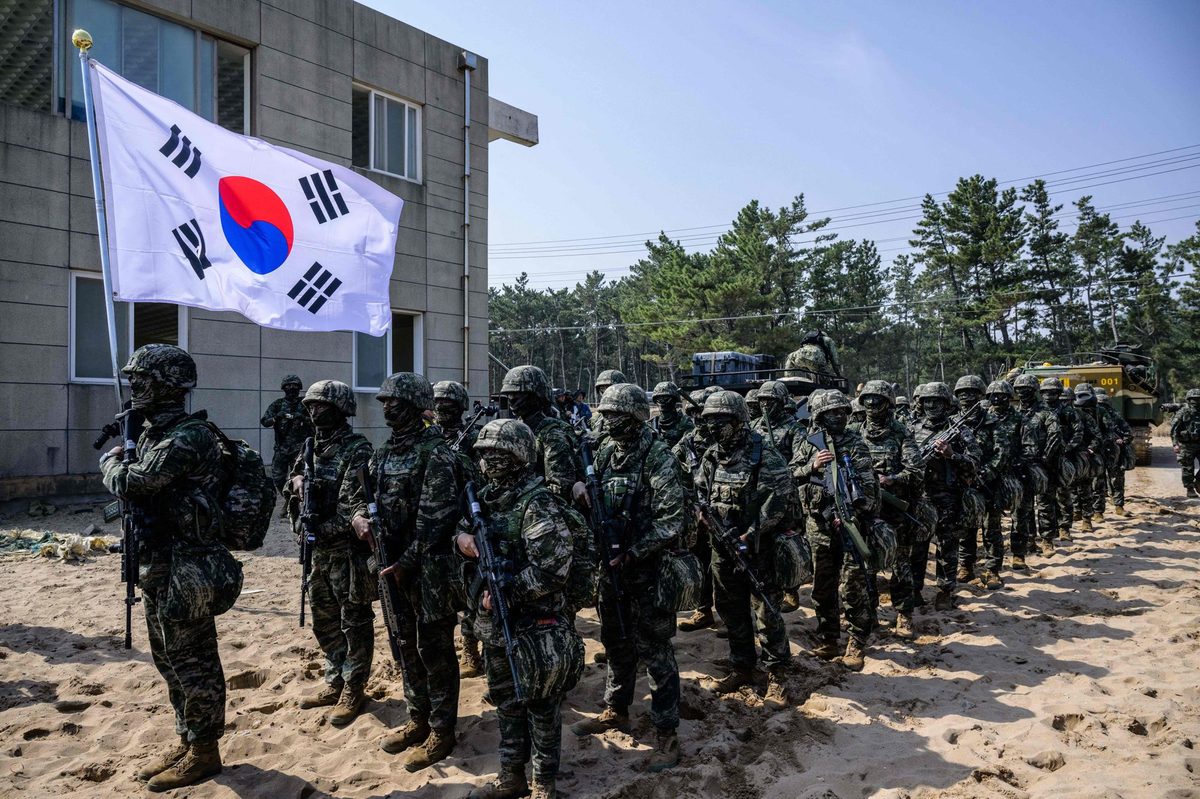
South Korea handed control of its military to the United States during the Korean War's desperate opening weeks in 1950. Seventy-five years later, Seoul is finally on the verge of getting it back. The new permanent Combined Ground Component Command—activated in January 2026—marks the fourth of six command structures now operating year-round, putting a Korean general at the helm of ground forces for the first time.

The stakes go beyond symbolism. President Lee Jae-myung has made OPCON transfer a signature goal before his term ends in 2030, backed by a $152 billion defense investment. But skeptics question whether South Korea can fill capability gaps in surveillance, missile defense, and intelligence that American forces currently provide—all while North Korea expands its nuclear arsenal.

Key Indicators

4 of 6
Component commands now permanent
Ground, air, naval, and marine commands operate year-round; special operations and intelligence remain temporary
2030
Target year for full transfer
Lee administration's deadline to complete conditions-based OPCON handover
$152B
Defense investment 2026-2030
South Korea's five-year military modernization budget to support self-reliant defense
28,500
US troops in South Korea
American personnel supporting combined defense posture

People Involved

Lee Jae Myung
Lee Jae Myung
President of South Korea (In office since June 2025, term ends 2030)
Ahn Gyu-back
Ahn Gyu-back
South Korean Defense Minister (First civilian defense minister in 64 years)
JS
Joo Seoung-un
Commander, Combined Ground Component Command (Leading permanent combined ground forces)

Organizations Involved

ROK/US Combined Forces Command
Bilateral Military Command
Status: Operational—transitioning toward Korean-led Future CFC

The warfighting headquarters commanding over 600,000 US and ROK personnel for Korean Peninsula defense.

United States Forces Korea
US Joint Headquarters
Status: Supporting OPCON transition while maintaining readiness

Joint headquarters for approximately 28,500 American military personnel stationed in South Korea.

US Eighth Army
US Eighth Army
US Army Component
Status: Providing personnel to permanent combined ground staff

The US Army's ground component in Korea, now dual-hatting personnel with the Combined Ground Component Command.

Timeline

  1. Permanent Combined Ground Command Goes Operational

    Milestone

    Combined Ground Component Command becomes fourth standing component, with Korean general leading and US Eighth Army personnel on combined staff.

  2. Defense Minister Inspects Combined Forces Command

    Leadership

    Ahn Gyu-back conducts first inspection of CFC headquarters at Camp Humphreys, emphasizing 'Fight Tonight' readiness.

  3. 57th SCM Sets 2026 FOC Verification Goal

    Agreement

    Defense ministers agree to complete Full Operational Capability verification by November 2026.

  4. Lee Jae Myung Elected President

    Political

    Progressive leader wins snap election, making OPCON transfer a national security priority with 2030 target.

  5. Yoon Declares Martial Law, Gets Impeached

    Political Crisis

    President Yoon Suk Yeol's martial law declaration triggers impeachment, leading to snap election and new progressive government.

  6. CGCC Permanent Status Approved

    Decision

    Bilateral Permanent Military Committee approves converting the Combined Ground Component Command to standing status.

  7. Full Operational Capability Evaluation Conducted

    Assessment

    Second phase evaluation tests Seoul's capability to lead combined defense operations.

  8. Initial Operational Capability Verified

    Milestone

    Allies complete first stage of three-phase verification process during command post exercises.

  9. Conditions-Based Framework Adopted

    Policy

    At the 46th Security Consultative Meeting, allies abandon fixed timeline and establish three conditions for transfer.

  10. Transfer Postponed to 2015

    Delay

    Following North Korea's second nuclear test and the Cheonan sinking, allies delay OPCON transfer citing security concerns.

  11. First Wartime OPCON Agreement Signed

    Agreement

    US and ROK defense chiefs agree to transfer wartime control between October 2009 and March 2012.

  12. Peacetime OPCON Returns to Seoul

    Transfer

    South Korea regains command of its forces during peacetime, though wartime control remains with US-led CFC.

  13. Combined Forces Command Established

    Institutional

    US and South Korea create integrated warfighting headquarters, formalizing American command of combined forces during wartime.

  14. Rhee Surrenders Command to MacArthur

    Origin

    President Syngman Rhee signs the Taejon Agreement, handing operational control of all ROK forces to General Douglas MacArthur during the Korean War's early crisis.

Scenarios

1

OPCON Transfer Completed by 2030

Discussed by: South Korean Defense Ministry, Korea Herald, Stimson Center

South Korea passes FOC verification in 2026, then Full Mission Capability assessment by 2028-2029. Both presidents certify readiness. A Korean four-star general assumes command of the Future Combined Forces Command, with an American deputy—reversing the current structure. This requires Seoul to demonstrate independent capabilities in missile defense, ISR, and command and control that currently depend on US assets.

2

Transfer Delayed Again Past 2030

Discussed by: Council on Foreign Relations, Crisis Group, conservative Korean analysts

Capability gaps prove harder to close than expected. South Korea's reliance on US reconnaissance satellites, early warning systems, and missile defense creates dependencies that can't be replaced by 2030. North Korea's nuclear advancement raises the stakes of any transition misstep. The next administration—potentially conservative—deprioritizes OPCON transfer as previous governments did after 2010, pushing completion into the 2030s.

3

Partial Transfer with Extended US Support Role

Discussed by: National Bureau of Asian Research, CSIS, defense analysts

A hybrid outcome where Korean generals command the Future CFC but substantial US enabling capabilities remain embedded. Similar to NATO arrangements where national forces fall under alliance command during crises, the structure evolves rather than cleanly transfers. This preserves alliance cohesion while addressing sovereignty concerns, but neither fully satisfies OPCON advocates nor alliance traditionalists.

4

Crisis Accelerates or Derails Transfer

Discussed by: Chatham House, The Diplomat, regional security experts

A North Korean provocation—seventh nuclear test, ICBM launch toward Guam, or kinetic incident—forces a decision point. Either the crisis demonstrates Seoul's readiness and accelerates transfer, or it exposes gaps that delay the timeline indefinitely. The Trump administration's pursuit of talks with Pyongyang adds unpredictability; a summit deal could reshape alliance structures faster than planned verification timelines.

Historical Context

West Germany's NATO Integration (1955)

May 1955

What Happened

Ten years after World War II's end, West Germany joined NATO and placed its new Bundeswehr under alliance command. The arrangement served dual purposes: containing Soviet expansion and constraining German military power. A German four-star officer eventually commanded Allied Forces Central Europe, but German forces remained under NATO's Supreme Allied Commander Europe during wartime.

Outcome

Short Term

West Germany rearmed within alliance constraints, contributing 500,000 personnel to NATO's Central European defense.

Long Term

The model of national forces under alliance command during crisis became NATO's template, lasting through the Cold War and beyond reunification.

Why It's Relevant Today

South Korea faces a similar challenge: asserting national command while maintaining alliance coherence. The German precedent shows how integrated command structures can evolve without undermining collective defense.

Japan's Joint Operations Command (2025)

March 2025

What Happened

Japan established its Joint Operations Command to unify Self-Defense Force branches under a single four-star commander for the first time. The US simultaneously upgraded US Forces Japan into a joint force headquarters to serve as its counterpart. Admiral Samuel Paparo called it 'the most significant change to USFJ since its creation.'

Outcome

Short Term

Both allies gained clearer command and control structures, enabling faster decision-making in potential contingencies.

Long Term

The reorganization established a model for deepened US-ally interoperability that South Korea's OPCON transition parallels.

Why It's Relevant Today

Japan's command restructuring shows how US allies in the Indo-Pacific are simultaneously modernizing military leadership arrangements. Seoul's OPCON transfer is part of a regional pattern, not an isolated development.

Peacetime OPCON Transfer (1994)

December 1994

What Happened

Following discussions initiated in 1987, South Korea regained peacetime operational control of its forces from the US-led Combined Forces Command. ROK Joint Chiefs of Staff began commanding Korean forces during non-wartime periods, while wartime OPCON remained with an American general.

Outcome

Short Term

Seoul gained routine command of its military while preserving alliance warfighting structure.

Long Term

The partial transfer created the framework that still exists today—and set the precedent that OPCON arrangements can evolve without dissolving the alliance.

Why It's Relevant Today

The 1994 transfer proved that shifting command authority doesn't undermine deterrence. Today's wartime OPCON debate follows the same logic at higher stakes.

12 Sources: