
Pull to refresh
Logo
Daily Brief
Following
Why
Iraq's grinding campaign against Islamic State remnants

Iraq's grinding campaign against Islamic State remnants

Force in Play
By Newzino Staff |

Desert Airstrikes and Security Operations Target Scattered Militants

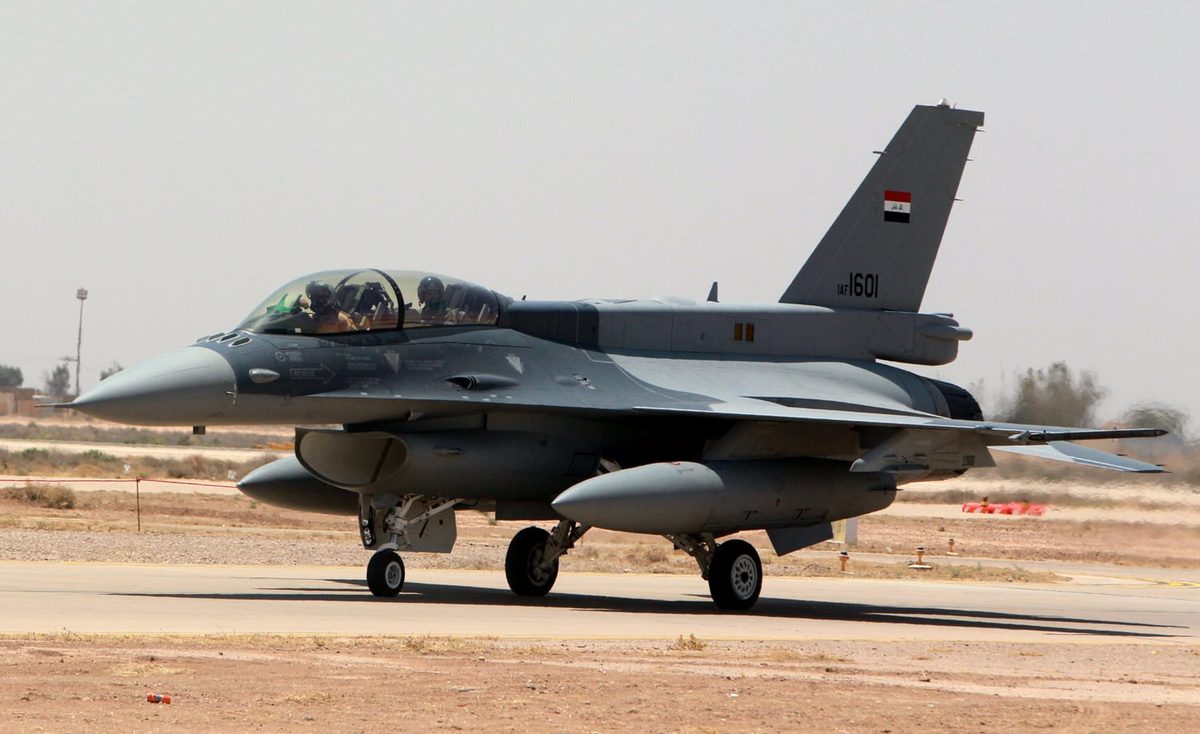
February 12th, 2026: F-16 Airstrikes Near Hatra Kill Four Militants

Overview

Iraq declared victory over the Islamic State in December 2017 after recapturing Mosul and eliminating the group's territorial caliphate. Eight years later, Iraqi F-16s are still hunting militants in desert hideouts—a reminder that defeating an insurgency's territory is not the same as defeating its fighters.

The February 2026 airstrikes near the ancient city of Hatra killed four militants and destroyed weapons caches, part of an intensified campaign targeting an estimated 1,500 to 3,000 Islamic State fighters still scattered across Iraq and Syria. With American forces scheduled to depart Iraq by late 2026, the question is whether Iraqi security forces can sustain this pressure alone—or whether history will repeat, as it did when the group reconstituted after the 2011 U.S. withdrawal.

Key Indicators

1,500-3,000
Estimated Islamic State fighters in Iraq and Syria
Down from a peak of roughly 30,000 fighters controlling territory with 10 million people in 2014-2015.
94%
Decline in Islamic State attacks since 2019
The group's operational tempo has collapsed from hundreds of monthly attacks to sporadic incidents.
34
Iraqi F-16IQ jets in service
These aircraft have become Iraq's primary precision strike platform against remote hideouts.
~2,000
U.S. troops remaining in Iraq
Scheduled for full withdrawal by end of 2026 as Operation Inherent Resolve concludes.

Interactive

Exploring all sides of a story is often best achieved with Play.

Ever wondered what historical figures would say about today's headlines?

Sign up to generate historical perspectives on this story.

Sign Up

Debate Arena

Two rounds, two personas, one winner. You set the crossfire.

People Involved

Mohammed Shia al-Sudani
Prime Minister of Iraq (In office since October 2022)
Abdul-Wahab al-Saadi
Former Commander, Iraqi Counter-Terrorism Service (Led CTS from 2020-2023; received French Legion of Honour in 2022)

Organizations Involved

Iraqi Joint Operations Command
Military Command
Status: Coordinates all Iraqi security operations against Islamic State remnants

The central coordinating body for Iraq's military, security services, and counterterrorism forces conducting operations against Islamic State cells.

IS
Islamic State (ISIS/ISIL/Daesh)
Terrorist Organization
Status: Degraded insurgency; no territorial control; conducting low-level guerrilla operations

A militant Sunni jihadist group that controlled large portions of Iraq and Syria from 2014-2017, now reduced to scattered cells conducting sporadic attacks.

Iraqi Air Force
Iraqi Air Force
Military Branch
Status: Primary platform for precision strikes against Islamic State hideouts

Iraq's aerial warfare branch, operating 34 F-16IQ Viper jets as its primary precision strike capability against remote militant positions.

Timeline

  1. F-16 Airstrikes Near Hatra Kill Four Militants

    Military

    Iraqi Air Force strikes Islamic State hideouts near the ancient UNESCO site, destroying weapons and logistics equipment.

  2. Two Senior Islamic State Operatives Killed in Anbar

    Military

    Iraqi security operation forces two high-ranking militants to detonate themselves rather than face capture.

  3. Islamic State Ambush Kills 17 in Kirkuk

    Attack

    Militants attack security forces near Kirkuk, killing nine police officers and eight civilians in one of the year's deadliest incidents.

  4. U.S. Announces Coalition Mission to End by 2026

    Political

    Washington and Baghdad agree to conclude Operation Inherent Resolve in Iraq by September 2025, with full U.S. withdrawal by end of 2026.

  5. Joint U.S.-Iraqi Raid Kills 15 Militants

    Military

    Coalition operation in western Iraq eliminates Islamic State fighters; seven U.S. personnel wounded.

  6. Islamic State Loses Last Syrian Territory

    Military

    Syrian Democratic Forces capture Baghuz, eliminating the group's final territorial foothold.

  7. Iraq Declares Victory Over Islamic State

    Political

    Government announces end of war after recapturing all territory. Islamic State has lost 95% of its holdings.

  8. Iraq Declares Mosul Liberated

    Military

    Prime Minister Abadi announces victory after nine months of urban combat that left much of the city destroyed.

  9. Battle for Mosul Begins

    Military

    Iraqi forces launch Operation "We Are Coming, Nineveh" to recapture the Islamic State's Iraqi capital.

  10. Iraq Receives First F-16 Fighters

    Military

    First batch of F-16IQ jets arrives, rebuilding Iraq's precision strike capability.

  11. Islamic State Destroys Ancient Hatra

    Cultural

    Militants bulldoze the UNESCO World Heritage Site, part of systematic destruction of pre-Islamic antiquities.

  12. U.S. Begins Airstrikes Against Islamic State

    Military

    President Obama authorizes air campaign to halt Islamic State advance, marking start of Operation Inherent Resolve.

  13. Grand Ayatollah Sistani Issues Mobilization Fatwa

    Political

    Iraq's top Shia cleric calls for volunteers to defend Baghdad, leading to formation of the Popular Mobilization Forces.

  14. Islamic State Captures Mosul

    Military

    Militants seize Iraq's second-largest city as Iraqi Army units collapse. The fall triggers a national crisis and international military intervention.

Scenarios

1

Islamic State Contained as Low-Level Insurgency

Discussed by: U.S. Central Command assessments, UN Security Council reports, International Centre for Counter-Terrorism

Iraqi forces maintain current pressure after the U.S. departure, keeping the Islamic State degraded to sporadic attacks with no territorial gains. F-16 strikes continue targeting desert hideouts while ground operations disrupt financing and recruitment networks. The group persists as a security nuisance but poses no existential threat to the Iraqi state. This scenario requires sustained intelligence cooperation with remaining coalition partners and continued U.S. support for Iraqi Air Force maintenance.

2

Security Vacuum Enables Islamic State Reconstitution

Discussed by: Hudson Institute, Foreign Affairs, Congressional Research Service

The withdrawal of American forces creates intelligence and capability gaps that Iraqi security services cannot fill. Sectarian governance under a potential Nouri al-Maliki return alienates Sunni communities in areas where the Islamic State recruits. Combined with instability in Syria and the risk of prison breaks freeing thousands of detained fighters, the group rebuilds toward 2014-level capacity over two to three years. Analysts warn this mirrors the 2011-2014 period when U.S. withdrawal preceded the group's dramatic resurgence.

3

Syrian Spillover Destabilizes Iraqi Border Regions

Discussed by: Soufan Center, Pentagon Inspector General reports, UK Parliament briefings

The Islamic State's stronger Syrian branch exploits the post-Assad governance vacuum to reconsolidate, using supply lines across the Iraqi border. With 8,500 detained militants in Syrian Democratic Forces custody at risk of liberation, a mass prison break or facility collapse floods both countries with combat-experienced fighters. Iraqi forces find themselves fighting a two-front insurgency that overwhelms their capacity without coalition air support.

4

Islamic State Effectively Eliminated in Iraq

Discussed by: Iraqi government statements, Global Coalition to Defeat ISIS

Sustained operations reduce the group below the threshold of operational viability. Remaining cells are killed, captured, or scattered into irrelevance. Iraq's security forces demonstrate independent counterterrorism capability, and the group's financial networks dry up. While this outcome represents Iraqi government messaging, most external analysts consider it aspirational rather than imminent given the group's resilience and continued $10 million cash reserves.

Historical Context

Al-Qaeda in Iraq Resurgence (2011-2014)

December 2011 - June 2014

What Happened

The U.S. completed its military withdrawal from Iraq in December 2011, removing the intelligence and strike capabilities that had reduced al-Qaeda in Iraq to a shadow of its former strength. Within three years, the group—rebranded as the Islamic State—had rebuilt its networks, exploited Sunni grievances against Prime Minister Nouri al-Maliki's sectarian governance, and captured Mosul with 1,500 fighters routing 30,000 Iraqi soldiers.

Outcome

Short Term

The Islamic State declared a caliphate spanning Iraq and Syria, controlling territory with 10 million residents and generating $2 billion in annual revenue.

Long Term

The resurgence required a years-long multinational military campaign to reverse, at the cost of tens of thousands of lives and the near-total destruction of cities like Mosul and Raqqa.

Why It's Relevant Today

The scheduled 2026 U.S. departure echoes the 2011 withdrawal. Analysts cite this precedent when warning that reducing pressure prematurely could enable another reconstitution cycle.

The Surge and Awakening Councils (2007-2008)

January 2007 - December 2008

What Happened

Facing a collapsing security situation, the U.S. deployed 30,000 additional troops while cultivating Sunni tribal militias—the "Awakening Councils"—to turn against al-Qaeda in Iraq. The combination of military pressure and local partners reduced violence by 80% and pushed AQI to the brink of destruction.

Outcome

Short Term

Al-Qaeda in Iraq was reduced to fewer than 1,000 fighters by 2010, effectively defeated as a military force.

Long Term

The gains proved reversible when U.S. forces withdrew and the Maliki government alienated Sunni communities, demonstrating that military victories require sustained political follow-through.

Why It's Relevant Today

The current strategy of degrading Islamic State cells mirrors the Surge's approach, but success depends on whether Iraqi governance avoids the sectarian mistakes that enabled the group's 2014 comeback.

Libya Post-Qaddafi Security Collapse (2011-2014)

October 2011 - Present

What Happened

The NATO-backed overthrow of Muammar Qaddafi removed the central authority without replacing it with effective governance. Armed militias filled the vacuum, weapons proliferated across North Africa, and the Islamic State established a territorial foothold in Sirte by 2015.

Outcome

Short Term

Libya descended into civil war between competing governments, with multiple foreign powers backing rival factions.

Long Term

The country remains divided, demonstrating how quickly security gains evaporate without governance capacity to sustain them.

Why It's Relevant Today

Libya illustrates the risks of withdrawing security support before local institutions can fill the gap—a concern analysts raise about the Iraq transition timeline.

10 Sources: