

US water utilities ramp capital spending under EPA lead-pipe mandate
Built WorldAging pipes and a December 2037 federal deadline drive a multi-trillion-dollar rebuild
December 31st, 2037: Final LCRI lead-pipe deadline (future)New here? Follow stories to track developments over time. Create a free account to get updates when stories you care about change.
Overview
Pennsylvania American Water confirmed $631 million in 2026 capital spending during Infrastructure Week. That was the largest single-state disclosure in the American Water Works rollout so far. Tennessee American Water followed with $40 million, closing out a week that began with Illinois's $290 million announcement on May 18.
All three plans run on the same federal deadline: December 31, 2037, when every lead service line must be replaced under the EPA's Lead and Copper Rule Improvements. American Water Works has pledged $48 billion over ten years across its 14-state system. The American Water Works Association says utilities currently spend $33.6 billion a year but need $90.2 billion — a gap of $56.6 billion annually.
Why it matters
Every household with a lead service line will see it removed by 2037, paid for by rate hikes that have already started.
Questions about this story
No questions yet — be the first to ask.
Key Indicators
Voices
Curated perspectives — historical figures and your fellow readers.
Play
Exploring all sides of a story is often best achieved with Play.
Higher or Lower
A number from this story, against one from elsewhere in the news — guess which is bigger, then keep the chain going. 5 rounds, 3 strikes; a miss costs a strike and resets your streak.
Keyboard: ↓/L lower · ↑/H higher
0 points — sign up to put that on the leaderboard.
Timeline
Order five events from this story, oldest at top. Each in the right slot scores 1 — neighbours within one slot count too. Your previous result — green ✓ for exact slots, yellow ~ for off by one. Cards now in true chronological order.
Sign up to save your score and track a streak across stories.
Connections
Sixteen names from the news. Find the four hidden groups of four. Four mistakes max.
Sign up to keep a daily streak — a new puzzle lands every day.
Exit debate?
Your progress in this debate will be lost.
- 1 Two AI personas square off on this story.
- 2 You predict who'll win each round — correct picks earn XP.
- 3 One crossfire question is yours to fire. Pick it carefully.
Couldn't generate a topic
Select Your Champions
Choose one persona for each side of the debate
DEBATE TOPIC
Choose personas with different perspectives for a more dynamic debate.
Select debater for this side:
No debate personas available right now.
Select debater for this side:
No debate personas available right now.
Who's Got This Round?
Make your prediction before the referee scores
The referee scores both sides on
Round Results
Set the Crossfire
Pick the question both personas must answer in the final round
Debate Oracle! You called every round!
Sharp Instincts! You know your debaters!
The Coin Flip Strategist! Perfectly balanced!
The Contrarian! Bold predictions!
Inverse Genius! Try betting the opposite next time!
XP Breakdown
Prediction History
People Involved
Organizations Involved
American Water serves about 14 million people across 14 states through regulated subsidiaries.
Illinois American Water serves roughly 1.3 million people across the state, the largest private water utility in Illinois.
The EPA writes and enforces national drinking-water rules, including the Lead and Copper Rule.
AWWA is the main trade association for US water utilities and the publisher of the sector's investment-need surveys.
Pennsylvania American Water serves about 2.5 million people across the commonwealth, making it one of American Water Works' largest state subsidiaries.
Timeline
April 2014 December 2037
-
Final LCRI lead-pipe deadline (future)
Latest FutureAll lead and covered galvanized service lines must be replaced nationwide.
-
LCRI compliance date (future)
FutureNew lead action level of 10 ppb takes effect. Utilities must begin the 10%-per-year replacement schedule.
-
Illinois American Water details $290M 2026 plan
CorporateSubsidiary breaks out $25 million for lead service line replacement and $15.5 million for Sterling plant upgrades.
-
Pennsylvania American Water discloses $631M 2026 capital plan
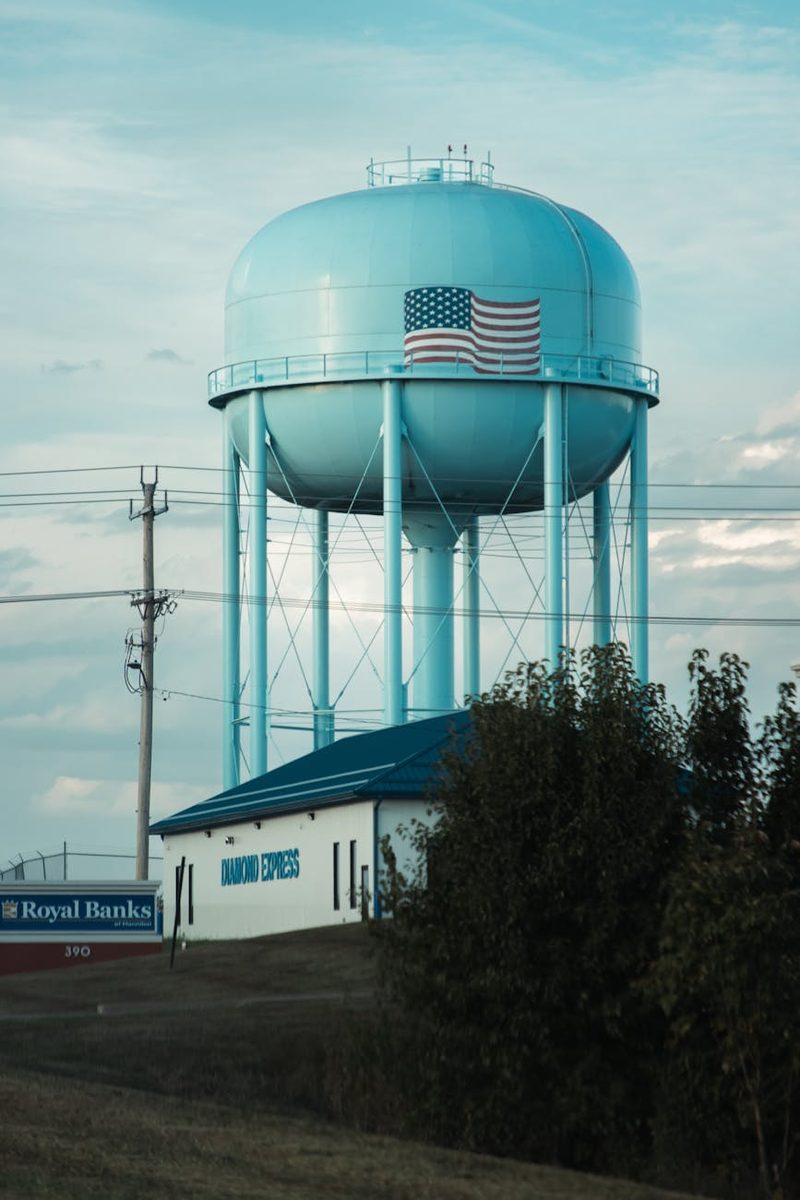
CorporatePennsylvania American Water confirms $631 million in 2026 infrastructure spending during Infrastructure Week, including $17.8 million to rehabilitate seven water storage tanks and build two new ones. The utility serves 2.5 million Pennsylvanians and spent $722 million in 2025.
-
Tennessee American Water highlights $40M+ in 2026 investments
CorporateTennessee subsidiary details $40 million in 2026 infrastructure projects during Infrastructure Week, including water main replacements in Chattanooga and East Ridge and a second 365,000-gallon storage tank due in summer 2026.
-
Kentucky American Water files $108M rate case with state PSC
RegulatoryKentucky American Water asks the Kentucky Public Service Commission for $17.7 million in added annual revenue to cover $108 million in 2027 capital investments. If approved, the average residential bill rises about $8 a month, with interim rates taking effect in December 2026.
-
American Water sets $3.7B 2026 capex
CorporateParent company files its full-year 2025 results and confirms a $48 billion ten-year investment plan.
-
Lee Zeldin confirmed as EPA Administrator
PersonnelNew administration takes over LCRI implementation and faces industry petitions to revisit cost estimates.
-
EPA finalizes Lead and Copper Rule Improvements
RegulationFinal rule sets a 2037 deadline to remove all lead service lines and lowers the action level to 10 ppb.
-
Service line inventory deadline
ComplianceWater systems must submit initial lead service line inventories to the EPA. The data drove EPA's revised four million estimate.
-
Bipartisan Infrastructure Law signed
LegislationPresident Biden signs the IIJA, including $55 billion for water and $15 billion dedicated to lead service line replacement.
-
Lead and Copper Rule Revisions take effect
RegulationThe prior LCR Revisions, drafted after Flint, set the first national inventory and replacement rules.
-
Flint switches water source
IncidentFlint, Michigan begins drawing drinking water from the Flint River without corrosion control. Lead leaches into the system.
Historical Context
3 moments from history that rhyme with this story — and how they unfolded.
Flint water crisis (April 2014 – present)
Flint, Michigan switched its drinking water source to the Flint River without applying corrosion control. Lead leached from aging service lines into tap water. Blood-lead levels in Flint children roughly doubled, and a Legionnaires' outbreak killed at least 12 people.
President Obama declared a federal emergency in January 2016. Criminal charges followed against state and city officials, including former Governor Rick Snyder.
Flint became the political trigger for the 2021 Lead and Copper Rule Revisions and the 2024 LCRI. Today's $25 million lead service line line item in Illinois sits in a regulatory framework Flint forced into existence.
Without Flint, there is no 2037 deadline. Illinois American Water's 2026 capital plan is the regulated-utility downstream consequence.
Newark lead service line replacement (2017-2021)
Newark, New Jersey detected elevated lead levels in 2017. The Natural Resources Defense Council sued. Mayor Ras Baraka and Essex County backed a $120 million bond to fund accelerated replacement, with no direct cost to homeowners.
Newark replaced more than 23,000 lead service lines in under three years. Lead levels dropped below federal action limits by mid-2021.
EPA cited Newark's pace in the LCRI rulemaking as proof a 10%-per-year national schedule is achievable.
Newark showed the speed possible when funding and political will line up. American Water's plan is the privatized, regulated version of that model, spread across 14 states.
Bipartisan Infrastructure Law water provisions (November 2021)
President Biden signed the Infrastructure Investment and Jobs Act, allocating $55 billion to water and wastewater systems, including $15 billion specifically for lead service line replacement over five years.
EPA began routing roughly $3 billion per year through state Drinking Water State Revolving Funds starting in 2022.
The federal cost share is what makes the LCRI economically viable for ratepayers. Without IIJA money, utilities would need to fund replacements entirely through rate increases.
Federal dollars and the regulatory deadline are the two halves of the same machine. Illinois American Water's 2026 plan draws on both.
