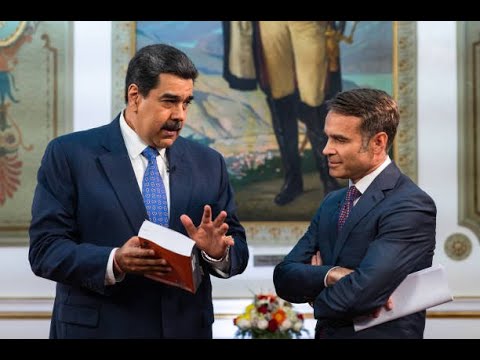
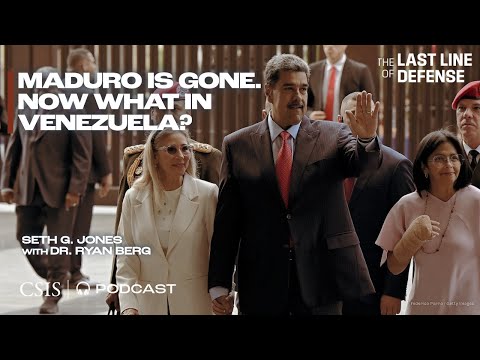
Seven weeks after U.S. special forces captured Venezuelan President Nicolás Maduro on January 3, 2026, Vice President Delcy Rodríguez has consolidated interim power through military loyalty pledges, oil privatization, and prisoner releases. In an NBC interview on February 12, she pledged 'free and fair' elections but refused to set a timeline, conditioning them on Venezuela being 'free from sanctions'.
On February 12, the National Assembly unanimously approved a general amnesty law for political prisoners detained since 1999. Rodríguez signed it on February 20, potentially freeing over 600 detainees. The law excludes those convicted of inciting foreign military intervention, which could bar opposition leader María Corina Machado from both amnesty and prosecution.
In her NBC interview, Rodríguez warned that Machado would 'have to answer to Venezuela' for calling for military intervention and sanctions. This signals prosecution if Machado returns. Foro Penal reports approximately 450 political prisoners have been released since January 8, with over 600 still in custody as of mid-February.
Trump's oil-for-stability bargain is deepening. U.S. Energy Secretary Chris Wright visited Caracas on February 10 to assess the oil industry overhaul. The U.S. received $300 million from the initial 50-million-barrel deal and lifted sanctions after the January 29 oil privatization law.
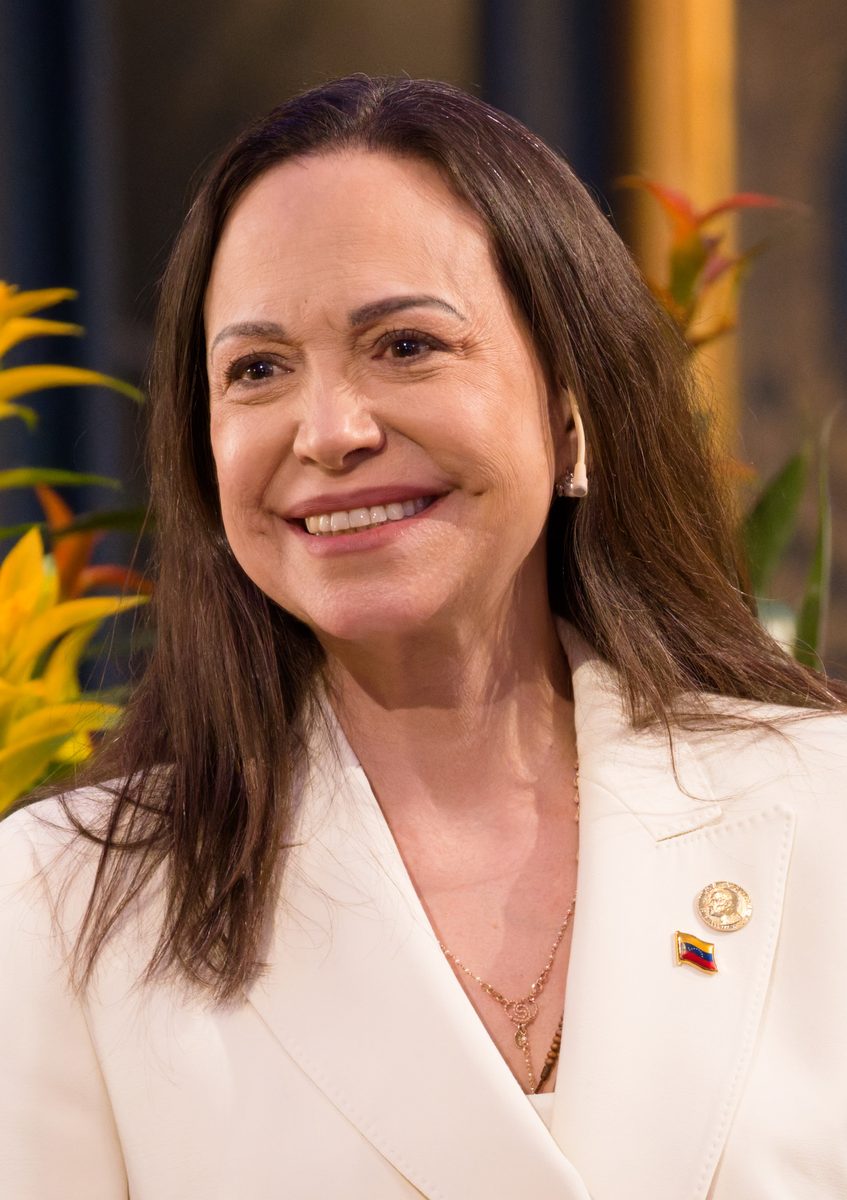
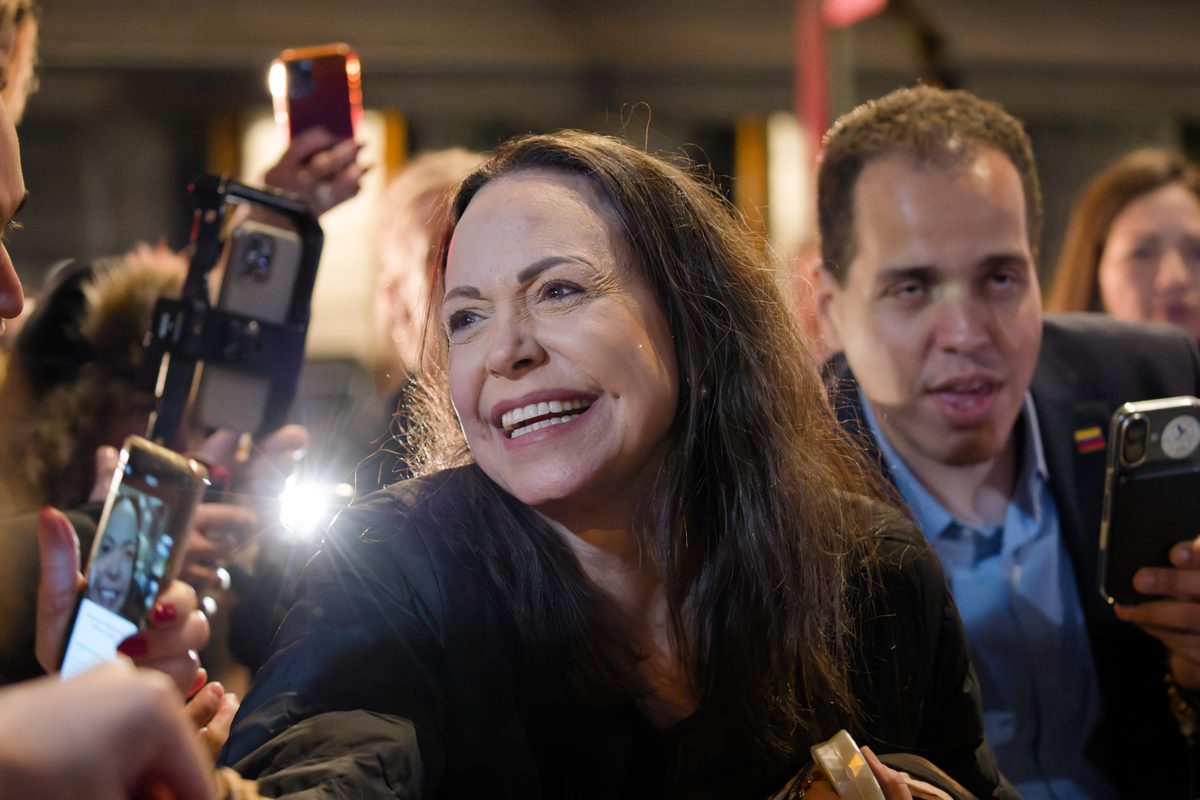
Machado, who gave Trump her Nobel Peace Prize medal in January, has become a source of White House frustration. By early February, Trump officials viewed her as a liability to the oil-focused transition. Machado delivered a virtual address at the Munich Security Conference on February 14, reaffirming her commitment to democratic governance.
Questions about this story
Free account needed to ask — your question is kept and asked for you right after sign-up. Answers are public.
No questions yet — be the first to ask.
Key Indicators
450+
Political prisoners released
Foro Penal count as of mid-February 2026; amnesty law signed Feb 20 could free 600+ more (excludes those convicted of inciting foreign intervention)
$2B
Total oil deal value
First $300M received Jan 20; U.S. Energy Secretary visited Feb 10 to oversee industry transformation
30%
Oil royalty cap
Law signed Jan 29; U.S. sanctions lifted Jan 30; indefinite shipments ongoing
7 weeks
Since Maduro's capture
Rodríguez consolidated power; amnesty law passed; elections promised but no timeline set
Images from Openverse under Creative Commons licenses.
Videos from YouTube.
Voices
Curated perspectives — historical figures and your fellow readers.
Cecil Rhodes
(1853-1902) ·Victorian Era · industry
Fictional AI pastiche — not real quote.
"How delightful to see the Americans have finally grasped what we British knew a century ago—that you cannot simply extract a country's resources without first installing a compliant administration, however unsavory their credentials! Though I confess, in my day we had the decency to call our puppet rulers "governors" rather than "presidents," and we certainly didn't let the Church complicate matters with their tedious moralizing about torture facilities."
0% found this insightful
Ever wondered what historical figures would say about today's headlines?
Sign up to generate historical perspectives on this story.
35 events
Latest: February 20th, 2026 · 8 months ago
Showing 8 of 35
JK to step
Tap a bar to jump to that date
Jump to
February 2026
Amnesty Law Signed Into Law
LatestPolitical
Interim President Rodríguez signs amnesty law approved by National Assembly on February 12, covering political prisoners detained since 1999. Law excludes those convicted of inciting foreign military intervention, potentially barring Machado from amnesty.
Machado Addresses Munich Security Conference
Statement
Opposition leader delivers virtual remarks reaffirming commitment to democratic governance and free elections, as White House frustrations with her leadership prospects grow.
National Assembly Unanimously Approves Amnesty Law
Political
Venezuela's National Assembly votes unanimously to approve amnesty covering 1999-present, with exclusions for foreign intervention charges. Rodríguez pledges 'free and fair' elections but refuses to set timeline, conditioning them on removal of sanctions and international pressure.
U.S. Energy Secretary Visits Caracas
Diplomatic
Secretary of Energy Chris Wright meets with Interim President Rodríguez to assess oil industry overhaul and privatization implementation, signaling deepening U.S.-Venezuela energy partnership.
White House Frustrations With Machado Surface
Political
Trump administration officials express growing skepticism about Machado's viability as Venezuela's future leader, viewing her as a liability to oil-focused transition despite her Nobel Peace Prize status.
January 2026
Machado Rejects 'Russian-Style' Transition
Statement
Machado responds to amnesty announcement, calling it 'irreversible' step toward democracy but insisting 'This is not a transition like Russia where the mafias remain in power.' Says objective is eliminating Chavista structures, not guaranteeing continuity.
Helicoide Prison Closure Announced
Political
Rodríguez announces closure of El Helicoide detention facility in Caracas, described by human rights groups as 'largest torture center in Latin America.' Building to become sports and cultural center.
U.S. Confirms All American Citizens Released
Diplomatic
State Department confirms all U.S. citizens known to be detained in Venezuelan prisons have been freed, part of broader prisoner release process.
U.S. Lifts Oil Sanctions as Privatization Law Takes Effect
Economic
United States lifts sanctions on Venezuelan oil trade hours after privatization law signed, allowing indefinite shipments under $2 billion deal.
Rodríguez Holds Phone Call with Indian PM Modi
Diplomatic
First major international engagement beyond U.S. sphere. Leaders discuss energy cooperation, trade, agriculture, and 'common roadmap to relaunch relations in 2026.' India urges peaceful dialogue.
Machado Declares 'I Will Be President When the Time Comes'
Statement
In CBS News interview, Machado states presidential intention but adds decision 'should be decided in elections by the Venezuelan people.'
Rodríguez Signs Oil Privatization Law
Economic
New law gives private firms control over Venezuelan oil production and sales, caps government royalties at 30%, requires disputes resolved in foreign courts. Fulfills key Trump demand.
Cabello Calls Catholic Church 'Fascists in Cassocks'
Political
Interior Minister attacks Church on state TV for not condemning U.S. operation and for supporting Machado, who met Pope Leo XIV on January 12.
Military and Police Pledge Loyalty to Rodríguez
Political
At ceremony in Fuerte Tiuna, Defense Minister Padrino presents Rodríguez with ceremonial baton and Bolívar's sword, declares 'absolute loyalty.' Over 3,000 troops file past first female commander-in-chief.
100+ Prisoners Released Over Weekend
Political
Foro Penal reports 104 freed Sunday alone, bringing total verified releases to 266 since January 8. Among them: opposition lawyer Kennedy Tejeda, missing since August 2024.
González's Son-in-Law Released After 380 Days
Political
Rafael Tudares Bracho freed after 13 months detention on terrorism charges with 30-year sentence. Daughter Mariana González calls detention 'unjust and arbitrary.'
First $300M Oil Payment Received
Economic
U.S. receives initial payment from 50-million-barrel oil deal announced January 6. Total deal valued at $2 billion; shipments to continue indefinitely.
AP Reveals DEA Designated Rodríguez 'Priority Target' in 2022
Investigation
Documents show Rodríguez has been on DEA radar since 2018, labeled 'priority target' in 2022 for suspected drug trafficking impact. Her name appeared in nearly a dozen DEA investigations. No public charges filed.
Rodríguez Reshuffles Cabinet, Consolidates Power
Political
Second wave of appointments following CIA director visit. Miguel Perez Pirela named communications minister; Luis Antonio Villegas heads new combined Industry and Trade ministry. Alex Saab resigns.
Machado Declares Intent to Become 'First Elected Female President'
Statement
In Fox News interview, Machado says 'When the timing is right, I will be the first woman elected president of Venezuela.' Vows to return but doesn't specify date.
Video Released of Machado's December Escape
Political
U.S. rescue team Grey Bull releases dramatic footage of 16-hour extraction operation. Machado boarded boat from Venezuelan coast to Caribbean rendezvous point in rough waters.
Machado Criticizes Rodríguez at Heritage Foundation
Statement
In first public appearance since escape, Machado calls Rodríguez a 'communist' and 'main ally' of Russia, China, and Iran. Asserts González is rightful president.
CIA Director Meets Rodríguez in Caracas
Diplomatic
Ratcliffe spends two hours with interim president discussing intelligence cooperation and economic collaboration.
Machado Gives Trump Her Nobel Medal
Political
At White House meeting, Machado presents Nobel medal to Trump. Trump accepts but declines to endorse her leadership bid.
Rodríguez Begins First Cabinet Reshuffle
Political
Captain Juan Escalona from Maduro's security circle appointed to head Ministry of the Presidency. Aníbal Coronado moves to Ministry of Ecosocialism.
Machado Meets Pope Leo XIV at Vatican
Diplomatic
Private audience at Apostolic Palace. Machado asks Pope to intercede for political prisoners. Also meets Secretary of State Pietro Parolin, former nuncio to Venezuela.
Prisoner Releases Begin
Political
Venezuela releases initial political prisoners including Americans and Spanish citizens. Trump cancels planned second attack wave.
Maduro Pleads Not Guilty in Manhattan
Legal
Maduro and Flores arraigned on narco-terrorism charges. Maduro declares himself 'prisoner of war.' Next court date: March 17.
Rodríguez Sworn In as Interim President
Political
Supreme Court declares Maduro's absence 'temporary,' installs Vice President Rodríguez. First woman to hold Venezuelan presidency.
U.S. Military Captures Maduro
Military
Operation Absolute Resolve: Delta Force breaches Maduro's compound at Fuerte Tiuna. Maduro and wife Cilia Flores flown to USS Iwo Jima, then New York.
December 2025
Machado Escapes Venezuela for Nobel Ceremony
Political
Private donors fund clandestine extraction via boat to Curaçao. Daughter accepts medal in Oslo; Machado arrives day later.
October 2025
Machado Wins Nobel Peace Prize
Award
Norwegian Nobel Committee honors Machado for 'tireless work promoting democratic rights' in Venezuela.
September 2024
González Flees to Spain
Political
Opposition presidential candidate escapes to Madrid via Spanish embassy after facing arrest warrant.
August 2024
Machado Goes Into Hiding
Political
Opposition leader writes Wall Street Journal op-ed saying she fears for her life amid 'Operation Tun Tun' crackdowns on protesters.
July 2024
Disputed Election Triggers Crisis
Election
Maduro declared winner with 51% despite opposition tallies showing González won 67%. International observers reject results as fraudulent.
Discussed by: International Crisis Group, Atlantic Council analysts
Rodríguez maintains control with tacit U.S. acceptance in exchange for oil access, prisoner releases, and intelligence cooperation. The opposition remains excluded from power. Cabello and military hardliners retain security control. Elections are perpetually promised but never scheduled, as the Supreme Court continues to declare Maduro's absence 'temporary.' This mirrors the pattern of authoritarian transitions where external powers prioritize stability over democracy.
2
Negotiated Transition Brings Opposition Into Government
Possible
Discussed by: WOLA, Inter-American Dialogue
U.S. and international pressure, combined with Chavista factions seeking legitimacy, produces a power-sharing arrangement. Rodríguez agrees to include opposition figures in a transitional cabinet and set a date for internationally supervised elections. González returns from exile. This requires Machado to accept a role short of the presidency and Cabello to receive amnesty guarantees. The Panama 1990 model, where U.S. intervention led to genuine democratization, provides a template.
3
Internal Chavista Split Destabilizes Transition
Possible
Discussed by: Council on Foreign Relations, security analysts
Tensions between Rodríguez's accommodationist approach and Cabello's hardline security apparatus fracture the ruling coalition. Cabello, facing U.S. indictment and unable to negotiate his own exit, uses militia forces to resist. Regional instability follows, potentially triggering renewed U.S. military action or a prolonged power vacuum. The risk increases if Trump administration patience with Rodríguez's pace of reform runs out.
4
Machado Movement Forces Democratic Opening
Unlikely
Discussed by: Human Rights Foundation, Venezuelan diaspora organizations
Street protests and international pressure—amplified by Machado's Nobel platform—compel the Rodríguez government to accept genuine elections. González returns to claim the presidency he won in 2024. Chavista officials negotiate amnesty terms. This scenario requires Machado to overcome Trump's skepticism and mobilize sufficient domestic pressure despite the post-capture security environment.
Discussed by: International Crisis Group, Venezuelan constitutional law experts
As the April constitutional deadline approaches, Rodríguez uses her National Assembly supermajority to extend her interim mandate indefinitely, citing need for 'stability' and 'dialogue.' Elections remain perpetually promised but never scheduled. This would formalize the exclusion of both Machado and González from power, effectively converting the interim government into a new authoritarian regime with U.S. backing for oil access.
Historical Context
3 moments from history that rhyme with this story — and how they unfolded.
1 of 3
December 1989 - January 1990
U.S. Invasion of Panama (1989)
U.S. forces invaded Panama to capture Manuel Noriega, who was wanted on drug trafficking charges. Operation Just Cause involved 26,000 troops. Noriega surrendered after taking refuge in the papal nunciature. President-elect Guillermo Endara, who had won an election Noriega annulled, was installed.
Then
Noriega extradited to U.S., convicted, and imprisoned. Endara government took power. Panama Defense Forces dissolved.
Now
Panama became a stable democracy. U.S. completed Panama Canal handover on schedule in 2000. Panama remains one of few Latin American countries without a standing army.
Why this matters now
The closest precedent for U.S. military capture of a Latin American leader. Panama's successful democratic transition, with the U.S. supporting an opposition figure who had won an election the dictator annulled, contrasts sharply with Trump's current approach of backing Maduro's deputy.
2 of 3
April 2002
2002 Venezuelan Coup Against Chávez
Military officers overthrew Hugo Chávez after protests over his oil company appointments turned deadly. Businessman Pedro Carmona was installed as interim president. He immediately dissolved Congress and suspended the constitution.
Then
Carmona's overreach provoked backlash. Pro-Chávez protests and military defections returned Chávez to power within 48 hours.
Now
Chávez consolidated power further, purged the military, and ruled until his death in 2013. The failed coup became a cautionary tale about regime change without sustainable political support.
Why this matters now
Demonstrates that removing a Venezuelan leader is easier than establishing an alternative power structure. Chavista institutions survived a 2002 coup attempt; they are now surviving Maduro's capture. Carmona's immediate constitutional overreach mirrors warnings about Trump's claim to 'run the country.'
3 of 3
1994-2004
Haiti's Revolving-Door Interventions (1994-2004)
The U.S. restored Jean-Bertrand Aristide to power in 1994 after a military coup. Aristide was re-elected in 2000 amid fraud allegations, then ousted again in 2004 with U.S. acquiescence. Neither intervention produced lasting stability.
Then
Each intervention achieved its immediate objective—removing or restoring a leader—but failed to build durable institutions.
Now
Haiti remains politically unstable. International interventions created dependency without capacity. The country now faces gang-controlled governance.
Why this matters now
Warning case for intervention without sustained institution-building. Venezuela's competing power centers—Rodríguez, Cabello, military, opposition—mirror Haiti's factional politics that no external force successfully resolved.