


Pull to refresh
Logo
Magnetic millirobots deliver drugs directly to a beating heart

Magnetic millirobots deliver drugs directly to a beating heart

New Capabilities

Johns Hopkins engineers aim to replace weeks of IV antibiotics and risky open-heart surgery for heart infections

5 days ago: Johns Hopkins announces magnetic millirobots for cardiac drug delivery

Overview

Updated 1 hour ago

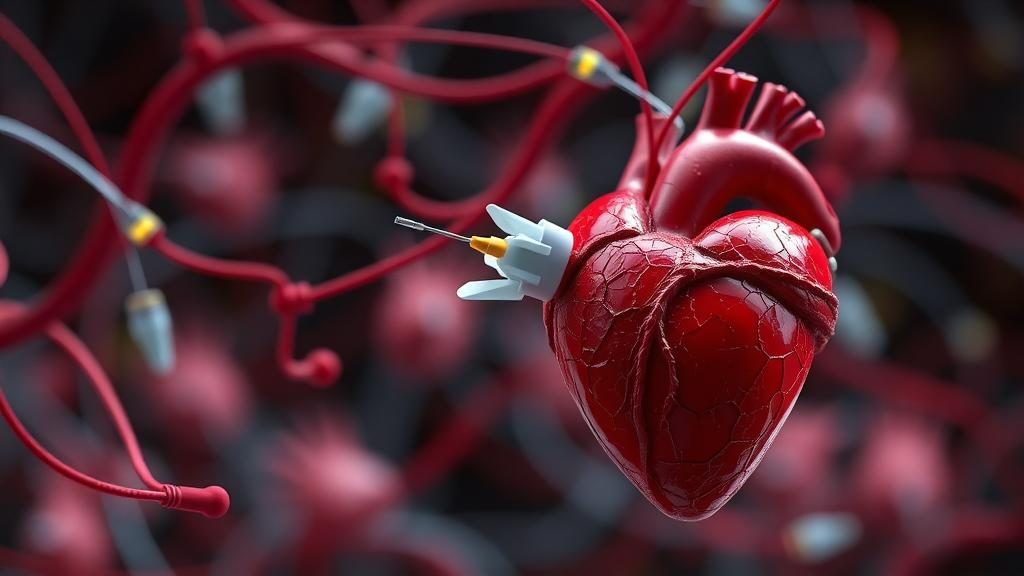
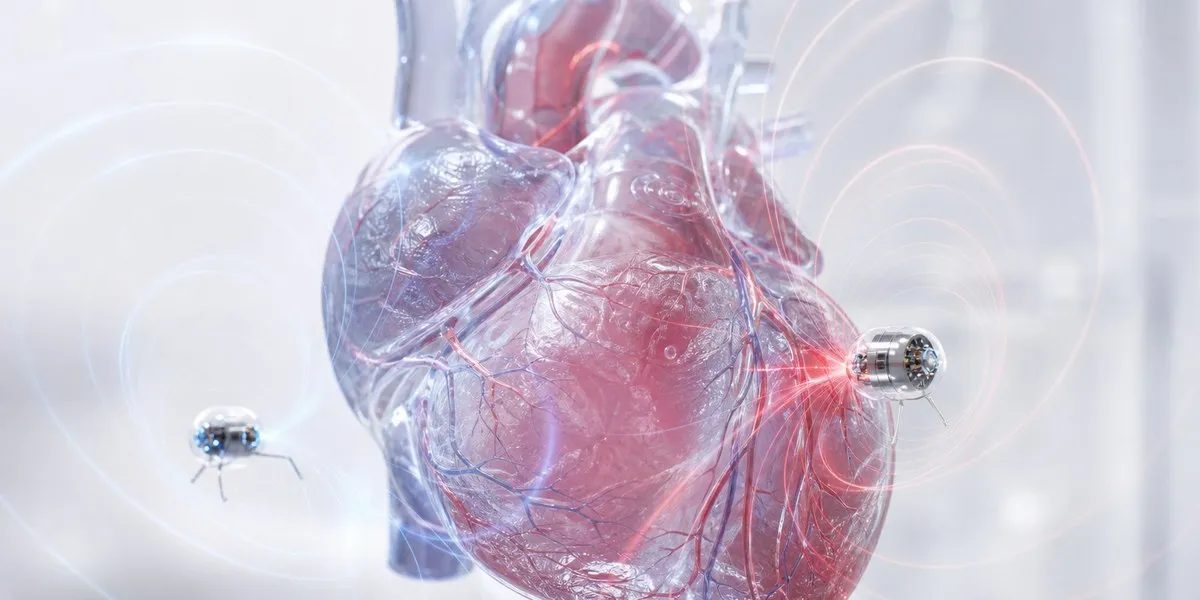
Johns Hopkins University engineers built a pair of magnetic robots the size of a pencil tip that travel through the bloodstream to place antibiotics directly on infected heart tissue. The robots carry no batteries or motors; they are steered from outside the body by electromagnetic coils, the same technology that powers an MRI machine.

The aim is to replace the standard treatment for infective endocarditis, a heart tissue infection that strikes about 50,000 Americans each year: a four-to-six-week course of intravenous antibiotics that often fails because the drugs arrive too diluted, and an extremely risky open-heart surgery that is the current fallback. If the approach works in living patients, the entire procedure could take under an hour.

Why it matters

If it works in patients, a month of IV antibiotics for heart infection could become a single hour-long procedure, no surgery required.

Questions about this story

Free account needed to ask — your question is kept and asked for you right after sign-up. Answers are public.

No questions yet — be the first to ask.

Key Indicators

50,000
Annual US endocarditis cases
Americans who contract the heart tissue infection each year.
66.7%
Tissue penetration force reduction
Barbed needle module cuts the force needed to anchor in cardiac tissue.
100%
Magnetic docking success rate
Drug module docked with needle module on demand during tests.
93%
Undocking success rate
Drug module released from needle module on demand during tests.

Voices

Curated perspectives — historical figures and your fellow readers.

Ever wondered what historical figures would say about today's headlines?

Sign up to generate historical perspectives on this story.

People Involved

Organizations Involved

Timeline

1 event Latest: 5 days ago
  1. Johns Hopkins announces magnetic millirobots for cardiac drug delivery

    Latest Research announcement

    Engineers unveiled a two-robot system that delivers antibiotics directly to infected heart tissue. Study published in Advanced Materials Technologies.

Scenarios

1

Millirobots pass dynamic beating-heart tests

Likely Resolves by Q2 2027

Discussed by: The Johns Hopkins research team

The team's next announced step is testing in phantom hearts that mimic the muscle contraction and beating motion of a real heart. If the robots navigate, dock, and deliver drugs under those conditions, and later in living animal models, the technology moves one step closer to clinical use.

2

Human trials begin for targeted cardiac drug delivery

Possible Resolves by End of 2028

Discussed by: The research team; NSF-funded program

If phantom and animal tests succeed, the team would seek regulatory approval and begin human trials. A first-in-human study would test whether the robots can be injected through a standard IV line, guided magnetically to the heart, and safely retrieved in living patients.

3

Millirobots stall at the bench; clinical path unclear

Possible Resolves by End of 2028

Discussed by: Skeptics of early-stage implantable robotics

The technology could fail to advance beyond phantom and ex vivo tests. Open challenges include scaling to a living beating heart, ensuring safe retrieval of the drug module, and winning regulatory approval for a magnetically controlled device inside the bloodstream.

Historical Context

2 moments from history that rhyme with this story — and how they unfolded.

2000s

Stereotaxis magnetic navigation (2000s)

Stereotaxis developed catheter systems steered by external magnets to treat heart arrhythmias, eliminating the need for manual catheter manipulation inside the heart.

Then

Cardiologists gained a way to guide flexible catheters to precise spots in the heart using magnetic fields.

Now

External magnetic steering of cardiac instruments became an established clinical tool, though it still relies on rigid catheters threaded through blood vessels.

Why this matters now

The millirobots use the same principle of external magnetic guidance but in a free-floating, untethered form, far smaller than any catheter-based system.

2001

Capsule endoscopy / PillCam (2001)

The PillCam, a pill-sized camera, became the first ingestible capsule to travel the gastrointestinal tract and transmit images wirelessly, approved for use in the early 2000s.

Then

Doctors gained a non-invasive way to inspect the small intestine without sedation or scopes.

Now

It proved miniature untethered devices could safely travel inside the human body, opening the field of ingestible and injectable medical devices.

Why this matters now

The millirobots extend that principle — but unlike the passively drifting PillCam, they are actively steered and can dock, deliver a drug over hours, and be replaced.

Sources

(5)