
Pull to refresh
Logo
Needle-thin brain implant packs recording, stimulation, and drug delivery into one fiber

Needle-thin brain implant packs recording, stimulation, and drug delivery into one fiber

New Capabilities

The mAxialtrode, developed by Danish and British researchers, lets scientists interact with multiple brain layers at once

Today: ScienceDaily features mAxialtrode in latest science news

Overview

Updated 1 hour ago

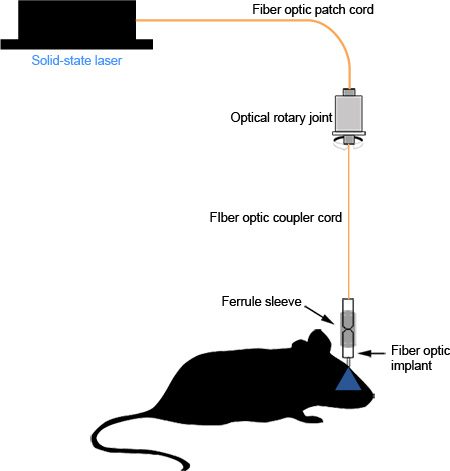
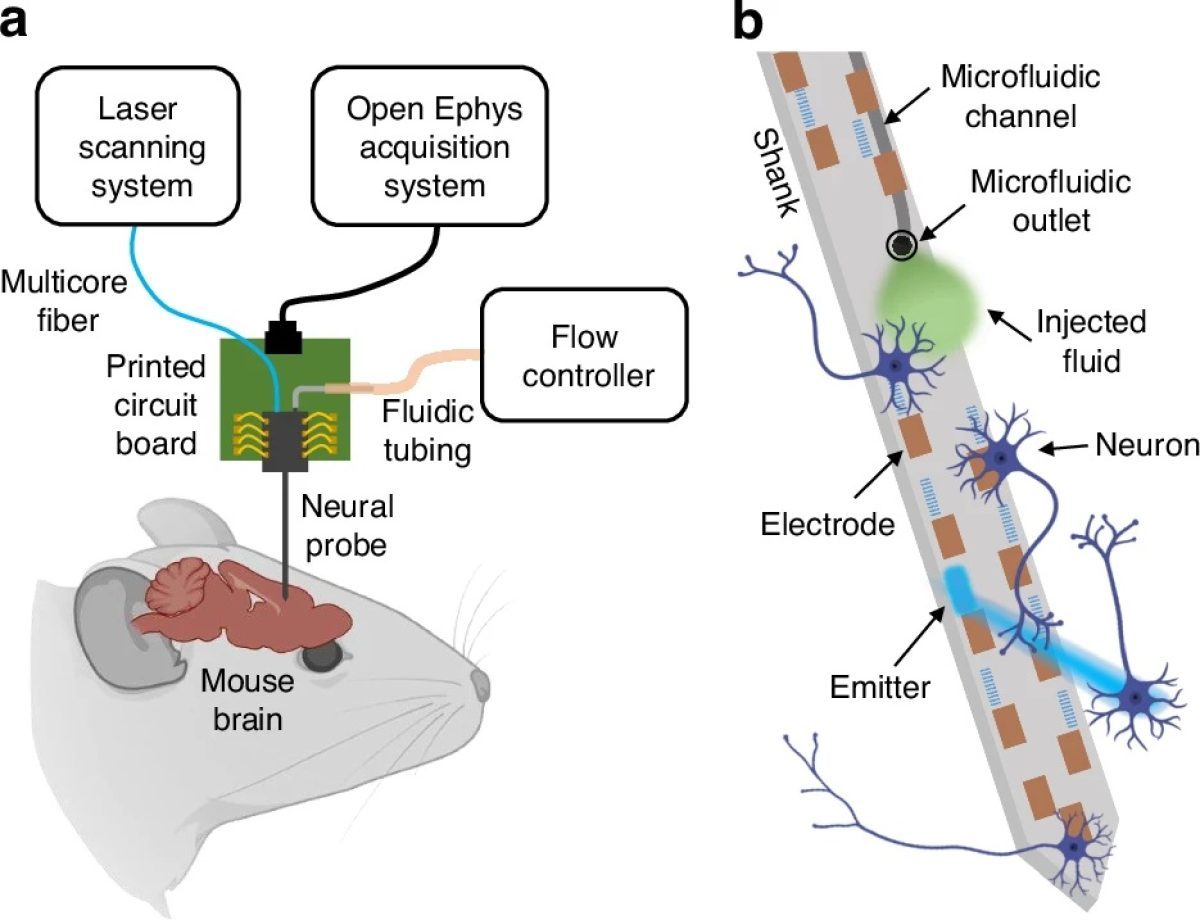
The microfluidic Axialtrode (mAxialtrode) is thinner than a sewing needle. Through a single soft fiber, it can record neural signals, inject drugs, and stimulate brain tissue with light at multiple depths at once.

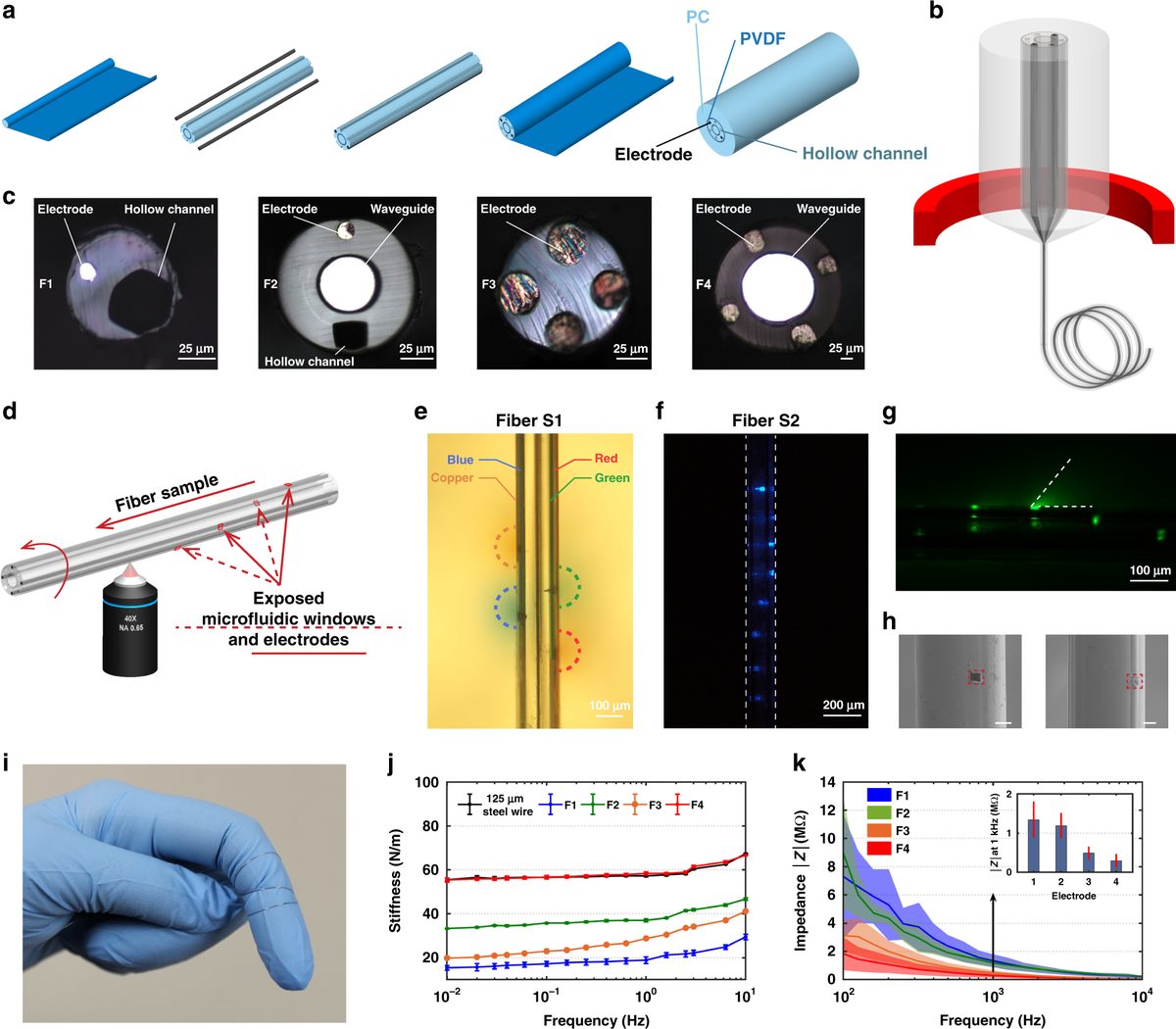
Most brain implants do one job, and they typically use rigid silicon, which irritates surrounding tissue over weeks. This device, published in Advanced Science and tested in mice, is made of soft polymer fibers with an angled tip that spreads electrodes and drug channels across brain layers. The team behind it says the design could give scientists a less invasive way to study conditions like epilepsy and memory disorders, and eventually point toward new treatments.

Why it matters

If this device advances, studying brain disorders like epilepsy no longer requires multiple rigid implants that damage the tissue they're meant to read.

Questions about this story

Free account needed to ask — your question is kept and asked for you right after sign-up. Answers are public.

No questions yet — be the first to ask.

Key Indicators

3
Functions combined in one fiber
Neural recording, drug delivery, and light stimulation in a single device.
< 0.5 mm
Fiber diameter
Thinner than a sewing needle, roughly half a dozen human hairs wide.
8
Microscopic channels within the fiber
Carry fluid for drug delivery and accommodate thin metal wires for electrical measurement.
2.7 mm
Depth separation for drug injections
Researchers delivered substances at different brain depths nearly 3 millimeters apart in mice.

Voices

Curated perspectives — historical figures and your fellow readers.

Ever wondered what historical figures would say about today's headlines?

Sign up to generate historical perspectives on this story.

People Involved

Organizations Involved

Timeline

January 2026 September 2026

2 events Latest: Today
  1. ScienceDaily features mAxialtrode in latest science news

    Today Coverage

    The research reaches wider circulation as ScienceDaily highlights the three-function brain implant and its potential for studying epilepsy and other neurological conditions.

  2. mAxialtrode research published in Advanced Science

    Publication

    International team from DTU, University of Copenhagen, and UCL publishes the mAxialtrode design and mouse testing results in Advanced Science.

Scenarios

1

mAxialtrode moves to human clinical trials

Unlikely Resolves by End of 2030

Discussed by: The research team themselves, who note extensive testing and regulatory approvals are still required

DTU researchers file for patents and begin the preclinical testing needed for human trials. The path would require years of biocompatibility studies, safety validation, and regulatory review before any investigational device application. The researchers see epilepsy as the most likely first clinical target, given that seizure networks span multiple brain layers.

2

Independent research labs adopt the mAxialtrode

Possible Resolves by Jan 1, 2029

Discussed by: Kunyang Sui, who says the technology is intended mainly for basic neuroscience research

Neuroscience labs studying brain activity across tissue layers adopt the mAxialtrode because it lets them record, stimulate, and deliver drugs at multiple depths from a single soft fiber. Adoption depends on whether the device is made available to outside researchers and whether it proves durable in long-term studies.

3

mAxialtrode technology licensed to a medical device company

Possible Resolves by End of 2029

Discussed by: The research team, which is in the process of patenting the underlying technology

A medical device company licenses the mAxialtrode technology for clinical development, either for epilepsy treatment or as a research platform. This would require the team to demonstrate reproducible manufacturing, secure patents, and show data from longer-term animal studies.

Historical Context

3 moments from history that rhyme with this story — and how they unfolded.

2002

Deep Brain Stimulation approved for Parkinson's (2002)

The U.S. Food and Drug Administration approved deep brain stimulation (DBS) for Parkinson's disease, allowing surgeons to implant electrodes that deliver continuous electrical pulses to specific brain regions. DBS became the first major clinically successful implanted brain stimulation device.

Then

Over 150,000 patients worldwide received DBS implants, with significant motor symptom relief.

Now

DBS established the clinical precedent for implantable brain devices and the regulatory pathways they must cross.

Why this matters now

The mAxialtrode follows DBS's path from invasive brain device to potential therapeutic tool, but adds drug delivery and light-based stimulation to electrical recording, and uses softer materials designed to avoid chronic inflammation.

2005

Optogenetics demonstrated (2005)

Karl Deisseroth's lab at Stanford showed that light-sensitive proteins from algae could be expressed in mammalian neurons, allowing precise control of neural activity with light pulses. The technique, called optogenetics, transformed how researchers manipulate brain circuits.

Then

Neuroscientists gained a tool to turn specific neuron populations on or off with millisecond precision.

Now

Optogenetics became a staple of neuroscience research but required separate light-delivery implants, usually rigid optical fibers.

Why this matters now

The mAxialtrode integrates optogenetic light stimulation into the same soft fiber that records signals and delivers drugs. In tests, researchers used blue and red light to stimulate nerve cells while measuring activity across the cortex and hippocampus.

1990s

Utah Electrode Array (1990s)

The Utah Electrode Array, a silicon grid of 100 needle electrodes, became the standard for recording brain activity. Its rigid silicon construction and flat design limited researchers to a single brain layer and caused inflammatory tissue reactions over time.

Then

Enabled multichannel brain recording for research and early brain-computer interface work.

Now

Decades of use showed hard implants degrade signal quality as the brain's immune response encapsulates the electrodes.

Why this matters now

The mAxialtrode directly addresses the Utah Array's main weaknesses: it is soft, polymer-based, and its angled tip spreads contact points across multiple depths instead of concentrating them at one flat surface.

Sources

(4)