
World's largest solar-storage microgrid reaches full commercial operation in Saudi Arabia
Built WorldSaudi Arabia's Red Sea destination now runs on 358 megawatts of solar and 1.2 gigawatt-hours of battery storage, independent of the national grid
2 days ago: World's largest solar-storage microgrid fully onlineNew here? Follow stories to track developments over time. Create a free account to get updates when stories you care about change.
Overview
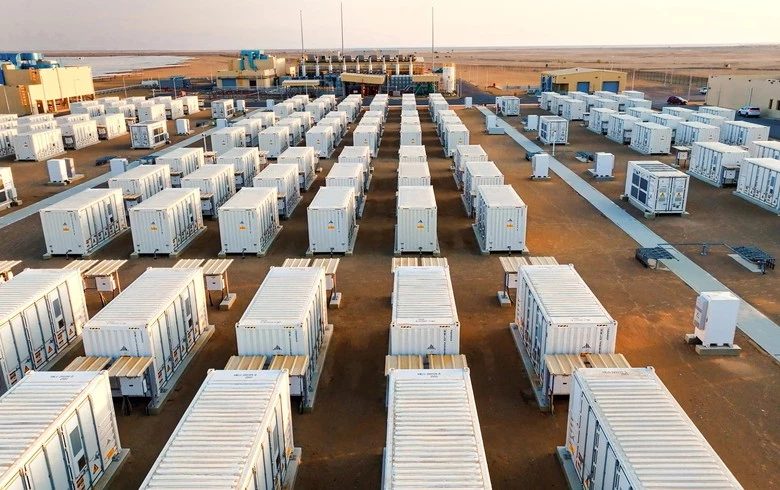
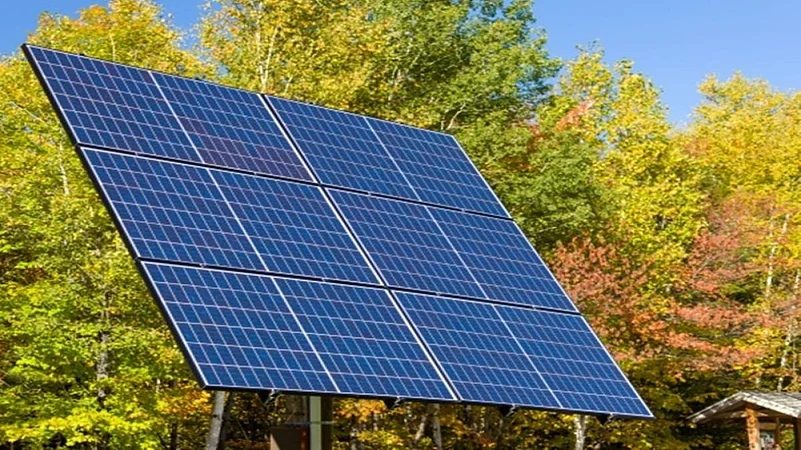
Updated 55 minutes agoAn entire tourism destination on Saudi Arabia's Red Sea coast now runs on its own solar-and-battery microgrid, with no connection to the national power grid. The project reached full commercial operation this week, pairing 358 megawatts of solar with 1,225 megawatt-hours of battery storage.
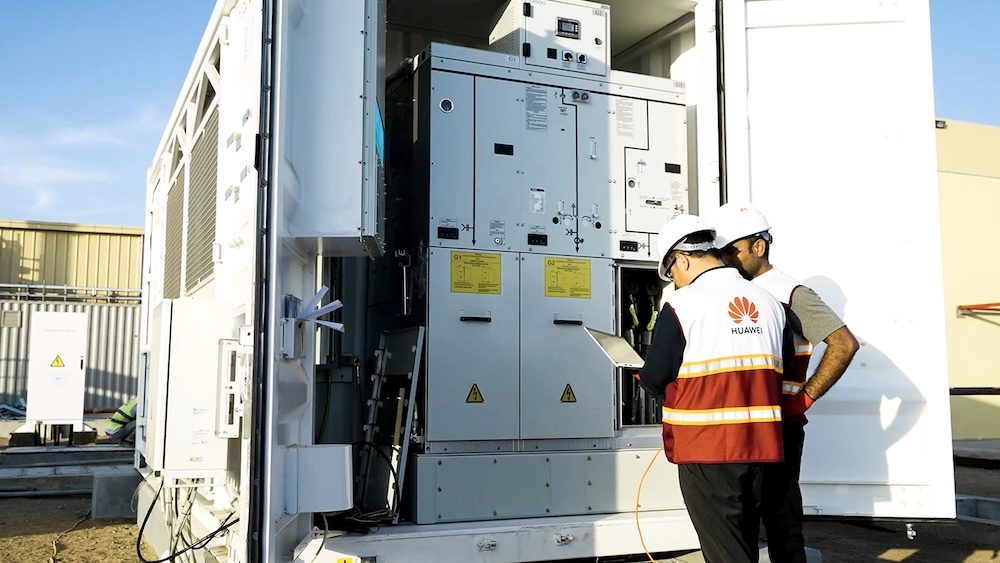
The microgrid powers resorts, an airport, desalination plants, and district cooling. Its batteries create the grid's voltage and frequency, a job normally done by spinning generators. That's what lets an isolated network run on solar and batteries, with 112.5 MW of fossil-fuel backup generation.
This is the largest off-grid solar-storage system ever built. It's also a working template for islands and remote sites where extending transmission lines is too expensive. The first year of operation will show whether grid-forming storage can deliver reliable 24/7 power, water, and cooling at this scale.
Why it matters
This microgrid shows solar-plus-storage can power an entire isolated utility around the clock — a template for islands and remote sites to cut diesel.
Questions about this story
Free account needed to ask — your question is kept and asked for you right after sign-up. Answers are public.
No questions yet — be the first to ask.
Key Indicators
Voices
Curated perspectives — historical figures and your fellow readers.
Play
Exploring all sides of a story is often best achieved with Play.
Higher or Lower
A number from this story, against one from elsewhere in the news — guess which is bigger, then keep the chain going. 5 rounds, 3 strikes; a miss costs a strike and resets your streak.
Keyboard: ↓/L lower · ↑/H higher
0 points — sign up to put that on the leaderboard.
Connections
Sixteen names from the news. Find the four hidden groups of four. Four mistakes max.
Sign up to keep a daily streak — a new puzzle lands every day.
Exit debate?
Your progress in this debate will be lost.
- 1 Two AI personas square off on this story.
- 2 You predict who'll win each round — correct picks earn XP.
- 3 One crossfire question is yours to fire. Pick it carefully.
Couldn't generate a topic
Select Your Champions
Choose one persona for each side of the debate
DEBATE TOPIC
Choose personas with different perspectives for a more dynamic debate.
Select debater for this side:
No debate personas available right now.
Select debater for this side:
No debate personas available right now.
Who's Got This Round?
Make your prediction before the referee scores
The referee scores both sides on
Round Results
Set the Crossfire
Pick the question both personas must answer in the final round
Debate Oracle! You called every round!
Sharp Instincts! You know your debaters!
The Coin Flip Strategist! Perfectly balanced!
The Contrarian! Bold predictions!
Inverse Genius! Try betting the opposite next time!
XP Breakdown
Prediction History
People Involved
Organizations Involved
Saudi developer that builds and operates power and desalination plants across the Middle East, Africa, and Asia.
Chinese construction and engineering firm, a subsidiary of PowerChina, that built the Red Sea utility complex.
Saudi developer building a luxury tourism destination on the Red Sea coast, planned to include 50 hotels.
Saudi Arabia's sovereign wealth fund, which owns Red Sea Global and supports the project's offtake agreement.
Timeline
February 2021 September 2026
-
World's largest solar-storage microgrid fully online
Latest MilestoneThe Red Sea project reaches full commercial operation, powering the destination off-grid.
-
Full commercial operation announced
MilestoneSEPCOIII announces the full utility complex has reached commercial operation.
-
Guinness World Record certified
RecognitionGuinness certifies 1,125.18 megawatt-hours of the installation as the world's highest-capacity off-grid battery storage.
-
Battery storage starts operating
MilestoneThe 1.2 gigawatt-hour storage unit begins operation, with solar and storage progressively commissioned from 2023.
-
Financial close reached
FinancingThe project reaches financial close in early 2022, backed by international and local lenders.
-
Construction begins on solar and storage
ConstructionWork starts on the battery storage facility and solar plant on Saudi Arabia's western coast.
-
Contract signed for Red Sea utility project
ContractSEPCOIII signs the engineering, procurement, and construction contract with ACWA Power.
Historical Context
3 moments from history that rhyme with this story — and how they unfolded.
El Hierro wind-hydro project (2014)
The Canary Island of El Hierro commissioned an 11.5 MW wind farm paired with a pumped-hydro storage plant, aiming to run its isolated grid entirely on renewables. Technical problems with the hydro system kept renewable share far below the 100% target in the project's early years.
The island kept relying on its diesel plant more than planned, and renewable penetration stayed well below the target for years.
El Hierro became a cautionary example of how hard it is to decarbonize an isolated grid without reliable, fast-responding storage.
The Red Sea project takes a different technical path, using grid-forming batteries instead of pumped hydro to create a stable isolated grid.
Ta'u Island microgrid (2016)
Tesla and SolarCity completed a 1.4 MW solar array with 6 MWh of battery storage on Ta'u, a small island in American Samoa. The system replaced diesel generators that were refueled by barge, cutting the island's fuel use by roughly 100,000 gallons a year.
The island's roughly 600 residents got near-continuous renewable power, with diesel kept only as backup.
It became the most-cited proof that solar-plus-storage could replace diesel on isolated islands, but at village scale.
The Red Sea project is about 250 times larger in solar capacity and 200 times larger in storage, showing how far off-grid renewable systems have scaled in a decade.
Hornsdale Power Reserve (2017)
Tesla built a 100 MW, 129 MWh battery next to the Hornsdale wind farm in South Australia after a state-wide blackout in 2016. The battery responded to grid frequency disturbances in milliseconds, faster than any conventional generator.
The battery stabilized South Australia's grid and earned significant grid-services revenue in its first year.
It triggered a global wave of grid-scale battery deployments and proved batteries could provide services once reserved for spinning generators.
Hornsdale proved batteries could support an existing grid. The Red Sea project goes further: its batteries create the grid itself, with no larger system to lean on.
