

Pull to refresh
Logo
Egypt completes its side of the Saudi power interconnection

Egypt completes its side of the Saudi power interconnection

Built World

Only Saudi-side testing remains before the $1.8 billion link can exchange up to 3,000 MW between the two countries.

Today: Egypt completes its side

Overview

Updated 30 minutes ago

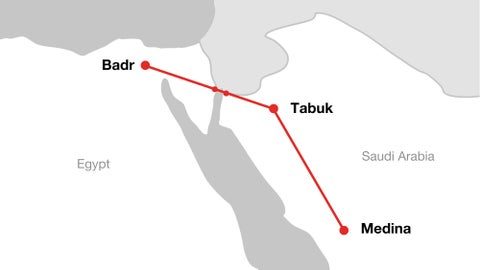
Egypt says its side of the $1.8 billion power line to Saudi Arabia is finished, leaving only minor tests on the Saudi end before full operation. The 1,350-kilometer link crosses the Gulf of Aqaba and can carry up to 3,000 megawatts between the two grids.

The project, first floated in 2012, is Egypt's largest electricity interconnection. It lets both countries import power during their own peak hours and export during the other's, cutting fuel use. Cairo is counting on it to anchor its bid to become a regional hub for renewable energy exports.

Why it matters

If the 3,000 MW link hits full operation, Egypt becomes a net electricity exporter with a corridor to sell renewable power into Europe.

Questions about this story

Free account needed to ask — your question is kept and asked for you right after sign-up. Answers are public.

No questions yet — be the first to ask.

Key Indicators

3,000 MW
Maximum exchange capacity
Power that can flow between Egypt and Saudi Arabia at full operation.
$1.8 billion
Project investment
Total cost, shared between the two countries.
1,350 km
Route length
Overhead lines and subsea cables spanning Egypt to Saudi Arabia.
500 kV
Transmission voltage
High-voltage direct current, built for low-loss long-distance transfer.
1,500 MW
Phase 1 capacity
First phase of the link, completed and in trial operation.

Voices

Curated perspectives — historical figures and your fellow readers.

Ever wondered what historical figures would say about today's headlines?

Sign up to generate historical perspectives on this story.

People Involved

Organizations Involved

Timeline

2012 September 2026

5 events Latest: Today
Tap a bar to jump to that date
  1. Egypt completes its side

    Today Announcement

    Egypt's electricity minister announces all Egyptian-side works complete; Saudi tests remain.

  2. Final trials underway

    Testing

    Final voltage and frequency trials begin; both grids prepare for commercial operation.

  3. Phase 2 completed

    Milestone

    Second phase of the interconnection is completed, readying both grids for full exchange.

  4. PM inspects Badr station

    Inspection

    Prime Minister Madbouly visits the Badr converter station and urges completing phase two.

  5. Project first floated

    Proposal

    Egypt and Saudi Arabia begin discussing a cross-border electricity link.

Scenarios

1

Full 3,000 MW commercial operation begins

Likely Resolves by End of 2026

Discussed by: Egyptian and Saudi officials cited by EnterpriseAM; regional energy press

The remaining Saudi-side technical tests conclude in the coming weeks. Both grids begin exchanging up to 3,000 MW, using the difference in peak consumption hours between Egypt and Saudi Arabia to balance loads and cut fuel use.

2

Saudi-side testing delays full capacity into 2027

Possible Resolves by Q1 2027

Discussed by: Saudi Energy Consulting analysts; project observers

The minor works and tests on the Saudi side take longer than Egyptian officials expect, leaving the link at Phase 1's 1,500 MW capacity through the end of 2026. Full 3,000 MW operation slips into early 2027.

3

Egypt converts completion into Europe interconnection talks

Possible Resolves by End of 2027

Discussed by: Egyptian officials cited by Business Tech News; regional energy press

The finished Saudi link strengthens Cairo's case for proposed interconnections with Greece and Italy, including the GREGY line. Studies wrap up and Egypt moves toward formal agreements, positioning itself as a bridge for renewable power into Europe.

Historical Context

3 moments from history that rhyme with this story — and how they unfolded.

2011

Gulf Cooperation Council power grid (2011)

The six Gulf Cooperation Council states built a shared power grid to trade electricity and handle emergencies, bringing the first phase online in 2011 after years of planning.

Then

Gulf states gained the ability to share generation during peak demand and system emergencies.

Now

The grid became a model for regional electricity cooperation, operating continuously and expanding over the following decade.

Why this matters now

It is the closest regional precedent for the Egypt-Saudi link, showing how neighboring states can operate a shared grid.

2012-present

EuroAsia Interconnector (proposed since 2012)

A proposed high-voltage direct current link between Greece, Cyprus, and Israel has faced repeated financing and permitting delays since it was first floated in 2012.

Then

The project remains incomplete more than a decade after its proposal.

Now

It illustrates how long regional HVDC projects can take and how political and financial hurdles compound technical ones.

Why this matters now

Egypt's planned interconnections with Greece and Italy, including the GREGY line, face similar risks.

2016-2021

NordLink (completed 2021)

Germany and Norway completed a high-voltage direct current cable under the North Sea in 2021, linking their power grids and enabling two-way exchange of hydroelectric and wind power.

Then

The link lets Norway export hydropower to Germany and import German wind power when supply is surplus.

Now

It demonstrated how HVDC interconnectors can smooth renewable energy variability across borders.

Why this matters now

The same principle applies to Egypt and Saudi Arabia, which plan to balance each other's grids using their different peak demand times.

Sources

(10)