
Pull to refresh
Logo
Three new lines push Yangtze River Delta high-speed rail past 8,500 km

Three new lines push Yangtze River Delta high-speed rail past 8,500 km

Built World

Anhui's Chaohu–Ma'anshan, Huaibei–Bengbu and Huaibei–Fuyang lines open together, bringing five counties onto the network

Overview

Updated 2 hours ago

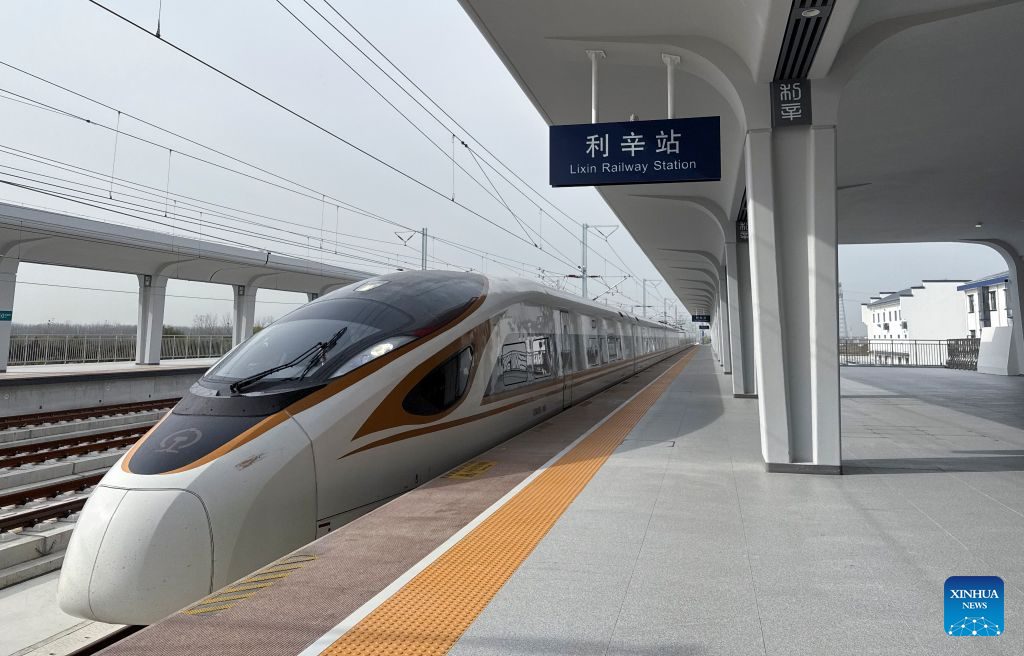
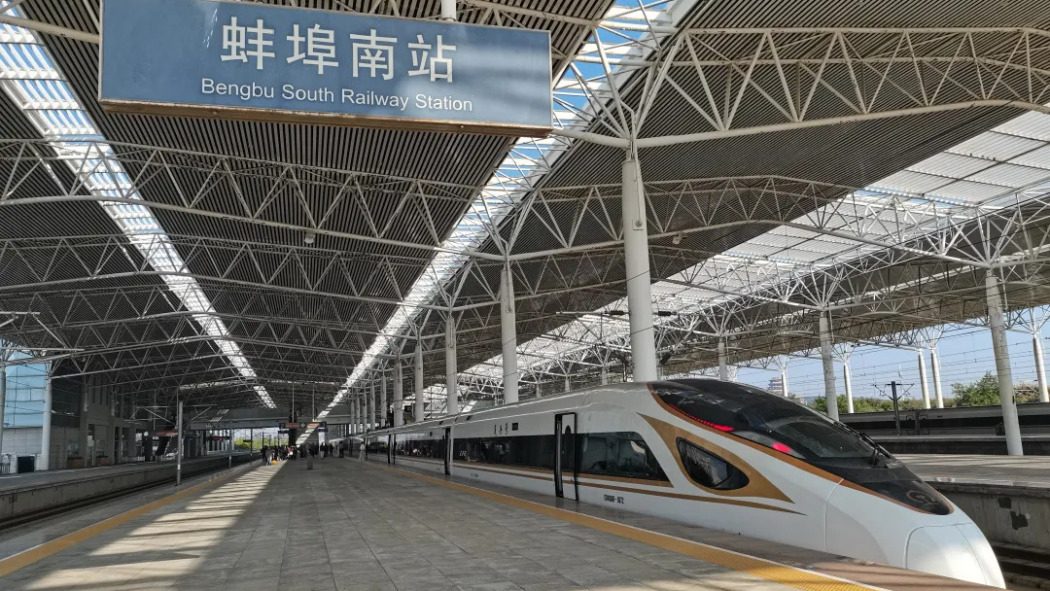
Five counties in Anhui province had no high-speed rail station on the morning of November 27. By that afternoon, after three lines opened at once, He, Suixi, Guzhen, Mengcheng and Lixin each had one, and the Yangtze River Delta's high-speed network passed 8,500 km.

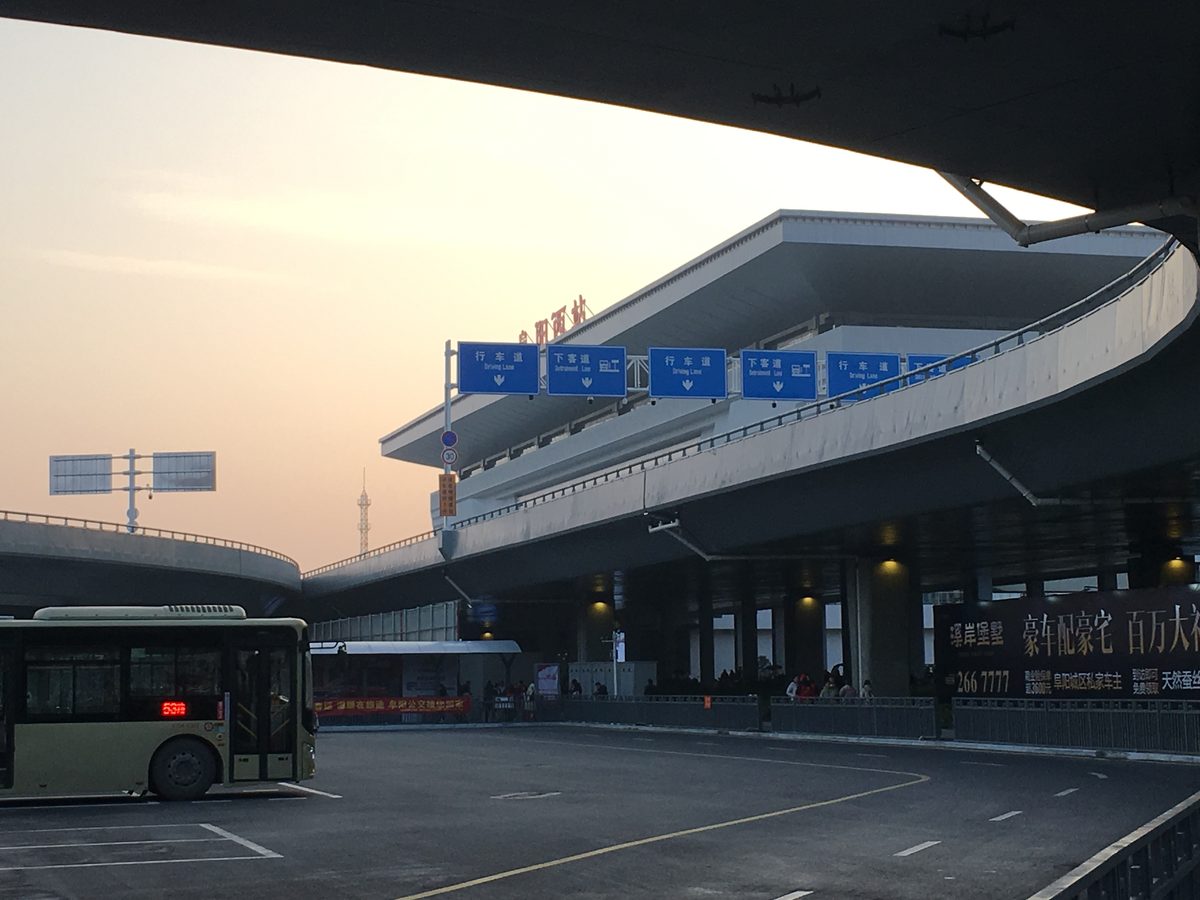
The new track totals 364.5 km, a small addition to a regional railway network of more than 15,800 km. The routing is the point. Trains from Huaibei no longer swing north through Xuzhou to reach Nanjing or Shanghai, and Fuyang West has gone from a T-shaped junction to a four-way one with 10 platforms and 22 tracks.

Why it matters

For people in Mengcheng or Lixin, Hefei used to be a bus ride. It is now about 75 minutes by train.

Questions about this story

Free account needed to ask — your question is kept and asked for you right after sign-up. Answers are public.

No questions yet — be the first to ask.

Key Indicators

8,500 km
Yangtze River Delta high-speed rail mileage
Regional high-speed mileage passed this mark when the three Anhui lines opened.
364.5 km
New mainline track added
Combined length of the Chaohu–Ma'anshan, Huaibei–Bengbu and Huaibei–Fuyang lines.
350 km/h
Design speed of all three lines
Test trains reached 385 km/h during commissioning.
5
Counties gaining high-speed rail
He, Suixi, Guzhen, Mengcheng and Lixin had no high-speed station before opening day.
72
Daily trains at opening
Eight on Chaohu–Ma'anshan, 46 on Huaibei–Bengbu and 18 on Huaibei–Fuyang, all cross-line services.
15,800 km
Total Yangtze River Delta railway mileage
High-speed lines are now more than half of the region's rail network.

Voices

Curated perspectives — historical figures and your fellow readers.

Sign up to generate historical perspectives on this story.

People Involved

Organizations Involved

Timeline

May 2021 November 2026

9 events Latest: Today
Tap a bar to jump to that date
  1. Three lines open; Delta high-speed network passes 8,500 km

    Today Opening

    Five counties get high-speed rail, and the region's railway mileage passes 15,800 km.

  2. Zhengzhou–Xuzhou cleared for 350 km/h

    Today Testing

    A 357 km section of the Xuzhou–Lanzhou line completes speed tests, with an inspection train hitting 385 km/h.

  3. Tickets go on sale

    Commercial

    Sales open the evening before opening for services on all three lines.

  4. All three lines begin month-long trial running

    Testing

    Trains rehearse full timetables, fault handling and evacuation drills. Peak test speed reaches 385 km/h.

  5. Huaibei–Bengbu enters joint commissioning

    Testing

    Test trains run progressively faster; the fleet covers 50,478 km across 1,476 runs.

  6. Track laying finished on Chaohu–Ma'anshan

    Construction

    Static inspection follows in May before electrical and signalling testing.

  7. Huaibei–Fuyang and Chaohu–Ma'anshan north bank start

    Construction

    The 142.5 km east-west line and the northern half of the Ma'anshan route begin.

  8. Huaibei–Bengbu line breaks ground

    Construction

    The 161 km north-south line through Suzhou and Bengbu begins four years of work.

  9. Construction starts on Chaohu–Ma'anshan south bank

    Construction

    Work begins on the section closest to Ma'anshan. The northern section follows in October 2022.

Scenarios

1

Q1 2027 timetable adds trains on the three new lines

Likely Resolves by Apr 15, 2027

Discussed by: China Railway Shanghai Group, which said in state media that density and destinations would increase at the next timetable change

Opening-day service is deliberately thin: eight trains a day on Chaohu–Ma'anshan and 18 on Huaibei–Fuyang. The railway operator said the first-quarter 2027 national timetable would raise frequency and add destinations based on demand. If that happens, travel times quoted at opening become the floor rather than the ceiling, and smaller stations such as Zhengpugang and Lixin get service beyond the initial cross-line runs.

2

Zhengzhou–Xuzhou runs scheduled 350 km/h service

Likely Resolves by Q1 2027

Discussed by: China State Railway Group, which said Fuxing trains would run at 350 km/h after acceptance checks

The 357 km section between Zhengzhou and Xuzhou has run at 300 km/h since it opened. Tests completed on November 27, with an inspection train reaching 385 km/h and equipment meeting requirements. The operator has upgraded track, bridges, power supply and signalling, and said some city-to-city journey times would fall once the first-quarter 2027 timetable takes effect. The section connects to the Beijing–Shanghai and Beijing–Guangzhou lines, so the change ripples beyond Henan, Anhui and Jiangsu.

3

Delta high-speed network passes 9,000 km

Uncertain Resolves by End of 2027

Discussed by: No published forecast; this follows the region's recent pace of roughly 300 to 400 km added per opening round

The Delta crossed 8,500 km with this batch of 364.5 km. Reaching 9,000 km needs another 500 km of completed line, which depends on projects still under construction in Anhui, Jiangsu and Zhejiang and on when they clear commissioning. If the region keeps its recent pace, the mark falls in 2027. If projects slip, it does not.

Historical Context

3 moments from history that rhyme with this story — and how they unfolded.

August 2008

Beijing–Tianjin intercity railway (2008)

China opened its first 350 km/h-class line, a 120 km link between Beijing and Tianjin, just before the Beijing Olympics. At the time it was a standalone showcase route rather than part of a network.

Then

Journey times between the two cities fell to about half an hour, and the line became the template for later 350 km/h projects.

Now

China's high-speed network grew from that single corridor to about 50,400 km by the end of 2025.

Why this matters now

The three Anhui lines are ordinary network additions now, not showcase projects. They fill gaps between existing trunk routes rather than creating a new one.

2011–2017

China's 2011 speed cut and the 2017 restoration

After the Wenzhou high-speed collision in July 2011, the railway ministry cut maximum operating speeds on its newest lines from 350 to 300 km/h. The Beijing–Shanghai line was among those slowed.

Then

Headline speeds fell and new line approvals paused while safety reviews ran.

Now

In September 2017 the operator restored 350 km/h service on the Beijing–Shanghai line using Fuxing trains, and 350 km/h has since spread to other main lines.

Why this matters now

The Zhengzhou–Xuzhou upgrade from 300 to 350 km/h, completed on the same day as the Anhui openings, is the latest step in that restoration on trunk routes.

October 1964

Tokaido Shinkansen (1964)

Japan opened the first purpose-built high-speed railway, 515 km between Tokyo and Osaka, timed to the Tokyo Olympics. Trains ran at 210 km/h, roughly double the speed of conventional expresses.

Then

The journey dropped from most of a day to about four hours, and ridership far exceeded forecasts.

Now

The corridor concentrated business activity along its stations and became the model that China, France and others adapted.

Why this matters now

It is the clearest evidence that new rail links shift where people work and where companies locate, not just how fast they travel.

Sources

(8)