

Pull to refresh
Logo
Army flies first drone powered by a 3D-printed heavy-fuel rotary engine

Army flies first drone powered by a 3D-printed heavy-fuel rotary engine

New Capabilities

A jet-fuel rotary engine spins a generator instead of the propellers on a Group 3 drone, part of a push to give battlefield drones the same fuel as trucks and helicopters

Overview

Updated 36 minutes ago

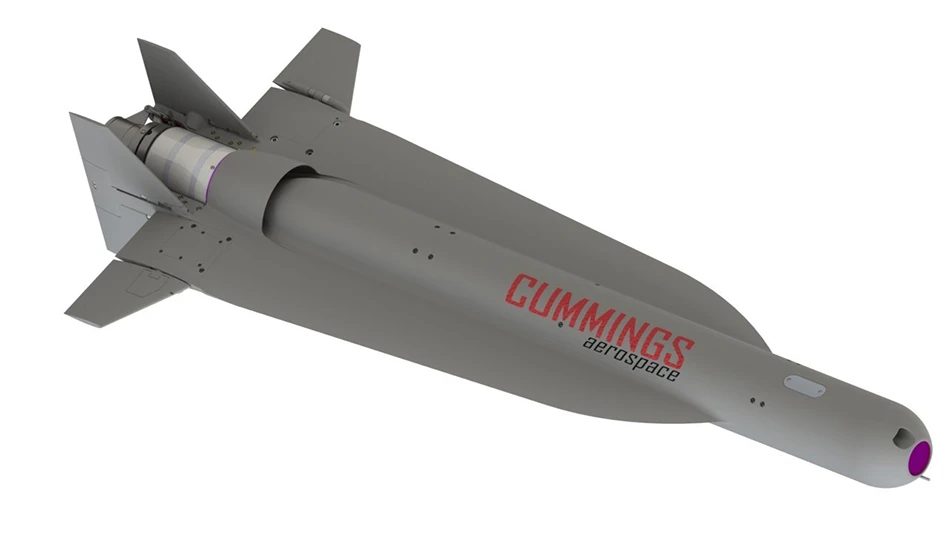
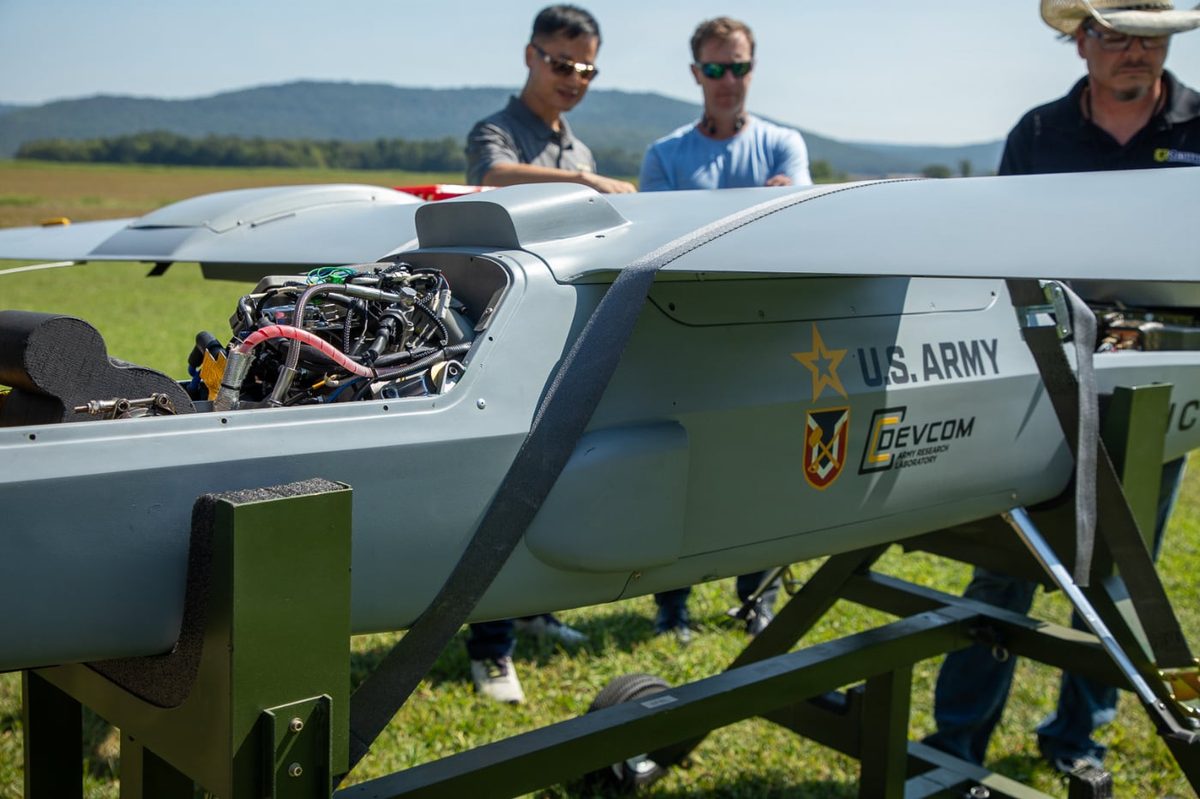
The Army flew a mid-sized drone whose engine was printed in metal and burns jet fuel. The engine never turns a propeller. It spins a generator, and electric motors drive the aircraft.

That matters because most small and mid-sized drones run on gasoline. Units in the field carry a separate fuel supply just for them. A drone burning the same kerosene-based fuel as trucks and helicopters removes that line item from the logistics chain.

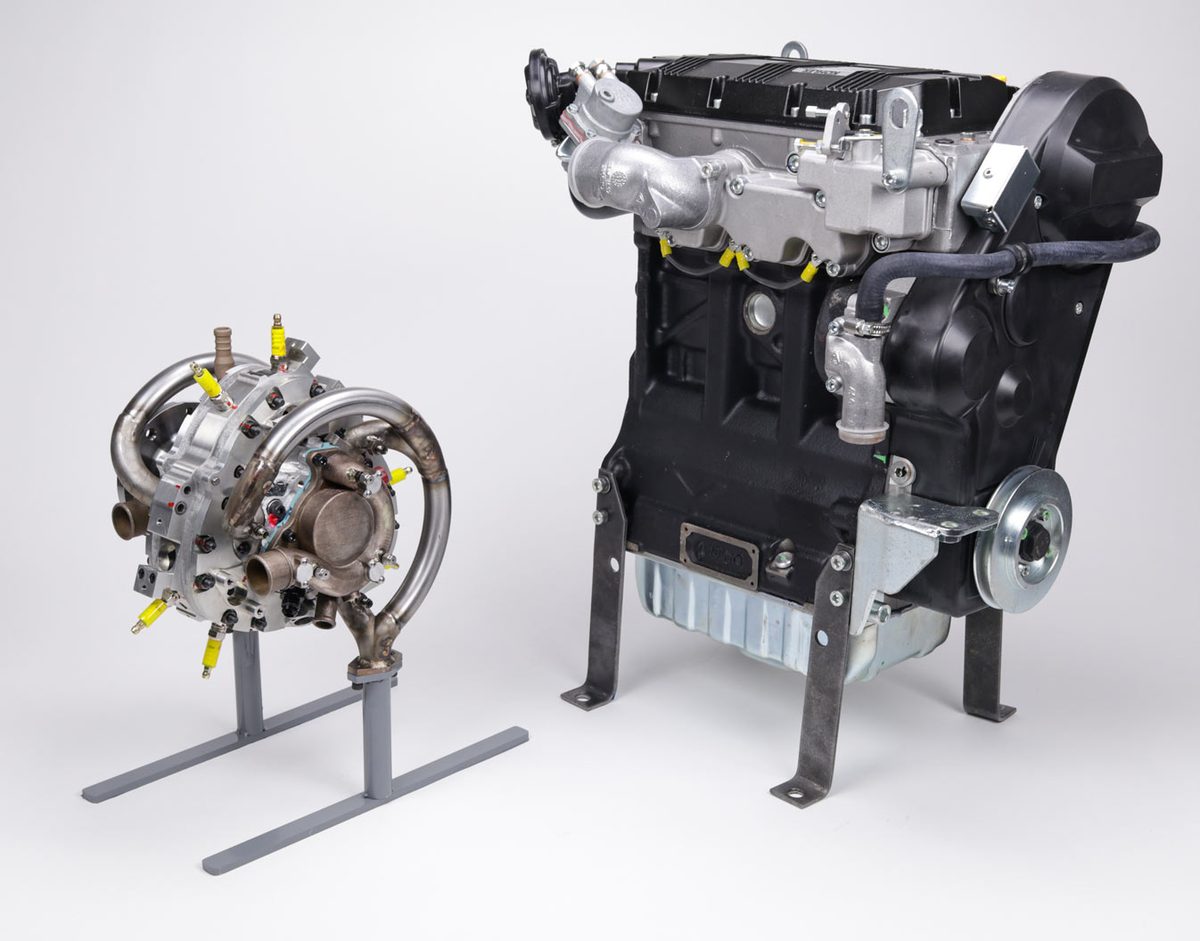
Heavy fuel is hard to burn in a small engine because it does not vaporize like gasoline. Army researchers modeled the fuel flow, redesigned the rotary from scratch, and used 3D metal printing to iterate between experiments. The result is an air-cooled engine paired with a 400-volt motor-generator.

Why it matters

One fuel for trucks, helicopters and drones would remove a separate gasoline supply chain from the battlefield, and let mid-sized drones fly farther.

Questions about this story

Free account needed to ask — your question is kept and asked for you right after sign-up. Answers are public.

No questions yet — be the first to ask.

Key Indicators

600 kg
Upper weight of a Group 3 drone
The class VICTOR belongs to, covering drones up to about 1,320 pounds flying below 18,000 feet.
400 V
Motor-generator voltage
The engine charges a 400-volt system rather than driving the rotors directly.
30+
Universities in the research program
The Army counts more than 30 universities, 13 federal laboratories and 20 companies as participants.
20+
Industry partners
Griffon Aerospace built the VICTOR airframe around the propulsion system.
$9M
Army funding for LiquidPiston rotary work
A 2022 DEVCOM ARL award to develop a separate 25-horsepower heavy-fuel rotary engine.

Voices

Curated perspectives — historical figures and your fellow readers.

Sign up to generate historical perspectives on this story.

People Involved

Organizations Involved

Timeline

2022 November 2026

3 events Latest: Today
  1. Army announces first flight of 3D-printed heavy-fuel hybrid

    Today Milestone

    ARL says VICTOR flew with a 3D-printed rotary charging a 400-volt generator. The flight date was not disclosed.

  2. Army funds a separate heavy-fuel rotary

    Funding

    DEVCOM ARL awards about $9 million to LiquidPiston to build a 25-horsepower heavy-fuel rotary engine.

  3. Hybrid-electric VTOL propulsion contract

    Funding

    LiquidPiston wins an Army SBIR Phase II worth roughly $1.7 million for hybrid-electric vertical takeoff propulsion.

Scenarios

1

Army turns VICTOR into a program of record

Possible Resolves by Q3 2028

Discussed by: Army Research Laboratory and Griffon Aerospace statements; defense trade press

The Army says VICTOR and the PULSAR swarm concept will be made available to military partners for experimentation. A funded program of record is the step between a lab demonstrator and fielded equipment, and it requires a budget line and a production contract rather than a single successful flight.

2

PULSAR swarm experiment puts multiple VICTOR aircraft in the air

Possible Resolves by End of 2027

Discussed by: Army Research Laboratory's PULSAR concept description

The Army describes PULSAR as a swarm of VICTOR drones for logistics, strike and reconnaissance. A public demonstration with more than one aircraft flying a coordinated mission would show the concept moved from slide to hardware. VICTOR was designed for vertical takeoff in contested environments, which is the operating profile a swarm test would exercise.

3

Propulsion technology stalls at the demonstration stage

Possible Resolves by Q3 2028

Discussed by: Griffon Aerospace's stated plan to keep refining VICTOR for other applications

Griffon says industry partners will continue refining VICTOR for other uses. The precedent is Griffon's Valiant, a heavy-fuel hybrid that reached the final two of the Army's Future Tactical Uncrewed Aircraft System competition before the Army cancelled that program. A working aircraft without a buyer stays a demonstrator.

Historical Context

3 moments from history that rhyme with this story — and how they unfolded.

Undated in source; Air Force Research Laboratory small business program

Heavy-fuel rotary flight test on the RQ-23A Tigershark

Baker Engineering built a 34-horsepower turbocharged, direct-injected heavy-fuel rotary and installed it on an RQ-23A Tigershark, replacing a gasoline engine. It flew the aircraft at Yuma Proving Ground in ground temperatures above 110 degrees Fahrenheit.

Then

Flight time was limited, but the integration and ground testing produced data on packaging and thermal management.

Now

The company reported the first flight of a turbocharged direct-injection heavy-fuel rotary and continued developing the engines.

Why this matters now

It shows the heavy-fuel rotary idea predates VICTOR and that cooling, not just combustion, is the recurring obstacle. The Army's air-cooled design is a direct answer to that problem.

Competition later cancelled by the Army

Griffon Aerospace Valiant in the Future Tactical Uncrewed Aircraft System competition

Griffon's Valiant, a hybrid-electric vertical takeoff drone with a heavy-fuel engine generating power for electric rotors, reached the final two of the Army's competition to replace the RQ-7 Shadow.

Then

The Army cancelled the competition, so no production award followed.

Now

Griffon kept working on hybrid heavy-fuel designs, and its aircraft later carried the Army's in-house engine.

Why this matters now

VICTOR's industry partner has already taken a heavy-fuel hybrid through an Army competition that died. A successful flight does not by itself create a buyer.

2022

LiquidPiston's Army-funded 25-horsepower heavy-fuel rotary (2022)

The Army Research Laboratory awarded about $9 million to design, build and demonstrate a heavy-fueled 25-horsepower rotary engine meant to match diesel piston engines up to ten times larger. A separate small business contract of roughly $1.7 million supported hybrid-electric vertical takeoff work.

Then

The awards funded prototype development outside the Army's own laboratory.

Now

The work became part of a broader Army bet that rotary engines can burn heavy fuel at drone scale.

Why this matters now

The Army was funding outside rotary approaches at the same time it was building VICTOR in-house, which suggests the service is hedging on which engine architecture wins.

Sources

(4)