



Pull to refresh
Logo
Ancient DNA maps two Papuan migrations into Fiji and a stratified early society

Ancient DNA maps two Papuan migrations into Fiji and a stratified early society

New Capabilities

Genomes from 72 individuals across the Southwest Pacific rewrite the region's 3,000-year settlement story

2 days ago: Cell publishes full ancient DNA study

Overview

Updated 1 hour ago

Three thousand years ago, Lapita-associated seafarers from Southeast Asia settled the islands of western Remote Oceania. New ancient DNA from 72 individuals shows who followed them, and when.

Papuan-related movements spread eastward slower than the pioneers, reaching Fiji in at least two distinct pulses and Tonga still later. Around 1,000 years ago, Polynesian voyagers moved back into southern Vanuatu. At Fiji's Sigatoka cemetery, a biological kin group carried more Southeast Asian ancestry and higher social status — possibly preserved through close-kin marriages.

Why it matters

Ancient DNA is rewriting how the Pacific was peopled — slower, multi-wave migrations, and early societies stratified by ancestry.

Questions about this story

Free account needed to ask — your question is kept and asked for you right after sign-up. Answers are public.

No questions yet — be the first to ask.

Key Indicators

72
Ancient genomes analyzed
Individuals from the eastern Solomon Islands, Vanuatu, Fiji, and Tonga spanning three millennia.
2
Distinct Papuan gene flow pulses into Fiji
Dated to roughly 2000–1700 BP and 1300–900 BP, both earlier than previously estimated.
3,000
Years of prehistory covered
From initial Lapita settlement about 3,000 years ago to the last millennium.
5
Generations in the Sigatoka family tree
Reconstructed from the early Fijian cemetery; a higher-status kin group carried elevated Southeast Asian ancestry.

Voices

Curated perspectives — historical figures and your fellow readers.

Ever wondered what historical figures would say about today's headlines?

Sign up to generate historical perspectives on this story.

People Involved

Organizations Involved

Timeline

October 2016 c. 950–

9 events Latest: 2 days ago
Tap a bar to jump to that date
  1. Polynesian backflow shapes southern Vanuatu

    Upcoming Prehistory

    Polynesian-related ancestry arrives, giving rise to Polynesian Outlier communities.

  2. Second Papuan pulse enters western Fiji

    Upcoming Prehistory

    A second distinct Papuan-related gene flow event reaches the islands.

  3. First Papuan gene flow reaches western Fiji

    Upcoming Prehistory

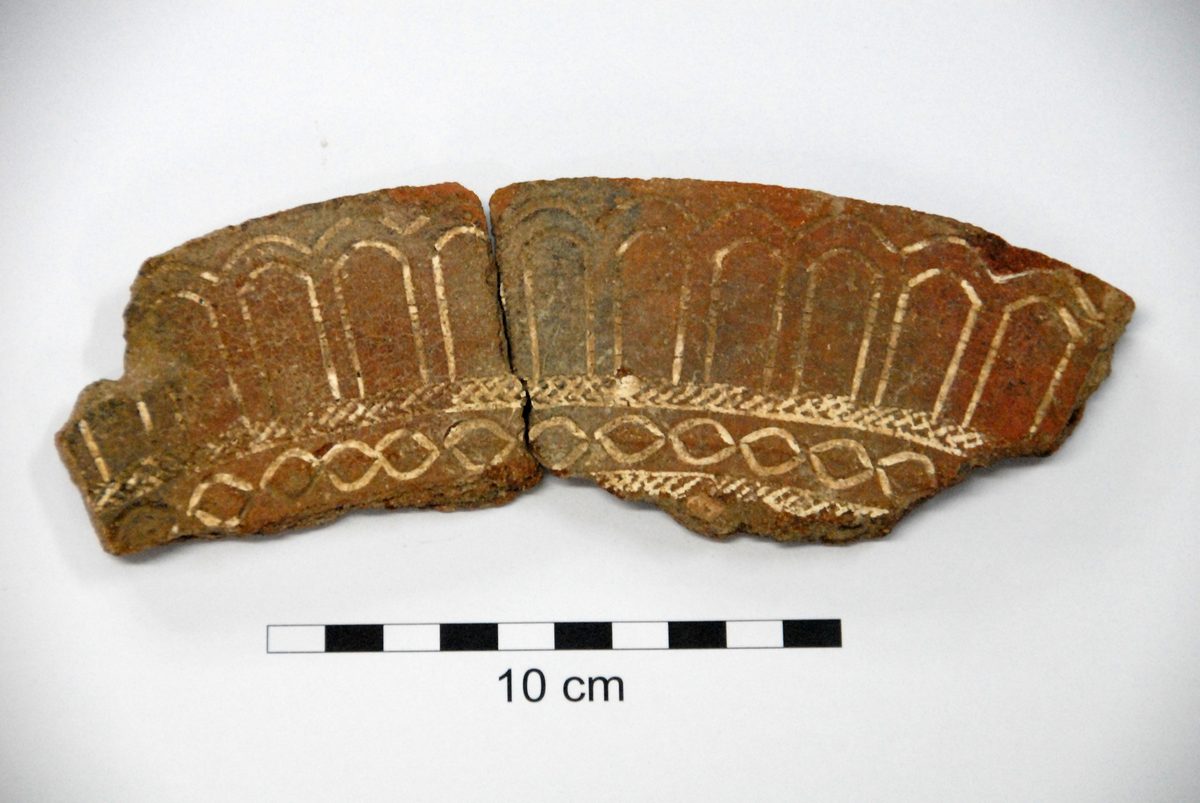
    Admixture coincides with a shift in vessel forms at multiple Fijian sites.

  4. Papuan-related ancestry appears in central Vanuatu

    Upcoming Prehistory

    Admixture begins a slower eastward expansion of Papuan-related populations.

  5. Lapita-associated people settle Vanuatu

    Upcoming Prehistory

    Southeast Asian-related seafarers reach western Remote Oceania in the first wave of settlement.

  6. Cell publishes full ancient DNA study

    Latest Publication

    Peer-reviewed paper reports 72 ancient genomes, two Papuan pulses into Fiji, and social stratification at Sigatoka.

  7. University of Tübingen announces findings

    Announcement

    Team previews results showing slower Papuan expansion and two pulses into Fiji.

  8. Contemporary Vanuatu genomes mapped

    Research

    Study of 1,433 living ni-Vanuatu shows uneven East Asian-related ancestry across islands, suggesting uneven Papuan turnover.

  9. Early Remote Oceanian genomes published

    Research

    Nature study finds early Vanuatu and Tonga settlers had little Papuan ancestry, opening the question of when it arrived.

Scenarios

1

More Fijian genomes confirm the two-pulse Papuan arrival

Likely Resolves by End of 2028

Discussed by: The study authors at the University of Tübingen

If researchers sequence additional ancient individuals from Fiji and nearby islands, the two distinct Papuan admixture pulses (about 2000–1700 BP and 1300–900 BP) would either gain tighter dates or be revised. The current study drew on a limited sample, so independent datasets will test whether the two-wave pattern holds across the archipelago.

2

Fieldwork at Sigatoka expands the kinship and stratification record

Possible Resolves by End of 2028

Discussed by: Co-authors Patrick Nunn, Martin Gibbs, and Fiji Museum archaeologists

The eroding Sigatoka dune cemetery has been excavated in parts over decades. New excavation could test whether the wealth-by-ancestry pattern held across the whole site or was limited to one family plot. The team's five-generation pedigree, with multiple-partner unions and close-kin pairings, is a testable hypothesis for further fieldwork.

3

A reanalysis challenges the timing of Papuan dispersal into Fiji

Possible Resolves by End of 2028

Discussed by: Population geneticists using alternative admixture-dating methods

Admixture dating is method-sensitive; earlier studies using different tools produced older estimates. A reanalysis with alternative software could argue for a single, earlier Papuan arrival into Fiji rather than two later pulses, mirroring earlier debates over the Skoglund-era dating that this study revised.

Historical Context

2 moments from history that rhyme with this story — and how they unfolded.

October 2016

Skoglund et al., 'Ancient Genomics and the Peopling of the Southwest Pacific' (2016)

Four ancient genomes from Vanuatu (about 3100–2700 BP) and Tonga (about 2700–2300 BP) showed the first Remote Oceanian settlers had little to no Papuan ancestry. That contradicted the prevailing view that Lapita pioneers were already admixed with New Guinea populations before setting out.

Then

Overturned the model of a pre-mixed Lapita people and set off a search for when Papuan ancestry actually arrived.

Now

Established that Remote Oceania's population history involved large later migrations, not just a single founding event.

Why this matters now

The Cell study directly answers the question Skoglund's work left open: when and how Papuan ancestry spread across the region.

July 2018

Posth et al., 'Language continuity despite population replacement in Remote Oceania' (2018)

Sequencing additional ancient Vanuatu individuals, the team showed Papuan-related ancestry replaced East Asian-related ancestry across the archipelago around 2,500 years ago, while Austronesian languages persisted.

Then

Confirmed a major demographic turnover in Vanuatu.

Now

Showed population replacement does not necessarily mean language replacement, a lasting lesson for Pacific prehistory.

Why this matters now

The new Cell study refines the timing and geography of that turnover, showing it was drawn out and multi-wave rather than a single event.

Sources

(6)