


Pull to refresh
Logo
Bennu asteroid samples reveal Jupiter's role in early solar system formation

Bennu asteroid samples reveal Jupiter's role in early solar system formation

New Capabilities

Isotope analysis places the asteroid's birth near a water-ice boundary where inner and outer solar system material met

Yesterday: Bennu origin finding reported widely

Overview

Updated Yesterday

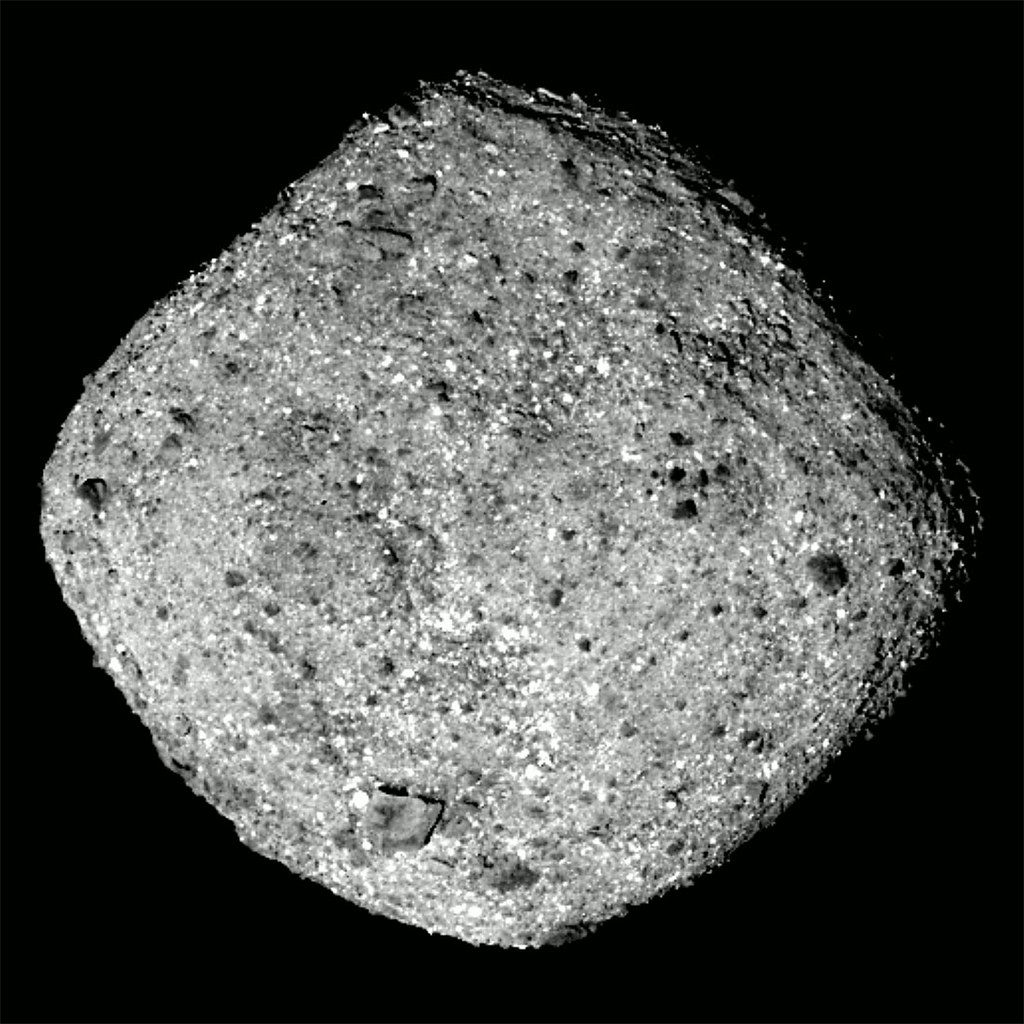
NASA's Origins, Spectral Interpretation, Resource Identification, Security, Regolith Explorer (OSIRIS-REx) mission returned 121 grams of asteroid Bennu to Earth in 2023. New isotopic analysis of that material is rewriting the story of how the solar system formed, and it points a surprising finger at Jupiter.

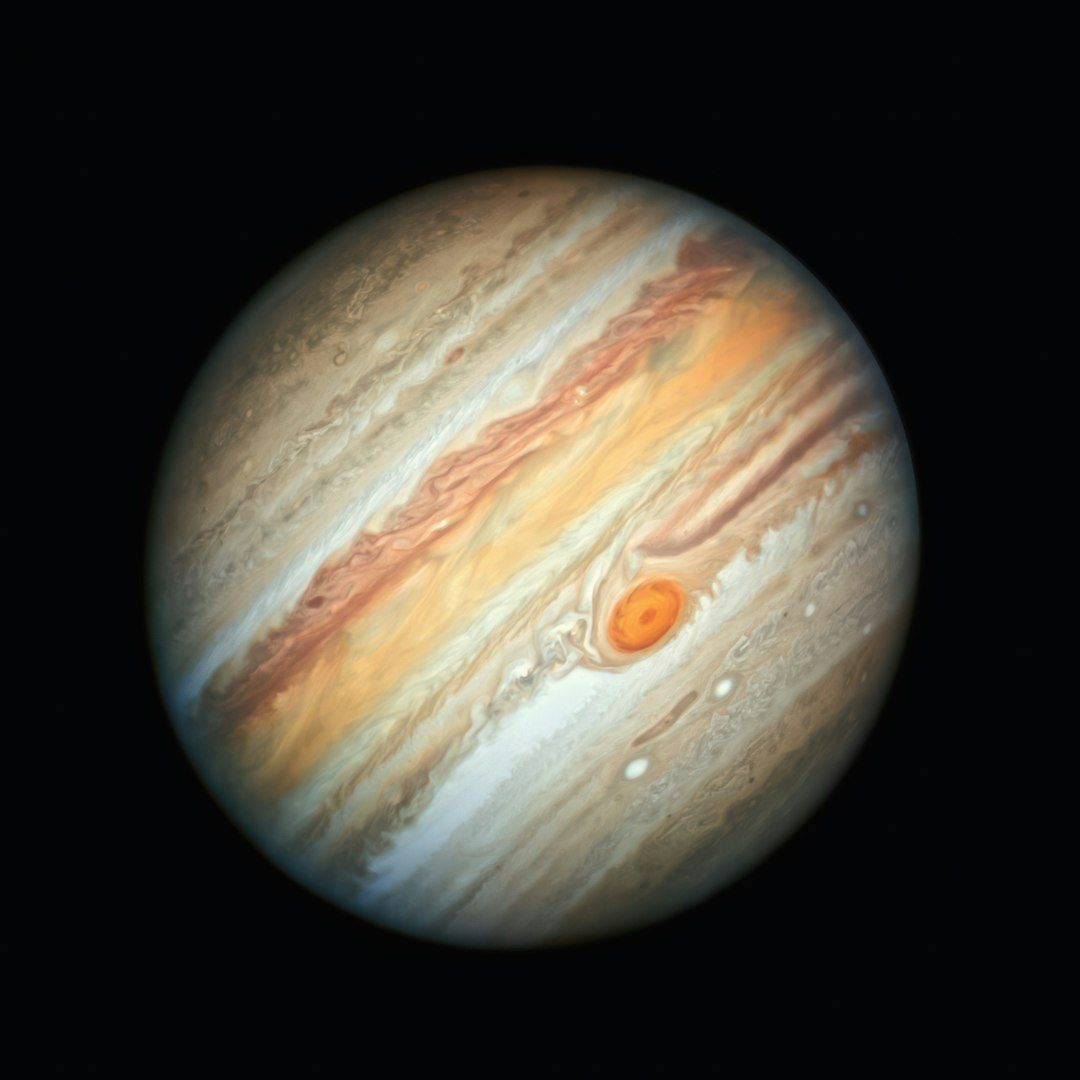
The new model says Bennu formed near a water-ice boundary, where dust from the inner and outer solar system mixed evenly. Jupiter grew fast, within a million years of the Sun's birth, and its gravity blocked coarse debris while letting fine dust flow around it. That, the team argues, is why Bennu, asteroid Ryugu, and a rare meteorite class called CI chondrites all match the Sun's composition so closely.

Why it matters

If this model holds, it explains how Earth got water and organic material — the same mixing that built Bennu likely delivered both here.

Questions about this story

Free account needed to ask — your question is kept and asked for you right after sign-up. Answers are public.

No questions yet — be the first to ask.

Key Indicators

121 g
Bennu sample mass delivered to Earth
Largest sample return from a world beyond the Moon, distributed to labs worldwide.
4.5 billion
Age of the Bennu material studied (years)
The samples preserve the state of the solar system's first million years.
3
Bodies linked to a common dust reservoir
Bennu, Ryugu, and CI chondrites share matching isotope signatures.

Voices

Curated perspectives — historical figures and your fellow readers.

Ever wondered what historical figures would say about today's headlines?

Sign up to generate historical perspectives on this story.

People Involved

Organizations Involved

Timeline

2018 October 2026

6 events Latest: Yesterday
Tap a bar to jump to that date
  1. Bennu origin finding reported widely

    Latest Report

    ScienceDaily reports the isotopic study as a rewrite of solar system history.

  2. ETH Zurich ties Bennu to Jupiter

    Research

    Isotopic analysis places Bennu's formation near the water-ice line, with Jupiter filtering dust.

  3. Brine pockets found in Bennu's parent body

    Discovery

    Analysis reveals salt-saturated water evaporated, leaving minerals like Earth's dry lakebeds.

  4. NASA reports carbon, water in samples

    Discovery

    Initial examination finds high-carbon content and water in the returned material.

  5. Bennu samples reach Earth

    Milestone

    Capsule carrying 121 grams of Bennu surface material lands in Utah desert.

  6. OSIRIS-REx reaches Bennu

    Mission

    Spacecraft begins a three-year survey, collecting surface material for return.

Scenarios

1

Independent labs confirm Bennu's water-ice origin

Likely Resolves by End of 2028

Discussed by: The ETH Zurich team and co-authors at partner institutions

NASA has distributed Bennu material to dozens of laboratories worldwide. If other research groups measuring different isotope systems or mineral fractions reach the same conclusion — formation near the water-ice line, with Jupiter filtering dust — the model becomes the consensus view of where primitive asteroids formed.

2

Competing origin model published

Possible Resolves by End of 2028

Discussed by: Planetary scientists studying protoplanetary disk dynamics

Some researchers may argue the isotope signatures can be explained without Jupiter's filtering role — for example, by radial drift or by mixing that happened before Jupiter grew large. A published challenge would reopen where Bennu formed, and the debate would play out in follow-up analyses.

3

New sample-return mission targets primitive asteroids

Possible Resolves by End of 2030

Discussed by: NASA and JAXA mission planners; decadal survey recommendations

The Bennu and Ryugu results strengthen the case for sampling an even more primitive object, such as a CI-chondrite parent body in the main belt. A formal mission announcement, possibly in NASA's planetary science decadal survey or a JAXA roadmap, would extend the sample-return era and test the water-ice line model directly.

Historical Context

3 moments from history that rhyme with this story — and how they unfolded.

December 2020

Hayabusa2 returns Ryugu samples (2020)

JAXA's Hayabusa2 spacecraft parachuted a capsule carrying samples from the carbonaceous asteroid Ryugu to the Australian outback in December 2020. Early analysis showed the material had a near-solar composition matching CI chondrite meteorites.

Then

Ryugu became a benchmark for primitive solar system material, studied by labs worldwide.

Now

The new Bennu analysis treats Bennu, Ryugu, and CI meteorites as products of one common dust reservoir, folding two sample returns into a single origin story.

Why this matters now

Ryugu samples gave scientists the first direct comparison point; the ETH model now explains why Bennu and Ryugu look so similar — both formed near the water-ice line.

1969–1972

Apollo lunar sample returns (1969–1972)

Six Apollo missions returned about 382 kilograms of rock from the Moon, the first time material from another world was brought to Earth for laboratory study. The samples let scientists date the Moon's crust and test formation theories directly.

Then

Analysis of lunar samples overturned prior models of the Moon's origin and revealed it formed close to Earth, likely from a giant impact.

Now

Apollo set the template for sample-return science — direct laboratory analysis can rewrite planetary formation theories. Bennu is doing the same for the solar system's first million years.

Why this matters now

Bennu samples are the largest returned from a world beyond the Moon since Apollo, and they are prompting the same kind of theoretical revision.

January 2006

Stardust returns comet Wild-2 particles (2006)

NASA's Stardust spacecraft returned the first samples from a comet — particles from comet Wild-2 — to Earth in January 2006. The particles contained minerals formed at high temperatures near the young Sun, showing material traveled far across the early solar system.

Then

Stardust proved the early solar system's disk actively mixed material across vast distances.

Now

Bennu's samples build on this: they preserve the same kind of mixing signal in far greater quantity.

Why this matters now

The Stardust result first showed inner-solar-system material reached the outer disk; the Bennu analysis shows how that mixing happened, with Jupiter as the gatekeeper.

Sources

(9)