


Pull to refresh
Logo
FDA grants AbbVie's Temab-A two breakthrough therapy designations for colorectal and lung cancer

FDA grants AbbVie's Temab-A two breakthrough therapy designations for colorectal and lung cancer

New Capabilities

The c-Met-targeting antibody-drug conjugate gets expedited review in two hard-to-treat cancers

Today: FDA grants two breakthrough therapy designations

Overview

Updated 1 hour ago

The FDA granted AbbVie's experimental cancer drug Temab-A two breakthrough therapy designations on October 7. One covers colorectal cancer, the other non-small cell lung cancer. The designations speed up development and review for drugs that show early evidence of substantial improvement over existing therapies.

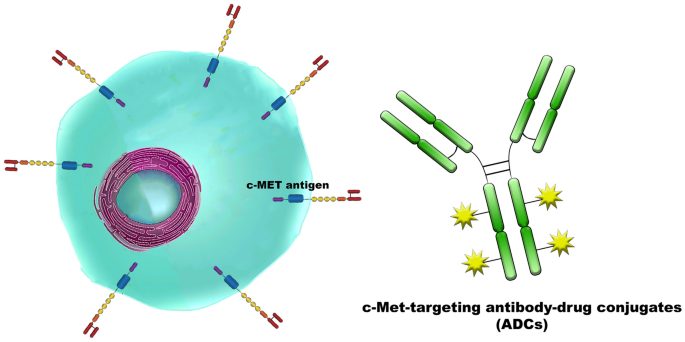
Temab-A is an antibody-drug conjugate that delivers a chemotherapy payload to cells carrying the c-Met protein, which is overexpressed in many solid tumors. The designations rest on phase 1 data showing the drug shrank tumors in patients who had already failed multiple lines of treatment. AbbVie is now running a phase 3 trial in colorectal cancer.

Why it matters

If Temab-A clears phase 3, patients with refractory colorectal and lung cancer gain a new option where standard treatments fail.

Questions about this story

Free account needed to ask — your question is kept and asked for you right after sign-up. Answers are public.

No questions yet — be the first to ask.

Key Indicators

2
Breakthrough therapy designations granted
One for refractory metastatic colorectal cancer, one for previously treated c-Met-expressing non-small cell lung cancer.
47.9%
Objective response rate in NSCLC
Across 48 patients with EGFR wild-type non-squamous NSCLC in phase 1 study M21-404.
6.8 months
Median progression-free survival in CRC combination cohort
Temab-A at 2.4 mg/kg plus bevacizumab versus 4.2 months for standard-of-care TAS-102 plus bevacizumab.
520
Patients enrolled in phase 1 study
Study M21-404 is active but not recruiting, with primary completion estimated for November 2027.

Voices

Curated perspectives — historical figures and your fellow readers.

Ever wondered what historical figures would say about today's headlines?

Sign up to generate historical perspectives on this story.

People Involved

Organizations Involved

Timeline

October 2021 October 2026

4 events Latest: Today
Tap a bar to jump to that date
  1. FDA grants two breakthrough therapy designations

    Today Regulatory

    FDA grants Temab-A breakthrough therapy designations in colorectal cancer and non-small cell lung cancer, based on phase 1 data.

  2. Phase 1 data presented at ESMO 2025

    Conference

    AbbVie presents data showing Temab-A plus bevacizumab improves progression-free survival in refractory colorectal cancer.

  3. Data cutoff for colorectal cancer cohort

    Clinical Data

    Data cutoff for the Temab-A plus bevacizumab combination cohort in refractory metastatic colorectal cancer.

  4. Phase 1 study M21-404 begins

    Clinical Trial

    AbbVie launches a first-in-human study of Temab-A, alone and with bevacizumab, in adults with advanced solid tumors.

Scenarios

1

Temab-A wins FDA approval in colorectal cancer

Possible Resolves by End of 2029

Discussed by: AbbVie and oncology analysts tracking the phase 3 AndroMETa-CRC trial

The phase 3 AndroMETa-CRC trial compares Temab-A plus bevacizumab against standard-of-care TAS-102 plus bevacizumab in refractory metastatic colorectal cancer. Phase 1 data showed a median progression-free survival of 6.8 months versus 4.2 months for standard care. If the larger trial confirms an overall survival benefit, AbbVie would file for approval, and the breakthrough designation would speed review.

2

Temab-A wins FDA approval in non-small cell lung cancer

Possible Resolves by End of 2029

Discussed by: AbbVie; the NSCLC monotherapy designation signals FDA interest in the c-Met target

The NSCLC designation covers Temab-A as monotherapy for EGFR wild-type, c-Met-expressing non-squamous disease after platinum-based chemotherapy and anti-PD-(L)1 therapy. Phase 1 data showed a 47.9% response rate, with higher responses in patients with higher c-Met expression. AbbVie would need a confirmatory phase 3 trial before filing.

3

Phase 3 trial disappoints, Temab-A development stalls

Unlikely Resolves by End of 2029

Discussed by: Oncology analysts noting the phase 1 data came from a small, biomarker-unselected population

The colorectal cancer phase 1 data came from 30 patients. If the larger phase 3 trial fails to confirm the benefit, or if safety issues emerge, AbbVie would need to narrow the indication or abandon the program. The phase 1 study showed dose-dependent hematologic toxicity and a 5% rate of interstitial lung disease.

Historical Context

2 moments from history that rhyme with this story — and how they unfolded.

2017-2020

Enhertu (trastuzumab deruxtecan) — ADC breakthrough designations (2017-2020)

Daiichi Sankyo and AstraZeneca developed Enhertu, an antibody-drug conjugate targeting HER2. It received multiple breakthrough therapy designations and showed responses in breast, gastric, and lung cancers where earlier HER2-targeted therapies had limited effect.

Then

The FDA approved Enhertu in 2019 for HER2-positive breast cancer, and it expanded to additional indications over the following years.

Now

Enhertu became one of the best-selling cancer drugs, validating the ADC class and the strategy of targeting proteins that drive tumor growth.

Why this matters now

Like Enhertu, Temab-A is an ADC that has received multiple breakthrough designations across tumor types, suggesting c-Met could follow a similar path.

August 2011

Adcetris (brentuximab vedotin) — first ADC approval (2011)

The FDA approved Adcetris in 2011, the first antibody-drug conjugate for Hodgkin lymphoma. It delivered a chemotherapy payload directly to CD30-positive cancer cells, sparing healthy tissue.

Then

Adcetris established the ADC class and showed that targeted chemotherapy delivery could work in the clinic.

Now

The ADC class has grown into a multi-billion-dollar market with dozens of approved drugs across cancer types.

Why this matters now

Temab-A builds on the ADC mechanism Adcetris pioneered, applying it to the c-Met target in solid tumors.

Sources

(6)