Pull to refresh
Logo
Daily Brief
Following
Why Sign Up
Healthcare workers draw the line on AI replacing clinicians

Healthcare workers draw the line on AI replacing clinicians

Rule Changes
By Newzino Staff |

Kaiser Permanente mental health strike marks largest healthcare labor action targeting artificial intelligence

Yesterday: Strike ends; negotiations expected to resume

Overview

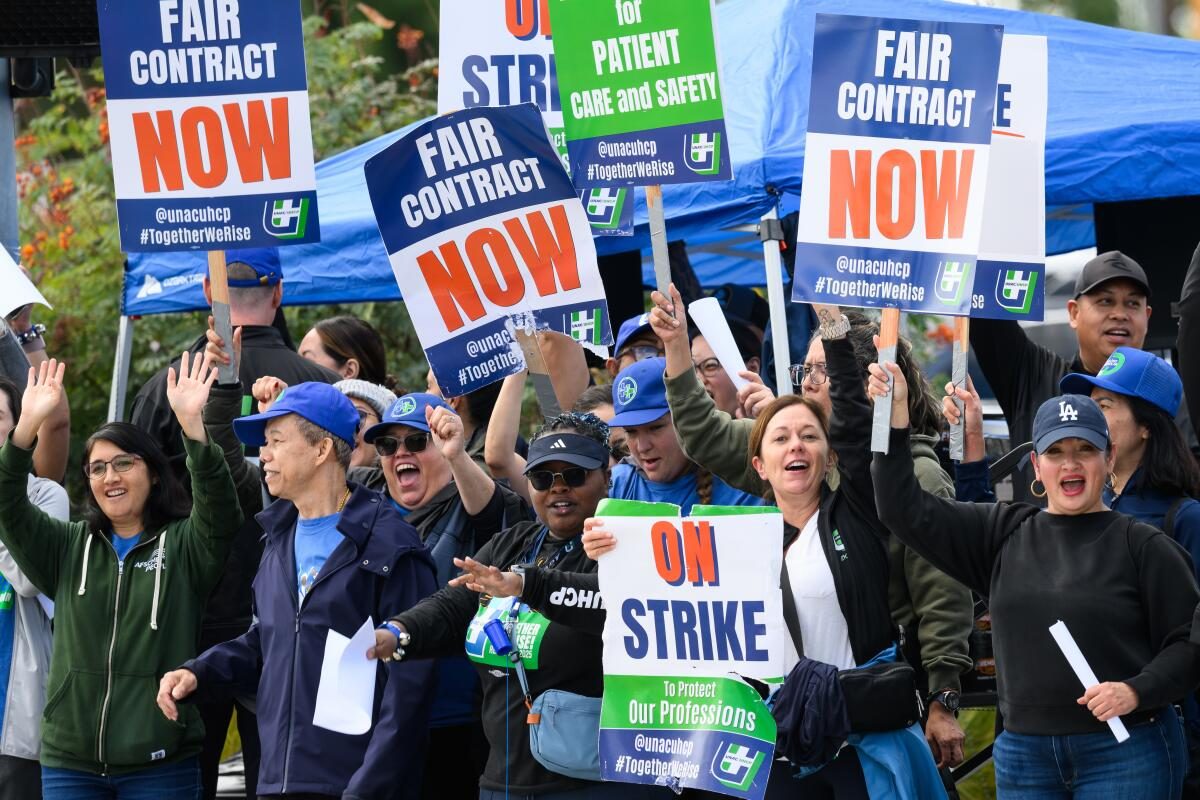
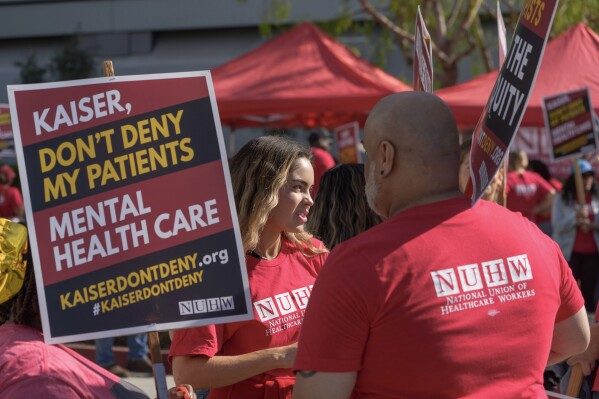
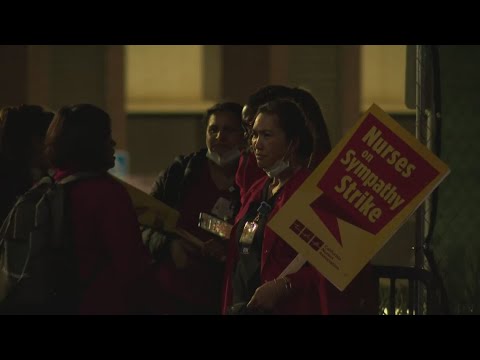
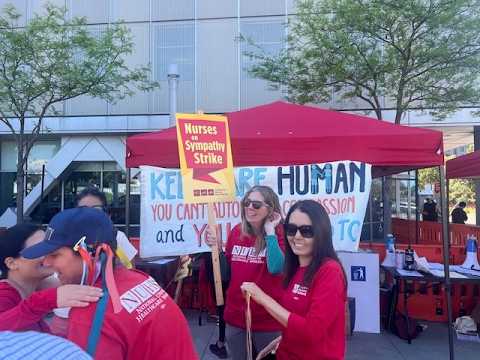
For years, patients calling Kaiser Permanente for mental health care spoke to a licensed therapist who spent 10 to 15 minutes assessing their needs. Kaiser quietly replaced many of those clinicians with unlicensed operators and an AI-driven questionnaire — and when the company refused to guarantee in writing that artificial intelligence would not replace therapists, 2,400 mental health workers walked off the job on March 18, backed by 23,000 nurses in sympathy.

Why it matters

If AI systems can quietly replace licensed clinicians who screen vulnerable patients, every health plan in the country will face pressure to follow.

Key Indicators

25,400
Workers who struck
2,400 mental health clinicians plus 23,000 nurses in sympathy, across Northern California
4.6M
Patients served
Kaiser Permanente members in Northern California whose mental health access is at stake
Triage staff cut
Kaiser reduced licensed screening clinicians by two-thirds in some areas, filling the gap with AI and unlicensed workers
6 months
Without a contract
Northern California mental health workers have been working without a contract since September 2025

Interactive

Exploring all sides of a story is often best achieved with Play.

Dorothy Parker

Dorothy Parker

(1893-1967) · Jazz Age · wit

Fictional AI pastiche — not real quote.

"How very modern of Kaiser Permanente to discover that the human soul, in its darkest hour, responds equally well to a questionnaire — and how very human of two thousand souls to suggest otherwise."

Ayn Rand

Ayn Rand

(1905-1982) · Cold War · philosophy

Fictional AI pastiche — not real quote.

"The irony is exquisite: collectivist unions, those tireless enemies of the individual mind, now march in defense of the very thing they have spent a century trying to crush — the irreplaceable value of a trained human intelligence in the marketplace. Perhaps when the destroyer is a machine rather than a bureaucrat, even the looters remember why competence matters."

Ever wondered what historical figures would say about today's headlines?

Sign up to generate historical perspectives on this story.

Sign Up

Debate Arena

Two rounds, two personas, one winner. You set the crossfire.

People Involved

Organizations Involved

Timeline

  1. Strike ends; negotiations expected to resume

    Labor Action

    The 24-hour walkout concluded. Workers returned to their posts while contract negotiations remain unresolved. Kaiser and NUHW are expected to return to the bargaining table.

  2. 2,400 therapists and 23,000 nurses strike over AI

    Labor Action

    NUHW mental health professionals walked off the job at 6 a.m. for a 24-hour unfair labor practice strike across Northern California. More than 23,000 CNA/NNU nurses joined in sympathy, making it the largest healthcare labor action to center on AI displacement.

  3. NUHW announces March 18 strike date

    Labor Action

    NUHW announced that 2,400 Northern California Kaiser mental health workers would hold a one-day unfair labor practice strike, citing Kaiser's refusal to include AI protections in the new contract.

  4. California AI healthcare disclosure law takes effect

    Regulation

    California Assembly Bill 489 took effect, prohibiting AI platforms from implying users are receiving care from licensed providers unless licensed oversight is present. Separate laws (AB 3030 and SB 1120) already required disclosure and consent for AI use in patient care.

  5. Northern California mental health contract expires

    Negotiation

    The NUHW contract covering Northern California Kaiser mental health workers expired. Negotiations had begun the previous summer but stalled over AI language and workload protections.

  6. Southern California Kaiser strike ends after 196 days

    Agreement

    A tentative agreement was ratified 1,937 to 31. The four-year contract included a defined benefit pension but did not achieve full pay equity for behavioral health staff.

  7. National Nurses United organizes nationwide anti-AI marches

    Protest

    NNU held marches, protests, and rallies in Washington D.C., El Paso, and across California demanding patient protections against AI deployment in healthcare.

  8. Southern California Kaiser therapists begin open-ended strike

    Labor Action

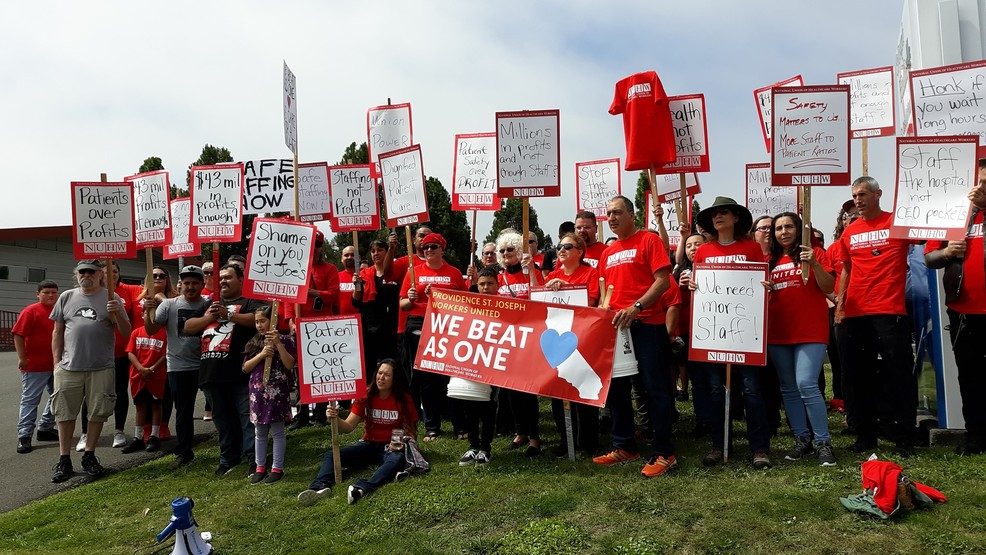
    Approximately 2,400 NUHW mental health workers in Southern California walked off the job. The strike would last 196 days — the longest mental health worker strike in U.S. history.

  9. Nurses protest AI outside Kaiser San Francisco

    Protest

    Hundreds of California Nurses Association members rallied outside Kaiser's San Francisco Medical Center with signs reading 'Trust Nurses, Not AI.'

  10. Kaiser replaces licensed triage clinicians with AI screening

    Policy Change

    Kaiser Permanente overhauled its mental health intake process, replacing 10-to-15-minute phone screenings by licensed clinicians with unlicensed operators and an AI-powered online questionnaire that routes patients to care.

  11. 75,000 Kaiser workers stage largest U.S. healthcare strike

    Labor Action

    A coalition of unions representing 40 percent of Kaiser's workforce walked off the job for three days over pay and staffing shortages. AI was not a central issue.

  12. Northern California Kaiser therapists strike for 10 weeks

    Labor Action

    NUHW mental health workers in Northern California held an open-ended strike lasting 10 weeks. Kaiser met most demands, including seven hours per week of protected non-session time for clinicians.

Scenarios

1

Kaiser agrees to AI guardrails, sets national precedent

Discussed by: NUHW leadership; labor analysts at Brookings and the Economic Policy Institute who see parallels to the WGA's successful AI provisions

Kaiser accepts contract language guaranteeing AI will assist but not replace licensed clinicians, mirroring provisions Southern California therapists already won. If the nation's largest nonprofit health system concedes this point, other hospital systems face pressure to do the same — much as the Writers Guild of America's AI guardrails in 2023 rippled across entertainment. This outcome becomes more likely if the strike generates sustained public attention and Kaiser faces regulatory scrutiny from state legislators already advancing mental health parity bills.

2

Negotiations drag on; workers strike again, longer

Discussed by: NUHW organizers who note the Southern California strike lasted 196 days; Kaiser labor relations analysts

The one-day walkout fails to move Kaiser, and the union escalates to an open-ended strike as it did in Southern California in 2024. Kaiser's Northern California mental health workforce has already demonstrated willingness to hold prolonged strikes — they walked out for 10 weeks in 2022. A quarter of Southern California therapists hired between 2021 and 2024 had already left Kaiser before that region's strike began, suggesting the workforce has little to lose. An extended walkout would disrupt care for 4.6 million Kaiser members.

3

California legislates AI limits in clinical staffing

Discussed by: Assemblymember Mia Bonta (author of AB 489); state legislators advancing AB 1429 and SB 747; National Nurses United policy team

The strike accelerates legislative action already underway in Sacramento. California has passed disclosure and consent laws for AI in healthcare (AB 3030, SB 1120, AB 489) but none specifically prevent AI from replacing clinical staff. Legislators could extend existing frameworks to require licensed human oversight for patient triage decisions, effectively codifying in law what NUHW is seeking in its contract. This path faces a complication: a December 2025 executive order from President Trump proposed a federal AI policy framework that could preempt state regulations.

4

AI triage expands industry-wide despite union resistance

Discussed by: Healthcare industry analysts; Kaiser management, which frames AI as expanding access to care

Kaiser holds firm, and other health systems — watching the cost savings from replacing licensed clinicians with AI questionnaires and unlicensed operators — adopt similar models. The union wins modest concessions on digital scribes and workload but fails to secure binding limits on AI in triage. This scenario becomes more likely if the federal government preempts California's ability to regulate healthcare AI, or if patient outcomes data does not clearly show harm from AI-driven screening.

Historical Context

Hollywood writers' and actors' strikes over AI (2023)

May-November 2023

What Happened

The Writers Guild of America struck for 148 days and the Screen Actors Guild for 118 days — the longest Hollywood walkouts in decades. Both unions made AI a central demand: writers fought to prevent studios from using AI to generate or rewrite scripts, while actors fought to prevent digital replicas of their likenesses from replacing live performances.

Outcome

Short Term

Both unions won explicit AI guardrails. The WGA contract bars AI-generated material from being treated as source material; the SAG-AFTRA deal requires consent and equivalent pay for digital replicas.

Long Term

The Hollywood deals became the template for AI labor negotiations across industries. Brookings called the WGA victory one that 'matters for all workers,' and unions from healthcare to logistics have cited it as proof that collective bargaining can constrain AI deployment.

Why It's Relevant Today

NUHW is seeking the same basic framework — contractual language guaranteeing AI assists but does not replace human workers. The Hollywood precedent shows such language is achievable through strikes, but also that employers resist it fiercely until economic pressure forces a deal.

East Coast dockworkers' automation strike (2024-2025)

October 2024-February 2025

What Happened

More than 47,000 International Longshoremen's Association members struck 36 East and Gulf Coast ports for three days in October 2024, the first such walkout in decades. The core unresolved issue was automation: shipping companies wanted to deploy fully automated cranes and gate systems that would eliminate longshoremen positions.

Outcome

Short Term

A tentative deal reached in January 2025 banned fully automated technology while allowing semi-automation with guaranteed jobs for union workers. The contract included a 62 percent wage increase over six years. Ratified with nearly 99 percent approval.

Long Term

The deal drew a clear line: automation that augments workers is acceptable; automation that replaces them is not. President Trump publicly supported the union's position, making anti-automation populism temporarily bipartisan.

Why It's Relevant Today

The dockworkers achieved what Kaiser's therapists are seeking — a contractual ban on automation that eliminates jobs. But ports have clear chokepoint leverage that hospitals lack, raising the question of whether healthcare workers can exert similar economic pressure.

Kaiser Permanente Southern California mental health strike (2024-2025)

October 2024-May 2025

What Happened

Approximately 2,400 NUHW therapists in Southern California struck for 196 days — the longest mental health worker strike in American history. The walkout exposed severe staffing shortages: one in four therapists hired between 2021 and 2024 had already quit Kaiser before the strike began.

Outcome

Short Term

A four-year contract was ratified 1,937 to 31, including a defined benefit pension. The deal included language stating AI would assist with documentation but not replace therapist functions.

Long Term

The Southern California contract created the specific AI language that Northern California workers are now demanding. Kaiser's refusal to extend the same protections northward triggered the March 2026 strike.

Why It's Relevant Today

The Northern California strike is a direct sequel. Workers are asking for language their Southern California colleagues already won, and Kaiser's refusal to grant it suggests the company views the Southern California provisions as a concession it does not want to repeat.

Sources

(11)