




The 1990s IT productivity boom (1995-2004)
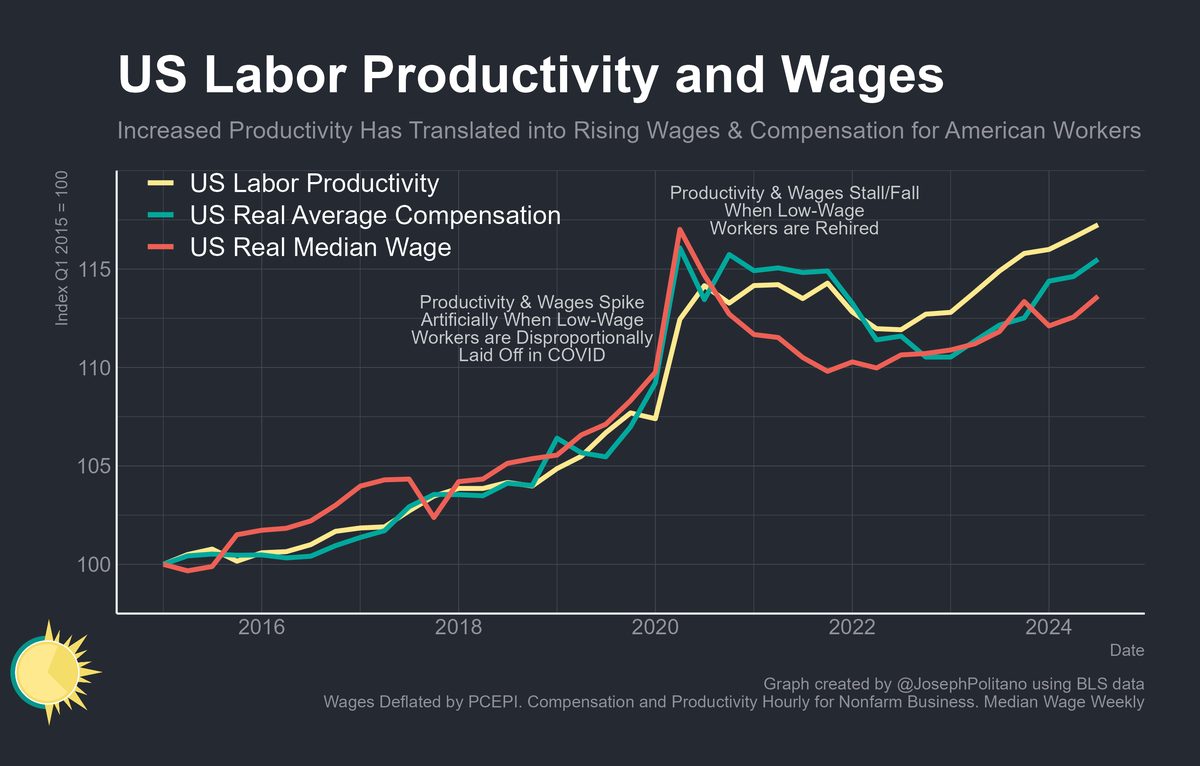
After two decades of stagnant productivity, US output per hour grew at 2.7% a year for nearly a decade. Economists credited personal computers, business software, and the buildout of corporate IT networks. Fed Chair Alan Greenspan famously bet on the boom and kept rates lower than his board wanted.
Real wages rose strongly, unemployment fell below 4%, and the federal budget moved into surplus.
Productivity growth slowed sharply after 2004 and averaged near 1% for the 2010s. The IT boom turned out to be a one-time payoff, not a permanent step up.
The current debate mirrors the 1990s: a new general-purpose technology arrives, productivity climbs, and economists argue over whether the gains will compound or fade. Greenspan's bet that the trend was real, not noise, looks a lot like the choice Powell faces now.