

Pull to refresh
Logo
Daily Brief
Following
Why Ranks Sign Up
Hayabusa2 threads a close pass by asteroid Torifune

Hayabusa2 threads a close pass by asteroid Torifune

New Capabilities

Japan's probe tests pinpoint asteroid navigation on its long road to a tiny space rock in 2031

Today: Hayabusa2 flies past Torifune

Overview

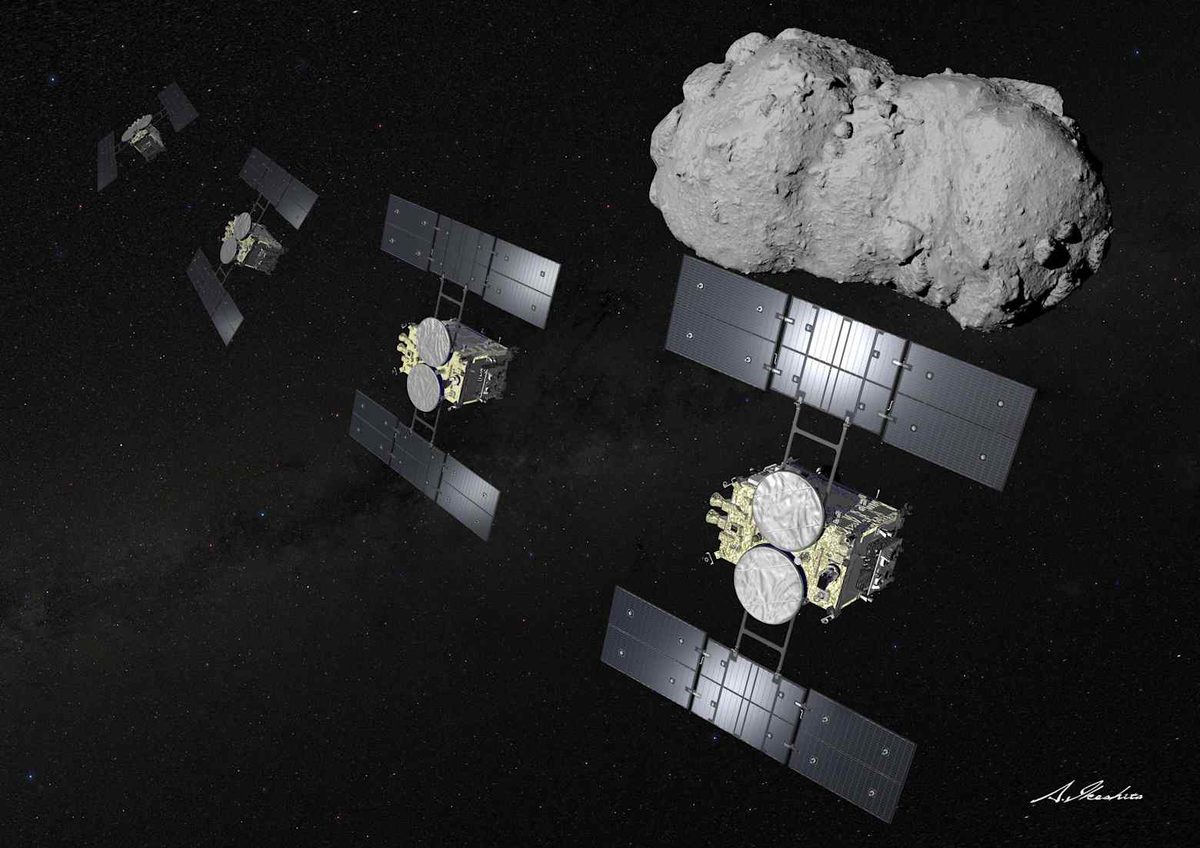
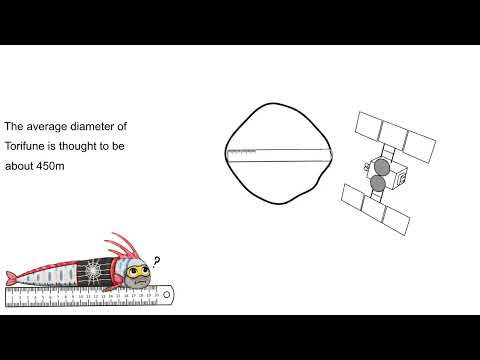
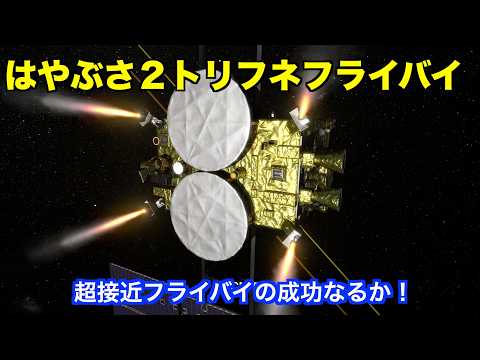
On July 5, 2026, a Japanese spacecraft flew about 1 kilometer past an asteroid the size of a skyscraper, moving at roughly 5 kilometers per second. JAXA confirmed Hayabusa2 pulled off the pass and gathered data on 98943 Torifune, a 450-meter rock no probe had ever visited.

The flyby was a navigation test as much as a science run. Steering that precisely at that speed is the same skill needed to slam a spacecraft into an asteroid on purpose. That is the core move in planetary defense, and Hayabusa2 just rehearsed it.

Why it matters

The same pinpoint steering Hayabusa2 tested is what a future mission would need to nudge a dangerous asteroid off a collision course with Earth.

Questions about this story

No questions yet — be the first to ask.

Key Indicators

1 km
Closest approach
How near Hayabusa2 aimed to pass Torifune's surface.
5 km/s
Flyby speed
Relative velocity during the pass, about 18,000 km/h.
450 m
Asteroid width
Torifune is an elongated, rocky S-type near-Earth object.
5
Onboard instruments
Cameras and sensors used to read Torifune's shape and surface.
2031
Final target
Planned rendezvous with the tiny asteroid 1998 KY26.

Voices

Curated perspectives — historical figures and your fellow readers.

Ever wondered what historical figures would say about today's headlines?

Sign up to generate historical perspectives on this story.

Play

Exploring all sides of a story is often best achieved with Play.

Log in to play. Track your picks, climb the leaderboards. Log in Sign Up
Predict 4 ways this could play out. Contrarian picks score more — points lock when the scenario resolves. Log in to play
Higher or Lower Two numbers from this story. Guess which is bigger. 5 rounds to set a streak. Log in to play
Connections Sixteen names from the news. Find the four hidden groups of four. Log in to play

People Involved

Organizations Involved

Timeline

December 2014 July 2026

5 events Latest: Today
Tap a bar to jump to that date
  1. Hayabusa2 flies past Torifune

    Today Milestone

    The probe passes roughly 1 kilometer from the 450-meter asteroid at about 5 km/s, gathering data and testing close-range autonomous guidance.

  2. Plan briefed to asteroid scientists

    Statement

    JAXA's Satoshi Tanaka details the flyby at a NASA Small Bodies Assessment Group meeting.

  3. JAXA sets the flyby date

    Statement

    JAXA announces the July 5 Torifune flyby and the plan to pass as close as 1 kilometer.

  4. Ryugu samples come home

    Milestone

    A capsule with Ryugu material lands in Australia. JAXA extends the mission and points the probe at new targets.

  5. Hayabusa2 launches

    Milestone

    JAXA sends Hayabusa2 from Tanegashima toward the near-Earth asteroid Ryugu.

Historical Context

3 moments from history that rhyme with this story — and how they unfolded.

September 2022

NASA's DART impact (2022)

NASA flew a 570-kilogram spacecraft, DART, straight into the small asteroid Dimorphos at about 6 km/s. It was the first test of deflecting an asteroid by hitting it. The craft steered itself into the target using onboard cameras in the final hour.

Then

The impact shortened Dimorphos's orbit around its larger companion by about 32 minutes, more than expected.

Now

DART proved a kinetic impactor can measurably move an asteroid, making it the leading planetary-defense method on the table.

Why this matters now

Hayabusa2's close, high-speed pass tests the same precise autonomous guidance a DART-style deflection needs.

July 2005

Deep Impact hits comet Tempel 1 (2005)

NASA's Deep Impact released a washing-machine-sized copper slug that smashed into comet Tempel 1 while the main craft watched. The goal was to study what lay beneath a comet's surface. The impactor had to steer itself into a target moving at more than 10 km/s.

Then

The collision blasted out a bright plume, revealing the comet's dusty, loosely packed makeup.

Now

It showed spacecraft can autonomously guide themselves into small, fast bodies, a building block for later impact missions.

Why this matters now

Like Hayabusa2's flyby, it hinged on hitting a precise point near a small body at high closing speed.

June 2010

Original Hayabusa returns Itokawa dust (2010)

Japan's first Hayabusa probe reached the asteroid Itokawa, survived thruster and communication failures, and limped home with the first samples ever taken from an asteroid. The mission nearly failed several times over seven years.

Then

A capsule with tiny Itokawa grains landed in Australia, a world first despite the spacecraft's damage.

Now

It established Japan's asteroid program and the playbook of pushing aging probes through risky extended operations.

Why this matters now

The current extended mission repeats that bet: squeeze more firsts out of tired hardware rather than retire it.

Sources

(5)