

Logo
Daily Brief
Following
Why
Europe's Deadliest Avalanche Week in Years

Europe's Deadliest Avalanche Week in Years

19 Killed Across Austria, Switzerland, and France Despite Extreme Warnings

Today (Latest): Woman Killed at Bad Hofgastein

Overview

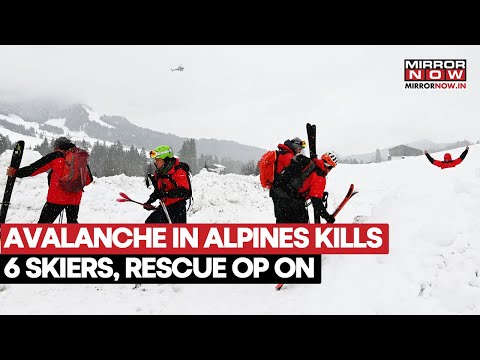
Eight skiers died in three avalanches across Austria on Saturday, January 18—all within four hours, all in terrain where warnings had been issued for days. The dead include a woman buried in front of her husband in Bad Hofgastein, four killed in the Gastein Valley, and three Czech nationals swept away in Pusterwald. These eight deaths brought the week's Alpine toll to at least 19 across Austria, Switzerland, and France.

The carnage follows a pattern that mountain rescue services find grimly familiar: heavy snowfall creates unstable layers, authorities raise danger levels to 4 ("high") on the five-point European scale, and skiers venture off-piste anyway. "This tragedy painfully demonstrates how serious the current avalanche situation is," said Gerhard Kremser, head of the Pongau mountain rescue service. "Despite clear and repeated warnings, numerous avalanches occurred again today—unfortunately with fatal consequences."

Key Indicators

19+
Deaths This Week
Fatalities across Austria, Switzerland, and France in the past seven days
8
Deaths in One Day
All eight Austrian fatalities occurred on Saturday, January 18
Level 4
Danger Rating
"High" on the 5-level European scale; triggering likely even from low loads
100
Average Annual Deaths
Typical yearly avalanche fatalities across the European Alps

People Involved

GK
Gerhard Kremser
District Head, Pongau Mountain Rescue Service (Active in rescue operations)

Organizations Involved

GE
GeoSphere Austria
National Meteorological and Geophysical Agency
Status: Issuing avalanche warnings

Austria's federal agency responsible for weather forecasting, climate monitoring, and avalanche warning services.

EU
European Avalanche Warning Services (EAWS)
International Coordination Body
Status: Coordinating Alpine-wide warnings

A cooperation between national and regional avalanche warning agencies across Europe, harmonizing danger scales and forecasting methods.

WS
WSL Institute for Snow and Avalanche Research (SLF)
Federal Research Institute
Status: Issuing Swiss avalanche bulletins

Switzerland's national avalanche research and warning service, based in Davos.

Timeline

  1. Woman Killed at Bad Hofgastein

    Fatality

    A female skier is buried and killed by an avalanche in the Schmugglerscharte area at 2,200 meters elevation. Her husband witnessed the burial.

  2. Four Killed in Gastein Valley

    Fatality

    An avalanche sweeps away seven skiers in the Gastein Valley south of Salzburg. Four die, two are seriously injured, one escapes unharmed.

  3. Three Czech Nationals Die at Pusterwald

    Fatality

    Three Czech skiers killed in an avalanche in Pusterwald, Styria. Four companions are evacuated to safety.

  4. Major Rescue Operation Deployed

    Response

    Four rescue helicopters, mountain rescue dog teams, and crisis intervention units respond to the three avalanche sites across Salzburg and Styria.

  5. 13-Year-Old Czech Boy Killed in Bad Gastein

    Fatality

    A 13-year-old Czech boy dies after being caught in an avalanche while skiing off-piste near Goldbergbahn in Bad Gastein, Austria.

  6. Three Die in French Alps

    Fatality

    Three off-piste skiers killed in separate avalanche incidents across French Alps, including near Courchevel and La Plagne resorts.

  7. Two Skiers Killed at Val-d'Isère

    Fatality

    Two French skiers die in an avalanche while skiing off-piste above the Val-d'Isère resort. Neither carried avalanche transceivers.

  8. Switzerland Raises Danger to Level 4

    Warning

    MeteoSwiss and SLF raise avalanche danger to "high" across Valais and neighboring cantons following heavy snowfall. Federal transport warnings issued.

Scenarios

1

Death Toll Continues Rising Through January

Discussed by: European Avalanche Warning Services, mountain safety analysts

The unstable snowpack—created by heavy December/January snowfall on weak early-season layers—persists for weeks. With Level 3-4 conditions forecast to continue and ski tourism in peak season, additional fatalities appear likely unless conditions stabilize or skiers change behavior. Historical patterns suggest multi-week danger periods following major snow events.

2

Warming Stabilizes Snowpack, Danger Drops

Discussed by: Swiss SLF forecasters, meteorological services

A warming period allows the weak layers in the snowpack to consolidate, reducing triggering probability. Danger levels drop to Level 2 ("moderate") across most regions. This would follow typical mid-winter stabilization patterns, though timing depends on weather systems that remain unpredictable.

3

Renewed Calls for Off-Piste Restrictions

Discussed by: European mountain safety experts, tourism industry analysts

The concentrated fatalities—particularly among off-piste skiers who ignored warnings—trigger policy debates similar to those following previous deadly seasons. Some resorts or regions could implement temporary off-piste closures or require safety equipment for backcountry access. France has previously considered such measures after fatality spikes.

4

Season Ends Near Average Fatality Count

Discussed by: EAWS statisticians, avalanche researchers

Despite the deadly January, the season's final toll falls within the typical 90-110 deaths across the Alps. Early-season tragedies often reflect dangerous snowpack conditions that later stabilize. Statistical analysis shows that concentrated fatality clusters, while tragic, don't necessarily predict abnormal season totals.

Historical Context

Winter of Terror (1950-1951)

January-March 1951

What Happened

A three-month period saw 649 avalanches kill over 265 people across Austria, Switzerland, and Italy. On January 20, 1951, over 45,000 people were trapped when a series of avalanches struck simultaneously. Austria lost 135 people; Switzerland lost 98 and saw 1,000 buildings destroyed.

Outcome

Short Term

The disaster prompted emergency international coordination and massive rescue operations involving military forces from multiple nations.

Long Term

Switzerland established the modern avalanche warning system. Protection forests were planted on critical slopes, hazard maps developed, and the SLF expanded its forecasting. When similar conditions recurred in 1999, fatalities were far lower.

Why It's Relevant Today

The 1951 disaster created the institutional infrastructure—warning services, danger scales, trained personnel—that exists today. January 2026's deaths occurred despite this system working as designed, raising questions about the limits of warning efficacy when skiers choose to ignore forecasts.

Galtür Avalanche (1999)

February 1999

What Happened

A 50-meter-high powder avalanche traveling at 290 km/h struck the village of Galtür, Austria, killing 31 people—25 tourists and 6 locals. The village had been designated a "green zone" (avalanche-safe), and the avalanche exceeded all historical records for that path. A second avalanche killed 7 more at nearby Valzur the next day.

Outcome

Short Term

Rescuers saved 26 people within 24 hours. A 4-year-old boy survived 90 minutes of burial. Military helicopters from multiple countries evacuated 18,400 stranded people.

Long Term

Austria revised hazard zone boundaries in July 1999, expanding red zones significantly. Galtür built a 300-meter protective dam and avalanche fences. The disaster showed that "historical record" can fail when conditions exceed prior experience.

Why It's Relevant Today

Galtür demonstrated that avalanches can exceed what models predict based on past events. The current January 2026 deaths involve a different failure mode: skiers entering terrain that warnings correctly identified as dangerous, rather than infrastructure failing to protect populated areas.

Rigopiano Hotel Disaster (2017)

January 2017

What Happened

An avalanche triggered by earthquakes struck the Hotel Rigopiano in Italy's Abruzzo region, killing 29 of 40 people inside. The avalanche contained 40,000-60,000 tonnes of snow traveling at 100 km/h. Survivors were pulled from air pockets up to 58 hours after burial.

Outcome

Short Term

Eleven people were rescued, including nine from under the snow. Prosecutors launched investigations into why the hotel was built on an avalanche path and why evacuation was delayed.

Long Term

Thirty people faced charges including manslaughter and illegal construction. The disaster highlighted gaps in Italian building regulations for avalanche zones and the dangers of ignoring historical avalanche paths.

Why It's Relevant Today

Unlike the current off-piste fatalities, Rigopiano involved a fixed structure in a questionable location. Both cases illustrate the challenge of managing avalanche risk: Rigopiano through building codes and enforcement, January 2026 through individual decision-making when warnings are issued.

12 Sources: