

Pull to refresh
Logo
Moon's far-side rocks show no spike in ancient asteroid impacts

Moon's far-side rocks show no spike in ancient asteroid impacts

New Capabilities

Argon dating of 28 Chang'e-6 melt fragments runs from 4.33 billion to 1.13 billion years old, with almost nothing clustering at 3.9 billion

Overview

Updated Yesterday

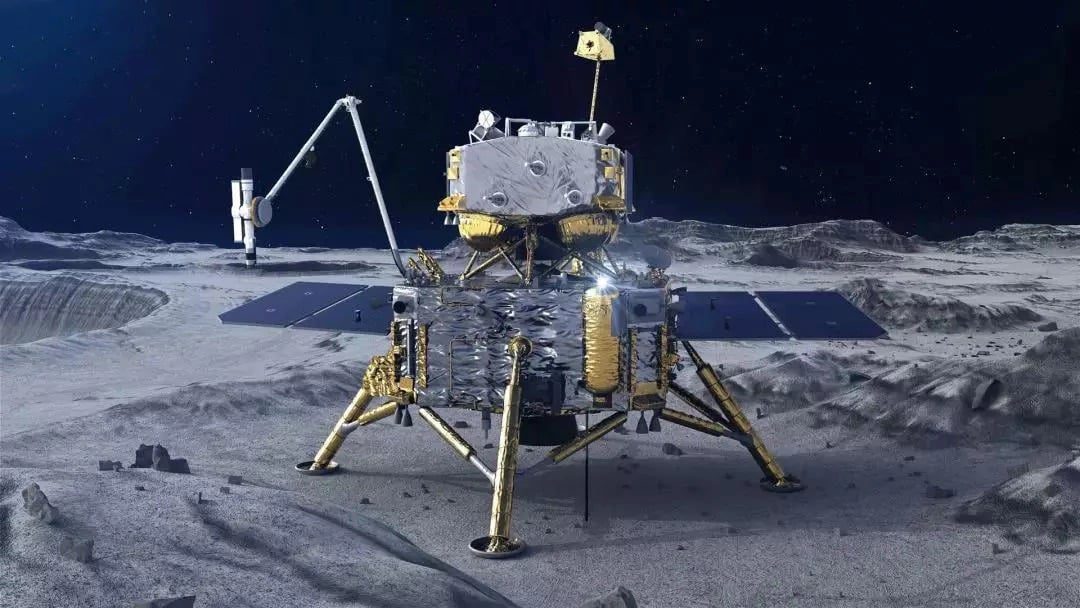
China's Chang'e-6 spacecraft brought the first rocks from the Moon's far side back to Earth in June 2024. Argon dating of 28 melted fragments in that haul found no burst of impacts around 3.9 billion years ago, the episode planetary scientists call the Late Heavy Bombardment.

The fragments instead span roughly 4.33 billion to 1.13 billion years, and only two of 21 reliable ages land between 4.0 and 3.7 billion years. That pattern fits a long, steady decline in impacts rather than one cataclysm — and it resets the backdrop against which early Earth became habitable.

Why it matters

If impacts tapered instead of spiking, early Earth had a longer, steadier window for life to take hold.

Questions about this story

Free account needed to ask — your question is kept and asked for you right after sign-up. Answers are public.

No questions yet — be the first to ask.

Key Indicators

28
Impact melt fragments dated
Single-clast argon-argon ages measured on Chang'e-6 samples.
4.33 billion years
Oldest age measured
The oldest of the 28 dated fragments, well before the disputed 3.9 billion mark.
2
Ages between 4.0 and 3.7 billion years
Out of 21 plateau ages, the interval where nearside samples cluster.

Voices

Curated perspectives — historical figures and your fellow readers.

Sign up to generate historical perspectives on this story.

People Involved

Organizations Involved

Timeline

June 2024 November 2026

3 events Latest: Yesterday
  1. Study finds no 3.9 billion-year spike

    Latest Research

    Researchers report argon dates on 28 melt fragments spanning 4.33 to 1.13 billion years, with only two between 4.0 and 3.7 billion.

  2. Far-side ages folded into a cratering curve

    Research

    A Chinese Academy of Sciences team fits Chang'e-6 ages and crater densities into a revised lunar cratering chronology.

  3. Chang'e-6 lands with far-side rock

    Mission

    China's sample-return spacecraft brings back the first material ever collected from the Moon's far side, from the Apollo basin.

Scenarios

1

A second far-side site confirms the gradual decline

Possible Resolves by End of 2028

Discussed by: Simone Marchi of the Southwest Research Institute and the Chang'e-6 authors, who both call for samples from more lunar regions

The claim rests on one landing site. If another far-side basin — or a lunar meteorite with a clearly different origin — yields melt rocks with no cluster near 3.9 billion years, the gradual-decline model becomes hard to attribute to local geology. That is the test Marchi describes as needed before the global impact curve can be redrawn.

2

Geochemists rule the Chang'e-6 clasts volcanic, not impact melt

Unlikely Resolves by End of 2027

Discussed by: Mark Harrison of the University of California, Los Angeles

Harrison's objection is petrological: the fragments, he says, lack the physical features of rock melted by a collision, which would make them cooled lava instead. If other geochemists reach the same conclusion from thin sections and mineralogy, the 28 ages stop being a bombardment record and the far-side challenge loses its central evidence.

3

The lunar cratering curve is rebuilt around far-side ages

Likely Resolves by Q2 2028

Discussed by: The Chinese Academy of Sciences research team that fitted Chang'e-6 ages to crater densities

Crater counting is how planetary scientists date surfaces they have never sampled, including Mars and the icy moons. The Chang'e-6 ages gave calibrators outside the Imbrium debris field for the first time. A published curve incorporating them would change derived ages for surfaces across the solar system, not just on the Moon.

Historical Context

3 moments from history that rhyme with this story — and how they unfolded.

1970s–2000s

The Late Heavy Bombardment takes hold (1970s–2000s)

Rocks brought back by NASA's Apollo and the Soviet Luna missions kept yielding argon ages near 3.9 billion years. Combined with crater counts, that clustering became evidence for a short, intense barrage of asteroids and comets roughly 3.9 billion years ago, widely described as the solar system's violent adolescence.

Then

The bombardment entered textbooks as a discrete event that shaped the inner planets.

Now

It framed research on when Earth's crust stabilized and when life could have begun.

Why this matters now

The Chang'e-6 ages attack the central evidence for that event: the cluster of nearside dates.

3.92 billion years ago

The Imbrium impact blankets the nearside (3.92 billion years ago)

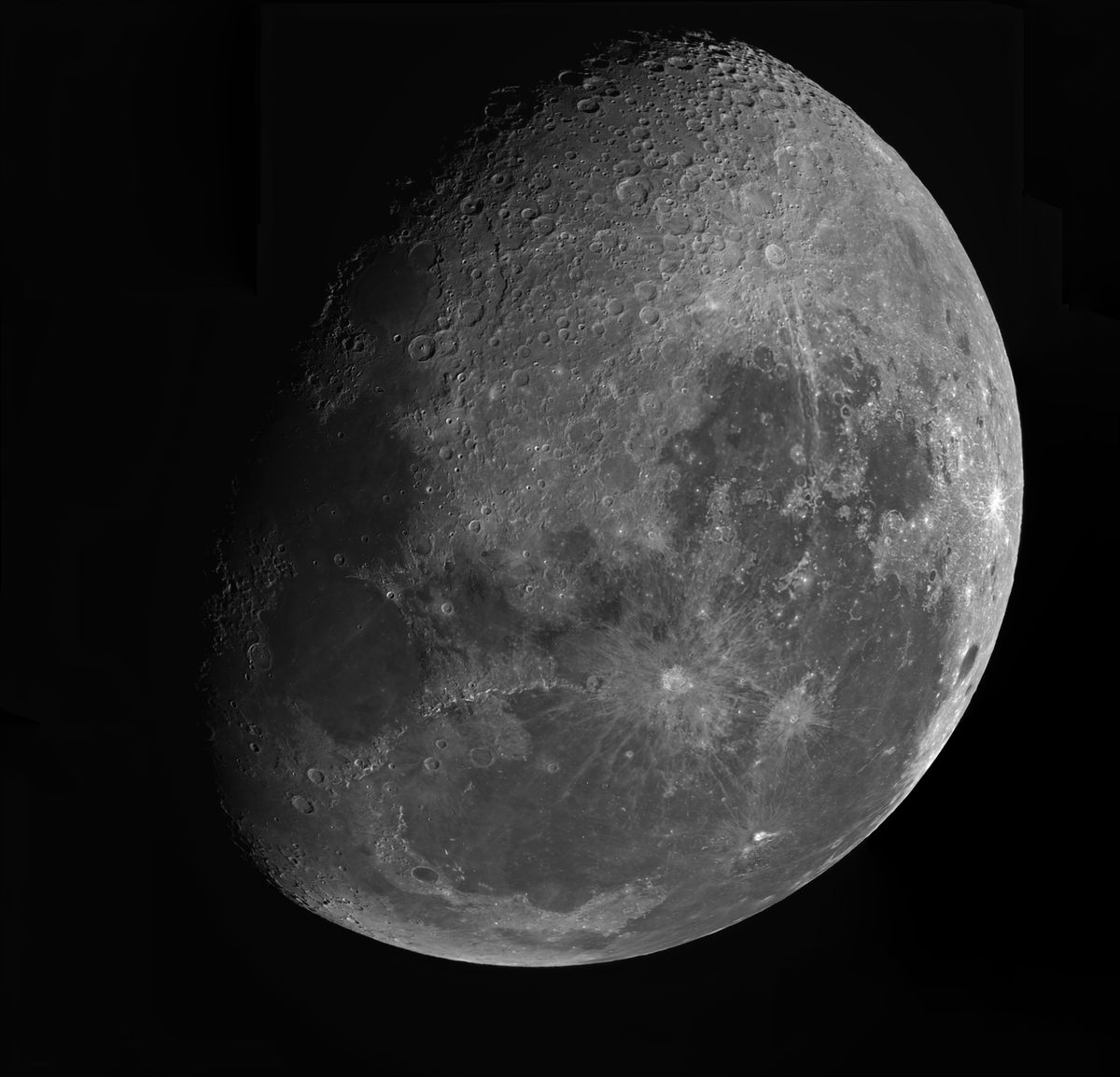
A basin-forming impact created Mare Imbrium on the Moon's Earth-facing side and threw debris across the nearside. Apollo and Luna landed inside that debris field, so much of the material they collected carries the same formation age.

Then

Nearly every dated nearside sample recorded roughly the same moment.

Now

The sampling bias survived five decades, because no mission had returned far-side rock.

Why this matters now

It explains why the old data looked like a spike and why the far-side samples read differently.

1912–1960s

Continental drift becomes plate tectonics (1912–1960s)

Alfred Wegener argued in 1912 that the continents had drifted apart, citing matching coastlines and fossils. Geologists rejected the idea for lack of a mechanism. In the 1960s, seafloor spreading data from wartime and postwar surveys supplied one, and the field converted within a decade.

Then

A generational dispute ended quickly once new instruments produced data the old framework could not absorb.

Now

Earth science reorganized around plate tectonics, and the episode became the standard example of a data-driven paradigm shift.

Why this matters now

Lunar bombardment history is in the same position: a long-standing consensus meeting data from a place it never sampled.

Sources

(6)