
Pull to refresh
Logo
Daily Brief
Following
Why Ranks Sign Up
Arm Holdings faces global antitrust scrutiny over chip licensing

Arm Holdings faces global antitrust scrutiny over chip licensing

Rule Changes

US, EU, and South Korean regulators are probing whether the company that designs most of the world's smartphone chips is choking off rivals

Today: News spreads globally; Arm shares slip less than 1%

Overview

Arm Holdings sells the blueprints that power roughly 99% of the world's smartphones and a growing share of data-center chips. On May 15, Bloomberg reported that the US Federal Trade Commission has opened an antitrust investigation into how Arm hands those blueprints out.

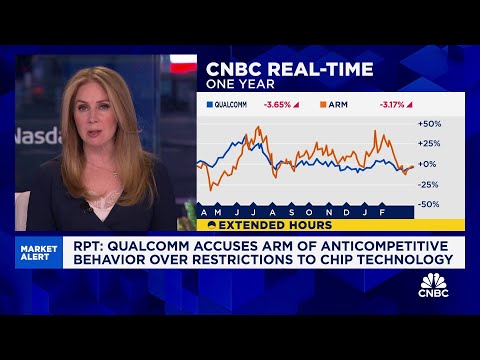
The FTC wants to know if Arm is rejecting or weakening licenses to outside chipmakers while CEO Rene Haas pushes the company to sell its own finished chips. South Korea raided Arm's Seoul office in November. Brussels is reviewing a parallel Qualcomm complaint. If regulators force changes to Arm's licensing terms, the cost of building almost any modern chip could change.

Why it matters

Arm's licensing model sits underneath most phones, laptops, and AI servers. A forced change to its terms ripples through every device you own.

Key Indicators

99%
Smartphone chips using Arm designs
Arm's instruction set is the near-universal foundation for mobile processors.
3
Active antitrust probes
The US FTC, South Korea's KFTC, and the European Commission are all examining Arm's licensing practices.
$15B
Arm's chip-sales revenue target
Annual revenue Arm expects from selling its own chips by 2031, the new business the FTC is scrutinizing.
$208
Arm share price
Stock slipped less than 1% on the FTC news after nearly doubling year-to-date.
2022
Year Qualcomm dispute began
Arm's attempt to cancel Qualcomm's Nuvia-related licenses triggered four years of litigation.

Interactive

Exploring all sides of a story is often best achieved with Play.

Ever wondered what historical figures would say about today's headlines?

Sign up to generate historical perspectives on this story.

People Involved

Organizations Involved

Timeline

  1. News spreads globally; Arm shares slip less than 1%

    Market

    Reports cite the preserved-documents order and a Qualcomm-style monopolization theory. Stock closes near $208 after nearly doubling year-to-date.

  2. FTC probe of Arm becomes public

    Investigation

    Bloomberg reports the agency has ordered Arm to preserve documents and is examining whether the company is monopolizing the chip market.

  3. Arm unveils its own data-center chip with Meta

    Product

    AGI CPU with up to 136 cores. Haas tells investors it could generate $15 billion in annual revenue by 2031.

  4. South Korean regulators raid Arm's Seoul office

    Investigation

    KFTC officials seize documents as part of a probe sparked by Qualcomm's complaint over licensing access.

  5. Delaware judge dismisses Arm's last claim

    Legal

    Final judgment ends the US litigation in Qualcomm's favor. Arm announces it will appeal.

  6. Delaware jury sides with Qualcomm on key claims

    Legal

    Jury finds Qualcomm did not breach the Nuvia architecture license. Most of Arm's claims fail; one count results in a hung jury.

  7. Arm moves to cancel Qualcomm's architecture license

    Legal

    Arm escalates by issuing a 60-day termination notice. Move triggers Qualcomm's regulatory campaign in three jurisdictions.

  8. Arm sues Qualcomm over Nuvia licenses

    Legal

    Arm claims Qualcomm cannot use Nuvia-developed Arm-compatible cores under its own license. Litigation runs three years.

  9. Nvidia-Arm deal collapses under regulatory pressure

    Regulatory

    FTC sues to block. SoftBank pivots to a public listing, and Rene Haas takes over as CEO.

  10. Nvidia agrees to buy Arm for $40 billion

    Deal

    Deal would have put Arm under a major chipmaker. Regulators raise alarms, foreshadowing later licensing concerns.

  11. SoftBank buys Arm for $32 billion

    Acquisition

    Masayoshi Son takes the British chip designer private, beginning the push to monetize the licensing model more aggressively.

Scenarios

Predict which scenario wins. Contrarian picks score more — points lock in when the scenario resolves.

Log in to predict. Track your picks, climb the leaderboard. Log in Sign Up
1

FTC files formal antitrust complaint against Arm

The FTC moves from document preservation to civil complaint, alleging Arm has monopolized CPU architecture licensing under Section 2 of the Sherman Act or Section 5 of the FTC Act. The case would target specific licensing decisions Arm made against Qualcomm and other customers since 2022. A complaint would mirror the agency's 2017 case against Qualcomm and likely seek behavioral remedies on Arm's licensing terms.

Resolves by: 2027-12-31
Source: FTC press release or official court filing on PACER
Discussed by: Bloomberg, Reuters, Stratechery's Ben Thompson
Consensus
2

FTC closes investigation without action

The FTC concludes that Arm's licensing decisions fall within legitimate IP rights and that competitors retain workable alternatives, mirroring the 9th Circuit's reasoning in the 2020 Qualcomm appeal. The agency formally closes the matter or quietly lets it lapse without filing a complaint. This outcome would lift the regulatory overhang from Arm's stock and validate the company's pivot into selling its own chips.

Resolves by: 2028-06-30
Source: FTC closing letter, public statement, or confirmation from Arm in SEC filings
Discussed by: Wall Street analysts at Bernstein, antitrust attorneys quoted by Bloomberg Law
Consensus
3

Arm settles with consent decree imposing licensing rules

Arm avoids a contested case by agreeing to behavioral commitments: maintaining license access for existing customers, capping price increases, or accepting an external monitor. Similar consent decrees ended Microsoft's 2001 case and Intel's 2010 settlement with the FTC. A deal would let Arm continue its in-house chip business while constraining how it can deny or modify licenses for competitors.

Resolves by: 2028-12-31
Source: FTC press release announcing the consent agreement, published on ftc.gov
Discussed by: Antitrust scholars at NYU Stern, Politico Pro Antitrust
Consensus
4

European Commission acts before the FTC

Brussels issues a Statement of Objections against Arm based on Qualcomm's 2024 complaint, before the US case reaches a complaint or settlement. The EU has historically moved faster on chip cases than US enforcers and can impose worldwide remedies. A Commission action would set the global template for Arm's licensing model and likely force the company to offer the same terms in the US.

Resolves by: 2027-12-31
Source: European Commission press release on competition-policy.ec.europa.eu
Discussed by: Politico Europe, MLex, Brussels-based competition attorneys
Consensus

Higher or Lower

Two numbers from this story. Guess which is bigger. Up to 5 rounds — one wrong call ends the streak.

Log in to play. Track your streak, climb the leaderboard. Log in Sign Up
Example
Anchor
EU tariff revenue
$52B
Mystery
Pentagon AI contract
?

Historical Context

FTC v. Qualcomm (2017-2020)

January 2017 - August 2020

What Happened

The FTC sued Qualcomm under chair Edith Ramirez, accusing the chipmaker of monopolizing modem markets through its 'no license, no chips' policy and refusing to license rivals. Judge Lucy Koh ruled for the FTC in 2019 and ordered Qualcomm to renegotiate its licenses globally.

Outcome

Short Term

Qualcomm appealed and the 9th Circuit unanimously reversed in 2020, finding that hyper-competitive conduct is not the same as anticompetitive conduct.

Long Term

The ruling raised the bar for FTC chip-licensing cases. It left unclear when a dominant IP holder's licensing decisions cross into illegal monopolization.

Why It's Relevant Today

The FTC must navigate the same legal terrain in the Arm case. Its theory of harm will likely mirror the Qualcomm playbook, but it has to avoid the 9th Circuit reasoning that doomed the earlier case.

United States v. Microsoft (1998-2001)

May 1998 - November 2001

What Happened

The Justice Department sued Microsoft for using its Windows monopoly to crush Netscape and other browser rivals. Judge Thomas Penfield Jackson ordered Microsoft broken up; an appeals court reversed but upheld the underlying liability finding.

Outcome

Short Term

Microsoft settled in 2001 with a consent decree that required it to share interoperability information and let computer makers configure Windows more freely.

Long Term

The case became the model for tech antitrust. A dominant platform that tilts the playing field against its own customers faces real enforcement risk.

Why It's Relevant Today

Arm's situation parallels Microsoft's. A dominant platform that millions of products depend on starts competing with the developers that license its technology. The same legal theory applies: using a foundational position to advantage a downstream business.

European Commission v. Intel (2009)

May 2009

What Happened

Brussels fined Intel €1.06 billion for paying computer makers like Dell and HP to use Intel chips over AMD's, finding the rebates excluded a competitor from the x86 CPU market.

Outcome

Short Term

Intel appealed and the case bounced through EU courts for over a decade. Parts of the fine were eventually overturned.

Long Term

The case established that a chip monopolist's commercial terms, even when nominally voluntary, can be illegal if they foreclose competition. EU regulators kept the theory active across later tech cases.

Why It's Relevant Today

If Brussels takes up Arm based on Qualcomm's complaint, the Intel precedent is the closest playbook. Both turn on whether a dominant chip firm's licensing or pricing decisions effectively shut competitors out of customer relationships.

Sources

(9)