
Pull to refresh
Logo
Astronomers confirm youngest known planet, a baby Jupiter still forming

Astronomers confirm youngest known planet, a baby Jupiter still forming

New Capabilities

Elias 2-24 b is less than a million years old and still gathering gas from its natal disk

Today: Elias 2-24 b confirmed as youngest known planet

Overview

Updated 1 hour ago

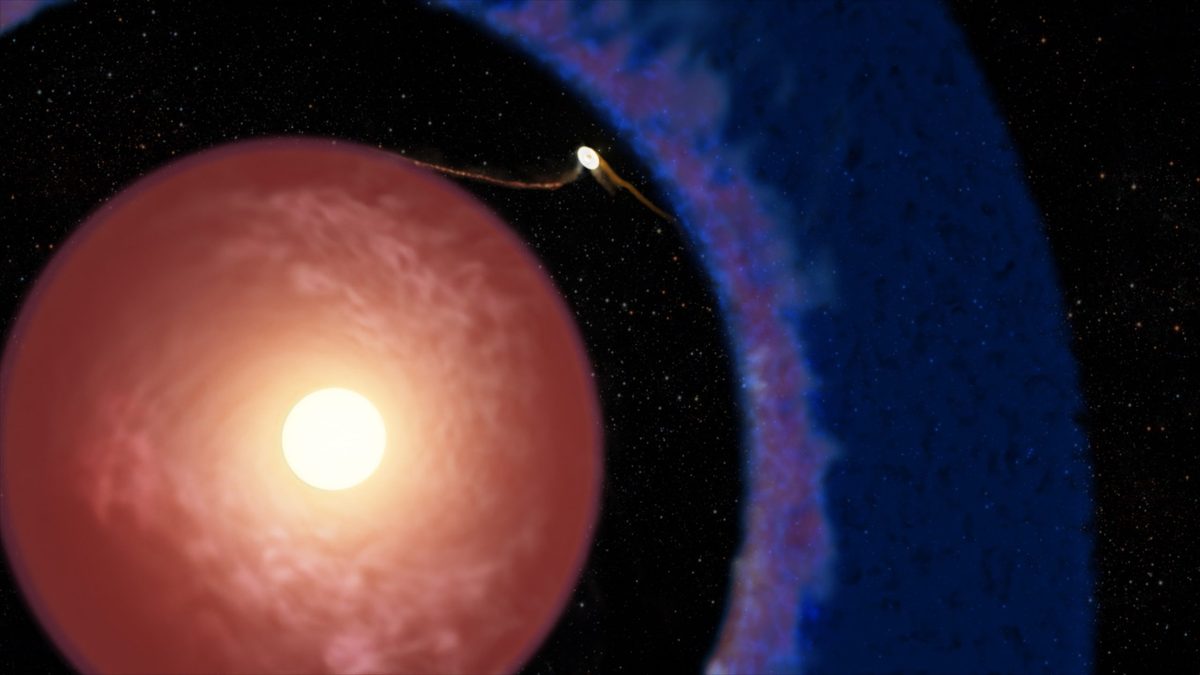
Astronomers have confirmed a planet less than a million years old, the youngest ever found. Elias 2-24 b is a Jupiter-size world still gathering gas from the disk of dust around its host star, 450 light-years from Earth.

The discovery challenges planet formation models, which predict building a Jupiter-size planet takes about 5 million years even at Jupiter's distance, and longer farther out. Elias 2-24 b sits 55 times farther from its star than Earth is from the Sun.

Why it matters

If giant planets can form in under a million years, the timeline for how planetary systems—including our own—take shape needs rewriting.

Questions about this story

Free account needed to ask — your question is kept and asked for you right after sign-up. Answers are public.

No questions yet — be the first to ask.

Key Indicators

<1 million years
Age of Elias 2-24 b
Youngest known planet, still actively forming.
1.9–4.0 M_Jup
Estimated mass
Comparable to Jupiter, inferred from photometry and 1-million-year isochrones.
55 AU
Distance from host star
55 times the Earth-Sun distance, far beyond where models predict rapid formation.
450 light-years
Distance from Earth
Location of the Elias 2-24 system in the constellation Taurus.

Voices

Curated perspectives — historical figures and your fellow readers.

Ever wondered what historical figures would say about today's headlines?

Sign up to generate historical perspectives on this story.

People Involved

Organizations Involved

Timeline

2016 September 2026

6 events Latest: Today
Tap a bar to jump to that date
  1. Elias 2-24 b confirmed as youngest known planet

    Today Publication

    Study confirms Elias 2-24 b as the youngest known planet, less than a million years old.

  2. Roman Space Telescope launches

    Launch

    NASA's Nancy Grace Roman Space Telescope launches with a more powerful coronagraph for detecting young planets.

  3. Additional Keck observations recorded

    Observation

    More Keck archival observations of Elias 2-24 are recorded, later used to confirm the planet's motion.

  4. Keck coronagraph observes Elias 2-24

    Observation

    Keck/NIRC2 vortex coronagraph observations capture the candidate planet in the L' and Ms bands.

  5. VLT spots faint point of light in gap

    Observation

    VLT detects a faint point of light in the gap, later identified as a candidate planet.

  6. ALMA reveals gap in Elias 2-24's disk

    Observation

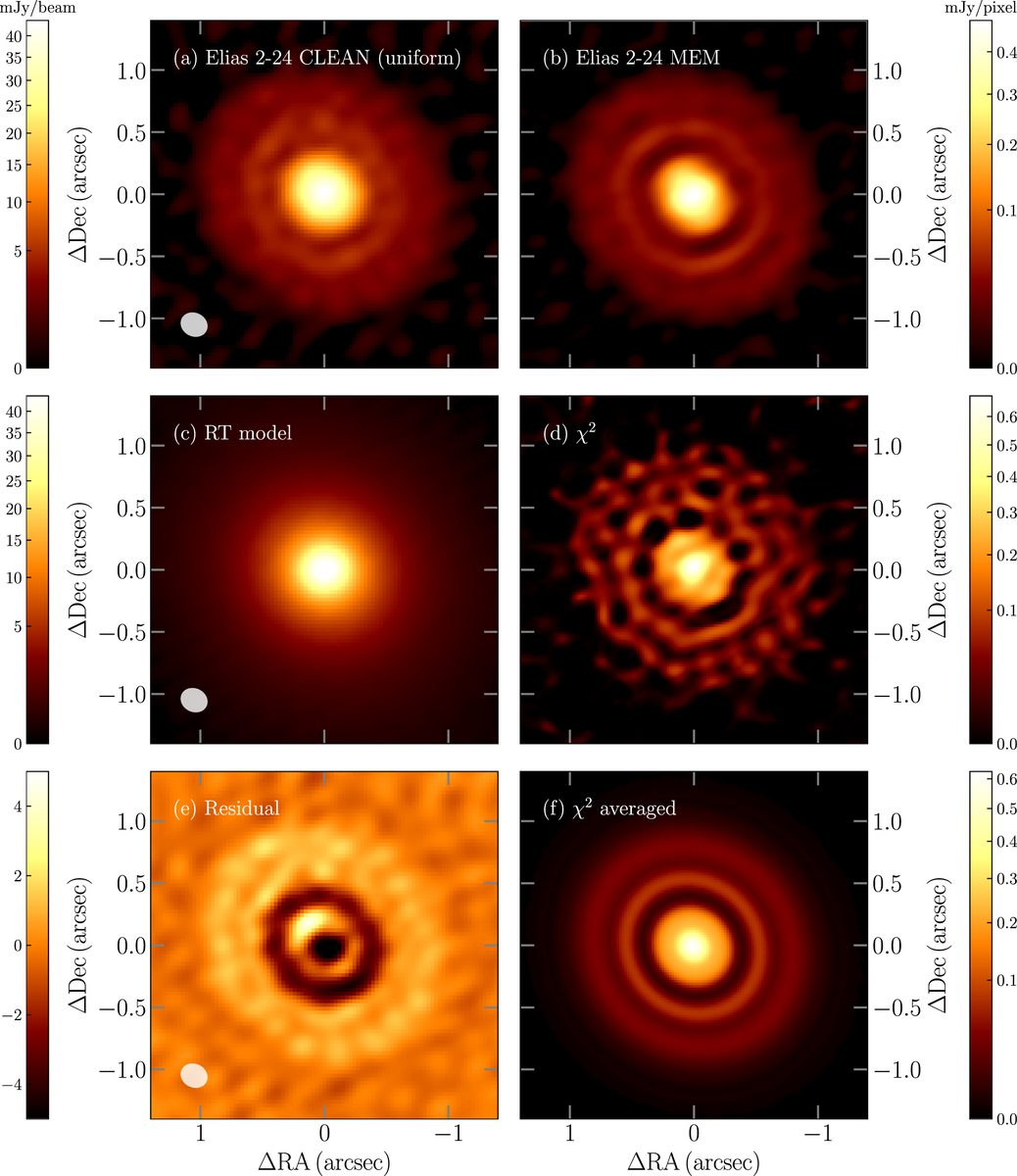
    ALMA observations reveal a gap in the young star's dusty disk, a possible sign of planet formation.

Scenarios

1

Roman telescope confirms more baby planets

Likely Resolves by End of 2028

Discussed by: NASA, study authors including Andrea Bernardi and Lucas Cieza

The Nancy Grace Roman Space Telescope, launched Aug 30, 2026, carries a more powerful coronagraph than current instruments. If it detects more young planets in protoplanetary disks, the rapid formation scenario gets validated and Eliass 2-24 b becomes the first of a new class of observed objects.

2

Planet formation models revised

Possible Resolves by Q2 2028

Discussed by: Planet formation theorists, study authors

If Elias 2-24 b's rapid formation is confirmed as typical, the core accretion model may need to account for faster gas accumulation at wide separations. A revised model would update the predicted timescales for giant planet formation.

3

Alternative formation mechanism proposed

Possible Resolves by End of 2027

Discussed by: Planet formation theorists

Some astronomers may argue the planet formed via disk instability rather than core accretion, since core accretion struggles to explain such rapid formation at wide separations. A competing paper would lay out the alternative mechanism.

Historical Context

3 moments from history that rhyme with this story — and how they unfolded.

1995

51 Pegasi b (1995)

Michel Mayor and Didier Queloz discovered a Jupiter-size planet orbiting 51 Pegasi in just 4.2 days. The existence of a hot Jupiter so close to its star contradicted planet formation models of the time.

Then

Sparked a revolution in exoplanet science.

Now

Led to the discovery of thousands of exoplanets and the realization that planetary systems are far more diverse than predicted.

Why this matters now

Like Elias 2-24 b, 51 Pegasi b challenged the prevailing models of how planets form.

2008

HR 8799 (2008)

Christian Marois and colleagues directly imaged three planets orbiting HR 8799 using the Keck and Gemini telescopes. The planets were massive and far from their star, challenging formation models.

Then

Demonstrated that direct imaging could find planets.

Now

Showed that massive planets can exist at wide separations, raising questions about formation mechanisms.

Why this matters now

Elias 2-24 b is also a massive planet at a wide separation, and its confirmation relied on Keck data, just like HR 8799.

2018

PDS 70 b (2018)

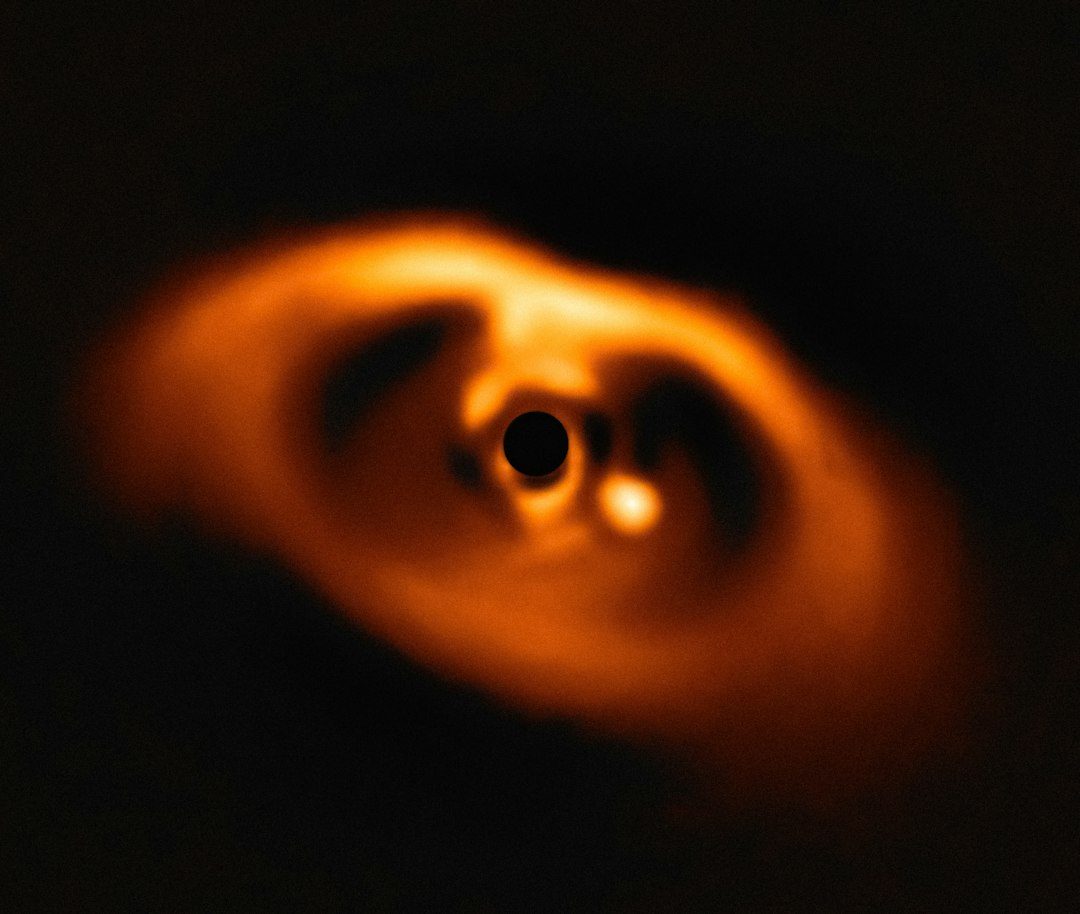
Astronomers using the Very Large Telescope confirmed PDS 70 b, a gas giant still forming within the disk of its young star, 370 light-years away. It was the first unambiguous detection of a planet still accreting material from its natal disk.

Then

Confirmed that planets can be directly imaged while still forming.

Now

Opened the door for studying planet formation in real time.

Why this matters now

Like Elias 2-24 b, PDS 70 b was caught in the act of formation, but PDS 70 b is older and closer to its star.

Sources

(5)