Logo
Daily Brief
Following
Why
Quebec's Power Reaches Massachusetts After a Decade of Delays

Quebec's Power Reaches Massachusetts After a Decade of Delays

The New England Clean Energy Connect marks the region's largest transmission build in years—and a rare victory over fossil fuel opposition

Overview

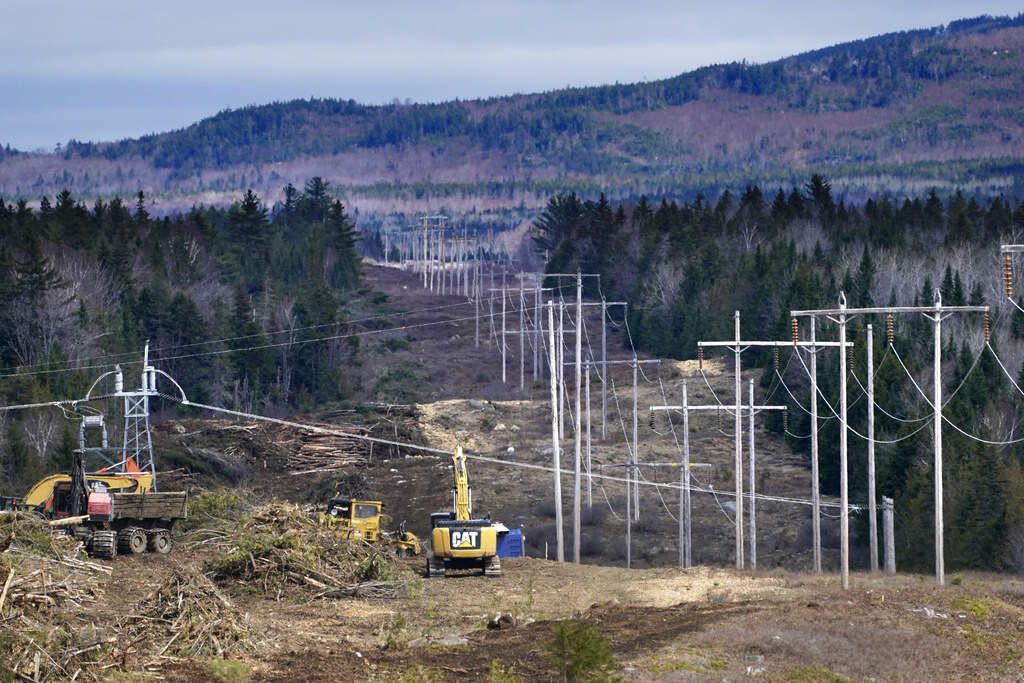
For 40 years, Hydro-Québec has wanted to sell more power to New England. For 40 years, transmission bottlenecks and local opposition stopped them. On January 16, 2026, a 145-mile power line through Maine's western woods began delivering 1,200 megawatts of Canadian hydroelectricity to Massachusetts—enough to supply 20% of the state's needs and the largest clean energy transmission addition to New England's grid in decades.

The project survived a $90 million referendum campaign funded by fossil fuel generators, a Maine Supreme Court battle, and an 18-month construction halt. Massachusetts ratepayers get a 20-year fixed-price contract projected to save $50 million annually. Maine gets discounted power and $250 million in community benefits. The question now: whether this hard-won model can be replicated as New England scrambles to build the transmission it needs for offshore wind and electrification.

Key Indicators

1,200 MW
Transmission capacity
Enough to power roughly 1.2 million homes
~20%
Share of Massachusetts electricity
Single largest clean energy source for the state
$50M
Annual ratepayer savings
Under a 20-year fixed-price contract
$90M+
Spent opposing the project
Largely by fossil fuel generators NextEra, Calpine, and Vistra
10 years
From legislation to operation
Including 18-month construction halt after 2021 referendum

People Involved

Charlie Baker
Charlie Baker
Former Governor of Massachusetts (2015-2023) (Now President of NCAA)
Maura Healey
Maura Healey
Governor of Massachusetts (In office since January 2023)
Janet Mills
Janet Mills
Governor of Maine (In office since January 2019)
TD
Thorn Dickinson
CEO & President, NECEC Transmission LLC (Led project through permitting, litigation, and construction)

Organizations Involved

Hydro-Québec
Hydro-Québec
Crown Corporation (State-Owned Utility)
Status: Power supplier under 20-year contract

Quebec's state-owned utility and North America's largest hydroelectric producer.

AV
Avangrid
Electric and Gas Utility Holding Company
Status: Project developer (subsidiary of Iberdrola)

Connecticut-based utility holding company owned by Spanish multinational Iberdrola.

NextEra Energy, Inc.
Electric Utility
Status: Lead funder of opposition campaign

Florida-based utility that owns fossil fuel and nuclear plants competing with NECEC power.

ISO New England
ISO New England
Regional Transmission Organization
Status: Grid operator integrating NECEC power

Independent grid operator for the six New England states.

Timeline

  1. Commercial operations begin

    Operations

    NECEC begins delivering 1,200 MW of Quebec hydropower to Massachusetts.

  2. Final permit secured

    Regulatory

    Avangrid announces construction will complete by year-end after securing final state permit.

  3. Jury verdict clears construction

    Legal

    Maine jury rules in favor of NECEC, allowing full construction to resume.

  4. Maine Supreme Court overturns referendum

    Legal

    Court rules citizen initiative cannot retroactively invalidate a valid state lease.

  5. Construction halted

    Legal

    At Governor Mills' request, NECEC suspends work pending court review of referendum.

  6. Maine voters reject corridor 59-41%

    Referendum

    After $90 million campaign largely funded by fossil fuel companies, voters approve retroactive ban on transmission corridors.

  7. DOE grants Presidential Permit

    Regulatory

    Department of Energy issues final major permit; construction begins.

  8. Army Corps issues permit

    Regulatory

    U.S. Army Corps of Engineers grants wetlands permit, a key federal approval.

  9. Maine PUC approves corridor

    Regulatory

    Maine Public Utilities Commission grants Certificate of Public Convenience and Necessity.

  10. Maine Governor Mills endorses project

    Political

    After securing $250 million in benefits for Maine, Mills announces support for NECEC.

  11. FERC approves NECEC

    Regulatory

    Federal Energy Regulatory Commission grants approval for the transmission project.

  12. Massachusetts selects NECEC as replacement

    Contract

    After Northern Pass falls through, state utilities sign 20-year contracts with NECEC for 9.45 TWh annually.

  13. New Hampshire rejects Northern Pass

    Regulatory

    Site Evaluation Committee unanimously denies permits for Eversource's 192-mile transmission line through New Hampshire.

  14. Massachusetts authorizes clean energy procurement

    Legislation

    Governor Baker signs Energy Diversity Act requiring utilities to procure 1,200 MW of clean energy via new transmission.

Scenarios

1

NECEC Model Replicated for Offshore Wind Transmission

Discussed by: ISO New England, Massachusetts energy officials, transmission industry analysts

With NECEC operational, advocates push to apply similar long-term contract structures to build transmission for offshore wind projects. Massachusetts has already issued its first competitive solicitation for onshore transmission to relieve grid constraints. Success would require overcoming the same local opposition and lengthy permitting that nearly killed NECEC—but the precedent of a completed project may shift political calculus.

2

Hydro-Québec Reduces Exports as Climate Shifts Water Availability

Discussed by: Energy analysts, climate researchers, New England Power Generators Association

Hydro-Québec exports to New England have already fallen 50% since 2022 amid drought conditions and rising domestic Quebec demand. If climate change continues reducing water availability in Quebec's reservoirs, the company may prioritize domestic supply over export contracts. The 20-year fixed-price agreement provides some protection, but delivery volumes could fall short of capacity.

3

Trump Administration Challenges NECEC Permits

Discussed by: Legal observers, energy industry sources familiar with federal review

The Trump administration has already suspended offshore wind leases and signaled hostility to clean energy projects. NECEC's federal permits—including the Presidential Permit and Army Corps authorization—could face review or challenge. Unlike wind projects, however, NECEC is already operational and delivering power, making retroactive permit revocation legally and practically more difficult.

4

New England Builds Transmission Network to Meet 2050 Demand

Discussed by: ISO New England, regional governors, utility planners

ISO-NE projects electricity demand could double by 2050 as transportation and heating electrify. Meeting that demand requires multiple NECEC-scale transmission projects—for offshore wind, additional Canadian hydro, and regional grid reinforcement. Whether NECEC's decade-long development timeline becomes faster or slower will determine if the region can decarbonize on schedule.

Historical Context

Northern Pass Rejection (2018)

2008-2019

What Happened

Eversource proposed a 192-mile transmission line through New Hampshire to deliver 1,000 MW of Hydro-Québec power to Massachusetts. After a decade of development and $318 million in spending, New Hampshire's Site Evaluation Committee unanimously rejected the project in February 2018, citing harm to tourism and rural communities. The state Supreme Court upheld the rejection in 2019.

Outcome

Short Term

Eversource wrote off $200 million. Massachusetts pivoted to NECEC as the backup bidder.

Long Term

The failure demonstrated that local opposition could kill even well-funded transmission projects—and that alternative routes through less populous areas might face less resistance.

Why It's Relevant Today

NECEC succeeded where Northern Pass failed partly because Maine's corridor crossed less populated territory and developers negotiated substantial community benefits. The Northern Pass failure added 2-3 years to New England's timeline for receiving Canadian hydropower.

Phase II Transmission Line (1990)

1986-1990

What Happened

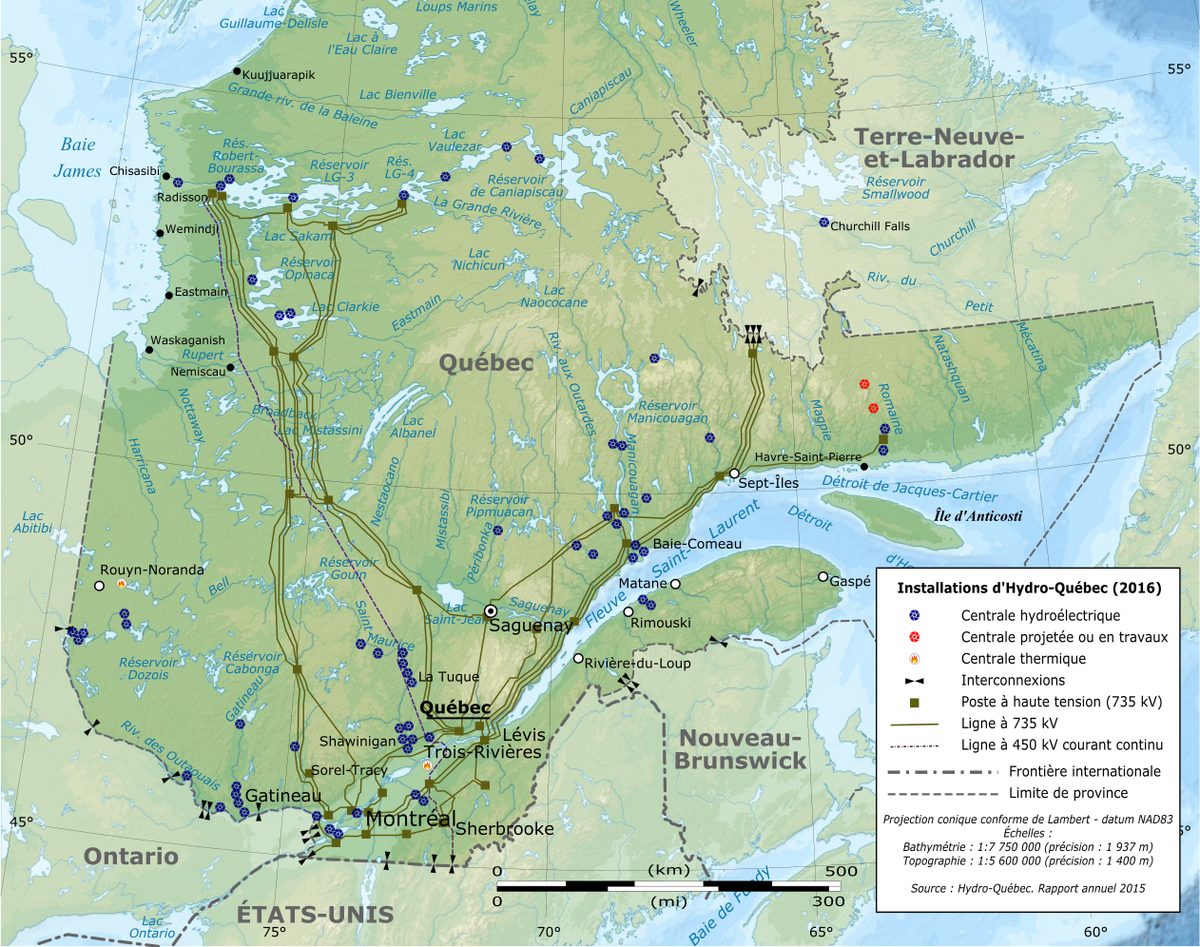
Hydro-Québec completed the 450-kV DC Phase II line from James Bay to Massachusetts, establishing a 1,200-1,400 MW connection that became the region's single largest power source. The project required a decade of planning and construction across multiple jurisdictions.

Outcome

Short Term

New England gained access to firm, dispatchable Canadian hydropower for the first time at scale.

Long Term

Phase II has delivered over 100 billion kWh since completion. But its capacity became a ceiling—Hydro-Québec wanted to export more, but lacked transmission to do so until NECEC.

Why It's Relevant Today

NECEC effectively doubles the transmission capacity between Quebec and New England, breaking a 35-year constraint. The Phase II experience also demonstrated that cross-border transmission projects can operate reliably for decades once built.

Winter Storm Elliott Grid Crisis (2022)

December 2022

What Happened

A severe cold snap stressed the Eastern U.S. power grid. In New England, 2,150 MW of generation failed to start—70% from gas plants that couldn't secure fuel. ISO-NE declared a capacity deficiency. Nine Mid-Atlantic states experienced rolling blackouts.

Outcome

Short Term

The crisis exposed New England's over-reliance on gas generation that competes with home heating for limited pipeline capacity.

Long Term

ISO-NE launched the Inventoried Energy Program to pay generators for maintaining backup fuel supplies. The event strengthened arguments for diverse, non-gas power sources.

Why It's Relevant Today

NECEC's 1,200 MW of hydropower—dispatchable regardless of gas pipeline constraints—directly addresses the reliability gap exposed by Winter Storm Elliott. Canadian hydropower output is highest in winter, precisely when New England's gas system is most strained.

10 Sources: