


Pull to refresh
Logo
Daily Brief
Following
Why
AI and automation transform waste industry economics

AI and automation transform waste industry economics

New Capabilities
By Newzino Staff |

Billion-dollar technology investments turn recycling from volatile commodity play into stable processing business

January 29th, 2025: WM Reports Record 30% Operating EBITDA Margin

Overview

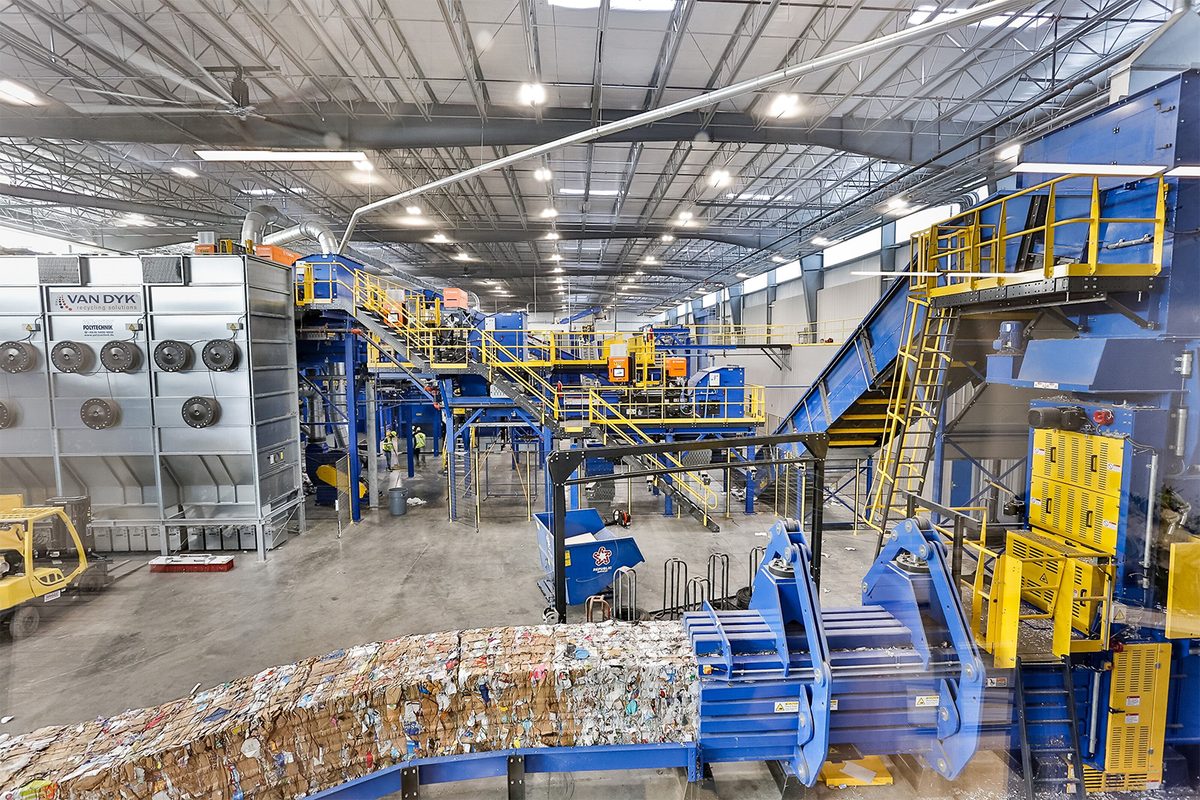
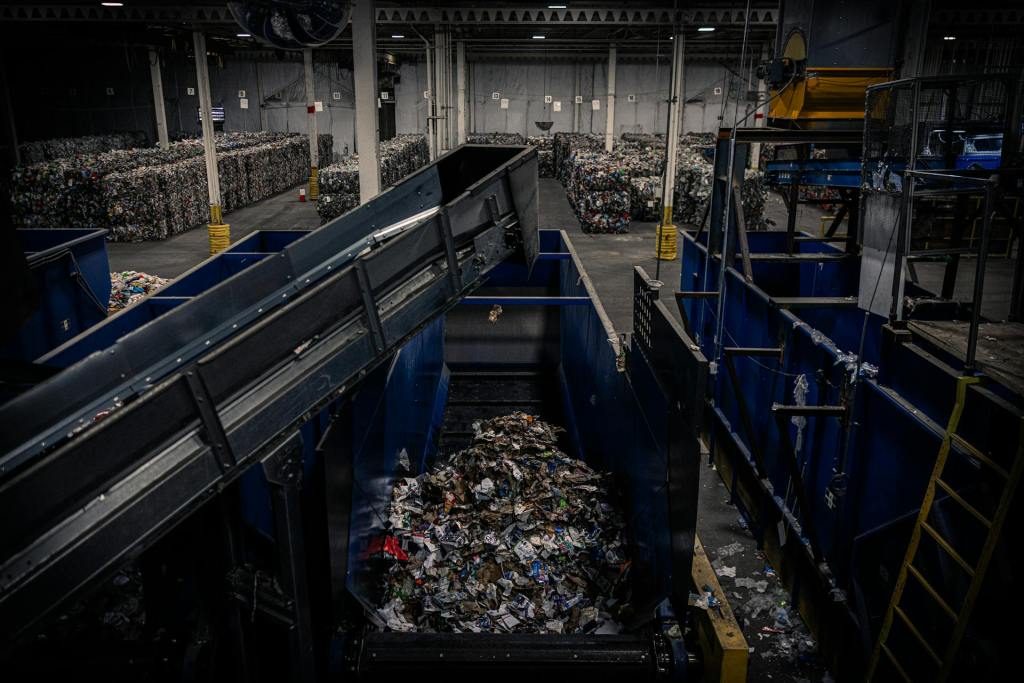
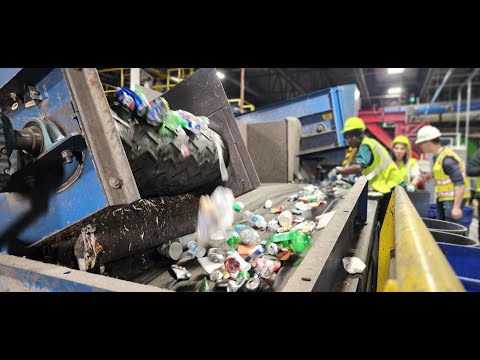
For decades, recycling profitability rose and fell with commodity prices—a business model that collapsed when China banned waste imports in 2018 and recycled material prices cratered. WM's response: pour $3 billion into automated facilities that cut labor costs 30% and double EBITDA margins compared to legacy plants. In Q4 2024, the company hit a 30% operating EBITDA margin for the first time in its history.

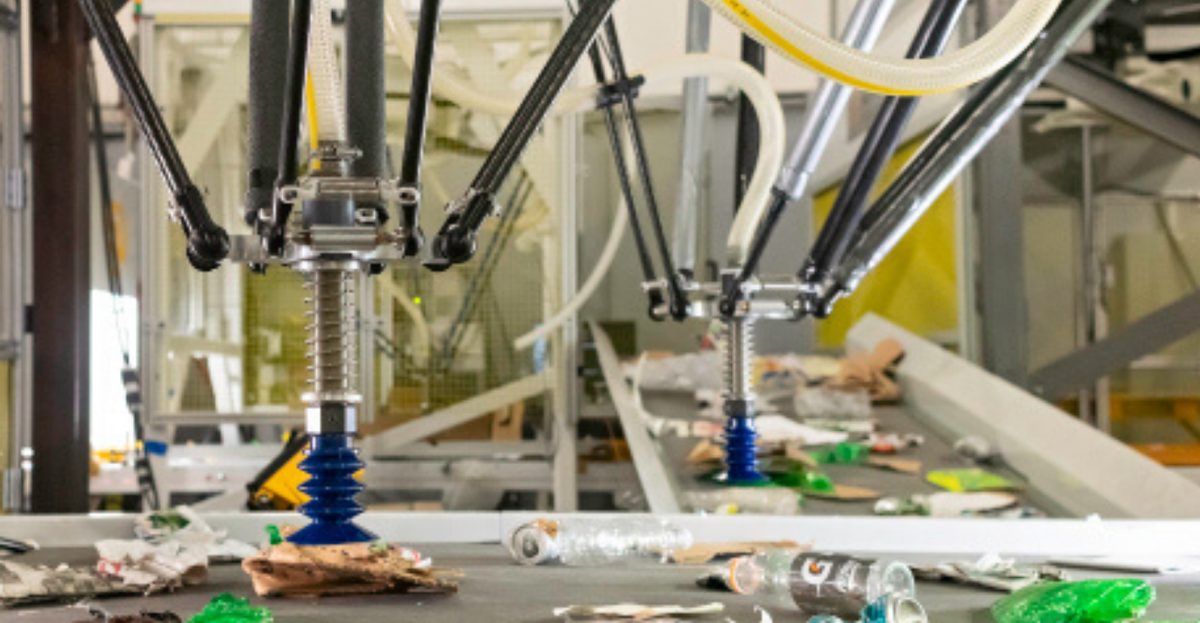
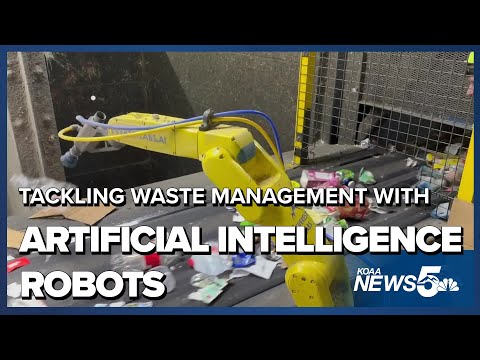
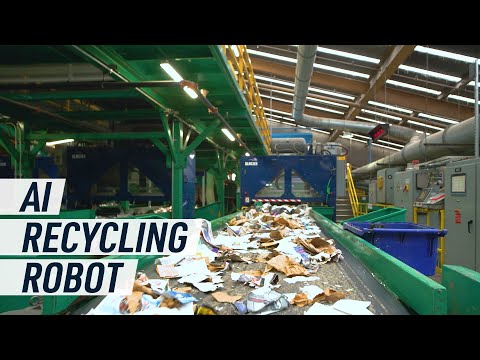
The transformation reaches beyond one company. WM, Republic Services, and Waste Connections are racing to deploy AI-powered sorting robots that identify materials 80 times per minute at 99% accuracy. The result is a structural shift: recycling is becoming a stable fee-for-service processing business, decoupled from the commodity volatility that made it unprofitable. When recycled commodity prices fell 35% in Q3 2025, WM's recycling EBITDA still grew 18%.

Key Indicators

30%
Operating EBITDA Margin
WM's record full-year margin in 2024, driven by automation and pricing discipline
$3B
Sustainability Investment
WM's 2022-2026 commitment to 39 recycling facilities and 20 renewable natural gas plants
30%
Labor Cost Reduction
Savings per ton at automated facilities versus legacy plants
27/39
Facilities Completed
WM's progress on planned recycling automation projects as of early 2025

Interactive

Exploring all sides of a story is often best achieved with Play.

Ever wondered what historical figures would say about today's headlines?

Sign up to generate historical perspectives on this story.

Sign Up

Debate Arena

Two rounds, two personas, one winner. You set the crossfire.

People Involved

Jim Fish
Jim Fish
Chief Executive Officer, WM (Leading $3 billion sustainability investment program)
Tara Hemmer
Tara Hemmer
Chief Sustainability Officer, WM (Overseeing recycling and renewable energy expansion)
John Morris
John Morris
President and Chief Operating Officer, WM (Overseeing field operations including recycling automation rollout)
Ron Mittelstaedt
Ron Mittelstaedt
Chief Executive Officer, Waste Connections (Expanding AI robotics partnership with AMP)

Organizations Involved

WM
WM (Waste Management, Inc.)
Publicly Traded Corporation
Status: Industry leader executing multi-billion dollar automation strategy

North America's largest waste services company, commanding 35-37% market share in environmental services.

Republic Services
Republic Services
Publicly Traded Corporation
Status: Second-largest waste company, investing in automation and contamination detection

Second-largest U.S. waste company with approximately 25% market share.

AMP Robotics
AMP Robotics
Private Technology Company
Status: Leading provider of AI-powered recycling robots

AI robotics company whose Cortex system sorts recyclables at 80 items per minute with 99% accuracy.

Timeline

  1. WM Reports Record 30% Operating EBITDA Margin

    Earnings

    WM achieves 30% full-year operating EBITDA margin for the first time, with automated recycling facilities delivering nearly double the margins of legacy plants.

  2. WM Closes $7.2 Billion Stericycle Acquisition

    Acquisition

    WM acquires medical waste leader Stericycle, expecting $125-250 million in annual synergies from logistics and technology integration.

  3. WM Completes 25 of 39 Recycling Automation Projects

    Milestone

    WM advances automation at 12 recycling facilities during 2024, spending $443 million on recycling automation and growth.

  4. Republic Services Launches Contamination Fee Program

    Business Model

    Republic deploys camera systems to detect overfilled and contaminated containers, generating $60 million in new revenue within one year.

  5. WM Announces $3 Billion Sustainability Investment

    Investment

    WM commits to building or upgrading 39 recycling facilities and 20 renewable natural gas plants through 2026.

  6. Waste Connections Expands to 50+ AI Robots

    Milestone

    Waste Connections becomes the largest operator of AI-guided robotics in the waste industry.

  7. WM Creates Chief Sustainability Officer Role

    Corporate

    Tara Hemmer becomes the waste industry's first Chief Sustainability Officer at a publicly traded company, signaling strategic priority shift.

  8. Waste Connections Partners with AMP Robotics

    Investment

    Waste Connections agrees to deploy 24 AI-guided robotic sorting systems, beginning industry-wide automation push.

  9. Recycling Economics Collapse

    Market

    U.S. recycling programs face crisis as commodity prices crash. Some municipalities halt collection entirely; others send recyclables to landfills.

  10. China's National Sword Policy Takes Effect

    Policy

    China bans most plastic and paper waste imports, eliminating the destination for 45% of global recyclables and exposing U.S. recycling's dependence on exports.

Scenarios

1

Automation Spreads, Industry Margins Permanently Higher

Discussed by: Wall Street analysts covering WM, Republic Services; industry publications Waste Dive and Waste360

WM completes its 39-facility program by 2026, competitors match investment levels, and automated recycling becomes the industry standard. Fee-for-service contracts replace commodity-price-dependent agreements. Operating EBITDA margins across the industry stabilize at 28-32%, roughly 500 basis points above pre-automation levels. This transforms waste companies from defensive utilities into growth stocks.

2

Technology Gap Creates Winner-Take-Most Market

Discussed by: Klover.ai industry analysis; Seeking Alpha equity research

WM's scale advantage proves decisive. Smaller regional operators cannot match $3 billion capital programs. WM's 35-37% market share grows to 45%+ through acquisitions of undercapitalized competitors. Republic Services and Waste Connections maintain positions but cede ground. Industry consolidation accelerates as automated capacity becomes the barrier to entry.

3

Extended Producer Responsibility Laws Reshape Business Model

Discussed by: Waste Dive policy coverage; state legislature tracking

Extended Producer Responsibility (EPR) laws spread beyond California, Colorado, and Oregon. Packaging manufacturers become responsible for recycling costs, creating guaranteed funding streams for processing facilities. This accelerates automation investment but also potentially caps processor margins as EPR programs negotiate rates. The winners are companies with the largest automated networks that can offer lowest processing costs.

4

Commodity Price Recovery Reduces Automation Urgency

Discussed by: Commodity market analysts; recycling industry trade publications

Recycled commodity prices recover substantially, making labor-intensive sorting economically viable again. Companies slow automation investment as existing facilities become profitable. This scenario requires sustained demand growth for recycled materials—potentially driven by corporate sustainability commitments or regulation—that outpaces the industry's current processing capacity.

Historical Context

Amazon Warehouse Automation (2012-Present)

March 2012 - Present

What Happened

Amazon acquired Kiva Systems for $775 million in 2012 and began deploying robots in fulfillment centers. By 2024, the company operated over 1 million robots across its network, with systems like Sequoia enabling 75% faster inventory processing. The transformation redefined warehouse economics and forced competitors to match automation levels.

Outcome

Short Term

Amazon's fulfillment costs initially rose during deployment, then declined as robots reduced labor requirements and increased throughput per facility.

Long Term

Warehouse automation became table stakes across e-commerce logistics. Companies unable to match Amazon's capital investment lost competitive position. The industry now expects 75% automation targets.

Why It's Relevant Today

WM's recycling automation follows a similar playbook: massive upfront capital expenditure to fundamentally change unit economics, creating competitive moats through operational efficiency that smaller players cannot replicate.

China National Sword Policy (2018)

January 2018

What Happened

China banned imports of most recyclable materials, eliminating the destination for 45% of global plastic waste exports. The U.S. recycling system, which had outsourced processing for decades, faced immediate crisis. Commodity prices collapsed, programs shut down, and recyclables went to landfills. The policy exposed structural weaknesses: contamination rates too high for domestic processing, no domestic mills to absorb volume.

Outcome

Short Term

Recycling commodity prices crashed. Municipal programs suspended service or raised fees. Some cities discontinued recycling entirely.

Long Term

Forced domestic investment in processing infrastructure. Created the economic pressure that drove WM and competitors to pursue automation rather than export-dependent models.

Why It's Relevant Today

National Sword was the catalyst that made WM's current strategy necessary. Without the export ban, the economic case for $3 billion in domestic automation investment would not have existed.

Fracking's Impact on Recycled Plastics (2014-2018)

2014-2018

What Happened

The U.S. shale revolution drove natural gas prices to historic lows. Since virgin plastic is made from natural gas derivatives, new plastic became cheaper than recycled material. Manufacturers shifted away from recycled content, reducing demand and prices for recycled commodities.

Outcome

Short Term

Recycled plastic economics worsened even before China's ban. Processing facilities operated at losses or minimal margins.

Long Term

Demonstrated that recycling profitability cannot depend on commodity markets alone. Created pressure for fee-for-service models and automation to reduce processing costs below commodity-price-dependent breakeven points.

Why It's Relevant Today

The fracking-driven price collapse foreshadowed the structural problem WM's automation strategy addresses: recycling economics must work even when virgin materials are cheap.

12 Sources: