

Iwa Robotics launches three-drone autonomous fleet for wildfire response
New CapabilitiesHAWK, CANARY and PELICAN detect, diagnose and suppress fires with no pilot in the loop
Yesterday: Iwa Robotics unveils HAWK, CANARY, and PELICANNew here? Follow stories to track developments over time. Create a free account to get updates when stories you care about change.
Overview
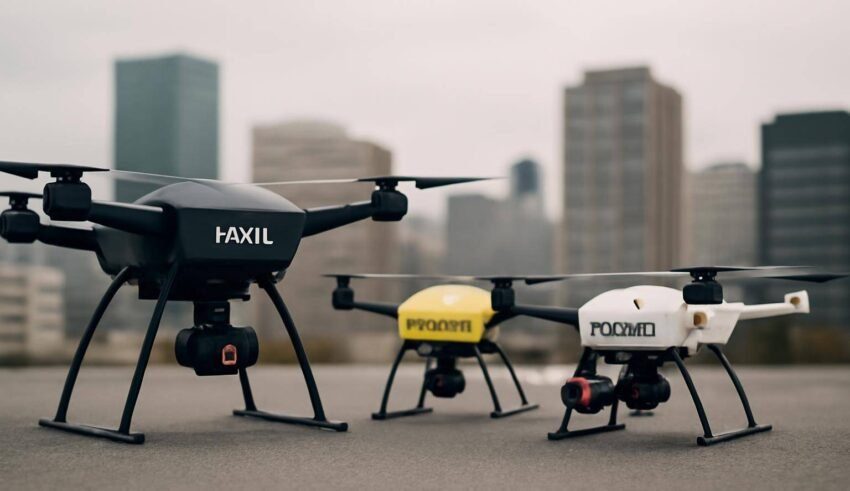
Updated 38 minutes agoIwa Robotics unveiled a three-drone autonomous fleet for urban wildfire response on September 5. The Los Angeles company's HAWK, CANARY, and PELICAN aircraft work as a coordinated system to spot fires, assess them, and drop suppressant with no human piloting.
The drones target the wildland-urban interface, where fires move fast and crews face the most dangerous conditions in firefighting — including low-altitude suppression flights through smoke into rising terrain. Iwa sells the fleet as a managed service, bundling aircraft, training, data, maintenance, and insurance into one contract with no upfront capital cost.
Why it matters
If autonomous suppression drones prove out, they could retire the deadliest job in aviation — low-level firefighting through smoke — and reshape how fire agencies buy aerial support.
Questions about this story
Free account needed to ask — your question is kept and asked for you right after sign-up. Answers are public.
No questions yet — be the first to ask.
Key Indicators
Voices
Curated perspectives — historical figures and your fellow readers.
Play
Exploring all sides of a story is often best achieved with Play.
Higher or Lower
A number from this story, against one from elsewhere in the news — guess which is bigger, then keep the chain going. 5 rounds, 3 strikes; a miss costs a strike and resets your streak.
Keyboard: ↓/L lower · ↑/H higher
0 points — sign up to put that on the leaderboard.
Connections
Sixteen names from the news. Find the four hidden groups of four. Four mistakes max.
Sign up to keep a daily streak — a new puzzle lands every day.
Exit debate?
Your progress in this debate will be lost.
- 1 Two AI personas square off on this story.
- 2 You predict who'll win each round — correct picks earn XP.
- 3 One crossfire question is yours to fire. Pick it carefully.
Couldn't generate a topic
Select Your Champions
Choose one persona for each side of the debate
DEBATE TOPIC
Choose personas with different perspectives for a more dynamic debate.
Select debater for this side:
No debate personas available right now.
Select debater for this side:
No debate personas available right now.
Who's Got This Round?
Make your prediction before the referee scores
The referee scores both sides on
Round Results
Set the Crossfire
Pick the question both personas must answer in the final round
Debate Oracle! You called every round!
Sharp Instincts! You know your debaters!
The Coin Flip Strategist! Perfectly balanced!
The Contrarian! Bold predictions!
Inverse Genius! Try betting the opposite next time!
XP Breakdown
Prediction History
People Involved
Organizations Involved
Iwa Robotics builds coordinated autonomous drone fleets for wildfire response and emergency management.
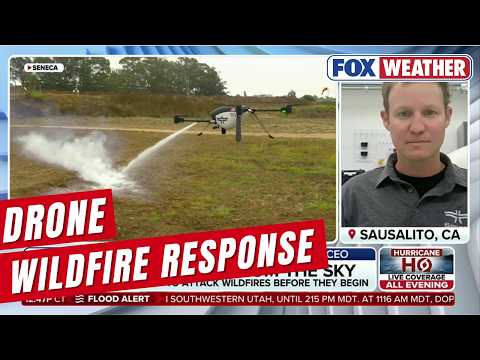
Seneca builds autonomous aircraft systems that locate fires from a single GPS waypoint and attack them with Class A foam.
Dryad pairs Silvanet wildfire sensors with Silvaguard autonomous drones that detect and attack fires without human intervention.
Timeline
October 2025 September 2026
-
Iwa Robotics unveils HAWK, CANARY, and PELICAN
Latest Product LaunchIwa publicly introduces its three-platform autonomous drone fleet — reconnaissance, sensing, and suppression — operating under a single Discovery and Resolution Fleet framework for urban wildfire response.
-
Dryad demonstrates autonomous firefighting at XPRIZE
DemonstrationDryad Networks' Silvanet sensors detect a wildfire within minutes and trigger Silvaguard drones to locate and suppress it autonomously across a 1,000 square kilometer Alaska test area.
-
Seneca launches with $60 million
FundingMarin County-based Seneca launches with $60 million to build autonomous wildfire defense systems for firefighters, utilities, and communities.
Historical Context
2 moments from history that rhyme with this story — and how they unfolded.
MQ-1 Predator: From reconnaissance to armed strikes (1994–2001)
The Predator began as a reconnaissance drone in the mid-1990s, flying surveillance missions over Bosnia and Kosovo. After seven years of proving its value for persistent observation, the Air Force armed it with Hellfire missiles in 2001.
The armed Predator became the backbone of targeted strikes in Afghanistan and later a global counterterrorism tool.
The shift from watching to acting set the template for how unmanned aircraft expand into new mission profiles.
Firefighting drones are following the same arc. Agencies used drones for reconnaissance for over a decade; Iwa's PELICAN suppression aircraft marks the move from observing fires to attacking them.
Aerial firefighting adoption (1950s–1960s)
The first air tankers were surplus military aircraft converted to drop retardant. Fire agencies were skeptical — retardant was unproven, crashes were frequent, and the cost was high. It took years of demonstration flights and hard-won experience to make aircraft standard firefighting equipment.
Air tankers proved their value on large fires and became a core tool for US fire agencies.
Aircraft are now indispensable to wildfire suppression, with entire firefighting strategies built around aerial drops.
The same trust curve applies to unmanned suppression aircraft. Agencies will need demonstration missions and successful deployments before autonomous drones gain acceptance.
