

Pull to refresh
Logo
AWS opens OpenFold3 structure prediction to one-click cloud deployment

AWS opens OpenFold3 structure prediction to one-click cloud deployment

New Capabilities

An Apache-licensed model that folds proteins, DNA, RNA and small molecules now runs inside a customer's own AWS account

Overview

Updated 35 minutes ago

A drug discovery team holding a proprietary protein used to face a narrow choice. Send the sequence to a public structure-prediction server, or spend weeks assembling GPUs, CUDA drivers and a serving stack. On 15 November 2026, AWS put OpenFold3 into SageMaker JumpStart, its catalogue of ready-to-deploy models, and the second option collapsed to a few lines of code.

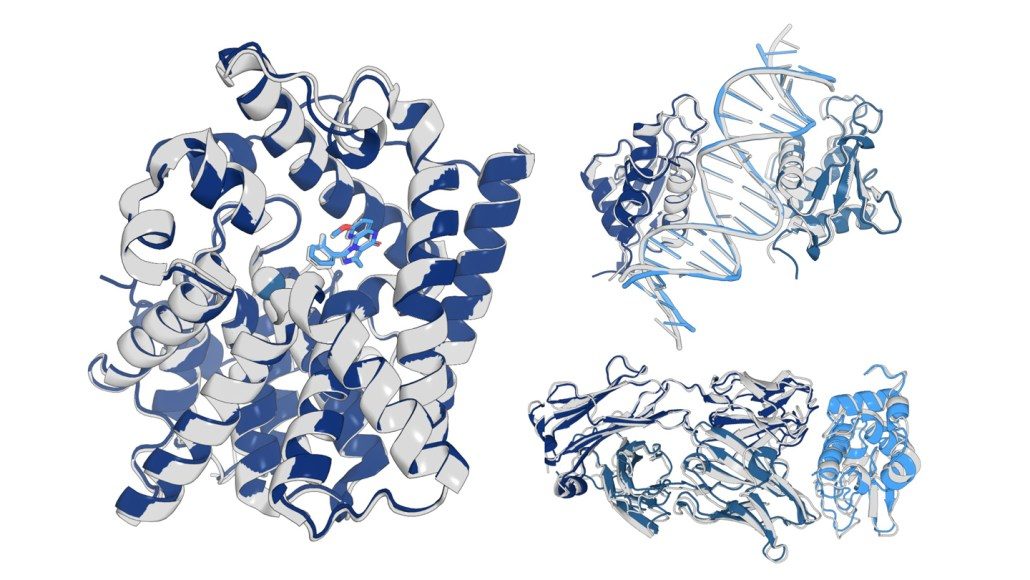
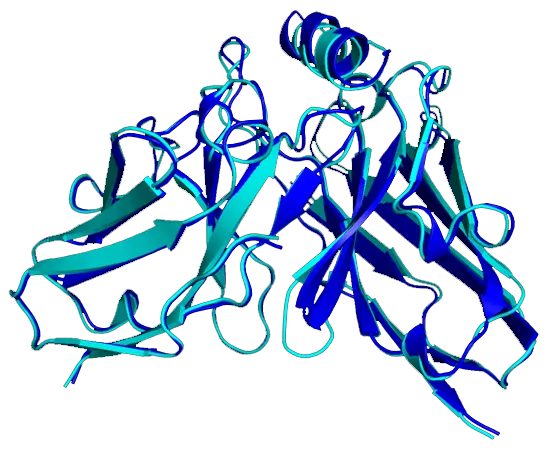
The model is not a single-protein tool. It predicts the joint 3D structure of proteins, DNA, RNA and small-molecule ligands together, and it ships under the Apache 2.0 licence, which permits commercial use and modification. The endpoint runs with network isolation: it will not call an outside sequence database, so proprietary sequences stay inside the customer's account. AWS's own test shows why that matters. Folded without an alignment, a carbonic anhydrase complex scored 30 on pLDDT, a 0-to-100 confidence scale. With one, it scored 98.

Why it matters

Structure prediction is turning into a cloud utility, and the self-hosted, permissively licensed version is the one that can touch proprietary sequences.

Questions about this story

Free account needed to ask — your question is kept and asked for you right after sign-up. Answers are public.

No questions yet — be the first to ask.

Key Indicators

98
pLDDT with a supplied alignment
Average confidence for the carbonic anhydrase II, zinc and acetazolamide complex in AWS's test.
30
pLDDT without an alignment
Same complex, same endpoint, sequence-only input.
0.2 Å
Backbone deviation, alignment run
Cα root-mean-square deviation against the experimental crystal structure.
22 Å
Backbone deviation, sequence-only run
The same protein came out misfolded without an alignment.
4
GPUs per ml.g6.12xlarge instance
Each concurrent prediction gets its own GPU on the four-GPU instance.

Voices

Curated perspectives — historical figures and your fellow readers.

Sign up to generate historical perspectives on this story.

People Involved

Organizations Involved

Timeline

November 2020 November 2026

4 events Latest: Yesterday
Tap a bar to jump to that date
  1. OpenFold3 opens to one-click deployment on SageMaker JumpStart

    Latest Launch

    AWS published a deployment path for the OpenFold3-preview model, running version 0.4.1, on managed asynchronous endpoints with network isolation.

  2. AlphaFold3 extends prediction to complexes, with limited access

    Research

    DeepMind added DNA, RNA and small molecules to the problem, but the trained model was initially reachable only through a web server.

  3. OpenFold project begins as an open reproduction

    Research

    The AlQuraishi Lab set out to rebuild AlphaFold-class methods and release the code and weights.

  4. AlphaFold2 resets expectations for structure prediction

    Research

    DeepMind's model scored near experimental accuracy at a long-running blind assessment, turning protein folding into a practical computational tool.

Scenarios

1

A second drugmaker discloses OpenFold3 use in its pipeline

Possible Resolves by Nov 15, 2027

Discussed by: AWS launch materials and the OpenFold Consortium

Novo Nordisk helped build the model, so a named second pharmaceutical customer is the cleanest signal that managed folding has commercial pull. Watch for a conference talk, a methods section in a preprint, or an AWS customer story that names a company and a target class.

2

AWS adds custom weights and fine-tuning to the OpenFold3 endpoint

Possible Resolves by Q2 2027

Discussed by: Structure-prediction practitioners tracking JumpStart capabilities

The current JumpStart listing runs one fixed checkpoint, of3-p2-155k. Drug teams often want to retrain on their own structures. If AWS ships a supported fine-tuning path, the endpoint stops being an inference utility and becomes a platform.

3

A blind benchmark puts OpenFold3 behind AlphaFold3 on unseen targets

Uncertain Resolves by End of 2027

Discussed by: Structural biology groups that run community assessments

AWS's published comparison uses carbonic anhydrase II, one of the most heavily studied complexes in the Protein Data Bank, and the company says so. A blind target set would test whether the open model holds up on proteins no model has seen.

Historical Context

3 moments from history that rhyme with this story — and how they unfolded.

November 2020

AlphaFold2 at the CASP14 assessment (2020)

DeepMind entered AlphaFold2 in the 14th Critical Assessment of Structure Prediction, a blind contest that had run since 1994. Its median score on the Global Distance Test sat near 90, a level roughly comparable to experimental structures. Progress in the field had been slow for a decade before that.

Then

DeepMind published the method and released code, and labs began folding proteins as routine work.

Now

Structure prediction became a standard research tool, and the benchmark culture around it made accuracy claims checkable.

Why this matters now

OpenFold3 belongs to the model family AlphaFold2 proved out, and inherits the same expectation that confidence scores can be compared against experiment.

May 2024

AlphaFold3 and the access gap (2024)

DeepMind extended prediction from single proteins to complexes containing DNA, RNA and small molecules, publishing the work in Nature. The trained model was not released with the paper. Access came through a web server with usage limits, which meant researchers could not run it locally on sequences they wanted to keep private.

Then

Groups working on proprietary drug targets had no local option for complex prediction.

Now

Open reimplementations filled the gap, and permissively licensed weights became the selling point for competitors.

Why this matters now

OpenFold3's Apache 2.0 licence and network-isolated endpoint answer that access problem directly.

2021 to present

The OpenFold project (2021 onward)

The AlQuraishi Lab at Columbia University began building an open reproduction of AlphaFold-class methods and trained the models on cloud compute. The project released code and weights under a permissive licence rather than keeping them behind a service.

Then

Academic groups gained a model they could modify and retrain.

Now

The effort grew into the OpenFold Consortium and a training pipeline that OpenFold3 extends from proteins to multi-molecule complexes.

Why this matters now

OpenFold3 is the current iteration of that project, now packaged so a company can deploy it without building the infrastructure.

Sources

(4)