
Pull to refresh
Logo
Bahrain prosecutes alleged IRGC operatives after Iran strikes

Bahrain prosecutes alleged IRGC operatives after Iran strikes

Force in Play

Sixty-four defendants, most of them Shia clerics, given life terms in Manama's largest post-war IRGC case

Overview

Updated Nov 17

A Bahraini court sentenced 64 people to life in prison on November 16, most of them Shia clerics, for running a group linked to Iran's Islamic Revolutionary Guard Corps. Five others got 15 years, and the court ordered $21.2m confiscated for charitable use.

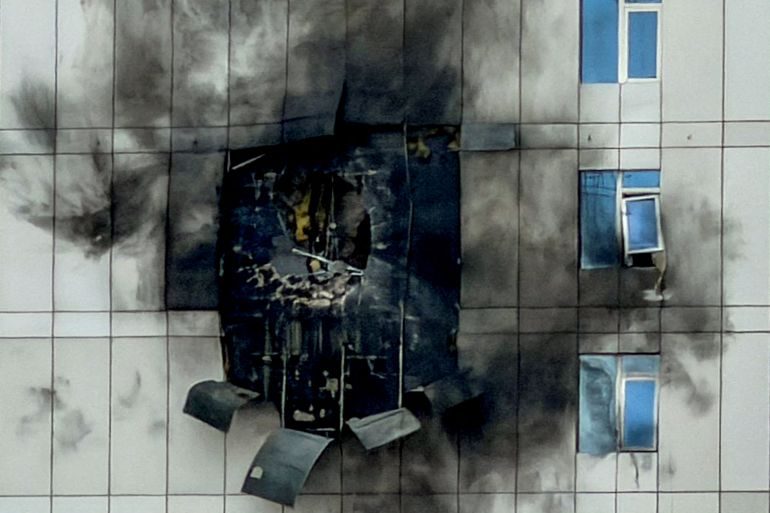
It is the largest verdict in the prosecution wave that began after Iranian missiles and drones hit Bahrain on February 28, where the U.S. Navy's Fifth Fleet is based. Bahrain says the defendants took orders from Iran and plotted to topple the government. Twenty rights groups, including Amnesty International and Human Rights Watch, say the confessions were extracted under torture.

Why it matters

Manama is answering an Iranian attack on the Fifth Fleet base with mass life sentences against its own Shia clergy.

Questions about this story

Free account needed to ask — your question is kept and asked for you right after sign-up. Answers are public.

No questions yet — be the first to ask.

Key Indicators

64
Given life on November 16
Most were Shia clerics arrested in May and June.
47
Clerics among those jailed
Includes Friday prayer leaders from Duraz and Ras Rumman, per BIRD.
Feb 28
Day Iran struck Bahrain
Drones and missiles hit the Fifth Fleet base and parts of Manama.
2
Bahraini deaths from Iran strikes
More than 50 people were injured in the February-March attacks.

Voices

Curated perspectives — historical figures and your fellow readers.

Sign up to generate historical perspectives on this story.

People Involved

Organizations Involved

Timeline

December 1981 November 2026

11 events Latest: November 16th, 2026 · 1 week ago Showing 8 of 11
Tap a bar to jump to that date
  1. Rights groups demand torture investigation

    Advocacy

    Twenty organisations, including Amnesty International, Human Rights Watch and BIRD, sign an open letter urging Bahrain to investigate allegations of forced standing, sleep deprivation and threats against defendants in the case.

  2. Bahrain arrests 41 alleged IRGC operatives

    Arrest

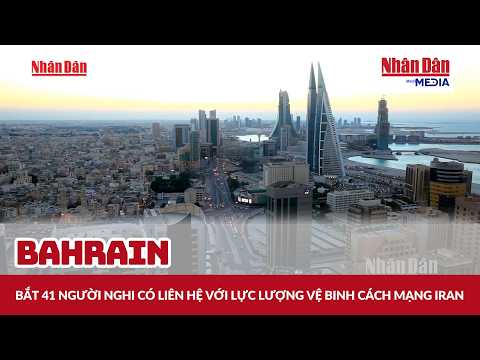
    The Interior Ministry calls the group the core of an Iranian network inside the kingdom and says it was raising funds for the IRGC.

  3. Conditional ceasefire in Iran war

    Diplomacy

    Pakistan mediates a conditional ceasefire between Iran, Israel, and the United States, ending six weeks of open fighting.

  4. First post-war espionage arrests announced

    Arrest

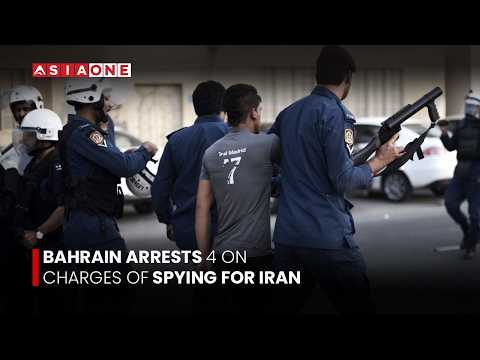
    Bahrain's Interior Ministry says it has detained four citizens accused of photographing vital sites and sending coordinates to the IRGC.

  5. Iran strikes Bahrain in response to U.S.-Israeli war

    Attack

    Iranian missiles and drones hit the U.S. Fifth Fleet base and parts of Manama and Muharraq. Bahrain says it shot down 45 missiles and nine drones.

  6. Pearl Roundabout uprising begins

    Historical context

    Mass protests in Manama, mostly by Shia Bahrainis, are crushed a month later by Saudi and Emirati troops. The government blames Iran.

  7. IRGC-trained group attempts coup in Bahrain

    Historical context

    Bahrain arrests members of the Islamic Front for the Liberation of Bahrain, an Iran-based group accused of plotting to topple the Al Khalifa monarchy.

Scenarios

1

Bahrain announces more IRGC cell prosecutions before year-end

Likely Resolves by End of 2026

Discussed by: Reuters, Al Jazeera, Iran International tracking the Bahraini prosecution wave

Manama keeps the pace it has set since March, announcing at least one more arrest sweep or verdict tied to alleged IRGC networks before December. The May 9 arrests alone still need to move through the courts, and Bahrain's Interior Ministry has signaled there are more cells to find.

2

Human Rights Watch or Amnesty publishes report alleging unfair trials

Possible Resolves by Feb 28, 2027

Discussed by: Human Rights Watch and Amnesty International, which have criticized Bahraini terror prosecutions for years

Both groups have documented coerced confessions and restricted defense access in past Bahraini terror trials. The volume and speed of the post-war verdicts is the kind of thing that draws a formal report. The question is whether they prioritize Bahrain over other 2026 caseloads.

3

Bahrain and Iran formally break diplomatic relations

Uncertain Resolves by End of 2026

Discussed by: Atlantic Council and regional analysts watching Gulf-Iran ties after the war

Bahrain and Iran restored relations only recently after the Saudi-Iran deal. The February strikes and the espionage prosecutions are a direct test of that thaw. A formal break would mean recalling ambassadors and shutting embassies, not just downgrading contacts.

4

Bahrain executes a defendant convicted in the post-war cases

Unlikely Resolves by May 24, 2027

Discussed by: Reprieve, the death-penalty NGO that tracks Bahraini cases

Bahrain has carried out executions of people convicted on terror charges before, including in 2017 and 2019. The current cases drew life sentences, not death, but separate cases in the pipeline could escalate. Watch for new charges that carry the death penalty.

5

Bahrain's Court of Cassation upholds the November 16 life sentences

Likely Resolves by Q2 2027

Discussed by: BIRD and defence lawyers tracking the case

All 69 defendants have a right of appeal, and Bahrain's higher courts have rarely overturned terror convictions. Watch whether any sentence is reduced on procedural grounds, or whether the whole batch is confirmed.

Historical Context

3 moments from history that rhyme with this story — and how they unfolded.

December 1981

Islamic Front for the Liberation of Bahrain coup plot (1981)

Bahraini security forces arrested 73 people accused of plotting to seize the Interior Ministry, the state broadcaster, and key installations on Bahrain's national day. The group, the Islamic Front for the Liberation of Bahrain, was founded in Iran by cleric Mohammad Taqi al-Modarresi after the 1979 revolution. Authorities said the plotters had trained in Iran and planned to install a clerical government.

Then

The plotters were tried and sentenced to long prison terms. Bahrain expelled Iranian diplomats and accused Tehran of trying to export its revolution.

Now

The episode set the template for how the Al Khalifa government frames every later Iran-linked case: Tehran using local Shia recruits to attack the monarchy.

Why this matters now

The current prosecutions follow the same script: an Iran-based handler, Bahraini recruits, alleged surveillance of vital sites. The 1981 case is the reason that script is instantly believable inside Bahrain.

February-March 2011

Pearl Roundabout uprising and Saudi-led intervention (2011)

Tens of thousands of Bahrainis, most of them Shia, occupied Pearl Roundabout in Manama demanding political reform. On March 14, about 1,000 Saudi troops and 500 Emirati troops crossed the causeway into Bahrain. King Hamad declared martial law the next day. The protest camp was cleared and the monument at the roundabout was demolished.

Then

At least 30 people were killed and thousands were detained. The Bahraini government blamed Iran for orchestrating the protests, though an independent inquiry it commissioned found no proof of Iranian direction.

Now

The uprising hardened a security state. Mass naturalization of Sunni migrants shifted the citizen demographic balance, and opposition political life was largely shut down.

Why this matters now

Bahrain has framed Shia dissent as Iranian-directed for 15 years. The post-war prosecutions land on top of that framing, making it easy to extend a domestic security argument into a foreign one.

March 2023

Saudi-Iran rapprochement and Gulf normalization (2023)

Saudi Arabia and Iran agreed in Beijing to restore diplomatic ties after a seven-year break. Bahrain followed by reopening channels with Tehran in 2024. The deal was meant to lower the temperature across the Gulf, including in proxy fights in Yemen and elsewhere.

Then

Embassies reopened. Direct flights resumed. Public rhetoric softened across the region.

Now

The thaw held until the U.S.-Israeli war on Iran in February 2026, when Iran struck Gulf states hosting U.S. forces and put the new détente under direct strain.

Why this matters now

The current prosecutions show how thin that thaw was for Bahrain. One round of strikes was enough for Manama to revert to the 1981 playbook.

Sources

(14)