


Pull to refresh
Logo
Daily Brief
Following
Why Sign Up
Iran extends war to US corporate targets across the Gulf

Iran extends war to US corporate targets across the Gulf

Force in Play
By Newzino Staff |

The IRGC's strikes on Oracle and Amazon facilities mark the first time a state has deliberately targeted commercial tech infrastructure during wartime

Yesterday: IRGC drone strikes Oracle building in Dubai

Overview

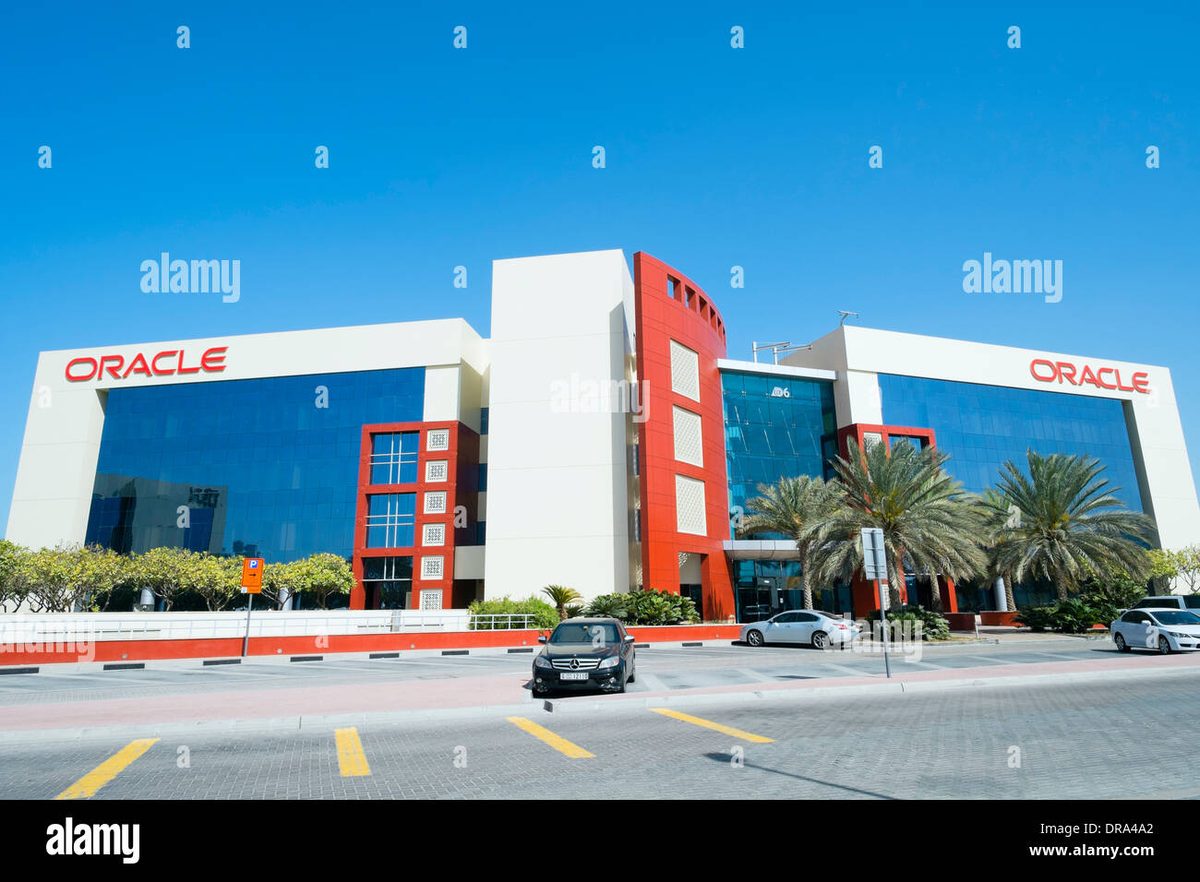
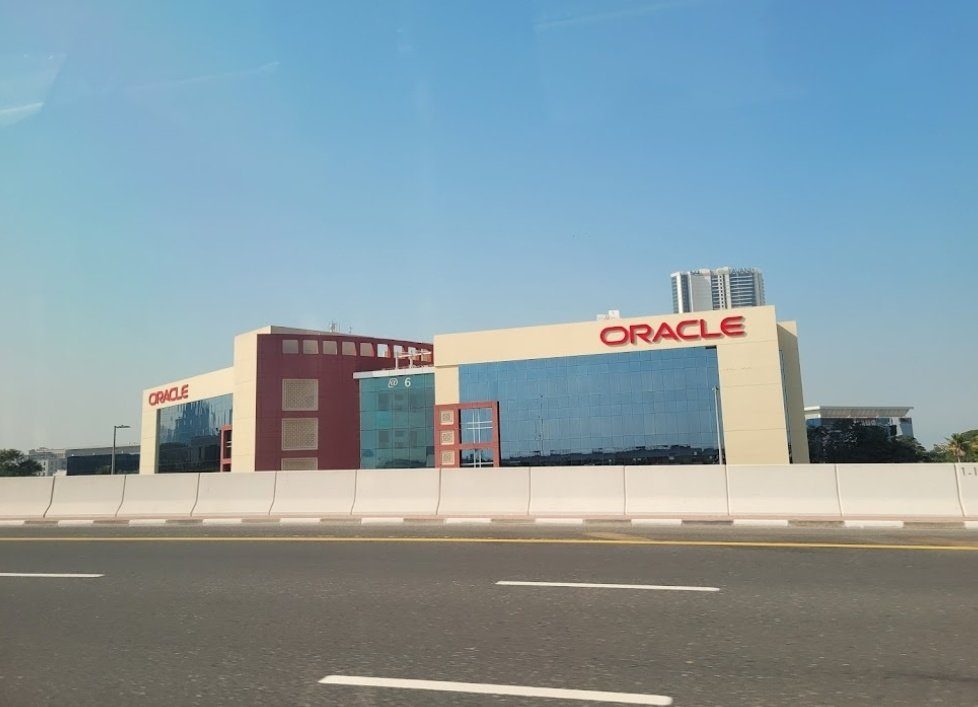
For decades, American tech companies built out massive data centers and office complexes across the Persian Gulf without ever treating them as potential military targets. On April 4, Iran's Islamic Revolutionary Guard Corps (IRGC) changed that calculation by striking Oracle's headquarters building in Dubai Internet City with a drone — part of a declared campaign against 18 US firms the IRGC accuses of supporting American and Israeli military operations.

Why it matters

Hundreds of billions in US tech infrastructure across the Gulf are now declared military targets in an active war.

Key Indicators

18
US companies named as IRGC targets
The IRGC designated 18 American firms — including Oracle, Amazon, Microsoft, Apple, Google, Meta, Nvidia, and Boeing — as legitimate military targets.
$126/barrel
Peak Brent crude oil price
Oil prices hit their highest level in years after Iran closed the Strait of Hormuz, the largest disruption to energy supply since the 1970s.
3,500+
Reported killed in Iran
Iran's Health Ministry reports over 3,500 killed including more than 1,600 civilians since US-Israeli strikes began February 28.
4+
Confirmed strikes on US tech facilities
Amazon Web Services centers in Bahrain hit at least three times; Oracle building in Dubai struck once.
48 hours
Trump's Hormuz ultimatum deadline
President Trump warned on April 4 that Iran has 48 hours to reopen the Strait of Hormuz or face attacks on its energy infrastructure.

Interactive

Exploring all sides of a story is often best achieved with Play.

Ever wondered what historical figures would say about today's headlines?

Sign up to generate historical perspectives on this story.

Sign Up

Debate Arena

Two rounds, two personas, one winner. You set the crossfire.

People Involved

Organizations Involved

Timeline

  1. IRGC drone strikes Oracle building in Dubai

    Military

    A drone strikes Oracle's headquarters building on Sheikh Zayed Road in Dubai Internet City, damaging the facade and southwestern corner. Dubai authorities describe the incident as debris from an aerial interception; the IRGC claims a deliberate strike in retaliation for the Kharrazi attack.

  2. Trump issues 48-hour Hormuz ultimatum

    Statement

    President Trump warns Iran has 48 hours to reopen the Strait of Hormuz or 'make a deal,' threatening to destroy Iran's power plants, oil facilities, and desalination plants. Iran's military command dismisses the threat.

  3. US F-15E shot down over Iran; crew ejects

    Military

    Iranian forces shoot down a US Air Force F-15E Strike Eagle. One crew member is rescued; the weapons systems officer evades capture in mountainous terrain for over 24 hours before being recovered by US special forces. An A-10 Warthog on the rescue mission is also downed over the Persian Gulf.

  4. Kharrazi's home struck; wife killed in Tehran

    Military

    A US-Israeli airstrike hits the Tehran home of former Foreign Minister Kamal Kharrazi, killing his wife and critically wounding him. Kharrazi had reportedly been involved in backchannel negotiations with the US via Pakistani intermediaries.

  5. Iranian missiles strike Amazon facility in Bahrain

    Military

    Iranian missiles hit Batelco headquarters in Bahrain's Hamala district, which hosts Amazon Web Services infrastructure. This is at least the fourth Iranian strike on AWS facilities in the region since the war began.

  6. IRGC publishes 18-company target list with April 1 deadline

    Declaration

    The IRGC names 18 US companies — including Oracle, Amazon, Microsoft, Apple, Google, Nvidia, and Boeing — as military targets. Sets an 8:00 PM Tehran time deadline on April 1 and warns employees to evacuate offices within a one-kilometer radius.

  7. Iran closes Strait of Hormuz to allied shipping

    Military

    The IRGC announces the Strait of Hormuz is closed to vessels traveling to or from US, Israeli, and allied ports. Oil prices, already above $100 per barrel, spike to $126. Global shipping through the strait drops 70%.

  8. IRGC declares US-Israeli economic interests as targets

    Declaration

    The IRGC formally designates American and Israeli economic and banking interests across the region as legitimate military targets, signaling an expansion beyond conventional military objectives.

  9. Iran retaliates against Gulf states and Israel

    Military

    Iran launches missiles and drones at all six Gulf Cooperation Council (GCC) countries, US military bases, and Israel within 48 hours. Amazon Web Services data centers in the UAE and Bahrain are among targets hit.

  10. US and Israel launch Operation Epic Fury

    Military

    Nearly 900 strikes in 12 hours target Iranian military facilities, nuclear sites, and leadership. Supreme Leader Ali Khamenei is killed in an Israeli decapitation strike on his compound.

Scenarios

1

Major US tech firms evacuate Gulf operations as strikes continue

Discussed by: Financial Times, Bloomberg, and Gulf-based business analysts tracking the $20 billion+ in committed US tech investment

If the IRGC successfully strikes additional targets on its 18-company list — particularly high-value data centers operated by Microsoft, Google, or Nvidia — insurers pull coverage and corporate boards order evacuations. Gulf states lose their position as emerging tech hubs. This is the scenario Gulf governments most fear, as it would undermine a decade of economic diversification strategy. Some initial evacuations of non-essential staff are already reported.

2

Trump strikes Iranian energy infrastructure, triggering mutual economic destruction

Discussed by: Carnegie Endowment, Dallas Federal Reserve analysts, and Pentagon officials quoted in NBC and Axios reporting

Trump's 48-hour deadline on April 6 passes without Iranian compliance. The US strikes power plants, oil facilities, and desalination plants. Iran retaliates by hitting Gulf energy and tech infrastructure at scale, fulfilling Colonel Zolfaqari's warning. Oil surpasses $150 per barrel. Gulf states, caught between both sides' escalation, face severe civilian infrastructure damage and economic disruption.

3

Backchannel diplomacy produces a ceasefire before deadlines expire

Discussed by: Middle East Council on Global Affairs, GCC diplomatic sources, and Pakistan's Foreign Ministry

The wounding of Kharrazi — himself a backchannel negotiator — has complicated but not eliminated diplomatic pathways. Gulf states, facing damage to their own territory and investment climates, push aggressively for a ceasefire framework. Pakistan, Oman, and Qatar facilitate. This scenario requires both sides to accept terms neither has yet shown willingness to accept: Iran reopening Hormuz and the US halting strikes on Iranian leadership.

4

Corporate targeting becomes a permanent feature of state-on-state conflict

Discussed by: The Conversation, Yale Law Journal scholars on dual-use targeting, and cybersecurity analysts at Flashpoint

Regardless of how this war ends, the IRGC has established a precedent: commercial data centers and tech offices are targetable in interstate war. Other states study the playbook. The global cloud industry, which concentrated infrastructure in politically convenient locations without hardening against state-level military threats, faces a structural reckoning about geographic risk. Insurance markets, corporate site-selection, and defense contracting all shift permanently.

Historical Context

Abqaiq-Khurais drone attacks on Saudi Aramco (2019)

September 2019

What Happened

On September 14, 2019, a swarm of drones and cruise missiles struck Saudi Aramco's oil processing facilities at Abqaiq and Khurais, temporarily knocking out 5.7 million barrels per day of production — about 5% of global supply. Yemen's Houthi movement claimed responsibility, but the US and Saudi Arabia attributed the attack to Iran.

Outcome

Short Term

Saudi Arabia restored production within weeks. Oil prices spiked briefly but settled. The US did not respond militarily.

Long Term

The attack demonstrated that cheap drones could disable critical infrastructure defended by billions of dollars in air defense systems, reshaping military planning worldwide.

Why It's Relevant Today

The Abqaiq attack proved the concept Iran is now scaling: using drones and missiles to strike high-value economic targets in Gulf states. The difference in 2026 is that Iran is targeting American corporate facilities directly, not just state-owned energy infrastructure.

US bombing of dual-use infrastructure in Iraq (1991)

January-February 1991

What Happened

During the Gulf War, US-led coalition forces systematically destroyed Iraq's electrical grid, telecommunications networks, water treatment plants, and bridges. The Pentagon classified these as 'dual-use' infrastructure supporting Saddam Hussein's military capacity. The campaign knocked out 90% of Iraq's electrical generation within days.

Outcome

Short Term

Iraqi military command and control was severely degraded. Coalition forces achieved rapid battlefield dominance.

Long Term

The destruction of civilian infrastructure contributed to a humanitarian crisis that killed an estimated tens of thousands of Iraqi civilians in the following years. The 'dual-use' doctrine became standard in US military planning but drew lasting criticism from international humanitarian law scholars.

Why It's Relevant Today

Iran is now applying a mirror-image version of the dual-use doctrine the US pioneered: designating American commercial technology infrastructure as military targets because of its contracts with the Pentagon. The legal and ethical arguments each side uses echo the debates from 1991.

Houthi attacks on Red Sea shipping (2023-2024)

November 2023 - 2024

What Happened

After the start of the Israel-Gaza war, Yemen's Houthi movement launched dozens of drone and missile attacks on commercial shipping in the Red Sea and Gulf of Aden, claiming to target vessels linked to Israel. Major shipping companies rerouted around the Cape of Good Hope, adding weeks and billions in costs to global trade.

Outcome

Short Term

A US-led naval coalition conducted strikes on Houthi positions but failed to stop the attacks. Global shipping costs surged.

Long Term

The campaign demonstrated that a relatively small military force could disrupt global trade chokepoints. It established the template of attacking commercial targets as leverage in a geopolitical conflict.

Why It's Relevant Today

The Houthi Red Sea campaign was a proof of concept for what Iran is now doing at larger scale: striking commercial infrastructure to raise the economic cost of the conflict for the US and its allies. Iran's Hormuz closure and corporate targeting represent the same strategy applied with state-level military capability rather than proxy forces.

Sources

(15)