

Pull to refresh
Logo
Daily Brief
Following
Why Sign Up
Iran-aligned forces target US bases and embassies across the Middle East

Iran-aligned forces target US bases and embassies across the Middle East

Force in Play
By Newzino Staff |

From Baghdad's Green Zone to Bahrain's Fifth Fleet headquarters, American facilities face the most sustained attack campaign since the 1983 Beirut barracks bombing

Yesterday: Missile destroys helipad and air defense system at US Embassy Baghdad

Overview

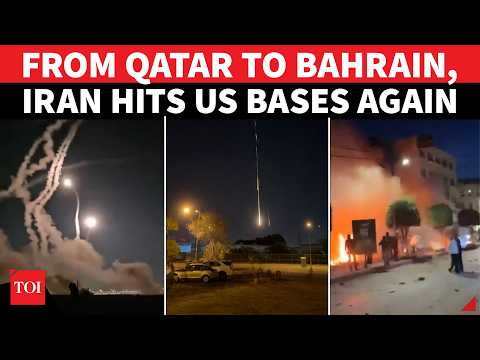
A missile struck the helipad inside the United States Embassy compound in Baghdad on March 14, destroying part of the air defense system designed to shoot down exactly this kind of incoming fire. The Counter-Rocket, Artillery, and Mortar system, its radar station, and a satellite communications array were all knocked out, leaving the largest US embassy in the world significantly more vulnerable to the hundreds of attacks that Iran-aligned militias have launched since the US and Israel began striking Iran on February 28.

Key Indicators

291+
Militia attacks claimed in Iraq
Operations claimed by the Islamic Resistance in Iraq against US targets through March 11
13
US service members killed
American military deaths since the conflict began on February 28
~200
US service members wounded
Approximately 170 have returned to duty; 10 remain in serious but stable condition
7+
Countries with US facilities hit
Iraq, Bahrain, Qatar, UAE, Kuwait, Jordan, and Saudi Arabia have all seen strikes on American installations

Interactive

Exploring all sides of a story is often best achieved with Play.

Ever wondered what historical figures would say about today's headlines?

Sign up to generate historical perspectives on this story.

Sign Up

Debate Arena

Two rounds, two personas, one winner. You set the crossfire.

People Involved

Organizations Involved

Timeline

  1. Missile destroys helipad and air defense system at US Embassy Baghdad

    Attack

    A missile struck the US Embassy helipad in Baghdad's Green Zone at approximately 5:30 AM, destroying the C-RAM air defense system, its radar station, and a satellite communications array. The strike left the compound significantly more vulnerable to future attacks. Hours earlier, US strikes killed senior Kata'ib Hezbollah commander Abu Hassan al-Furaiji in Baghdad.

  2. US strikes PMF headquarters across Iraq; French and Italian bases hit

    Military

    US airstrikes hit Popular Mobilization Forces headquarters in Kirkuk province and near the Syrian border, killing nine fighters. Separately, a missile hit an Italian military base in Erbil, and a French training camp was struck — killing one French soldier and wounding six.

  3. Drone strikes US diplomatic facility in Baghdad

    Attack

    A drone struck the US Baghdad Diplomatic Support Center, a facility separate from the main embassy compound. The attack demonstrated that militia forces could reach multiple American sites within the capital.

  4. First wartime attack on US Embassy in Baghdad

    Attack

    Four Katyusha rockets struck the US Embassy compound in the Green Zone — the first attack to land within the fortified district since the war began. Prime Minister al-Sudani ordered security forces to pursue the perpetrators.

  5. Iranian drones hit US Embassy compound in Riyadh

    Attack

    Two drones struck the US Embassy in Saudi Arabia, causing a fire and minor material damage. Reports indicated the strike also hit a Central Intelligence Agency station within the compound. The embassy ordered Americans to shelter in place.

  6. State Department orders non-emergency staff to leave Iraq

    Diplomatic

    The Department of State ordered non-emergency US government employees to depart Iraq and raised the travel advisory to Level 4 — Do Not Travel. Routine consular services at the Baghdad embassy and Erbil consulate were suspended indefinitely.

  7. Drone swarms hit US installations in Erbil, Kurdistan Region

    Attack

    Saraya Awliya al-Dam claimed drone attacks on American bases in Erbil 'in retaliation for the blood of the martyr Khamenei.' The Kurdistan Region became the primary target zone, absorbing roughly 200 of the 291 attacks claimed through March 11.

  8. US and Israel launch Operation Epic Fury against Iran

    Military

    Approximately 900 strikes hit Iranian targets in the first 12 hours. Supreme Leader Ali Khamenei was killed in Tehran. Iran immediately retaliated with 247 ballistic missiles and 230 drones targeting US bases and Gulf states. The Islamic Resistance in Iraq claimed 16 operations against US targets on the first day.

  9. Iranian drones hit US Fifth Fleet headquarters in Bahrain

    Attack

    Shahed-136 drones struck the Naval Support Activity compound at Juffair, destroying a radar dome. The base was declared unsafe, and approximately 8,300 US personnel were ordered to evacuate to off-base hotels.

  10. Iranian missiles damage THAAD radar at US base in Jordan

    Attack

    Missiles struck Muwaffaq Salti Air Base, destroying an advanced Terminal High Altitude Area Defense radar system. Satellite imagery showed 13-foot craters near the wreckage, with damage estimated at $300 million.

Scenarios

1

US evacuates Baghdad embassy as attacks overwhelm defenses

Discussed by: Defense analysts at the Foundation for Defense of Democracies and military correspondents at Stars and Stripes

With the C-RAM system destroyed and militia attacks averaging 20 per day, the embassy's defensive posture has degraded to a point where maintaining a diplomatic presence becomes untenable. The State Department has already ordered non-emergency departures and struggled to evacuate under fire. If attacks intensify or a strike causes mass casualties among remaining staff, a full evacuation — potentially requiring a military extraction under hostile conditions — becomes the likeliest outcome. This would echo the 2020 near-evacuation but under far more dangerous circumstances.

2

US retaliatory strikes degrade militia capacity, attacks slow to manageable levels

Discussed by: CENTCOM briefings and Pentagon correspondents at Fox News and CBS News

The killing of Kata'ib Hezbollah commander al-Furaiji on March 14 and the March 12 strikes on PMF headquarters across multiple provinces represent an escalating US effort to dismantle militia command structures. If sustained, these leadership strikes could fragment the Islamic Resistance in Iraq's coordination, reducing the attack tempo from dozens per day to sporadic incidents that existing defenses can manage. CENTCOM's claim that Iranian missile fire has dropped 90% suggests attrition is already working against state-level threats, though militia groups operate with greater independence.

3

Iraq expels remaining US forces, ending the American military presence

Discussed by: Al Jazeera analysts and Iraqi parliamentary commentators cited by The New Region

Prime Minister al-Sudani is under immense pressure from both sides. US strikes on PMF positions — which include units nominally under Iraqi government command — have drawn condemnation from Baghdad. If US operations continue killing Iraqi security-adjacent personnel, the political cost of hosting American forces could exceed the cost of expelling them. The Iraqi parliament passed a non-binding expulsion vote after the 2020 Soleimani killing; a binding version under current conditions would carry far more political momentum. The US had already withdrawn from most of federal Iraq before the war began, making a complete departure logistically simpler than in previous years.

4

Ceasefire halts regional hostilities, militia attacks taper off

Discussed by: Omani diplomatic sources, Iranian President Pezeshkian's March 12 ceasefire framework, and Latin American joint ceasefire calls

Iranian President Pezeshkian outlined three ceasefire conditions on March 12: recognition of Iran's rights, reparations, and guarantees against future aggression. If negotiations gain traction — particularly through Omani mediation or following the Putin-Trump call on March 11 — Iran could order its proxy forces to stand down. The Islamic Resistance in Iraq paused operations after US retaliatory strikes in February 2024, suggesting the militia command structure responds to Iranian direction. However, Iran's foreign minister has simultaneously stated Iran is 'not interested in negotiating with the US,' and the gap between the two sides' positions remains wide.

Historical Context

Attacks on US bases during the Gaza war (2023-2024)

October 2023 - February 2024

What Happened

After Hamas attacked Israel on October 7, 2023, Iran-backed militias launched over 190 attacks on US bases in Iraq, Syria, and Jordan over four months. The deadliest strike killed three US soldiers at Tower 22 in Jordan on January 28, 2024, when a drone exploited a gap in air defenses. The US retaliated on February 2, 2024, striking 85 targets across Iraq and Syria.

Outcome

Short Term

The Islamic Resistance in Iraq paused operations after the US retaliatory strikes, demonstrating that sustained US military pressure could influence militia behavior.

Long Term

The 2023-2024 campaign established the Islamic Resistance in Iraq as a coordinating brand and demonstrated the militia playbook now being executed at far greater scale in 2026.

Why It's Relevant Today

The 2023-2024 campaign totaled roughly 190 attacks over four months with three American deaths. The 2026 conflict has seen comparable attack volumes in days, with 13 US deaths in two weeks — showing the difference between proxy harassment during a regional crisis and proxy warfare during a direct US-Iran conflict.

US Embassy Baghdad storming and the Soleimani killing (2019-2020)

December 2019 - January 2020

What Happened

After US airstrikes killed 25 Kata'ib Hezbollah fighters, militia supporters physically stormed the US Embassy in Baghdad on December 31, 2019, breaching the outer compound. Three days later, the US killed Iranian General Qasem Soleimani and Kata'ib Hezbollah commander Abu Mahdi al-Muhandis at Baghdad Airport. Iran retaliated by firing 12 ballistic missiles at two US bases, causing 110 traumatic brain injuries among American troops.

Outcome

Short Term

Iraq's parliament passed a non-binding resolution to expel US forces. The US and Iran pulled back from further escalation through backchannel communication.

Long Term

The episode set the precedent for direct Iranian ballistic missile strikes on US forces, but at a scale (12 missiles at 2 bases) that now looks restrained compared to the 2026 barrage of hundreds of missiles across seven countries.

Why It's Relevant Today

The 2019-2020 cycle shows what restraint looked like — both sides absorbed blows and stopped. In 2026, the killing of Khamenei removed the restraint calculus entirely. The embassy that militia supporters breached on foot in 2019 is now being struck by precision munitions that have disabled its air defenses.

1983 Beirut barracks bombing and embassy attacks

April - October 1983

What Happened

On April 18, 1983, a truck bomb destroyed the US Embassy in Beirut, killing 63 people including 17 Americans. Six months later, on October 23, a suicide truck bomb hit the US Marine barracks at Beirut International Airport, killing 241 American service members — the deadliest single attack on US forces since the Battle of Iwo Jima. A simultaneous attack killed 58 French paratroopers. Iran-backed Hezbollah was linked to both attacks.

Outcome

Short Term

President Reagan withdrew US Marines from Lebanon in February 1984, four months after the barracks bombing.

Long Term

The withdrawal established a lasting pattern: sustained attacks on US facilities in the Middle East, when combined with sufficient casualties, can alter American force posture. The episode shaped US risk calculus for deploying troops in the region for decades.

Why It's Relevant Today

The 1983 precedent is the scenario US military planners want to avoid — where cumulative attacks on a fortified position force a withdrawal that reshapes regional power dynamics. The destruction of the Baghdad embassy's air defenses on March 14 echoes the core vulnerability: even heavily defended US facilities can be degraded by persistent, targeted strikes.

Sources

(15)