




Pull to refresh
Logo
FDA approves first Factor XIa blood thinner for repeat strokes

FDA approves first Factor XIa blood thinner for repeat strokes

New Capabilities

Bayer's Sunharbo cut ischemic strokes 26% without raising major bleeding in a 12,327-patient trial

Overview

Updated 1 hour ago

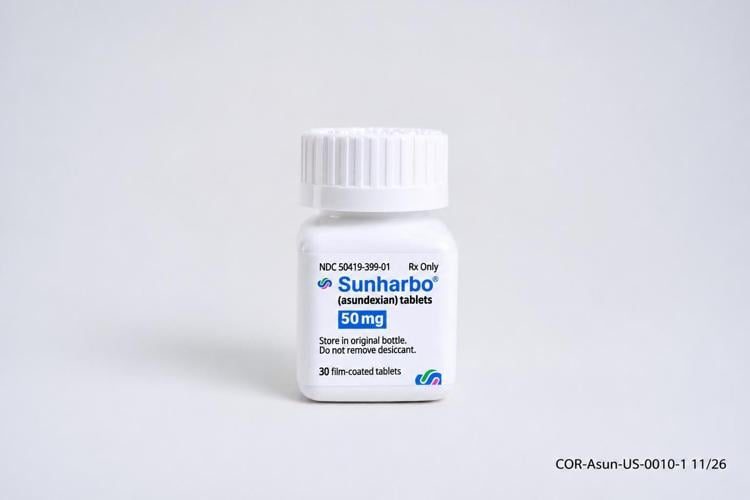
Roughly a quarter of the 795,000 Americans who have a stroke each year have had one before. On Monday the Food and Drug Administration approved Sunharbo, a daily pill from Bayer that cuts the risk of a second ischemic stroke by 26% when taken alongside existing antiplatelet therapy.

Sunharbo is the first approved medicine in a new class: Factor XIa inhibitors. The target is a clotting protein that amplifies clots after they form but plays a smaller role in sealing everyday injuries. In the 12,327-patient OCEANIC-STROKE trial, major bleeding was about the same on the drug as on placebo, the balance that older blood thinners struggle to strike.

Why it matters

Stroke survivors now have a daily pill that lowers repeat-stroke risk without a measurable rise in major bleeding across the whole trial population.

Questions about this story

Free account needed to ask — your question is kept and asked for you right after sign-up. Answers are public.

No questions yet — be the first to ask.

Key Indicators

26%
Relative reduction in ischemic stroke
Sunharbo plus antiplatelet therapy versus placebo plus antiplatelet therapy over a median 14.2 months.
12,327
Patients in the OCEANIC-STROKE trial
Randomized within 72 hours of a non-cardioembolic ischemic stroke or high-risk transient ischemic attack.
1.9% vs 1.7%
Major bleeding, drug versus placebo
The difference was not statistically significant, but bleeding rose in patients over 75 and in the first 90 days.
$748.50
List price for a 30-day supply
Bayer's disclosed list price before insurance and rebates.

Voices

Curated perspectives — historical figures and your fellow readers.

Sign up to generate historical perspectives on this story.

People Involved

Organizations Involved

Timeline

2022 November 2026

4 events Latest: Today
Tap a bar to jump to that date
  1. FDA approves Sunharbo for repeat-stroke prevention

    Today Regulatory

    The first Factor XIa inhibitor reaches the U.S. market, for use alongside antiplatelet therapy after a non-cardioembolic stroke or high-risk mini-stroke.

  2. FDA accepts application under priority review

    Regulatory

    Regulators took up Bayer's new drug application with a faster review clock.

  3. Asundexian stumbles in atrial fibrillation

    Clinical trial

    A key atrial fibrillation trial did not pan out, leaving secondary stroke prevention as the drug's path to market.

  4. Mid-stage trial misses main goal but shows a signal

    Clinical trial

    The Phase 2 PACIFIC-STROKE study missed its primary endpoint but suggested fewer symptomatic strokes at the 50 mg dose without extra bleeding, shaping the Phase 3 design.

Scenarios

1

Stroke centers add Sunharbo to standard discharge orders

Likely Resolves by End of 2027

Discussed by: Bayer executives and stroke neurologists quoted in BioPharma Dive

Stroke neurologists write the first prescriptions for patients leaving the hospital after a clot-caused stroke. If professional guidelines and hospital protocols list Sunharbo alongside antiplatelet therapy, the drug becomes routine within a year and Bayer reports meaningful sales by its 2027 annual results.

2

Insurers restrict coverage and slow the launch

Possible Resolves by Q2 2027

Discussed by: Bayer's Stefan Oelrich, who named access as the launch's limiting factor

Payers place Sunharbo on prior-authorization lists or require step therapy, and adoption stalls despite the trial results. At a $748.50 monthly list price, even modest cost-sharing can push patients toward generic alternatives, and Bayer's revenue falls short of blockbuster expectations.

3

A rival Factor XIa drug succeeds in its own late-stage trial

Uncertain Resolves by End of 2027

Discussed by: Leerink Partners analysts modeling milvexian sales

Bristol Myers Squibb and Johnson & Johnson's milvexian posts positive results in a large stroke or atrial fibrillation trial. That would confirm Factor XIa inhibition as a class rather than a single product, expanding the market and intensifying competition on price and label breadth.

4

Bleeding signal in older patients narrows the label

Unlikely Resolves by Nov 9, 2029

Discussed by: FDA label language flagging increased bleeding in patients over 75 and in the first 90 days

Post-marketing reports or a safety review find major bleeding meaningfully higher in elderly patients than the trial suggested. The FDA adds a warning or restricts use in that group, cutting into the Medicare-heavy population that has the most strokes.

Historical Context

2 moments from history that rhyme with this story — and how they unfolded.

1954-2011

Warfarin and the monitoring era (1954-2011)

For more than half a century, the main oral blood thinner was warfarin, a drug that prevented clots by blocking vitamin K. It worked, but patients needed regular blood tests to keep the dose in a narrow range. Too little and clots formed; too much and bleeding became dangerous. Diet and other medicines could throw the level off.

Then

Warfarin became standard for stroke prevention in atrial fibrillation and for clot-prone patients.

Now

The monitoring burden and bleeding risk created demand for drugs that worked without constant dose adjustment.

Why this matters now

The Stroke Prevention era set the trade-off Sunharbo's developers tried to escape: preventing clots without causing dangerous bleeding.

2011-2026

Factor Xa inhibitors displace warfarin (2011-2020s)

A new generation of pills targeting Factor Xa, including Bayer's Xarelto and rivals such as apixaban, arrived without routine monitoring and quickly took market share. Bayer sold Xarelto for years as a blockbuster. Generic competition eventually eroded the franchise: Bayer recorded 738 million euros from Xarelto in the first half of 2026, down almost 43% from a year earlier.

Then

Factor Xa drugs became the default oral anticoagulants for many patients.

Now

They still carried bleeding risk, leaving room for a drug aimed at a clotting protein that matters less for sealing injured vessels.

Why this matters now

Sunharbo is Bayer's attempt to repeat the Xarelto playbook with a new target as the old franchise declines.

Sources

(5)