



Pull to refresh
Logo
Big US banks post mixed Q3 results as equities trading surges

Big US banks post mixed Q3 results as equities trading surges

Money Moves

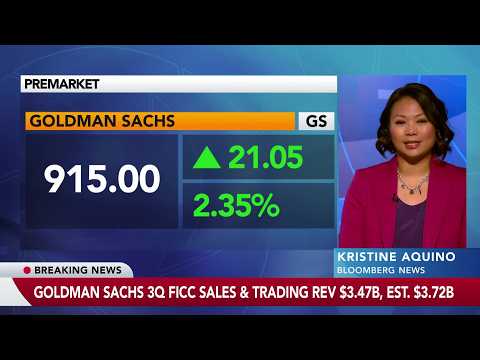
JPMorgan misses for first time since 2023; Goldman beats by 30% on equities surge

Yesterday: Big US banks report mixed Q3 earnings

Overview

Updated 40 minutes ago

JPMorgan Chase missed quarterly profit estimates for the first time in nearly three years. Goldman Sachs posted its second-best revenue quarter ever. The split came down to equities trading, which surged 49% at JPMorgan and 72% at Goldman.

Fixed-income trading fell at most banks, and dealmaking cooled from a strong spring. CEOs flagged sticky inflation, elevated asset prices, and rising interest rates as risks. The results show how much big-bank profits now depend on volatile trading desks.

Why it matters

Big-bank profits now hinge on equities trading, a volatile revenue source that can reverse quickly if markets turn.

Questions about this story

Free account needed to ask — your question is kept and asked for you right after sign-up. Answers are public.

No questions yet — be the first to ask.

Key Indicators

$17.01
Goldman Sachs Q3 earnings per share
Beat the $13.09 consensus by nearly 30%.
$5.57
JPMorgan Q3 earnings per share
Missed the roughly $5.90 consensus, the first miss since Q4 2023.
72%
Goldman equities revenue growth, year over year
Equities net revenues hit $6.44 billion on prime brokerage and derivatives.
49%
JPMorgan equity markets revenue growth, year over year
Strength in prime brokerage and derivatives trading.
12.4%
Goldman standardized CET1 capital ratio
Down from 12.9% in Q2 as risk-weighted assets grew.

Voices

Curated perspectives — historical figures and your fellow readers.

Ever wondered what historical figures would say about today's headlines?

Sign up to generate historical perspectives on this story.

People Involved

Organizations Involved

Timeline

July 2026 October 2026

3 events Latest: Yesterday
  1. Big US banks report mixed Q3 earnings

    Latest Earnings

    JPMorgan missed for first time since Q4 2023; Goldman beat by 30%.

  2. Federal Reserve hikes rates for first time since 2023

    Policy

    The Fed raised its benchmark rate with signals of more tightening possible.

  3. Big banks report strong Q2 earnings

    Earnings

    Trading revenue peaked in Q2 before cooling in Q3.

Scenarios

1

Trading boom fades as Q4 volumes cool

Possible Resolves by Jan 31, 2027

Discussed by: FinancialMarkets.com, which noted trading revenue fell 15-17% from Q2 at the three banks

Trading revenue already fell from Q2 to Q3 at all three banks. If that trend continues, equities desks normalize and banks lean on lending and investment banking. JPMorgan says its deal pipeline is strong, which could cushion the blow.

2

Equities momentum carries into Q4

Possible Resolves by Jan 31, 2027

Discussed by: Investing.com and CNBC, which noted Goldman's 30% beat and strong equities demand

Goldman's 72% equities jump and JPMorgan's 49% surge suggest structural demand for prime brokerage and derivatives. If market volatility persists, trading desks keep printing and banks beat again.

3

Consumer credit deterioration hits loan-loss reserves

Unlikely Resolves by Jan 31, 2027

Discussed by: AP News and Forbes, which noted two banks added to reserves for future losses

Two banks added to reserves for future losses in Q3. If inflation and higher rates squeeze borrowers, loan-loss provisions rise and eat into profits. Wells Fargo's capital ratio already fell on unrealized bond losses.

Historical Context

2 moments from history that rhyme with this story — and how they unfolded.

January-March 2021

Pandemic trading boom (Q1 2021)

Retail investors piled into meme stocks like GameStop, driving volatility and record trading revenue at major banks. Goldman and JPMorgan both posted their best trading quarters in years.

Then

Banks reported record quarterly trading revenue.

Now

Revenue normalized as volatility faded in later quarters.

Why this matters now

Shows how a trading boom can inflate bank profits, then reverse when markets calm.

March 2023

Silicon Valley Bank collapse (March 2023)

The Federal Reserve's rapid rate hikes caused bond losses that brought down Silicon Valley Bank, the largest bank failure since 2008. Signature Bank failed days later.

Then

Regulators seized both banks and guaranteed all deposits.

Now

The episode showed how rising rates can stress banks even when the economy looks solid.

Why this matters now

Today's banks face a similar dynamic: the Fed hiked rates in September 2026, and rising rates are already cutting into capital ratios.

Sources

(10)