

Pull to refresh
Logo
BLS to omit year-over-year inflation from the October CPI report

BLS to omit year-over-year inflation from the October CPI report

Rule Changes

A month of prices never collected during the 2025 shutdown leaves the US without its headline inflation number

Overview

Updated 1 hour ago

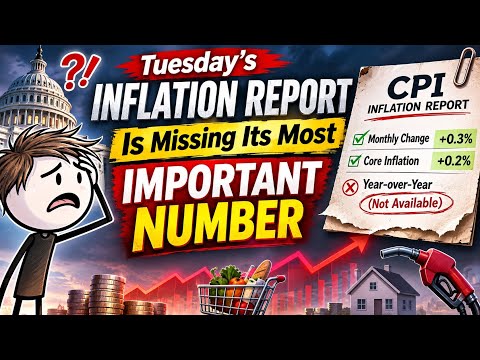
Tuesday's US inflation report will arrive without the number most people mean by inflation. The Bureau of Labor Statistics will not publish a 12-month change for the consumer price index or for core prices, which exclude food and energy.

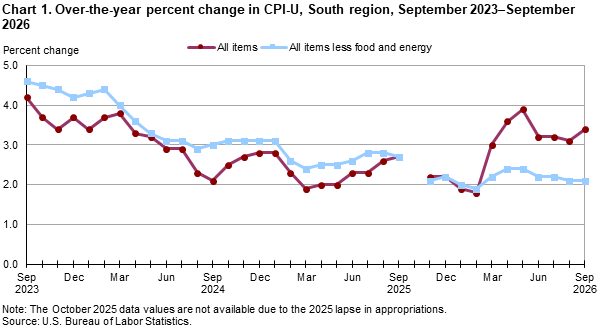
The cause is a month of prices the agency never collected. October 2025 fell inside a federal funding lapse, and BLS says it cannot reconstruct those prices now. The Fed, bond markets and anyone tracking real wages will have to work from a single month's change.

Why it matters

America's most-cited inflation number will be missing for October, leaving the Fed and markets to read a single month's price change.

Questions about this story

Free account needed to ask — your question is kept and asked for you right after sign-up. Answers are public.

No questions yet — be the first to ask.

Key Indicators

3.7%
September 12-month CPI
The last yearly inflation rate published before the gap.
0.3%
Expected October monthly CPI
Economists' forecast for the change from September.
0.2%
Expected October monthly core CPI
Forecast for the change in prices excluding food and energy.
43
Length of the 2025 funding lapse
The lapse ran from October 1 to November 12, 2025 and suspended most CPI collection.
1
Months of CPI data permanently missing
October 2025 is the only reference month with no published index for most series.

Voices

Curated perspectives — historical figures and your fellow readers.

Sign up to generate historical perspectives on this story.

People Involved

Organizations Involved

Timeline

October 2025 November 2026

6 events Latest: Today
Tap a bar to jump to that date
  1. Yearly figures confirmed missing from October report

    Today Statement

    BLS says no 12-month CPI or core CPI figures, and no real earnings growth.

  2. BLS spells out the October 2026 gap

    Statement

    Agency FAQ says 12-month changes will not publish where October 2025 is missing.

  3. November CPI built on carried-forward October prices

    Data release

    BLS issues no October 2025 CPI news release at all.

  4. Shutdown ends after 43 days

    Government

    October prices were never collected. BLS carries September values forward instead.

  5. September CPI published, nine days late

    Data release

    Collection for September was already finished, so that month's data was complete.

  6. Funding lapse begins

    Government

    Federal agencies shut down or run at reduced staffing. BLS suspends most CPI collection.

Scenarios

1

Yearly inflation returns with the November report

Likely Resolves by End of 2026

Discussed by: BLS, in its shutdown FAQ

BLS limits the omission to indexes where the October 2025 base is missing. November 2025 indexes were published using carried-forward October prices, so the November 2026 report should carry a normal 12-month rate. That would make October a one-month hole rather than a permanent break in the series.

2

BLS backfills October 2025 and restores the October comparison

Unlikely Resolves by Q2 2027

Discussed by: No forecaster in the cited reporting has predicted this; BLS has ruled it out.

The agency could try to rebuild October 2025 prices from receipts, scanner data or late respondent reports. BLS rejected that path, saying retroactive collection would be costly and potentially inaccurate, and that its price surveys do not rely on respondent recall. Rents would be the hardest piece, since the housing survey draws a different sample each month.

3

BLS writes a standing plan for shutdowns

Possible Resolves by End of 2027

Discussed by: No public proposal appears in the cited sources; the question follows from the agency's own account.

The FAQ describes an improvised recovery: carry-forward imputation for every survey sample, a geometric-mean patch to keep seasonal adjustment running, and no October news release. An agency that has now lost a month of data has reason to pre-write what it would do next time. Whether it does depends on budget and leadership, not on statistics.

Historical Context

3 moments from history that rhyme with this story — and how they unfolded.

March-April 2020

Pandemic suspension of in-person price collection (2020)

BLS stopped in-person CPI collection in March 2020 and shifted to phone, internet and alternative data sources. The agency kept publishing on schedule, flagging which estimates depended on imputation. It also warned that some furloughed workers had been misclassified in the employment data.

Then

Indexes published with quality notes and wider uncertainty than usual.

Now

The agency kept a continuous series and documented its substitutes rather than leaving a hole.

Why this matters now

Shows the difference between publishing through a collection gap and having no base period at all. The 2020 gap was bridged; October 2025 was not.

October 2013

Federal shutdown and the delayed September jobs report (2013)

A 16-day funding lapse beginning October 1, 2013 closed parts of the federal government. The September employment report, due October 4, slipped by more than two weeks. BLS had already finished collecting the underlying data before the lapse.

Then

Markets waited for a jobs number that arrived late but intact.

Now

The episode became the standard example of shutdowns delaying statistics without corrupting them.

Why this matters now

Past shutdowns mostly moved release dates. This one destroyed a reference month, which is why the October 2026 report cannot be repaired by waiting.

1983

CPI shelter methodology change (1983)

BLS replaced home purchase prices in the consumer price index with owners' equivalent rent, an estimate of what a homeowner would pay to rent the same home. The change redefined what the housing component measured. Shelter is now the index's largest component.

Then

Reported inflation behaved differently, and the agency explained the break.

Now

The series stayed continuous and comparable across the change.

Why this matters now

BLS has changed what CPI measures before, but always kept a usable year-over-year comparison. The October 2026 report breaks continuity instead of redefining it.

Sources

(6)