
Pull to refresh
Logo
US producer prices post biggest jump since 2022 as energy costs surge

US producer prices post biggest jump since 2022 as energy costs surge

Rule Changes

Wholesale inflation hit 6.3% year-over-year, pressuring the Fed to raise rates at its October meeting

Today: PPI surges 1.3%, largest monthly jump since March 2022

Overview

Updated 1 hour ago

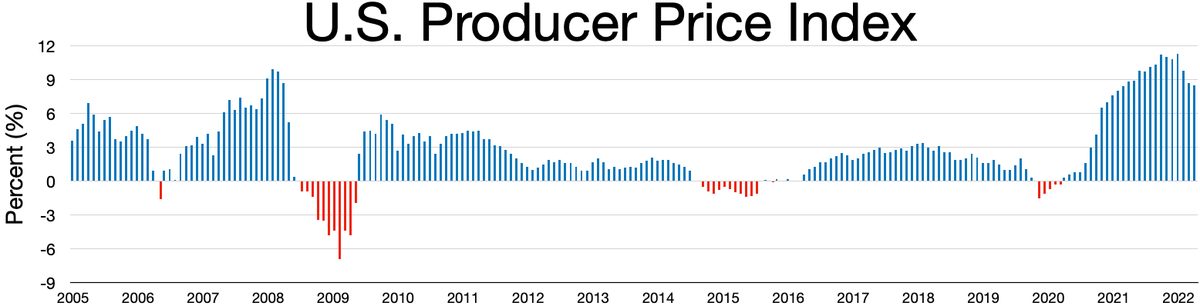
Wholesale prices jumped 1.3% in September, the biggest monthly gain in 4.5 years, as gasoline costs spiked 20.3% during the US-Israeli war with Iran. Producer prices rose 6.3% from a year earlier, the fastest pace since December 2022.

The report, released October 15, landed a day after consumer inflation also beat forecasts. Together they put pressure on the Federal Reserve to raise interest rates when its committee meets October 27-28. The Fed already raised rates in September, its first hike since July 2023, and traders now price a 63% chance of another by December.

Why it matters

Energy-driven inflation spills into consumer prices; if the Fed hikes again, mortgages and business borrowing stay expensive into 2027.

Questions about this story

Free account needed to ask — your question is kept and asked for you right after sign-up. Answers are public.

No questions yet — be the first to ask.

Key Indicators

1.3%
Producer prices, monthly change
Largest rise since March 2022, up from 0.5% in August.
6.3%
Producer prices, year-over-year
Fastest pace since December 2022, up from 5.6% in August.
+20.3%
Gasoline prices, monthly change
Energy prices overall rose 10.8%, accounting for over 80% of the goods increase.
0.7%
Core producer prices, monthly change
Excluding food and energy; economists had forecast 0.3%.
33.8%
Market-implied chance of October Fed hike
Up from 29.3% before the PPI report, per the CME FedWatch tool.
63.2%
Market-implied chance of December Fed hike
Traders see a December move as more likely than an October one.

Voices

Curated perspectives — historical figures and your fellow readers.

Ever wondered what historical figures would say about today's headlines?

Sign up to generate historical perspectives on this story.

People Involved

Organizations Involved

Timeline

September 2026 October 2026

4 events Latest: Today
Tap a bar to jump to that date
  1. FOMC convenes to decide on rates

    Upcoming Scheduled Policy

    The committee meets October 27-28, its first since the September hike, under pressure from hot CPI and PPI data.

  2. PPI surges 1.3%, largest monthly jump since March 2022

    Today Data

    Energy prices rose 10.8%, with gasoline up 20.3%, pushing wholesale inflation to 6.3% year-over-year.

  3. September CPI shows core inflation above forecasts

    Data

    Core consumer inflation beat expectations, the first of two consecutive hot inflation reports.

  4. Federal Reserve raises rates for the first time since July 2023

    Policy

    The FOMC hiked the federal funds rate, reversing a multi-year easing cycle as inflation re-accelerated.

Scenarios

1

Fed raises rates at October 27-28 meeting

Possible Resolves by Oct 28, 2026

Discussed by: CME FedWatch traders, who put the chance at 33.8%

Two consecutive inflation surprises raise the bar for holding. If oil keeps climbing on the Iran conflict, the committee may act now rather than wait. The September hike already broke the easing pattern, making a quick follow-up plausible.

2

Fed holds in October, raises rates in December

Likely Resolves by End of 2026

Discussed by: Chris Zaccarelli (Northlight Asset Management); 63.2% probability per CME FedWatch

Zaccarelli expects the committee to hold at the October session with midterm elections approaching, then deliver a 25-basis-point hike in December. This is the market's baseline: traders see a December move as twice as likely as one this month.

3

Inflation cools and Fed holds through year-end

Unlikely Resolves by End of 2026

Discussed by: Economists noting core goods inflation ex-energy was a milder 0.3%

Energy drove most of the September jump. If oil stabilizes or falls, a ceasefire in the Iran conflict would do that, headline inflation could ease quickly. Core goods excluding energy and the 0.5% rise excluding food, energy, and trade support the view that underlying pressure is contained.

Historical Context

2 moments from history that rhyme with this story — and how they unfolded.

October 1973 - March 1974

1973 oil embargo (1973-1974)

OPEC cut oil exports and quadrupled prices during the Yom Kippur War. The shock pushed US inflation from around 6% in 1973 to over 12% in 1974 and helped tip the economy into recession.

Then

Gasoline lines, rationing, and a sharp spike in consumer prices within months.

Now

The energy shock broadened into a decade of stagflation, cementing inflation expectations that took aggressive Fed tightening under Paul Volcker to break.

Why this matters now

A Middle East war-driven energy spike is the pattern today. The question is whether high oil filters into the broader price level the way it did in the 1970s.

2021-2023

2021-2022 inflation surge (2021-2023)

Post-pandemic supply and demand imbalances, amplified by Russia's invasion of Ukraine, pushed headline CPI to a peak of 9.1% in June 2022.

Then

The Fed raised rates from near zero to 5.25-5.5% over 2022-2023, the fastest tightening cycle in decades.

Now

Inflation cooled to near the Fed's 2% target by 2024, and the Fed began cutting rates through 2024 and 2025.

Why this matters now

The Fed's current situation is the reverse image: it hiked in September 2026 after months of cuts driven by the same energy-price channel. The playbook for what comes next is that 2022-2023 cycle.

Sources

(8)