

Pull to refresh
Logo
Inflation accelerates in final report before midterms as Iran war lifts gas prices

Inflation accelerates in final report before midterms as Iran war lifts gas prices

Money Moves

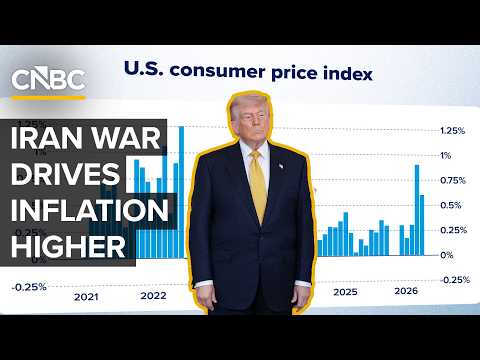
September CPI hit 3.7%, the fastest pace since spring, in the last inflation reading before the November 3 midterms.

Today: September CPI shows inflation at 3.7%

Overview

Updated 1 hour ago

US consumer prices climbed 3.7% in September from a year earlier, up from 3.4% in August and the fastest annual pace since spring. Gasoline jumped 9.1% for the month, more than half the total increase. The US-Israel war with Iran, launched in late February, keeps lifting energy costs.

The rise wasn't only fuel: core prices, excluding food and energy, accelerated to 2.6% annually from 2.4%. The report is the last inflation reading before the November 3 midterm elections. It also tightens the Federal Reserve's choice: traders now see roughly even odds of a rate hike at the October 27-28 meeting, up from about 22% before the data.

Republicans defend their House and Senate majorities as polls show the cost of living is voters' top issue. A Reuters/Ipsos survey found 78% of Americans blame Trump's policies, including tariffs and the Middle East conflict, for prices that now outpace wages.

Why it matters

The Fed may hike rates again in October, and voters who call the cost of living their top issue decide November 3 whether Republicans keep Congress.

Questions about this story

Free account needed to ask — your question is kept and asked for you right after sign-up. Answers are public.

No questions yet — be the first to ask.

Key Indicators

3.7%
Annual CPI inflation, September 2026
Up from 3.4% in August; the last reading before the midterm elections.
9.1%
Monthly surge in gasoline prices
Accounts for more than half of the September CPI increase.
0.6%
Monthly CPI increase, August to September
Biggest monthly gain in five months, in line with economist forecasts.
52%
Market odds of an October Fed rate hike
Up from about 22% before the CPI report, per CME FedWatch futures.
78%
Americans blaming Trump's policies for rising prices
Reuters/Ipsos poll, citing tariffs and the Middle East conflict.

Voices

Curated perspectives — historical figures and your fellow readers.

Ever wondered what historical figures would say about today's headlines?

Sign up to generate historical perspectives on this story.

People Involved

Organizations Involved

Timeline

February 2026 October 2026

3 events Latest: Today
  1. September CPI shows inflation at 3.7%

    Today Economic Data

    The Labor Department reports annual inflation up from 3.4%, with gasoline surging 9.1% for the month, in the last CPI report before the midterms.

  2. Federal Reserve hikes rates for first time in three years

    Monetary Policy

    The Fed raises its benchmark rate 25 basis points to a 3.75%-4.00% range and flags further increases.

  3. US-Israel war with Iran begins

    Conflict

    The war pushes oil and gasoline prices higher, starting the climb in inflation that runs through the year.

Scenarios

1

Fed hikes again at October 28 meeting as inflation proves sticky

Possible Resolves by Oct 28, 2026

Discussed by: CME FedWatch futures traders, Reuters

Futures traders lifted odds of a quarter-point hike at the October 27-28 FOMC meeting to roughly 52%, from about 22% before the CPI report. The shift reflects concern that energy-driven price gains are broadening beyond fuel, with core inflation also accelerating. A hike would mark back-to-back increases and signal the Fed sees inflation as more than a temporary supply shock.

2

Republicans lose control of Congress in midterm backlash

Possible Resolves by Nov 3, 2026

Discussed by: Reuters/Ipsos polls, Associated Press, The Guardian

Polls rank the cost of living as the top issue for voters in both parties and show Trump's approval rating sliding. The final inflation report lands weeks before ballots are counted, giving Democrats a central campaign message. Republicans defend narrow majorities, so an elevated reading through early November raises the odds of losing at least one chamber.

3

Energy prices cool, inflation eases if the war de-escalates

Unlikely Resolves by End of 2026

Discussed by: CNBC, Fed officials cited in the CPI coverage

Fuel-price shocks are generally treated as temporary, and Fed officials may look past them if oil retreats. But the war shows no signs of ending, and diesel has hit record highs, threatening to feed into supermarket prices. A ceasefire or de-escalation could pull gasoline down quickly, as happened after oil corrected in 2022.

Historical Context

2 moments from history that rhyme with this story — and how they unfolded.

February-November 2022

US inflation surge and 2022 midterms (2022)

Russia's February 2022 invasion of Ukraine sent oil and gasoline prices soaring, and US CPI peaked at 9.1% in June 2022, a 40-year high. Voters ranked inflation their top concern, and Democrats lost the House in the November midterms despite keeping the Senate.

Then

Republicans took the House by a narrow margin as inflation dominated the campaign.

Now

Inflation eased through 2023 as oil prices corrected, though the Fed's aggressive tightening campaign followed.

Why this matters now

Today's setup mirrors 2022: a war-driven energy shock lifting prices before a midterm, with voters blaming the party in power. It shows both the political risk and the possible path to cooling if fuel costs fall.

October 1973-March 1974

OPEC oil embargo (1973-74)

Arab oil producers embargoed the US over its support for Israel in the Yom Kippur War. Oil prices roughly quadrupled, US inflation entered double digits, and Americans waited in long gas lines.

Then

The embargo ended in March 1974, but energy prices stayed high.

Now

The shock helped push inflation into an entrenched spiral that took a painful Fed tightening and years of elevated rates to break.

Why this matters now

The parallel echoes today's central question: does an energy supply shock stay contained, or does it feed through the economy and stick in inflation expectations? The 1970s is the cautionary case.

Sources

(10)