


Pull to refresh
Logo
US import prices post biggest annual gain in four years

US import prices post biggest annual gain in four years

Money Moves

AI-driven capital goods demand and fuel costs push September prices up 1.1%

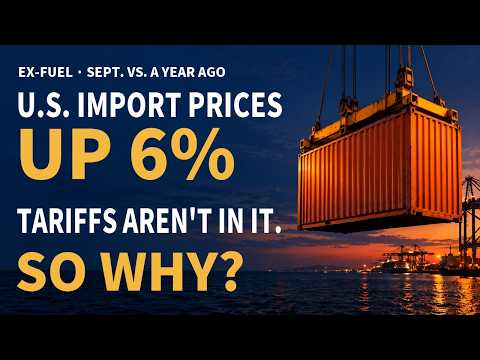
2 days ago: September import prices rise 1.1%, annual gain 8.1%

Overview

Updated 1 hour ago

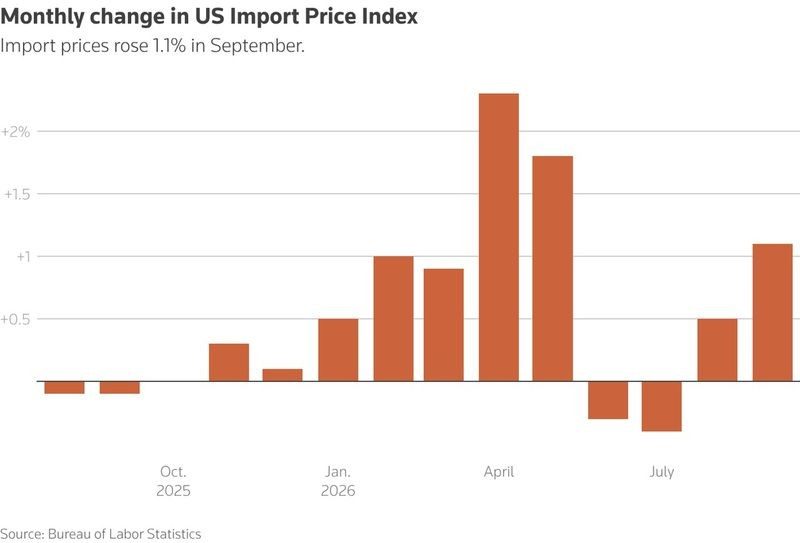
US import prices rose 1.1% in September, the biggest monthly jump since May, pushing the annual gain to 8.1% — the largest since July 2022. Economists had expected a 0.6% increase.

Fuel prices drove part of the gain. But capital goods tied to the AI buildout — computers, peripherals, and semiconductors — rose for a ninth straight month, and foreign suppliers raised prices instead of absorbing US tariffs. The data excludes duties, so the full cost to American buyers is higher still.

Why it matters

Rising import costs flow into consumer prices and raise the odds the Federal Reserve keeps rates higher for longer.

Questions about this story

Free account needed to ask — your question is kept and asked for you right after sign-up. Answers are public.

No questions yet — be the first to ask.

Key Indicators

1.1%
September import price increase
Monthly change, vs. 0.6% expected by economists.
8.1%
Annual import price gain
Largest 12-month increase since July 2022.
8.4%
Capital goods annual increase
Fastest pace since December 1987, driven by computers and semiconductors.
36.1%
Semiconductor import prices, year over year
Eighth straight record in data back to 2006.
9%
Average effective US tariff rate
Up from 2.5% post-substitution rate in 2024, per Yale Budget Lab.

Voices

Curated perspectives — historical figures and your fellow readers.

Ever wondered what historical figures would say about today's headlines?

Sign up to generate historical perspectives on this story.

People Involved

Organizations Involved

Timeline

2024 October 2026

5 events Latest: 2 days ago
Tap a bar to jump to that date
  1. September import prices rise 1.1%, annual gain 8.1%

    Latest Data

    BLS reports biggest monthly jump since May and largest annual gain since July 2022.

  2. Fed raises rates to 3.75%-4.00%

    Policy

    Federal Reserve lifts benchmark rate by 25 basis points in September meeting.

  3. Fuel import prices jump 12.12%

    Data

    Largest monthly fuel gain of the year so far, before three straight months of declines.

  4. Last monthly import price decline

    Data

    Import prices post their last monthly decline; every month since has been an increase.

  5. Effective tariff rate at 2.5%

    Policy

    Yale Budget Lab puts the post-substitution effective tariff rate at 2.5% before major increases.

Scenarios

1

Fed Holds in October, Raises Rates in December

Likely Resolves by End of 2026

Discussed by: Reuters, financial market pricing

Despite September's hot inflation readings, markets expect the Fed to skip raising rates at its October meeting and tighten in December. Chairman Kevin Warsh gave no guidance in his Bangkok speech. A December hike would bring the benchmark range to 4.00%-4.25%.

2

AI Capital Goods Inflation Persists Through 2027

Likely Resolves by Jan 31, 2027

Discussed by: SMBC Group, TheStreet

Capital goods import prices have risen nine straight months, with semiconductor prices up 36% year over year. SMBC notes capital goods import prices have historically been a leading indicator of the PCE deflator. If the AI buildout keeps driving demand for computers, chips, and machinery, import price pressure continues regardless of near-term Fed action.

3

Import Price Surge Fades as Suppliers Absorb Tariffs

Unlikely Resolves by Q2 2027

Discussed by: Counter-scenario; no major analyst currently predicting this

If US demand softens and foreign suppliers need to stay competitive, they could begin absorbing tariff costs, which would show up as lower or flatter dock prices. The BLS data would then stop rising for nonfuel goods. No major analyst is forecasting this now, but it is the mechanism by which import pressure could ease.

Historical Context

2 moments from history that rhyme with this story — and how they unfolded.

2021-2022

Pandemic-Era Import Price Surge (2021-2022)

Supply chain disruptions and stimulus pushed US import prices up sharply, with annual gains exceeding 10% by March 2022. The Fed initially called the inflation transitory.

Then

The Fed had to raise rates from near zero to above 5% within 18 months, triggering a slowdown.

Now

Demonstrated that import price shocks transmit to consumer prices with a lag and can force rapid policy reversals.

Why this matters now

Today's 8.1% annual import price gain approaches the 2022 peak, and the Fed faces the same question of how persistent the pressure is. The difference: this time AI investment and tariffs, not just supply chains, are the drivers.

October 1973-March 1974

1973-74 Oil Embargo

OPEC's embargo quadrupled crude oil prices, driving import costs and US consumer inflation to double digits. The Fed initially accommodated the shock, then tightened aggressively.

Then

US inflation hit 12% by 1974, followed by a sharp recession as the Fed raised rates.

Now

Established the pattern of energy shocks transmitting through import prices into broad inflation, forcing central bank tradeoffs between price stability and growth.

Why this matters now

Fuel prices are again a meaningful contributor to import price gains. But today's increase also has non-energy drivers, making the Fed's job different — and arguably harder — than in the 1970s.

Sources

(10)