
Pull to refresh
Logo
Daily Brief
Following
Why
Los Angeles subway reaches the Westside after 40-year wait

Los Angeles subway reaches the Westside after 40-year wait

Built World
By Newzino Staff |

The D Line Extension brings rapid transit to the Miracle Mile, Beverly Hills, and eventually UCLA ahead of the 2028 Olympics

February 10th, 2026: Section 1 Opens to Passengers

Overview

For 40 years, Los Angeles tried and failed to extend its subway to the Westside. A 1985 methane explosion triggered federal and local bans on tunneling through the Miracle Mile. Now the first section of the D Line Extension opens in early 2026, bringing three new stations to Wilshire Boulevard and marking the most significant expansion of LA's subway since the 1990s.

Key Indicators

9
Miles of New Subway
Total length of the three-section D Line Extension from Koreatown to Westwood
$9.7B
Total Project Cost
Combined cost of all three sections, up from initial estimates of $6-7 billion
7
New Stations
Stations at La Brea, Fairfax, La Cienega, Rodeo, Century City, Westwood, and VA Hospital
40+
Years in the Making
First proposed in 1961, repeatedly blocked by voter initiatives and federal bans until 2008

Interactive

Exploring all sides of a story is often best achieved with Play.

Ever wondered what historical figures would say about today's headlines?

Sign up to generate historical perspectives on this story.

Sign Up

Debate Arena

Two rounds, two personas, one winner. You set the crossfire.

People Involved

Stephanie Wiggins
Stephanie Wiggins
Chief Executive Officer, LA Metro (Leading agency through 2028 Olympics preparations)
Henry Waxman
Henry Waxman
Former U.S. Congressman (D-CA) (Retired from Congress in 2015)
Zev Yaroslavsky
Zev Yaroslavsky
Former LA County Supervisor (Retired from public office)

Organizations Involved

Los Angeles County Metropolitan Transportation Authority (LA Metro)
Regional Transit Agency
Status: Managing D Line Extension construction and 2028 Olympics transit planning

LA Metro operates the second-busiest transit system in the United States and is delivering the D Line Extension as part of its 'Twenty-Eight by 28' initiative for the Olympics.

LA28 Olympic and Paralympic Games Organizing Committee
Event Organizing Body
Status: Coordinating with Metro on transit-first spectator experience

The organizing committee for the 2028 Summer Olympics has made transit a centerpiece of its sustainability and accessibility strategy.

Timeline

  1. Section 1 Opens to Passengers

    Opening

    Three new stations at Wilshire/La Brea, Wilshire/Fairfax, and Wilshire/La Cienega begin service, extending the D Line four miles west.

  2. Federal Olympics Funding Approved

    Funding

    Congress allocates $94.3 million in transit funding for the 2028 Olympic and Paralympic Games.

  3. Opening Delayed to Early 2026

    Schedule

    Metro announces Section 1 will open between January and March 2026, rather than late 2025 as previously planned.

  4. Section 1 Cost Reaches $3.35 Billion

    Budget

    Metro approves $225 million additional overrun, bringing total Section 1 overruns to $575 millionβ€”20% over original budget.

  5. First Cost Overrun Approved

    Budget

    Metro board approves $200 million overrun for Section 1 due to difficult tunneling conditions.

  6. Tunnel Boring Begins

    Construction

    Metro launches tunnel boring machines 'Elsie' and 'Soyeon' to dig Section 1 tunnels through the Miracle Mile.

  7. Measure M Passes

    Funding

    Voters approve permanent sales tax increase, providing funds to accelerate the D Line Extension and other transit projects.

  8. Section 1 Groundbreaking

    Construction

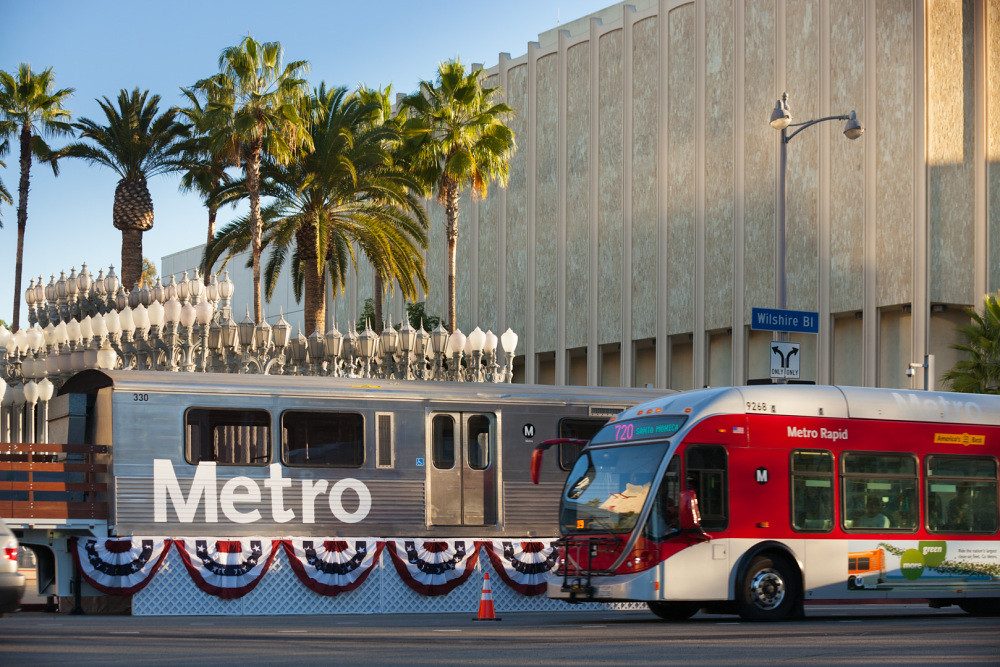
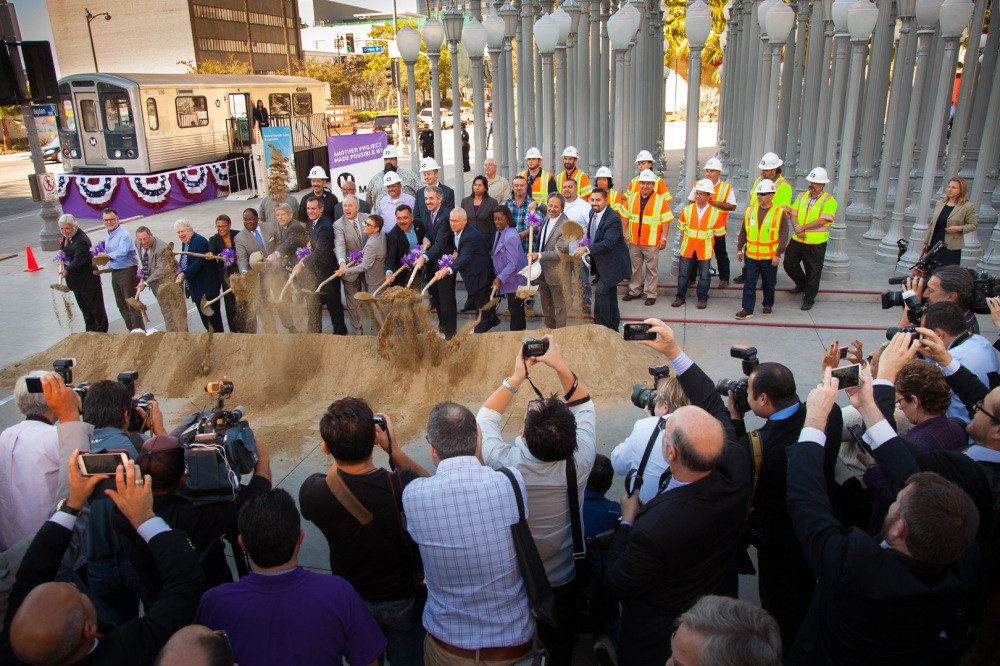
    Metro breaks ground on Section 1 at a ceremony at the Los Angeles County Museum of Art, with a projected cost of $2.8 billion and 2023 completion.

  9. Measure R Passes

    Funding

    LA County voters approve a half-cent sales tax increase, adding $4 billion for the Westside subway extension.

  10. Federal Tunneling Ban Lifted

    Legislation

    Waxman's legislation to repeal his own ban is signed into law as part of the 2008 omnibus spending bill, reopening the Wilshire corridor.

  11. County Voters Ban Subway Funding

    Legislation

    Supervisor Yaroslavsky's ballot measure passes, prohibiting use of Proposition A and C sales tax funds for any subway tunneling in LA County.

  12. Federal 'Methane Zone' Ban Enacted

    Legislation

    Congressman Henry Waxman secures federal legislation prohibiting subway tunneling through the Fairfax 'methane zone,' blocking the Wilshire route.

  13. Fairfax District Methane Explosion

    Incident

    A methane gas explosion at a Ross Dress for Less store on Fairfax Avenue injures 23 people, triggering safety concerns about tunneling in the area.

  14. Wilshire Subway First Proposed

    Planning

    The 'New Proposed Backbone Route Plan' describes a subway along Wilshire Boulevard from Westwood to Downtown, but no funding materializes.

Scenarios

1

Full D Line Opens Before Olympics Opening Ceremony

Discussed by: LA Metro officials, LA Times transportation coverage

All three sections complete on schedule, with Section 3 opening to Westwood in Q4 2027. The full nine-mile extension is operational before the July 2028 Olympics, enabling direct subway service from Downtown to UCLA and the VA campus. This scenario depends on avoiding further construction delays in Sections 2 and 3, which are currently 83% and 73% complete respectively.

2

Sections 2-3 Miss Olympics Deadline

Discussed by: Transit advocacy groups, Streetsblog LA

Additional construction delays or budget overruns push Section 3 completion past July 2028. Section 1 operates during the Games, but spectators heading to UCLA-area venues cannot take the subway all the way. Metro would need to deploy bus bridges for the final segments, complicating the 'transit-first' Olympic strategy.

3

D Line Becomes Catalyst for Sepulveda Corridor

Discussed by: Metro planning documents, urbanist analysts

Success of the D Line Extension builds political momentum for the proposed Sepulveda Transit Corridor, a north-south rail line connecting the Westside to the San Fernando Valley. This would create a true rapid transit network rather than a single east-west line, fundamentally changing mobility patterns in western Los Angeles County.

Historical Context

Washington DC Silver Line Phase 2 (2022)

2013-2022

What Happened

The 11-mile extension of Washington Metro's Silver Line to Dulles Airport was awarded in 2013 with a 2018 target. Defective concrete panels at five stations, water infiltration issues, and contractor disputes pushed the opening to November 2022β€”four years late. The project cost roughly $3 billion.

Outcome

Short Term

Metro faced criticism for oversight failures and the lengthy delays frustrated commuters and airport travelers.

Long Term

The extension now provides direct rail access to Dulles International Airport and has spurred development in Loudoun County, though ridership recovery post-pandemic remains slow.

Why It's Relevant Today

Like the D Line, the Silver Line faced multi-year delays and significant cost overruns during construction. Both projects demonstrate the difficulty of completing major subway extensions on time and budget in the United States.

Los Angeles 1984 Summer Olympics Transportation (1984)

July-August 1984

What Happened

Los Angeles hosted the Summer Olympics with no subway systemβ€”27 years after the last streetcars closed and six years before any rail transit opened. Planners expected 1.2 million visitors and 6 million spectators. Through aggressive marketing, express bus service, and staggered event scheduling, the city avoided predicted gridlock.

Outcome

Short Term

More than 1 million passengers rode buses to venues, and commuters altered driving patterns. The 'traffic apocalypse' never materialized.

Long Term

The success demonstrated demand for transit alternatives but did not immediately spur rail construction. Voters approved Proposition A for rail funding in 1980, and the Blue Line finally opened in 1990.

Why It's Relevant Today

The 1984 Games showed Los Angeles could move Olympic crowds without rail. In 2028, the city will have the opposite: a growing rail network designed specifically to serve Games venues. The D Line stations at Fairfax and La Cienega provide access the 1984 organizers could only dream of.

Paris Grand Paris Express for 2024 Olympics (2024)

2010-2024

What Happened

France invested over €35 billion in the Grand Paris Express project, adding 200 kilometers of new metro lines and 68 stations to connect Paris's suburbs to the city center. Key sections opened in time for the 2024 Summer Olympics, though the full network won't complete until the 2030s.

Outcome

Short Term

New Line 14 extensions improved access to Olympic venues. Paris achieved its goal of halving the Games' carbon footprint compared to London 2012.

Long Term

The infrastructure will serve residents long after the Olympics, connecting historically underserved banlieues to central Paris and redistributing economic opportunity.

Why It's Relevant Today

Paris shows what's possible when Olympic deadlines drive transit investment. Los Angeles is attempting something similar with its 'Twenty-Eight by 28' initiative, using the Games as a forcing function for projects that benefit the region permanently.

Sources

(10)