
Pull to refresh
Logo
Daily Brief
Following
Why Sign Up
Repeated strikes near Iran's Bushehr nuclear reactor raise specter of radioactive disaster in the Gulf

Repeated strikes near Iran's Bushehr nuclear reactor raise specter of radioactive disaster in the Gulf

Force in Play
By Newzino Staff |

Four projectile impacts in five weeks have killed one worker, triggered a Russian staff exodus, and put 210 tonnes of spent nuclear fuel at the center of a widening war

Yesterday: Iran warns of radioactive catastrophe across Gulf states

Overview

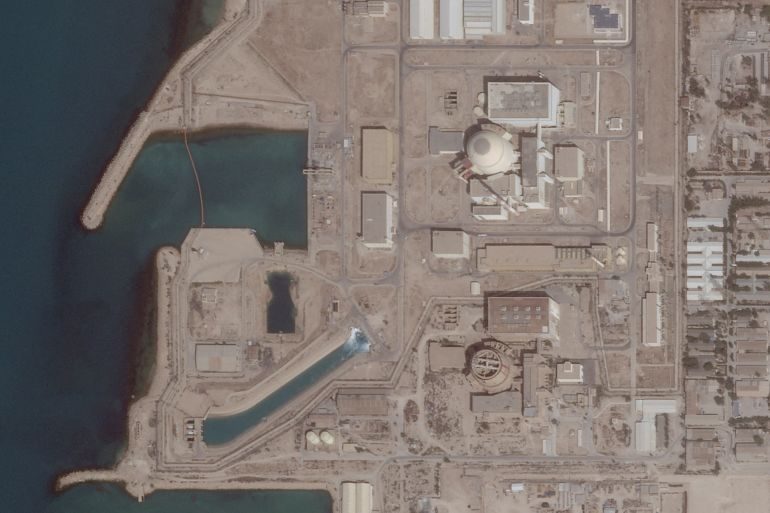
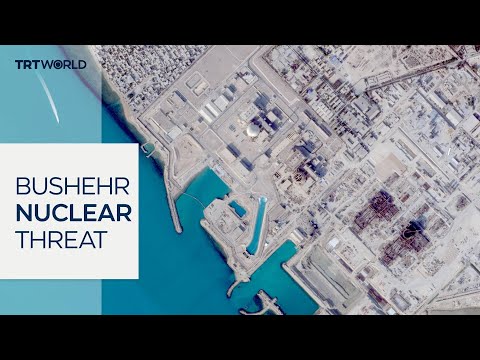
A projectile struck 350 meters from Iran's only operating nuclear reactor on April 4, killing a security guard and damaging an auxiliary building — the fourth time ordnance has landed on or near the Bushehr nuclear power plant since the United States and Israel began striking Iran on February 28. The International Atomic Energy Agency (IAEA) confirmed no radiation increase was detected, but Director General Rafael Grossi warned that auxiliary buildings may house vital safety equipment and that nuclear plant sites "must never be attacked."

Why it matters

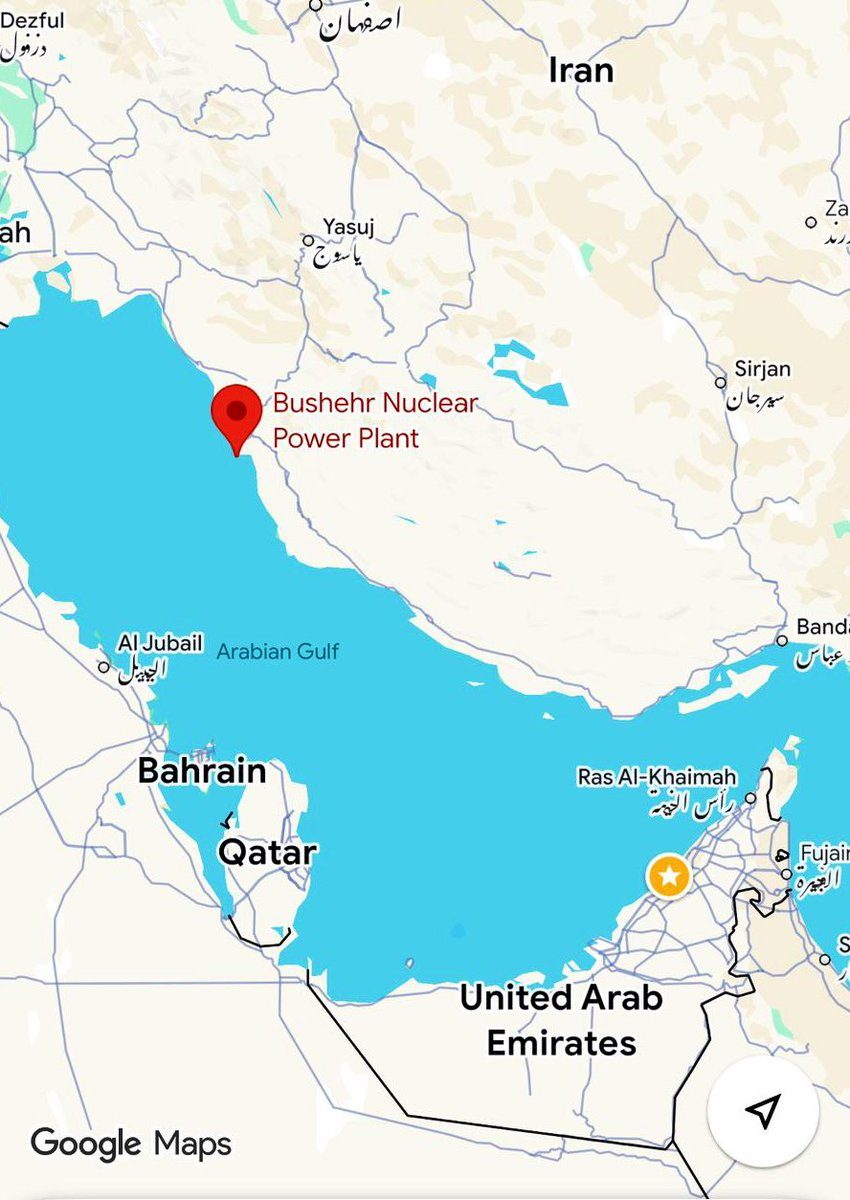
A direct hit on Bushehr's spent fuel could contaminate the Persian Gulf's desalinated water supply serving tens of millions of people.

Key Indicators

4
Projectile strikes on or near Bushehr
Confirmed impacts on March 17, March 24, March 27, and April 4, 2026
350m
Distance of latest strike from reactor
The April 4 projectile hit an auxiliary building within the plant's perimeter
210 tonnes
Spent nuclear fuel on site
Irradiated fuel assemblies accumulated over more than a decade of operation, confirmed on site by the Bellona Foundation as of April 3
~50
Rosatom staff remaining
Down from approximately 700 before the war; volunteers staying to keep the plant operational
1
Fatality
An Iranian security guard was killed by projectile fragments in the April 4 strike

Interactive

Exploring all sides of a story is often best achieved with Play.

Ever wondered what historical figures would say about today's headlines?

Sign up to generate historical perspectives on this story.

Sign Up

Debate Arena

Two rounds, two personas, one winner. You set the crossfire.

People Involved

Organizations Involved

Timeline

  1. Iran warns of radioactive catastrophe across Gulf states

    Diplomatic

    Foreign Minister Abbas Araghchi writes to the United Nations warning that repeated strikes near Bushehr pose a "serious risk of radioactive contamination" and that fallout would devastate Gulf Arab capitals that depend on seawater desalination. He accuses Western nations of hypocrisy compared to their response to shelling near Ukraine's Zaporizhzhia plant.

  2. Fourth strike kills security guard, triggers mass Rosatom evacuation

    Strike

    A projectile strikes 350 meters from the reactor, killing an Iranian security guard with shrapnel and damaging an auxiliary building. Rosatom evacuates 198 staff by bus toward the Armenian border within 20 minutes. IAEA Director General Grossi expresses "deep concern" and reiterates that nuclear sites must never be attacked.

  3. Rosatom announces final evacuation preparations

    Evacuation

    Rosatom publicly states it is preparing a final evacuation of its employees, with only a group of roughly 50 volunteers to remain and keep the plant operational.

  4. Third projectile strikes near Bushehr

    Strike

    Iran reports a third projectile impact near the plant, the second strike in three days. No casualties or radiation increase detected.

  5. Rosatom evacuates 163 more staff after second strike

    Evacuation

    The day after the second strike, Rosatom withdraws another 163 personnel, leaving approximately 300 Russian staff at the plant.

  6. Second projectile strikes Bushehr premises

    Strike

    A second projectile hits the plant premises in the evening. No damage to the reactor or casualties reported. The IAEA is informed by Iranian authorities.

  7. First projectile strikes Bushehr plant premises

    Strike

    A projectile impacts approximately 350 meters from the reactor, hitting an area adjacent to a facility housing measurement instruments and sensors. The IAEA confirms the strike via satellite imagery taken the following day. No casualties or radiation increase reported.

  8. Rosatom completes second evacuation phase from Bushehr

    Evacuation

    Russia's Rosatom evacuates a second wave of staff overnight, reducing its Bushehr workforce from roughly 700 to approximately 450 as strikes intensify across Iran.

  9. Satellite imagery shows damage at Natanz nuclear facility

    Assessment

    Commercial satellite images reveal that entrance buildings at Iran's Natanz uranium enrichment facility were damaged in the opening strikes. The IAEA confirms no radiological consequences were detected at the enrichment plant itself.

  10. US and Israel launch Operation Epic Fury against Iran

    Military

    Nearly 900 strikes in 12 hours target Iranian military infrastructure, air defenses, and leadership. Supreme Leader Ali Khamenei is killed. The port city of Bushehr is among the areas struck, but the IAEA reports no evidence of direct hits on nuclear facilities.

Scenarios

1

Strikes continue but miss the reactor; Bushehr operates with skeleton crew

Discussed by: IAEA assessments, Moscow Times analysis, and nuclear safety experts

Projectiles continue to land near but not on the reactor or spent fuel storage. Rosatom's 50 remaining volunteers keep the plant running at reduced capacity. The IAEA continues issuing warnings but has no enforcement mechanism. This is the current trajectory — each near-miss raises the statistical probability of a direct hit without triggering a decisive response from either the attacking or defending side. The plant gradually degrades as it loses the technical expertise needed for safe long-term operation.

2

Direct hit on spent fuel storage triggers regional radioactive contamination

Discussed by: Bulletin of the Atomic Scientists, Science and Global Security journal, Rosatom CEO Likhachev, and Iran's Foreign Ministry

A strike damages the spent fuel storage facility containing 210 tonnes of irradiated fuel. A fire in the spent fuel pool or dry storage releases radioactive material into the atmosphere. Prevailing northwesterly winds carry contamination across the Persian Gulf toward Saudi Arabia, Bahrain, Qatar, Kuwait, and the United Arab Emirates — nations whose populations depend on seawater desalination. Contamination of desalination intake water would create a humanitarian emergency affecting tens of millions. This scenario has been explicitly warned about by both Rosatom and Iranian officials.

3

International pressure forces a de facto exclusion zone around Bushehr

Discussed by: Gulf Cooperation Council (GCC) diplomats, IAEA leadership, and nuclear safety analysts

Gulf Arab states, recognizing that they bear the greatest risk from a Bushehr catastrophe, pressure the United States and Israel to establish an informal exclusion zone around the plant. This could emerge through diplomatic back-channels or a UN Security Council resolution — though Russia and China would likely demand broader conditions. The precedent of Zaporizhzhia, where the IAEA established a permanent monitoring presence, could provide a template, though the IAEA currently has no inspectors on the ground at Bushehr during the conflict.

4

Rosatom volunteers withdraw, plant enters uncontrolled shutdown

Discussed by: Moscow Times, nuclear engineering analysts, and Rosatom communications

If strikes continue or intensify, the remaining 50 Rosatom volunteers abandon the plant. Without the Russian engineers who built and operate the facility, Iran's own staff may lack the expertise to manage a safe long-term shutdown, particularly cooling the spent fuel. An uncontrolled shutdown with degrading safety systems would significantly increase the risk of a radiological incident — not from a strike, but from equipment failure without qualified operators. Likhachev's warning that risk "is only increasing day by day" points in this direction.

Historical Context

Zaporizhzhia Nuclear Power Plant Crisis (2022–present)

March 2022–present

What Happened

Russian forces seized Europe's largest nuclear power plant in southern Ukraine on March 4, 2022, six days into Russia's full-scale invasion. Over the following months, the plant and its surroundings were repeatedly shelled by both sides, severing off-site power eight times and forcing all six reactors into cold shutdown by September 2022. IAEA Director General Grossi personally led an inspection team through the frontlines in September 2022 and established a permanent monitoring presence.

Outcome

Short Term

Grossi introduced the "seven indispensable pillars" framework for nuclear safety during armed conflict, which became the IAEA's standard protocol. No radiological release occurred despite multiple close calls.

Long Term

Zaporizhzhia established the modern precedent for an active nuclear plant in a war zone and demonstrated that international bodies have limited ability to enforce safety around contested facilities.

Why It's Relevant Today

The IAEA is now applying the same seven-pillars framework to Bushehr, and Iran's foreign minister has explicitly invoked the Zaporizhzhia precedent to accuse Western nations of a double standard — condemning Russian shelling near Zaporizhzhia while conducting strikes near Bushehr.

Israeli Strike on Iraq's Osirak Reactor (1981)

June 1981

What Happened

On June 7, 1981, eight Israeli F-16 fighters destroyed Iraq's French-built Osirak research reactor near Baghdad in a surprise airstrike codenamed Operation Opera. The reactor was still under construction and not yet fueled, meaning the strike produced no radiological release. Ten Iraqi soldiers and one French engineer were killed. The United Nations Security Council unanimously condemned the attack.

Outcome

Short Term

Iraq's overt nuclear program was set back by years. Israel faced broad international condemnation but no substantive penalties.

Long Term

Scholars later concluded the strike drove Iraq's nuclear weapons program underground and may have accelerated Saddam Hussein's covert efforts. The operation established a precedent — sometimes called the "Begin Doctrine" — for preemptive strikes on nuclear facilities.

Why It's Relevant Today

Osirak was an unfueled reactor under construction. Bushehr is a fully operational plant with more than a decade of spent fuel on site. The radiological consequences of a direct hit are incomparably greater, which is why the IAEA's warnings carry a different urgency than in 1981.

Chernobyl Exclusion Zone During Russian Occupation (2022)

February–March 2022

What Happened

Russian forces occupied the decommissioned Chernobyl nuclear plant on the first day of their invasion of Ukraine, February 24, 2022. Soldiers dug trenches in the contaminated Red Forest, and the plant lost external power for several days, raising fears about cooling for spent fuel pools. Ukrainian staff were forced to work under armed guard for weeks without rotation.

Outcome

Short Term

Russian forces withdrew from Chernobyl by April 2, 2022, after reportedly suffering radiation exposure from trenching in contaminated soil. Several soldiers were later treated for acute radiation syndrome.

Long Term

The incident demonstrated that military forces operating near nuclear facilities face risks they may not fully understand, and that loss of qualified staff is itself a safety hazard.

Why It's Relevant Today

The parallel to Bushehr is the staffing crisis: as Rosatom withdraws its engineers — the people who designed and understand the plant's systems — the facility becomes more vulnerable to exactly the kind of slow-motion safety degradation that threatened Chernobyl during the Russian occupation.

Sources

(12)