
Pull to refresh
Logo
El Hierro declares migration emergency as Atlantic arrivals surge

El Hierro declares migration emergency as Atlantic arrivals surge

Rule Changes

Spain's smallest Canary Island asks Madrid for staff and money after thousands arrive in weeks

Overview

Updated 1 hour ago

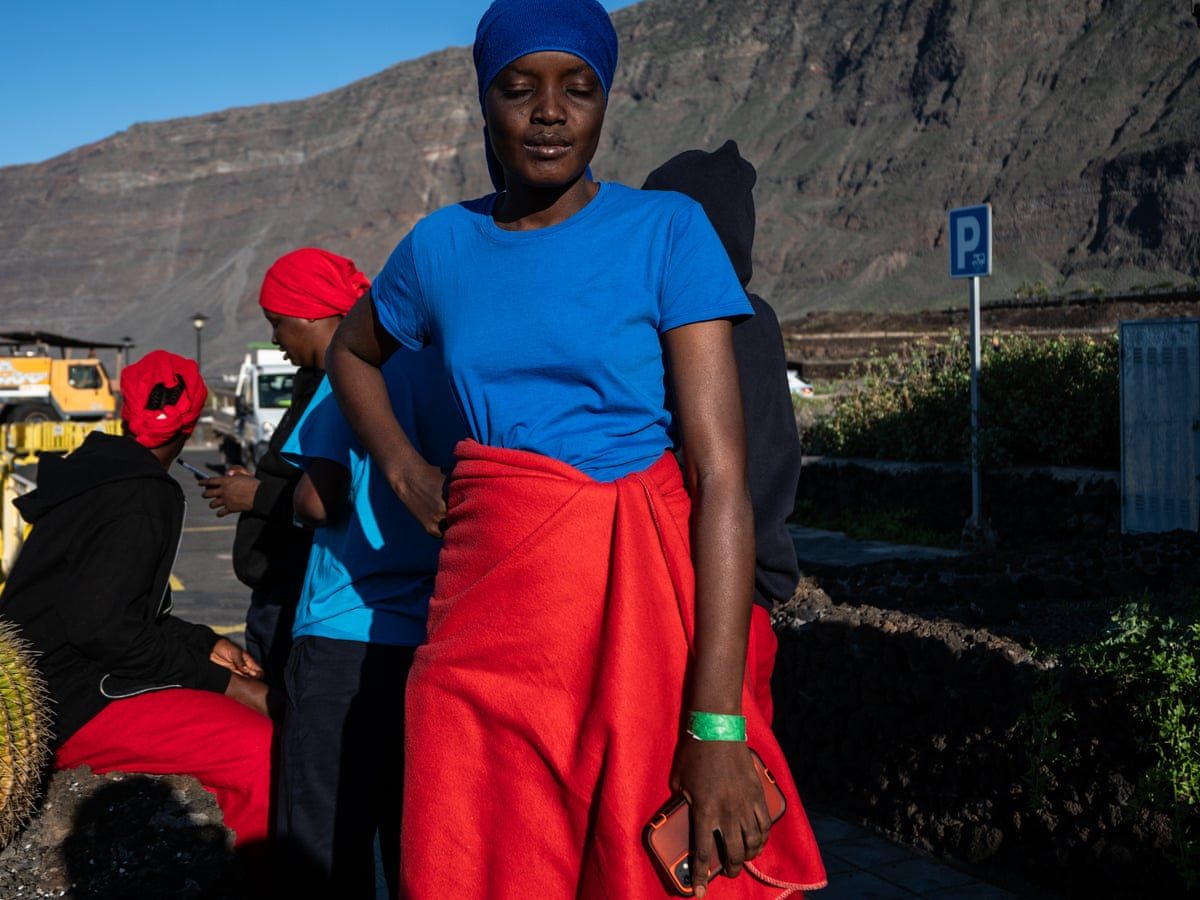
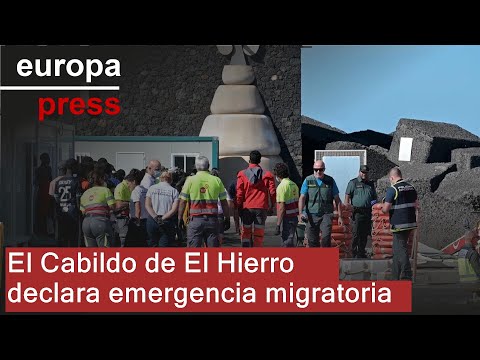
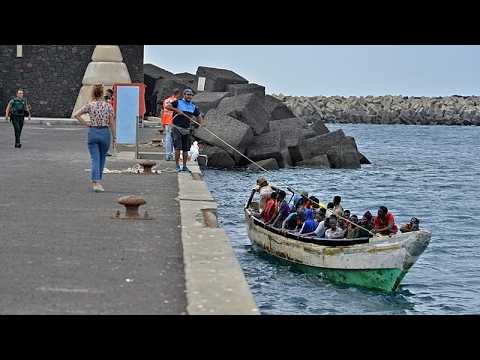
El Hierro's island council declared a social emergency on 7 November 2026, asking Spain's national government and the Canary Islands regional government for staff, money and a way to move new arrivals off the island faster. More than 3,300 people reached the island in about 30 boats in the first week of November alone, on an island of roughly 11,400 residents.

The declaration does not change who controls migration policy. It gives the island council a legal basis to demand resources and to sign coordination agreements with higher levels of government, while local health and reception services are operating beyond their capacity.

Why it matters

A reception system built for a few hundred people is absorbing thousands, and the fix depends on decisions in Madrid and Brussels that haven't been made yet.

Questions about this story

Free account needed to ask — your question is kept and asked for you right after sign-up. Answers are public.

No questions yet — be the first to ask.

Key Indicators

3,300+
Arrivals on El Hierro since 1 November
People reaching the island in about 30 boats in roughly a week, per local authorities.
8,000+
Arrivals on El Hierro in five weeks
The island council's own figure for late September through early November.
300
Capacity of El Hierro's foreigner reception centre
The temporary centre is partly under construction, cutting usable space further.
3,261
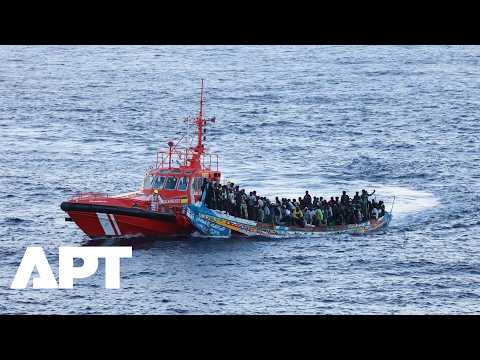
People rescued off the Canaries, 1-6 November
Maritime rescue figures covering the whole archipelago for six days.
13,327
Sea arrivals to Spain, January-October 2026
Interior Ministry figure, 5.5% below the same period in 2025.

Voices

Curated perspectives — historical figures and your fellow readers.

Sign up to generate historical perspectives on this story.

People Involved

Organizations Involved

Timeline

June 2026 November 2026

6 events Latest: Today
Tap a bar to jump to that date
  1. Canary Islands president calls situation unsustainable

    Today Statement

    Fernando Clavijo says arrival numbers are approaching 2024's record and that buses and medical staff have been diverted to migration operations.

  2. El Hierro declares a social emergency

    Emergency declaration

    The island council declares an emergency and requests staff, funding and a transfer protocol to larger islands from Madrid and the regional government.

  3. Sánchez agrees to convene immigration commission

    Government response

    The prime minister commits to an urgent Interministerial Immigration Commission meeting the following Tuesday and to reinforcing health resources.

  4. Police union says transfers skip required triage

    Controversy

    A police organisation says arrivals are ferried to other islands without the health and security checks the EU pact requires. The Interior Ministry denies it.

  5. November begins with a sharp rise in boats to El Hierro

    Migration

    About 30 boats carrying more than 3,300 people reach the island in the first days of the month.

  6. EU migration pact enters into force with Spanish reservations

    Policy

    The European Pact on Migration and Asylum takes effect; Spain objects to some provisions. The pact sets triage rules for external border arrivals.

Scenarios

1

Madrid sends staff and funding, pressure eases within weeks

Possible Resolves by Dec 15, 2026

Discussed by: El Hierro council and Canary Islands regional government, which requested the Interministerial Immigration Commission meeting

The emergency meeting on Tuesday produces additional police, health staff and money for temporary accommodation. Transfers to Tenerife and Gran Canaria speed up, and the number of people sleeping in the La Restinga area and at the reception centre falls. This is the outcome the island council's decree is designed to force.

2

Arrivals keep climbing, El Hierro reception collapses into open-air waiting

Possible Resolves by End of 2026

Discussed by: Canary Islands regional president Fernando Clavijo, who said arrival numbers are nearing 2024's record pace

If boats keep landing at the November rate, the reception centre and the overflow pavilion fill and transfers lag. Local health services, already short of Red Cross staff at the dock, pull doctors from the hospital to cover arrivals. The scenario turns on whether the transfer pipeline to other islands expands faster than arrivals.

3

Police triage dispute escalates into legal challenge

Unlikely Resolves by Q1 2027

Discussed by: Police organisations that accused the Interior Ministry of skipping mandatory triage, and the ministry, which denies it

The police complaint alleges arrivals are mixed at the La Restinga dock, losing traceability between boats during disease outbreaks, and that bracelet-based tracking does not meet the EU pact's requirements. If a court or EU body takes the complaint up, transfers could be paused pending review, worsening the backlog on the island.

4

Origin-country patrols cut departures, as they did after 2024

Uncertain Resolves by Q2 2027

Discussed by: Spanish Interior Ministry, which reported a 5.5% drop in sea arrivals for January-October 2026 versus 2025

Arrivals fell sharply after the 2024 record of more than 46,000 because of tighter surveillance and cooperation with Senegal, Mauritania and Morocco. Patrols push departures further south, making crossings longer and more deadly. The same lever, applied to Senegalese departures, is the main route to bringing numbers down.

Historical Context

3 moments from history that rhyme with this story — and how they unfolded.

2024

Canary Islands arrival record (2024)

More than 46,000 people reached the Canary Islands by sea in 2024, the highest annual total on the Atlantic route. Reception centres across the archipelago, and small islands in particular, ran far beyond capacity.

Then

Spain expanded temporary reception and moved arrivals to the mainland and other islands.

Now

Arrivals fell sharply in 2025 after tighter surveillance and deals with Senegal, Mauritania and Morocco, but the underlying reception capacity problem on small islands stayed.

Why this matters now

El Hierro's current surge is being measured against 2024's pace, and the 2024 experience is the template for both the strain and the response.

2025-2026

Atlantic route shifts south (2025-2026)

Patrols off Senegal, Mauritania and Morocco pushed departures further south, to The Gambia, Guinea-Bissau and Guinea. Longer crossings mean more time at sea and higher death tolls.

Then

Departures from the northern departure points fell, but journeys lengthened and boats increasingly arrived on the westernmost island, El Hierro.

Now

The geographic shift moved the point of first arrival away from better-equipped islands, concentrating pressure on the smallest reception system.

Why this matters now

This explains why an island of 11,400 people is now the landing point for boats that once reached Tenerife or Gran Canaria.

June 2026

European Pact on Migration and Asylum (June 2026)

The EU's migration and asylum rules took effect on 12 June 2026, with Spain objecting to some provisions. The pact sets out how arrivals at the external border must be screened before being moved onward.

Then

Spain set a three-day deadline for completing triage, shorter than the seven days the EU framework allows for island external borders.

Now

The tighter deadline became the point of friction when arrivals outran processing capacity on El Hierro.

Why this matters now

The police complaint that transfers skip triage is a direct argument about whether Spain is meeting the pact's requirements under strain.

Sources

(8)