
Pull to refresh
Logo
ARPA-H funds race to store cell therapies at room temperature

ARPA-H funds race to store cell therapies at room temperature

New Capabilities

Three teams share up to $87 million to make cell medicines ship like aspirin, ending ultra-cold storage

2 days ago: CaseBioscience announces role in RAB team

Overview

Updated 1 hour ago

ARPA-H committed up to $87 million to a four-year program aiming to store living cell therapies at room temperature, ending the cold chain that defines modern biologics. CaseBioscience, a Colorado biopreservation firm, announced Oct. 2 that it joined one of three funded teams, led by Likarda, awarded up to $7.3 million.

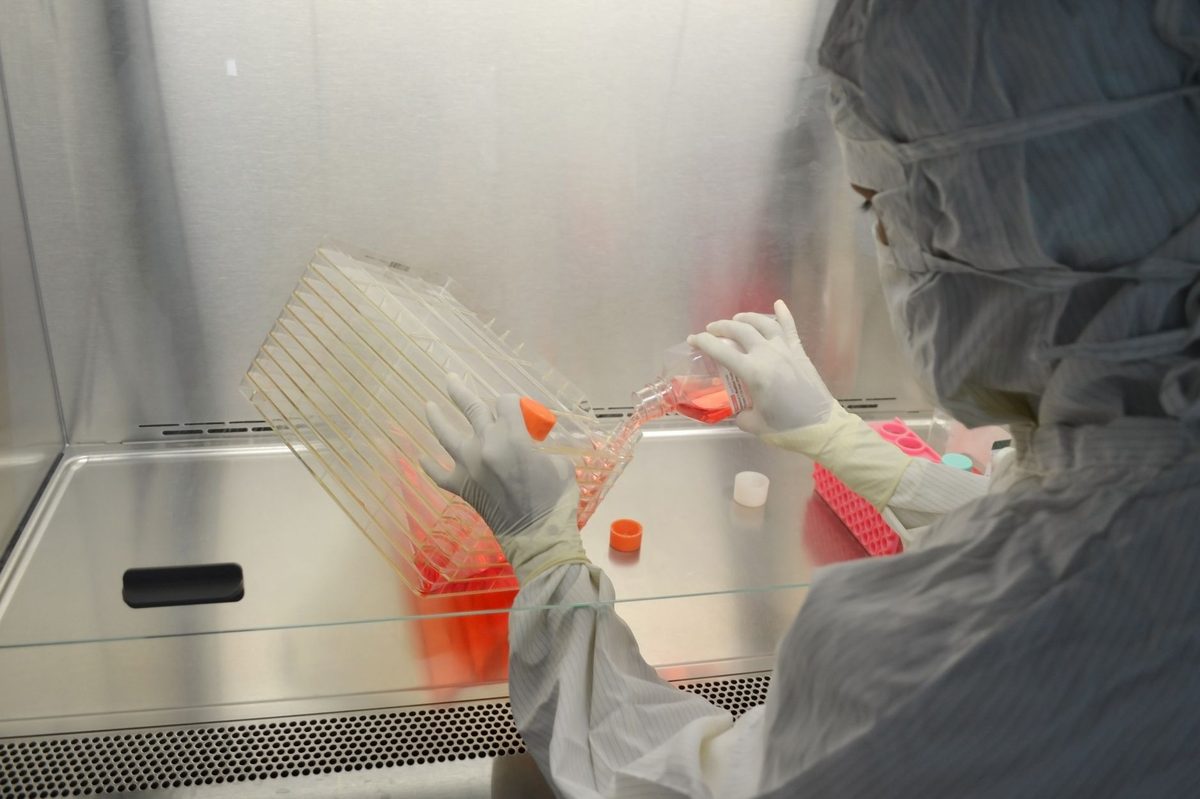
Cell-based medicines now need unbroken ultra-cold storage from factory to hospital bed. A single dose worth hundreds of thousands of dollars can be destroyed by a shipping delay or a failing freezer. The program's goal is a product as easy to ship and store as aspirin.

Why it matters

If ambient-stable cell therapies work, treatments would cost less and reach patients now blocked by ultra-cold supply chains.

Questions about this story

Free account needed to ask — your question is kept and asked for you right after sign-up. Answers are public.

No questions yet — be the first to ask.

Key Indicators

$87M
ARPA-H commitment to BoSS program
Total four-year funding for the BioStabilization Systems program, across three performer teams and one verification partner.
$7.3M
Award to the RAB team
Up to $7.3 million for the Reversible Ambient Biostabilization team, which includes CaseBioscience.
3
Performing teams funded
Three teams pursue competing stabilization approaches, with ATCC providing independent verification.
15 months
Length of initial phase
The RAB team's first phase began Sept. 24, 2026; continuation depends on meeting research milestones.

Voices

Curated perspectives — historical figures and your fellow readers.

Ever wondered what historical figures would say about today's headlines?

Sign up to generate historical perspectives on this story.

People Involved

Organizations Involved

Timeline

September 2026 October 2026

2 events Latest: 2 days ago
  1. CaseBioscience announces role in RAB team

    Latest Announcement

    CaseBioscience says it joined the Likarda-led team awarded up to $7.3 million for ambient cell preservation.

  2. BoSS program launches initial research phase

    Program Start

    ARPA-H announces the four BoSS contract awards, and the RAB team begins its 15-month initial phase.

Scenarios

1

RAB team clears Phase 1, ARPA-H continues funding

Likely Resolves by End of 2027

Discussed by: Program structure and ARPA-H statements tying continuation to meeting aggressive research milestones

The RAB team's $7.3 million award is an "up to" figure, and ARPA-H has not disclosed how disbursements are structured. The funding is contingent on each team meeting viability, production-speed, and shelf-life benchmarks. Clearing the initial 15-month phase would trigger continued funding toward the four-year program goal.

2

RAB team fails milestones, funding pulled or restructured

Possible Resolves by End of 2027

Discussed by: ARPA-H explicitly conditions awards on meeting aggressive research milestones; disbursement details remain undisclosed

If the RAB team misses benchmarks for cell viability, production speed, or shelf-life stability, ARPA-H could cut, delay, or redirect its funding to the other two performer teams. The program funds competing approaches in parallel precisely to de-risk failure in any single one.

3

Room-temperature-stable cell therapy reaches clinical transition

Uncertain Resolves by Q3 2030

Discussed by: ARPA-H states all performers work with transition partners to apply their technology to a cell therapy by project end

If the science succeeds, a team would demonstrate functional, viable therapeutic cells stabilized at room temperature and begin moving the technology toward clinical use with a partner. This is the four-year endpoint the program is designed to reach, with performance evaluated against increasingly stringent benchmarks.

Historical Context

3 moments from history that rhyme with this story — and how they unfolded.

2020-2021

COVID-19 mRNA vaccines and the deep-freeze barrier (2020-2021)

Pfizer's mRNA vaccine required storage near -70°C, far colder than standard freezers. Hospitals needed dedicated freezers or dry ice, and rural and low-income regions struggled to deploy doses quickly.

Then

Cold-chain logistics managed the rollout, but distribution was uneven and doses were lost to temperature failures.

Now

The episode showed how ultra-cold storage limits equitable access to biologic medicines.

Why this matters now

BoSS targets the same constraint, the cold chain, for living cell therapies, which are far harder to stabilize than a frozen vaccine.

19th century to 1980

Dried smallpox vaccine and eradication (19th-20th centuries)

Early smallpox vaccine was dried onto threads, quills, or glass so it could ship at ambient temperature. Later freeze-dried vaccine enabled mass vaccination campaigns in remote areas without refrigeration.

Then

Vaccination reached rural populations worldwide without a cold chain.

Now

The approach contributed to smallpox eradication by 1980, the only human disease eliminated.

Why this matters now

Ambient stabilization is the proven route to global distribution of a biologic; BoSS aims to apply that logic to living human cells.

1940s

Freeze-dried blood plasma and penicillin (1940s)

Lyophilization, or freeze-drying, of blood plasma in World War II and of penicillin afterward turned perishable biologics into shelf-stable products that could be shipped and stockpiled.

Then

Battlefield medicine and global drug supply were transformed.

Now

Freeze-drying became the standard for sensitive pharmaceuticals.

Why this matters now

A processing innovation removed a logistical ceiling and expanded who could receive treatment, the same prize BoSS seeks for cell therapies.

Sources

(5)