
Pull to refresh
Logo
Synthetic cell research group accidentally builds a factory

Synthetic cell research group accidentally builds a factory

New Capabilities

San Francisco plant makes open-source cell-building reagents after key suppliers quit

Yesterday: Hundredth Cytosol kit shipped

Overview

Updated Yesterday

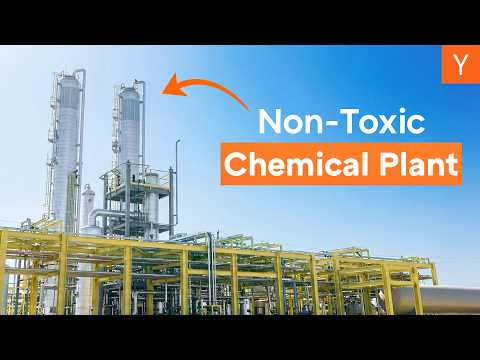
Roche stopped making tRNA in 2023; Sigma stopped in 2024. With the only two commercial sources of a critical molecule gone, a small research group in San Francisco built its own factory to make the missing ingredients.

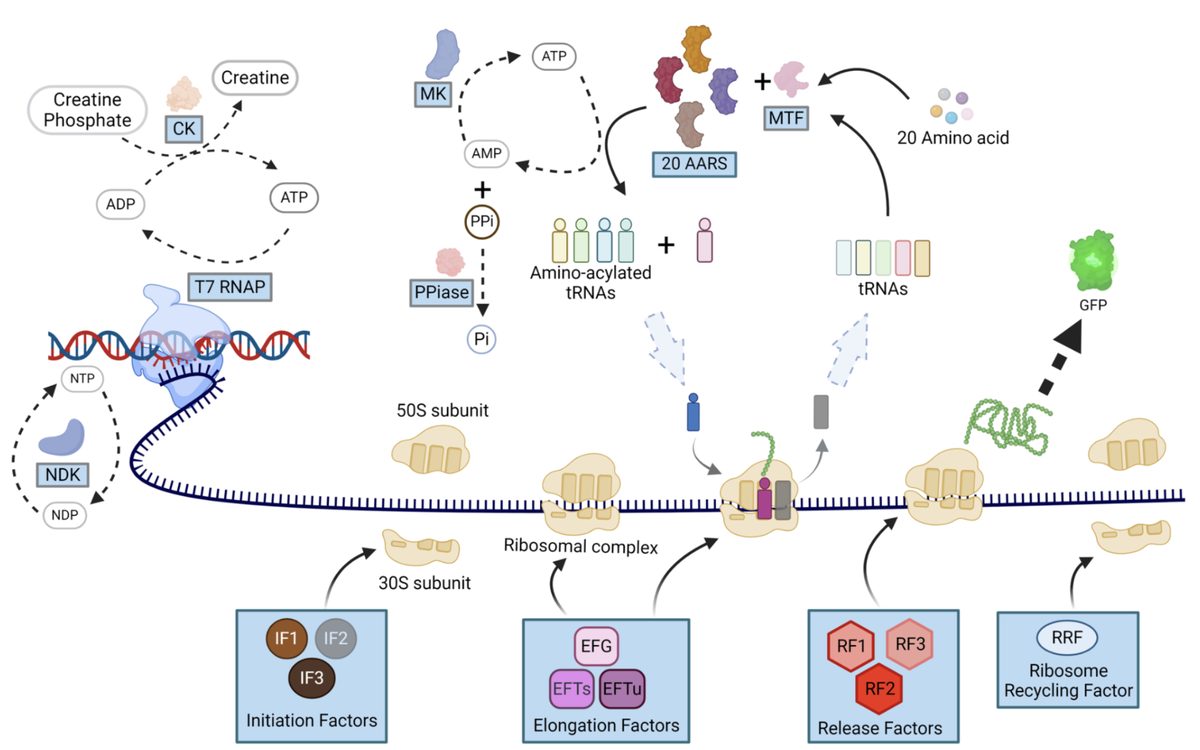
The factory makes Cytosol, the core mix of proteins and reagents used to assemble synthetic cells in the lab. The group has shipped over 100 kits to roughly 20 labs worldwide. It is a side effect of a broken supply chain, not a grand vision.

The PURE system, the field's standard platform, was published in 2001. It took labs 18 months or more to build because the plasmid set was incomplete, mutated, and locked behind restrictive licenses. b.next redesigned all 36 plasmids, open-sourced the recipe, and now manufactures the final product.

Why it matters

Synthetic cells could make new drugs and materials, but only if labs can get the ingredients. This factory is the first open supply chain.

Questions about this story

Free account needed to ask — your question is kept and asked for you right after sign-up. Answers are public.

No questions yet — be the first to ask.

Key Indicators

100+
Cytosol kits shipped
Shipped since the San Francisco plant opened in early 2026.
~20
Labs supported worldwide
Open projects at labs on several continents using Cytosol kits.
1 week
Time to build PURE system in b.next workshop
Down from the 18+ months most labs needed before open protocols existed.
36
Plasmids redesigned and open-sourced
The complete set needed to produce PURE system proteins, released on Nucleus.

Voices

Curated perspectives — historical figures and your fellow readers.

Ever wondered what historical figures would say about today's headlines?

Sign up to generate historical perspectives on this story.

Play

Exploring all sides of a story is often best achieved with Play.

Most of these play right now — no account needed. Sign up to save scores, keep a streak, and unlock Debate and Predict. Log in Sign Up
Predict 3 ways this could play out. Back the one you believe — contrarian picks score more when a scenario has a resolution date. Log in to play

People Involved

Organizations Involved

Timeline

2023 September 2026

9 events Latest: Yesterday
Tap a bar to jump to that date
  1. Hundredth Cytosol kit shipped

    Latest Milestone

    b.next announced shipping its 100th kit, supporting open projects at roughly 20 labs.

  2. SpudCell completes full life cycle

    Research breakthrough

    University of Minnesota team unveiled SpudCell, a synthetic cell that grows, replicates, and divides.

  3. San Francisco Cytosol plant opens

    Infrastructure

    Operationalized a manufacturing plant in San Francisco to supply Cytosol kits.

  4. All PURE components open-sourced

    Milestone

    Released open protocols for every PURE component, including tRNA and ribosomes.

  5. First PURE workshop trains eight researchers

    Event

    Graduate students and postdocs built the full PURE system from scratch in one week.

  6. Open PURE plasmid set released

    Publication

    Published redesigned 36-plasmid set and PURE assembly protocols on Nucleus.

  7. Sigma exits tRNA market

    Supply chain

    Sigma also discontinued tRNA, leaving no commercial source of the molecule.

  8. Roche exits tRNA market

    Supply chain

    Roche discontinued tRNA, the first of two sole suppliers to exit the market.

  9. b.next wins open synthetic cell contract

    Contract

    Received a contract to build a simple synthetic cell sensor from fully open components.

Historical Context

3 moments from history that rhyme with this story — and how they unfolded.

1976–1982

Genentech and recombinant insulin (1976–1982)

In 1976, venture capitalist Robert Swanson and biochemist Herbert Boyer founded Genentech to commercialize recombinant DNA. In 1982, human insulin produced by engineered bacteria became the first federally approved biotech drug, shifting insulin production from animal extraction to fermentation tanks.

Then

Insulin manufacturing moved from slaughterhouses to bioreactors, and Genentech grew into a major pharmaceutical company.

Now

Set the template for academic biology inventions being scaled by dedicated manufacturing companies. Most modern biotech drugs trace to this model.

Why this matters now

Synthetic cells are at the same transition: lab inventions need factory infrastructure to reach practical scale, exactly what b.next's plant provides.

1987

TSMC and the foundry model (1987)

Taiwan Semiconductor Manufacturing Company launched in 1987 as the world's first pure-play chip foundry. It offered manufacturing to any chip designer, no factory required, decoupling chip design from chip fabrication.

Then

Fabless design firms multiplied, and TSMC became the dominant chip manufacturer globally.

Now

Open manufacturing for all comers became the semiconductor standard, enabling the modern chip industry.

Why this matters now

Cytosol resembles a foundry for synthetic cells: labs design, b.next manufactures the reagents. If the model works in biology, it could do for cell engineering what it did for chips.

1996

Human Genome Project Bermuda Principles (1996)

At a 1996 meeting in Bermuda, leaders of the Human Genome Project agreed to release all genome sequence data within 24 hours of production. The project's data became a shared public asset instead of a proprietary one.

Then

Sequencing data flowed openly, and the public consortium completed the human genome in 2003.

Now

Established open-data norms in large-scale biology and seeded a genomics industry built on shared reference data.

Why this matters now

The same bet underlies b.next's open Cytosol: shared core assets let the whole field build rather than gatekeeping access.

Sources

(6)