
Pull to refresh
Logo
IL-21 mimic converts transient KRAS inhibitor responses into durable remissions in pancreatic cancer

IL-21 mimic converts transient KRAS inhibitor responses into durable remissions in pancreatic cancer

New Capabilities

CD4 T cells, not CD8 killers, drive the effect in mouse models

Today: Cell publishes IL-21 mimic / KRAS inhibitor study

Overview

Updated 1 hour ago

Pancreatic cancer ignores nearly every approved immunotherapy, and the new KRAS inhibitors shrink tumors only until resistance emerges. A study published online this week in Cell pairs those inhibitors with a designer mimic of the immune signal IL-21 — and in mice, the combination cleared pancreatic tumors and kept them clear for months.

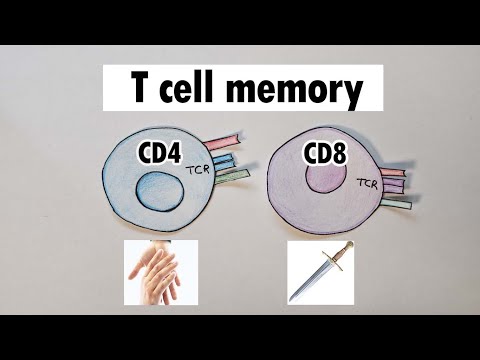
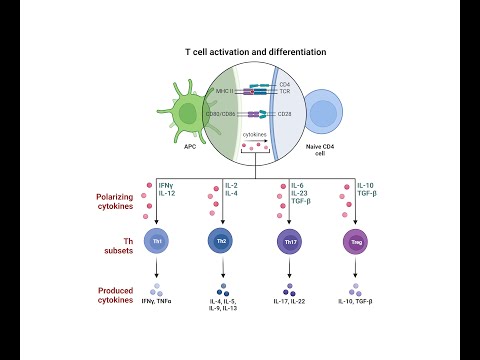
The mechanism is the surprise. Durable remissions depended on CD4 T cells, not the CD8 "killer" T cells that most immunotherapy tries to mobilize. Primed by IL-21, the CD4 cells produced interferon-gamma, which told macrophages to eat the tumor cells.

Checkpoint blockade — the PD-1, PD-L1 and CTLA-4 drugs that transformed other cancers — produced no durable remissions in the same mouse model. The authors propose the CD4-driven pathway may apply to other poorly immunogenic tumors.

Why it matters

Pancreatic cancer shrugs off every approved immunotherapy. This pairing could turn months of tumor control into lasting remissions.

Questions about this story

Free account needed to ask — your question is kept and asked for you right after sign-up. Answers are public.

No questions yet — be the first to ask.

Key Indicators

7 of 9
Mice tumor-free at day 90 with MRTX1133 + 21h10
The KRAS G12D inhibitor plus IL-21 mimic cleared pancreatic tumors in most treated animals.
100%
Durable remissions in KRAS G12C lung cancer model
Adagrasib plus 21h10 produced remissions in every mouse in a lung cancer model minimally responsive to PD-1 blockade.
70%
Durable remissions in MRTX1133-resistant tumors
The combination cleared YAP-amplified pancreatic tumors that had acquired resistance to the KRAS inhibitor alone.
0
Approved checkpoint-blockade combos with durable remissions
PD-1, PD-1/LAG3 and CTLA-4 regimens each extended survival but none produced durable remissions in the model.

Voices

Curated perspectives — historical figures and your fellow readers.

Ever wondered what historical figures would say about today's headlines?

Sign up to generate historical perspectives on this story.

People Involved

Organizations Involved

Timeline

2 events Latest: Today
  1. Cell publishes IL-21 mimic / KRAS inhibitor study

    Today Publication

    Study shows pairing a KRAS inhibitor with the IL-21 mimic 21h10 produces durable remissions in mouse models of pancreatic and lung cancer, driven by CD4 T cells.

  2. Dana-Farber issues press release on findings

    Today Statement

    Institute highlights the combination as a potential strategy to turn transient KRAS inhibitor responses into durable remissions in pancreatic cancer.

Scenarios

1

21h10 enters clinical trials for pancreatic cancer

Possible Resolves by End of 2029

Discussed by: Dana-Farber researchers involved in the study, who cite ex vivo human data as support for moving to human testing

The ex vivo finding that patient-derived pancreatic tumor T cells produce IFN-γ when exposed to 21h10 is the main rationale for a clinical program. The path runs through a Phase 1 safety and dosing trial combining 21h10 with an approved KRAS inhibitor — adagrasib for G12C tumors, or MRTX1133 for G12D once approved. Registration would appear on ClinicalTrials.gov if the therapy is licensed or developed in-house.

2

Human studies fail to reproduce the immune response

Possible Resolves by End of 2031

Discussed by: Cancer immunologists who note mouse efficacy often fails to translate; the authors themselves say more research is needed on safety and efficacy

Mouse models routinely overstate immunotherapy benefit. The human evidence so far is limited to short-term cultures of patient tumor tissue. If a Phase 1 trial shows toxicity, no immune activation, or no clinical signal, development could stall or shift to other indications.

3

CD4-driven IL-21 mechanism extends to other KRAS-mutant cancers

Likely Resolves by Q2 2029

Discussed by: The study authors, who showed the combination works in lung cancer and propose the CD4 pathway may apply broadly to poorly immunogenic tumors

The paper already demonstrates efficacy in a KRAS G12C lung cancer model and in MRTX1133-resistant pancreatic tumors. If further preclinical work confirms the CD4/cDC2/macrophage mechanism in additional KRAS-mutant tumor types, the IL-21 approach could be tested more widely. This would be visible through subsequent publications.

Historical Context

3 moments from history that rhyme with this story — and how they unfolded.

March 2011

Ipilimumab and the first checkpoint remissions (2011)

The Food and Drug Administration approved ipilimumab, the first immune checkpoint inhibitor, for metastatic melanoma. A minority of patients achieved remissions that held for years — a first for advanced cancer.

Then

Ipilimumab became the model for checkpoint therapy and spawned the anti-PD-1 drugs that followed.

Now

Checkpoint blockade transformed melanoma, lung and kidney cancer — but pancreatic cancer stayed refractory, and immunotherapy research has largely assumed CD8 T cells must be activated.

Why this matters now

This study challenges that assumption, showing CD4 T cells coordinating innate immunity may be the lever pancreatic cancer responds to.

2013-2021

KRAS 'undruggable' breakthrough (2013-2021)

After decades of failed attempts, researchers cracked KRAS G12C inhibitors, and sotorasib and adagrasib won approval for lung cancer. The heavily mutated protein was finally druggable.

Then

KRAS G12C inhibitors shrank tumors and extended survival in a subset of patients.

Now

Responses often proved transient as resistance emerged, creating an urgent need for combination partners — exactly what this study's IL-21 mimic offers.

Why this matters now

KRAS inhibitors debulk tumors and reduce immunosuppression, but the immune system must finish the job; this study supplies the missing immune signal.

1990s

High-dose IL-2 therapy (1990s)

Interleukin-2 became the first cytokine-based cancer immunotherapy, producing durable remissions in a small fraction of melanoma and kidney cancer patients — at the cost of severe, sometimes fatal toxicity.

Then

IL-2 showed cytokines could cure some patients but limited by side effects.

Now

The field spent three decades engineering safer cytokines; 21h10 is a designed IL-21 mimic built for better stability and tolerability.

Why this matters now

21h10 represents the modern, computationally designed successor to the natural cytokines, potentially capturing their immune benefits without the toxicity.

Sources

(6)