


Pull to refresh
Logo
Daily Brief
Following
Why Ranks Sign Up
Chile reverses state-led mining strategy as Kast takes office

Chile reverses state-led mining strategy as Kast takes office

Rule Changes

New president plans to open lithium to private investment and sign a critical minerals deal with the United States

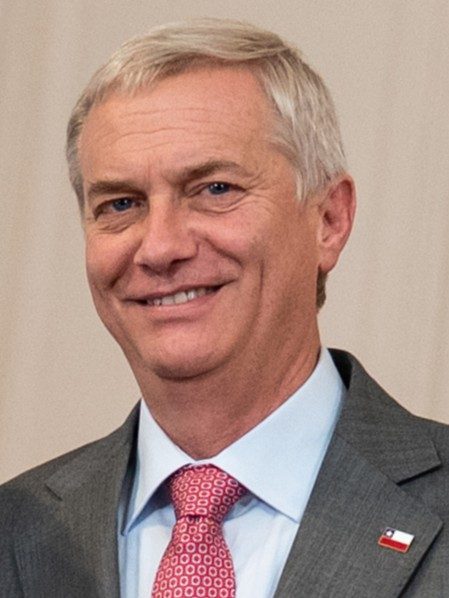
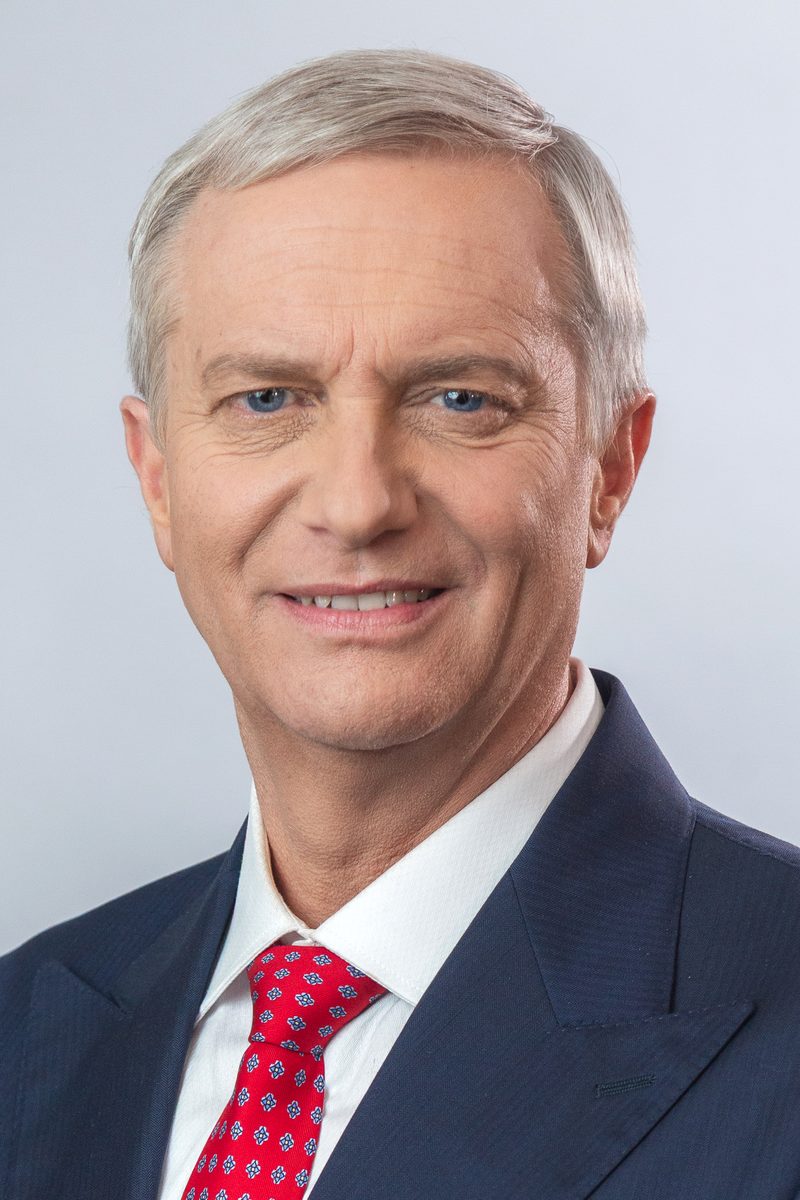
March 11th, 2026: Kast inaugurated as Chile's 38th president

Overview

Chile produces roughly a quarter of the world's copper and holds the largest lithium reserves on Earth. President Kast took office March 11, 2026, to reverse his predecessor's approach by scrapping plans for a national lithium company, opening the sector to broader private investment, and unlocking $105 billion in stalled mining projects.

The stakes extend well beyond Chile's borders. The country's mining policy directly shapes the global supply of two metals essential to the energy transition and electronics manufacturing.

Kast plans to sign a critical minerals agreement with the Trump administration within days, positioning Chile as a main partner in Washington's effort to reduce dependence on Chinese-controlled mineral supply chains. The approach will test Chile's resource governance, particularly the durability of partnerships like the Codelco-SQM lithium joint venture signed under former President Gabriel Boric.

Questions about this story

No questions yet — be the first to ask.

Play on this story Voices Debate Predict

Key Indicators

24%
Share of global copper production
Chile has been the world's largest copper producer continuously since 1983.
9.3M tonnes
Lithium reserves (world's largest)
Chile holds 36% of the world's identified lithium reserves, concentrated in the Salar de Atacama.
$105B
Mining investment pipeline through 2034
Estimated value of mining projects awaiting regulatory approval or construction permits.
500+
Permits per mining project
Number of separate permits currently required before a single mining project can begin construction.
58.2%
Kast's runoff vote share
The second-highest vote percentage in a Chilean presidential runoff since the return of democracy in 1990.

Voices

Curated perspectives — historical figures and your fellow readers.

Ever wondered what historical figures would say about today's headlines?

Sign up to generate historical perspectives on this story.

Play

Exploring all sides of a story is often best achieved with Play.

Log in to play. Track your picks, climb the leaderboards. Log in Sign Up
Predict 4 ways this could play out. Contrarian picks score more — points lock when the scenario resolves. Log in to play
Timeline Five events from this story — drag them oldest to newest. Log in to play
Connections Sixteen names from the news. Find the four hidden groups of four. Log in to play

People Involved

Organizations Involved

Timeline

April 2023 March 2026

8 events Latest: March 11th, 2026 · 4 months ago
Tap a bar to jump to that date
  1. Kast inaugurated as Chile's 38th president

    Latest Government

    Kast took the oath of office at the National Congress in Valparaíso before roughly 1,100 guests including Argentina's Javier Milei, Ecuador's Daniel Noboa, Panama's José Raúl Mulino, and Spain's King Felipe VI. A critical minerals agreement with the Trump administration was expected within days.

  2. Kast announces cabinet with merged Mining-Economy ministry

    Government

    President-elect Kast named Daniel Mas, an agribusiness engineer, as dual Minister of Economy and Mining—abandoning a plan to appoint former BHP executive Santiago Montt to a standalone mining post.

  3. Kast wins presidential runoff in landslide

    Election

    Kast defeated Jara with 58.2% of the vote—7.2 million ballots, the highest total in Chilean history—winning every region of the country.

  4. Kast and Jara advance to presidential runoff

    Election

    In the first-round vote, Jeannette Jara of the Communist Party led with 27%, followed by Kast with 24%. No candidate reached a majority, triggering a December runoff.

  5. Chile passes permitting reform law

    Legislation

    Congress approved Law 21.770 (Ley Marco de Autorizaciones Sectoriales), aiming to cut permitting timelines by 30–70% for strategic mining and energy projects.

  6. Codelco-SQM joint venture finalized as Nova Andino Litio

    Industry

    The partnership was formalized with Codelco holding 50% plus one share. The state would receive about 70% of operating margins through 2030, rising to 85% from 2031.

  7. Codelco and SQM sign lithium memorandum of understanding

    Industry

    The state copper company and Chile's largest private lithium producer agreed to form a public-private partnership for lithium production in the Salar de Atacama.

  8. Boric launches National Lithium Strategy

    Policy

    President Gabriel Boric announced a state-led approach requiring government majority stakes in all future lithium projects, including plans for a National Lithium Company. Existing contracts with SQM and Albemarle were honored.

Historical Context

3 moments from history that rhyme with this story — and how they unfolded.

2008–2025

Bolivia's failed state-led lithium program (2008–2025)

Bolivia nationalized lithium in 2008 under President Evo Morales, requiring foreign investors to partner equally with the state company YLB. After 17 years, Bolivia failed to achieve commercial-scale lithium production. A joint venture with Germany's ACI Systems collapsed in 2019 after local protests, and a state-run potassium chloride plant operated at less than 30% capacity.

Then

Bolivia remained the only country in the 'Lithium Triangle' (with Chile and Argentina) that the U.S. Geological Survey did not consider commercially viable.

Now

Newly elected center-right President Rodrigo Paz began reversing the state monopoly approach in late 2025, opening lithium to broader private participation—a policy arc Chile's Kast government is now accelerating in the opposite direction from Boric.

Why this matters now

Bolivia's experience is the cautionary tale most cited by supporters of Kast's private-sector approach: state control of lithium without sufficient capital, technology, or operational expertise can leave vast reserves in the ground while competitors capture the market.

1973–1990

Chile's privatization wave under Pinochet (1973–1990)

The Pinochet military government privatized hundreds of state-owned firms under the guidance of the 'Chicago Boys' economists. Copper mining through Codelco was constitutionally exempted, but new mineral deposits were opened to private investment. SQM—now one of the world's largest lithium producers—was sold to a politically connected buyer, Julio Ponce Lerou, at below-market prices.

Then

Chile attracted foreign mining capital and expanded copper production, but some privatizations enriched regime insiders at public expense.

Now

The hybrid model—state-owned Codelco alongside private miners—persisted for 35 years across governments of every political stripe, making Boric's 2023 lithium strategy and Kast's reversal both departures from a durable equilibrium.

Why this matters now

Kast's inauguration has been framed as Chile's sharpest rightward shift since the end of the Pinochet era. His mining policy reopens a debate that Chile's post-1990 democracy had largely settled: how much of the country's mineral wealth should the state control directly versus regulate from a distance.

April 2022

Mexico's lithium nationalization (2022)

President Andrés Manuel López Obrador pushed a bill through Mexico's Congress in a single day that classified lithium as a 'strategic mineral' reserved exclusively for the state. A new state-owned company, LitioMx, was created to manage all lithium exploration and production. Private companies were barred from obtaining new lithium concessions.

Then

LitioMx began operations in February 2023 but lacked the capital, technology, and experienced personnel to develop Mexico's lithium deposits at commercial scale.

Now

Mexico's lithium output remained negligible. The policy became a reference point for critics of state-led mineral strategies across Latin America, including in Chilean debates over Boric's approach.

Why this matters now

Mexico's experience reinforced the argument that declaring state control over critical minerals means little without the technical and financial capacity to extract them—an argument central to Kast's case for expanding private-sector participation in Chilean lithium.

Sources

(13)