


Pull to refresh
Logo
Daily Brief
Following
Why
America builds Western mineral alliance against Chinese dominance

America builds Western mineral alliance against Chinese dominance

Rule Changes
By Newzino Staff |

Washington signs bilateral agreements with 21 nations, launches FORGE initiative to reshape global supply chains

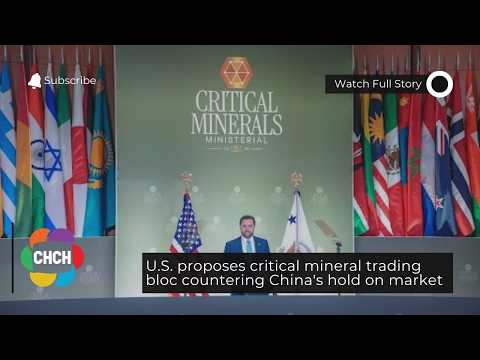
February 4th, 2026: 54-Nation Critical Minerals Ministerial Convenes

Overview

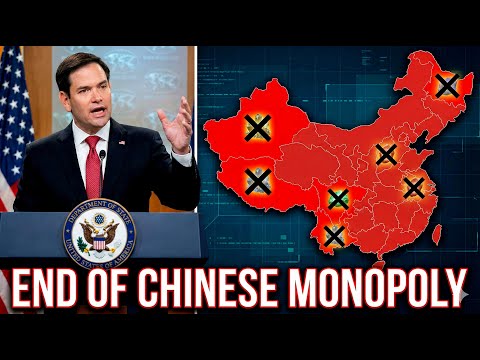
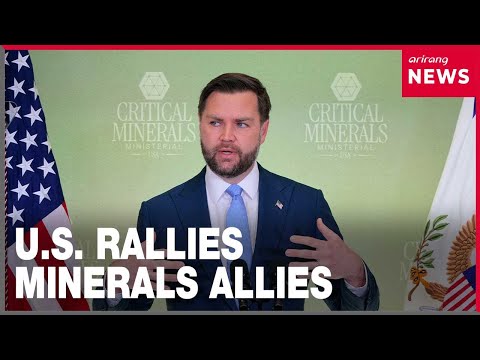
China controls roughly two-thirds of global rare earth mining and about 90 percent of processing—a concentration the United States now treats as a national security threat. On February 4, 2026, Secretary of State Marco Rubio convened ministers from 54 countries in Washington to unveil America's answer: a preferential trade bloc for critical minerals backed by price floors, billions in financing, and a new coordinating body called FORGE.

Argentina joined the alliance that day, signing a framework agreement that positions it as a key Western Hemisphere supplier of lithium, copper, and rare earths. The deal represents the culmination of 18 months of bilateral negotiations, with the United States now holding critical minerals pacts with 21 nations. President Milei's investment incentives have already attracted $31 billion in announced mining projects, and the US agreement opens access to American financing and a market hungry to bypass Chinese supply chains.

Key Indicators

54
Countries at Ministerial
Nations represented at the February 2026 Critical Minerals Ministerial in Washington
90%
China's Processing Share
China's share of global rare earth processing—the chokepoint the alliance aims to break
$31B
Argentina Mining Investment
Total mining investments announced in Argentina under Milei's RIGI incentive program
21
US Bilateral Agreements
Total critical minerals agreements signed by the United States through February 2026

Interactive

Exploring all sides of a story is often best achieved with Play.

Ever wondered what historical figures would say about today's headlines?

Sign up to generate historical perspectives on this story.

Sign Up

Debate Arena

Two rounds, two personas, one winner. You set the crossfire.

People Involved

Marco Rubio
Marco Rubio
United States Secretary of State (Leading US critical minerals diplomacy)
Pablo Quirno
Pablo Quirno
Argentina Foreign Minister (Signed critical minerals framework with United States)
Javier Milei
Javier Milei
President of Argentina (Driving pro-mining economic reforms)

Organizations Involved

Forum on Resource Geostrategic Engagement (FORGE)
International Coordinating Body
Status: Newly launched, chaired by South Korea through June 2026

US-led alliance to coordinate critical mineral policy, pricing, and project development among partner nations.

U.S. Department of State
Federal Agency
Status: Leading critical minerals diplomacy

Primary US agency executing critical minerals bilateral agreements and the FORGE initiative.

Timeline

  1. 54-Nation Critical Minerals Ministerial Convenes

    Diplomatic Summit

    Secretary Rubio hosts ministers from 54 countries and the European Commission in Washington. Administration unveils FORGE initiative and Project Vault, a $12 billion strategic reserve.

  2. Argentina Signs Framework Agreement

    Agreement

    Foreign Minister Quirno signs Framework Instrument for Strengthening Critical Minerals Supply, making Argentina a key Western Hemisphere partner in the US alliance.

  3. 11 New Bilateral Agreements Announced

    Agreement

    US signs frameworks with Argentina, Cook Islands, Ecuador, Guinea, Morocco, Paraguay, Peru, Philippines, UAE, and Uzbekistan, bringing total agreements to 21.

  4. US-Japan Rare Earths Pact Signed

    Agreement

    Tokyo and Washington formalize framework covering cobalt, graphite, lithium, manganese, and nickel with $20+ billion in announced project financing.

  5. US-Australia $8.5B Framework Announced

    Agreement

    Trump and Albanese unveil America's largest international minerals partnership, including $3 billion in joint government investment and Pentagon support for Australian gallium refinery.

  6. US-Argentina Sign Initial Minerals MOU

    Agreement

    Foreign Minister Diana Mondino and US Under Secretary José Fernández sign memorandum of understanding on critical minerals cooperation in Buenos Aires.

Scenarios

1

FORGE Bloc Establishes Price Floors, Western Mining Investment Surges

Discussed by: Center for Strategic and International Studies, Council on Foreign Relations analysts

If FORGE successfully implements enforceable price floors, Western mining projects become economically viable again. Argentina's $31 billion in committed investments translate into operational mines by 2030, Chinese market share in processing drops to 80% by decade's end. This scenario requires sustained political commitment across multiple US administrations and cooperation from price-sensitive consumer nations.

2

China Retaliates with Export Controls, Supply Crisis Erupts

Discussed by: Chatham House, Carnegie Endowment analysts, Financial Times

Beijing responds to FORGE by restricting rare earth exports, repeating its 2010 playbook against Japan but at global scale. Prices spike, Western manufacturers scramble, and political pressure builds to negotiate directly with China. Argentina and other new suppliers cannot scale quickly enough to fill the gap, exposing the decade-long timeline required to actually diversify supply chains.

3

Alliance Fragments Over Competing Interests

Discussed by: Natural Resource Governance Institute, trade policy specialists

Developing producer nations resist price floors that benefit US consumers, while allies like Japan and South Korea prioritize cheap inputs over supply security. Without binding commitments, FORGE becomes a talking shop. Argentina continues attracting Chinese and Western investment alike, hedging between blocs rather than choosing sides.

4

Argentina Becomes Top-Five Copper Producer by 2035

Discussed by: Mining.com, JP Morgan commodity analysts, Glencore executives

Milei's RIGI framework survives political transition, and four major greenfield copper projects in San Juan province reach production. Argentina joins Chile and Peru in the top tier of global copper suppliers, producing over one million tons annually. Combined with its lithium output, Argentina becomes the most important minerals partner in the Western Hemisphere.

Historical Context

China's Rare Earth Embargo Against Japan (2010)

September-November 2010

What Happened

Following a territorial dispute over the Senkaku Islands, China halted rare earth exports to Japan for approximately two months. Japan, which sourced 90% of its rare earths from China, saw its automotive, electronics, and defense industries thrown into panic. Prices for some rare earth elements rose tenfold within a year.

Outcome

Short Term

Japanese companies stockpiled rare earths, exacerbating a price bubble that lasted over a year. China denied implementing a formal embargo.

Long Term

Japan invested heavily in alternative suppliers, backing the emergence of Lynas (Australia) and Malaysian processing facilities. Tokyo pioneered recycling and substitution technologies that reduced rare earth dependency by 50% in some applications.

Why It's Relevant Today

The 2010 episode proved China would weaponize mineral supply. It also showed that diversification is possible but requires a decade of sustained investment—the timeline the current US alliance must navigate.

OPEC Oil Embargo (1973-1974)

October 1973 - March 1974

What Happened

Arab OPEC members embargoed oil exports to the United States in retaliation for American support of Israel during the Yom Kippur War. Global oil prices quadrupled from $3 to $12 per barrel. American consumers faced gas rationing and long lines at filling stations.

Outcome

Short Term

The embargo triggered a global recession and reshaped US foreign policy toward the Middle East.

Long Term

The US created the Strategic Petroleum Reserve (1975), imposed fuel efficiency standards, and launched decades of energy independence efforts. OPEC's coordination demonstrated that resource-rich nations could reshape global markets.

Why It's Relevant Today

The Trump administration explicitly cites the SPR as a model for Project Vault, its $12 billion critical minerals reserve. The parallel suggests Washington views Chinese mineral dominance as analogous to 1970s oil dependence—a strategic vulnerability requiring decades of policy response.

US Inflation Reduction Act Mineral Requirements (2022)

August 2022

What Happened

The Biden administration's signature climate law included requirements that electric vehicle tax credits depend on sourcing critical minerals from the US or free trade agreement partners—not from China or Russia. By 2027, 80% of battery minerals must come from friendly nations.

Outcome

Short Term

Automakers scrambled to restructure supply chains. The administration negotiated minerals-specific trade deals with Japan, the EU, and others that bypassed traditional free trade agreements.

Long Term

The IRA created permanent market incentives for non-Chinese mineral supply, making the current diplomatic push commercially necessary rather than purely strategic.

Why It's Relevant Today

Argentina's new framework positions it to supply minerals that qualify for IRA tax credits, making the agreement immediately valuable to American automakers and battery manufacturers.

11 Sources: