


Pull to refresh
Logo
China cuts US Treasury holdings to lowest since 2008 amid global bond sell-off

China cuts US Treasury holdings to lowest since 2008 amid global bond sell-off

Money Moves

Beijing's reported stash falls to $618 billion as reserves migrate into gold and agency bonds

Today: Fed hikes rates as 10-year yield tops 5%

Overview

Updated 1 hour ago

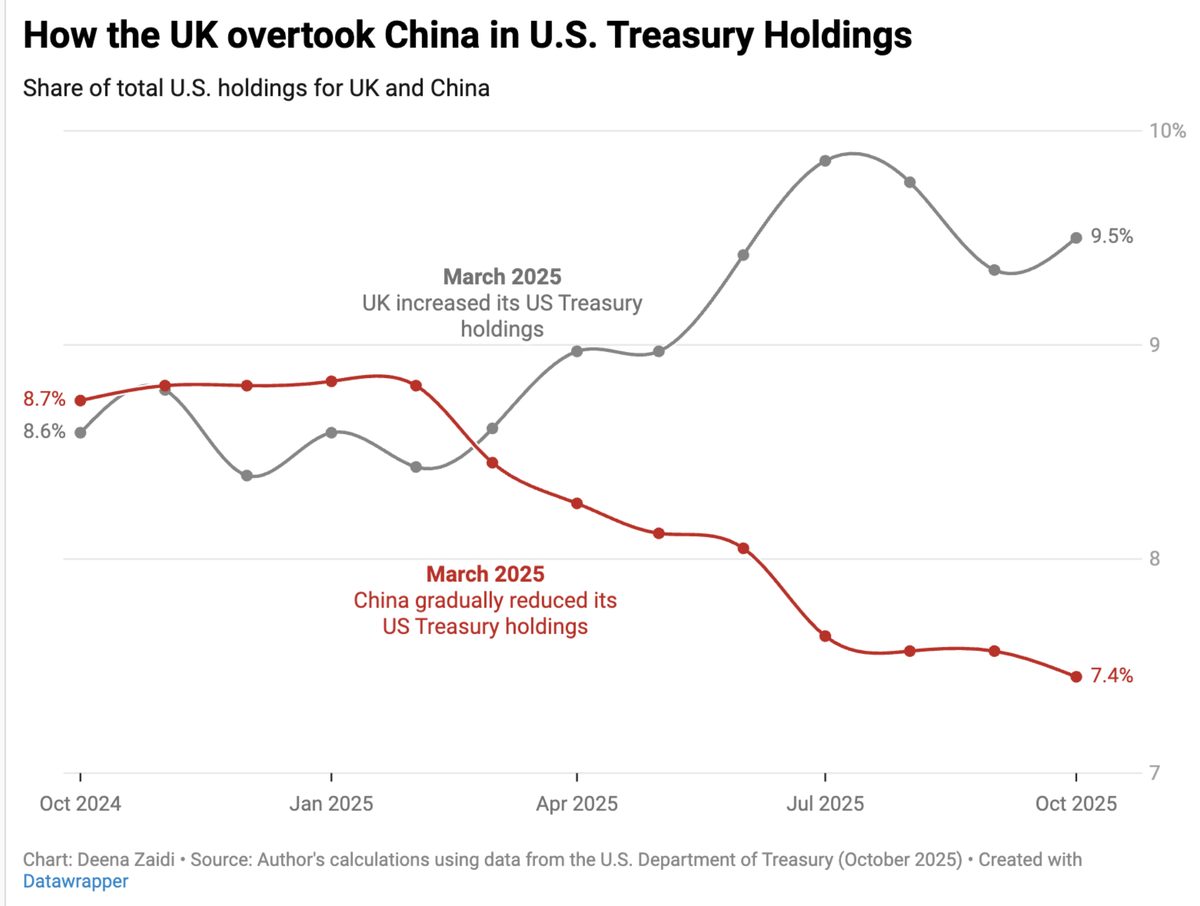
China's reported US Treasury holdings fell to $618 billion in July, the lowest since September 2008. The Treasury Department data, released September 16, showed Beijing trimming 2.4% in a single month, matching the level that marked the depths of the global financial crisis.

The unwind has been building for years. Beijing peaked near $1.3 trillion in November 2013 and has been diversifying steadily, accelerating after Washington froze Russian reserves in 2022. The July data landed the same week the Federal Reserve delivered its first rate hike in more than three years and the 10-year Treasury yield rose above 5%, signs that foreign demand for US debt is weakening just as Washington's borrowing costs climb.

Why it matters

If China keeps trimming its Treasury stash, US borrowing costs climb just as the fiscal deficit makes debt markets the central story.

Questions about this story

Free account needed to ask — your question is kept and asked for you right after sign-up. Answers are public.

No questions yet — be the first to ask.

Key Indicators

$618 billion
China's reported July Treasury holdings
Lowest since September 2008, when holdings were $618.2 billion.
18 years
Years since holdings were this low
Holdings last matched current levels during the global financial crisis.
$1.3 trillion
Peak holdings, November 2013
China has shed more than half its reported position since then.
$9.25 trillion
Total foreign holdings, July
Down $50 billion from June, a nine-month low for all foreign investors.
5%
10-year Treasury yield high, September 2026
Yields spiked above the level investors treat as a danger zone for stocks.

Voices

Curated perspectives — historical figures and your fellow readers.

Ever wondered what historical figures would say about today's headlines?

Sign up to generate historical perspectives on this story.

People Involved

Organizations Involved

Timeline

November 2013 September 2026

5 events Latest: Today
Tap a bar to jump to that date
  1. Fed hikes rates as 10-year yield tops 5%

    Today Policy

    Federal Reserve delivers first rate increase in over three years as investors flee US debt, with the 10-year yield spiking above 5%.

  2. July data confirms 18-year low at $618 billion

    Data

    Treasury Department release shows China's holdings down 2.4% month over month to $618 billion, matching September 2008 levels.

  3. June holdings fall to $633.4 billion

    Data

    China cut 4% in one month, the lowest level since 2008, per data released in September.

  4. US freezes Russian central bank assets

    Geopolitics

    Washington froze roughly $300 billion in Russian reserves after the Ukraine invasion, alarming other dollar-asset holders.

  5. China's Treasury holdings peak above $1.3 trillion

    Data

    Beijing's reported position topped out near $1.3 trillion before a long, steady decline began.

Scenarios

1

China's Treasury holdings slide below $600 billion

Likely Resolves by Q2 2027

Discussed by: Natixis economist Alicia García-Herrero and BNP Paribas' Wei Li, who see the diversification as deliberate and ongoing

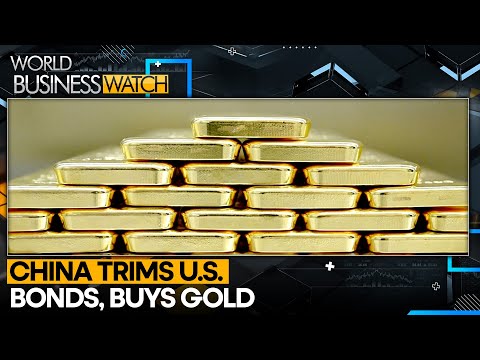
Beijing keeps trimming reported holdings month after month, extending the 13-year decline. Gold purchases continue at record levels and the PBOC shifts more reserves into US agency bonds. Global investor anxiety over Washington's $40 trillion debt load reinforces the move, and each monthly TIC release shows a new low.

2

Rising yields stall China's Treasury exodus

Possible Resolves by Q2 2027

Discussed by: Analysts cited by Firstpost and Business Insider, who note that 10-year yields above 5% attract buyers seeking returns

The sell-off makes Treasuries cheap enough to lure buyers back. High yields outweigh fiscal concerns, foreign demand returns, and China's reported holdings stabilize or tick up. The push-pull dynamic — worries about US debt push yields up, but higher yields draw money in — keeps Beijing's position roughly flat.

3

Reported decline proves overstated

Uncertain Resolves by Q2 2027

Discussed by: Daily Beirut and analysts noting that Chinese entities hold dollar assets through Euroclear in Belgium and Clearstream in Luxembourg

The reported drop understates China's true exposure because Beijing holds a share of its US debt through third-country custodians, which obscure ownership. Belgian and Luxembourg custodial data would show rising Chinese-linked holdings even as reported direct holdings fall, meaning the diversification is less dramatic than headline numbers suggest.

Historical Context

3 moments from history that rhyme with this story — and how they unfolded.

2015-2016

China's reserve outflow episode (2015-2016)

Fears of yuan devaluation triggered massive capital outflows. China's reserves fell by about $1 trillion from a peak near $4 trillion as Beijing spent dollars defending the currency.

Then

Beijing burned through reserves, imposed capital controls, and stabilized the yuan.

Now

It showed Beijing treats reserve allocation as a deliberate policy tool and will shift positions when it perceives risk.

Why this matters now

Today's Treasury sell-down is similar reserve management — slower and more strategic than the 2015 panic, but the same willingness to move money for policy reasons.

February 2022

Russian reserve freeze (2022)

Days after Russia invaded Ukraine, the US and its allies froze roughly $300 billion of Russian central bank reserves held in Western institutions. Beijing watched the move as a direct warning about the safety of dollar assets.

Then

Russia lost access to most of its dollar and euro reserves and accelerated its pivot to gold and yuan.

Now

The freeze became a cautionary tale for every central bank holding dollar assets, prompting a global push toward diversification.

Why this matters now

Chinese officials have cited the freeze as a reason to reduce reliance on US debt, and analysts say it accelerated China's Treasury sell-down.

September-October 2022

Japan's yen-defense Treasury sales (2022)

With the yen plunging to multi-decade lows, Japan's finance ministry intervened to support the currency, selling US Treasuries to fund the operation. Japan's reported holdings fell as a result.

Then

Japan stabilized the yen and its Treasury holdings dropped in the months that followed.

Now

It demonstrated that major foreign holders will sell Treasuries for domestic policy reasons, not just portfolio strategy.

Why this matters now

Japan trimmed again in July 2026 — its third straight monthly decline — showing sovereign selling of US debt is now a coordinated global theme, not a China-only story.

Sources

(8)