
Pull to refresh
Logo
Daily Brief
Following
Why Sign Up
China admits its engineers were on Pakistani airbases during 2025 conflict with India

China admits its engineers were on Pakistani airbases during 2025 conflict with India

Force in Play

After a year of denials, Beijing acknowledges direct involvement in Operation Sindoor

Yesterday: China admits AVIC engineers were at Pakistani airbases

Overview

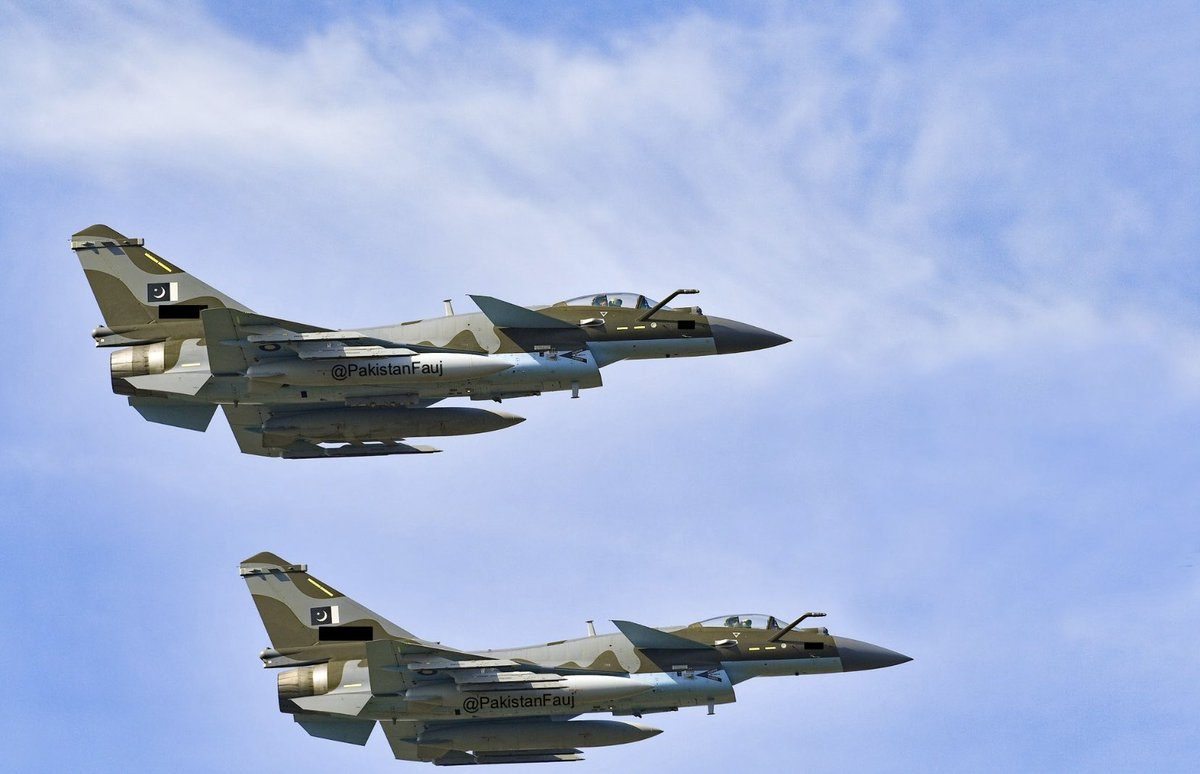
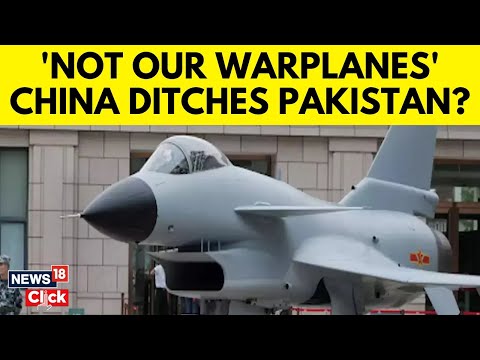
For a year, Beijing said it was not on the battlefield. On May 8, 2026, China's state broadcaster aired interviews with two engineers from the Aviation Industry Corporation of China (AVIC) who said they had been stationed at Pakistani airbases during the four-day clash with India in May 2025, working alongside Pakistan Air Force crews flying Chinese-built J-10CE fighters. The admission turns a denial into a record — and the commercial logic behind it was already visible. AVIC's aircraft subsidiary posted first-quarter 2026 revenue up nearly 80 percent year-on-year, with Bangladesh reportedly in a $2.2 billion government-to-government deal for 20 J-10CEs and Indonesia evaluating a larger batch. A jet with a confirmed combat record sells itself.

Why it matters

If a nuclear-armed neighbor's last war already had Chinese personnel on the runway, India's next planning assumption changes — and so does the diplomatic ceiling with Beijing.

Key Indicators

~80%
AVIC Q1 2026 revenue jump
Chengdu Aircraft Corporation's Q1 2026 sales surged nearly 80 percent year-on-year, driven by J-10CE export demand after its combat debut against India.
81%
Chinese share of Pakistan's military hardware
Indian Army figure cited by Lt Gen Rahul Singh in July 2025; covers fighters, missiles, and air defense.
1 year
Time between conflict and admission
Beijing denied any direct role from May 2025 until the CCTV broadcast on May 8, 2026.
4 days
Length of the May 2025 fighting
Strikes ran from May 7 to a ceasefire at 5 pm IST on May 10, 2025.
26
Civilians killed at Pahalgam
April 22, 2025 attack in Kashmir that India cited as the trigger for Operation Sindoor.
36
J-10CE fighters in Pakistani service
Pakistan is the only export customer for the Chengdu J-10C series; Chinese engineers were on hand to support them.

Interactive

Exploring all sides of a story is often best achieved with Play.

Ever wondered what historical figures would say about today's headlines?

Sign up to generate historical perspectives on this story.

Sign Up

Debate Arena

Two rounds, two personas, one winner. You set the crossfire.

People Involved

Organizations Involved

Timeline

  1. China admits AVIC engineers were at Pakistani airbases

    Disclosure

    CCTV aired interviews with AVIC engineers Zhang Heng and Xu Da, who said they supported J-10CE operations from Pakistani bases during Operation Sindoor.

  2. India announces military restructuring and S-400 expansion on Sindoor anniversary

    Military

    On the first anniversary of Operation Sindoor, Indian military officials announced battle formation restructuring for multi-front operations and the addition of two S-400 squadrons. Leadership explicitly named a China-Pakistan-Turkey axis as the prevailing threat framework.

  3. Bloomberg reports AVIC fighter jet sales surge after 2025 conflict

    Commercial

    Bloomberg reported that Chengdu Aircraft Corporation's 2025 revenue rose 15.8 percent to 75.4 billion yuan, while first-quarter 2026 sales jumped nearly 80 percent year-on-year, driven by J-10CE export demand following its combat debut against India.

  4. Indian Army goes public on Chinese role

    Statement

    Lt Gen Rahul Singh said Pakistan was a 'live lab' for Chinese weapons and that 81% of its hardware came from China. Beijing denied direct involvement.

  5. Pakistan launches Operation Bunyan-un-Marsoos

    Military

    Pakistan attacked Indian airbases and command sites. India responded with strikes on Pakistani airbases including Nur Khan, Sargodha, Jacobabad, and Bholari.

  6. Ceasefire takes effect

    Diplomatic

    Both governments announced a ceasefire after four days of fighting. Talks were set for May 12.

  7. Pakistan retaliates, shells Line of Control

    Military

    Pakistan launched cross-border shelling and drone strikes; at least 13 civilians were reported killed on the Indian side.

  8. India launches Operation Sindoor

    Military

    Indian forces struck nine militant sites in Pakistan and Pakistan-administered Kashmir, including Muridke and Bahawalpur, using BrahMos and SCALP-EG missiles.

  9. Pahalgam attack kills 26 in Kashmir

    Trigger event

    Gunmen attacked tourists at Baisaran meadow near Pahalgam in Indian-administered Kashmir, killing 26 civilians. India blamed Pakistan-based militant groups.

Scenarios

1

India accelerates indigenous arms buildup, freezes China defense talks

Discussed by: The Print, India Sentinels, Carnegie Endowment analysts

New Delhi treats the disclosure as proof that any future Pakistan crisis is a two-front problem. Defense planners push faster procurement of indigenous platforms (Tejas Mk1A, Rudram, Pralay) and deepen ties with France, the United States, and Israel. Quiet defense talks with Beijing stall. This is the path most closely aligned with Lt Gen Singh's July 2025 framing and Indian press commentary on the disclosure.

2

Beijing uses combat record to win J-10 export deals

Discussed by: Asian Mirror, defense trade press

China treats the CCTV broadcast as an advertising campaign. With Xu Da publicly saying the J-10CE 'performed exactly as we expected,' AVIC pitches the fighter to buyers in Egypt, Iran, and Latin America who want a cheaper alternative to U.S. and French aircraft. The message: combat-tested against a peer air force. This scenario explains why Beijing chose disclosure over continued denial.

3

Diplomatic friction stays managed; trade and border talks continue

Discussed by: Some Indian foreign policy commentators, Chinese state media

India and China have spent two years rebuilding ties after the 2020 Galwan clash. Both governments may decide the disclosure is uncomfortable but not worth blowing up Border Affairs talks or the recent thaw on direct flights and visas. Public statements stay sharp; the working-level relationship limps forward.

4

Pakistan deepens dependence on Chinese systems and personnel

Discussed by: Stimson Center, ORF, Indian defense analysts

With Chinese involvement now public, Islamabad has less reason to disguise the relationship. Future deals could include more J-10s, J-35 stealth fighters, and longer-term embedded technical teams. The cost is strategic autonomy: Pakistan's air defense doctrine becomes harder to separate from Beijing's.

5

J-10CE displaces Western jets in price-sensitive markets, making combat-tested Chinese fighters the default alternative

Discussed by: The Diplomat, Bloomberg, Quwa defense analysis

AVIC's Chengdu Aircraft posted Q1 2026 revenue up nearly 80 percent and Bangladesh is reportedly closing a $2.2 billion deal for 20 J-10CEs. If Indonesia finalizes a reported purchase of around 42 jets, the fighter will have broken into Southeast Asia with a combat record behind it. At that point, the May 8 CCTV disclosure reads less as a diplomatic miscalculation and more as a calculated advertisement — the cost of admitting the engineers were there, paid in full by the export orders that followed.

Historical Context

Soviet pilots in Egypt's War of Attrition (1969–1970)

January 1970 – August 1970

What Happened

Moscow sent some 15,000 personnel and full air-defense units to Egypt, including pilots who flew MiG-21s in combat against Israeli aircraft. The Soviet role was officially denied at the time. After a July 30, 1970 dogfight in which Israeli pilots downed five Soviet-flown MiGs, the operation was scaled back, but it took decades for Moscow to fully acknowledge it.

Outcome

Short Term

A ceasefire was signed in August 1970 that froze the Suez front. Israel quietly understood it had been fighting Soviet pilots.

Long Term

The episode set a template for great-power 'deniable' combat involvement that allies later copied. Public admission came piecemeal, mostly after the Cold War.

Why It's Relevant Today

Like Beijing's J-10CE engineers, Soviet personnel were on the ground (and in the cockpit) of a client state during a hot war while their government denied it. The pattern of years-later admission, once strategic value had been extracted, is the same.

American Volunteer Group in China (1941–1942)

December 1941 – July 1942

What Happened

About 100 U.S. military pilots resigned their commissions to fly P-40s for China against Japan, months before Pearl Harbor brought the United States into the war. Officially they were civilian volunteers; in practice, the Roosevelt administration approved the unit and supplied the aircraft.

Outcome

Short Term

The 'Flying Tigers' claimed roughly 300 Japanese aircraft destroyed before being absorbed into the U.S. Army Air Forces in July 1942.

Long Term

Washington's role was eventually acknowledged and the unit became a celebrated piece of U.S. air history. The episode is a textbook case of plausible-deniability military aid that later turned into open alliance.

Why It's Relevant Today

AVIC engineers at Pakistani airbases play the same role the AVG played in 1941: skilled foreign personnel directly enabling a client's combat operations under a thin civilian label. Beijing's choice to publicize the involvement after the fact mirrors how the U.S. eventually claimed the Flying Tigers.

U.S. intelligence and weapons support to Ukraine (2022–present)

February 2022 – present

What Happened

The United States and NATO allies have supplied Ukraine with HIMARS rockets, Patriot batteries, F-16s, and real-time targeting intelligence in its war with Russia, while keeping Western troops out of direct combat. The scale of the support, including Western contractors near front lines, has been progressively revealed in U.S. and European reporting.

Outcome

Short Term

Ukraine has held off Russian advances and conducted long-range strikes that would have been impossible without Western kit and data.

Long Term

Moscow has treated the West as a co-belligerent in policy if not in law. The conflict has reset assumptions about what 'support short of war' looks like.

Why It's Relevant Today

The Ukraine model is what India is now arguing it faced in May 2025: a near-peer power feeding a client state weapons, data, and personnel without firing a shot itself. Beijing's admission narrows the gap between China's role and what Washington has done in Kyiv.

Sources

(12)