The 60-day ceasefire window set by the June memorandum expired August 17 with no extension. A White House official called the talks 'static,' and Iran's foreign minister Abbas Araghchi said Tehran has not decided to resume negotiations with Washington. Trump responded by confirming a secret US backchannel to Iran's Revolutionary Guard Corps and threatening to bomb Oman if it interferes with US efforts in the strait.
Iran and Oman are close to a shipping-route deal, but Tehran says fully reopening the strait still depends on the US lifting its naval blockade and sanctions. Suspected Iranian strikes hit three Abu Dhabi-linked tankers this week, and Treasury Secretary Scott Bessent promised 'unprecedented' economic pressure on Iran. Iran's Revolutionary Guard Corps said its posture could turn 'offensive' and denied any US backchannel talks.
Why it matters
The MOU collapsed in three weeks, showing how far apart the two sides remain on nuclear terms and Hormuz sovereignty.
Questions about this story
Free account needed to ask — your question is kept and asked for you right after sign-up. Answers are public.
No questions yet — be the first to ask.
Key Indicators
171
Days of conflict
War began February 28, 2026. The June MOU's 60-day negotiating window expired August 17 with no extension. Iran's foreign ministry says the deadline 'lost its relevance' and blames the US for violating the deal's terms.
~$88/bbl
Brent crude (current)
Brent crude climbed above $88 a barrel in mid-August, up from about $82 in early August, as talks over reopening the Strait of Hormuz stayed deadlocked and tanker attacks continued.
MOU window expired
Nuclear moratorium (deal status)
The MOU's 60-day negotiating window lapsed August 17 without an extension. Iran's foreign ministry says the memorandum's text never specified a hard deadline and blames US strikes for derailing implementation.
Route near-final, reopening still blocked
Iran-Oman Hormuz technical deal
Iran and Oman are close to finalizing coordinates for a shared shipping corridor, but repeated strikes on UAE tankers and Iran's insistence that the US end its naval blockade first leave the reopening timeline unresolved.
'Unprecedented' sanctions promised
US 'economic isolation' plan (Iran)
Treasury Secretary Scott Bessent said Washington will unveil sanctions 'like the world has never seen' targeting Iranian financial institutions, assets and government revenue, alongside the existing naval blockade of Iranian ports.
Images from Openverse under Creative Commons licenses.
Videos from YouTube.
Voices
Curated perspectives — historical figures and your fellow readers.
Dorothy Parker
(1893-1967) ·Jazz Age · wit
Fictional AI pastiche — not real quote.
"They bomb and negotiate in the same breath — the great modern romance, where men court catastrophe while pretending to propose peace."
0% found this insightful
Ayn Rand
(1905-1982) ·Cold War · philosophy
Fictional AI pastiche — not real quote.
"The spectacle of men who govern by gunpoint now haggling over frozen billions while their proxies trade missiles and diplomacy in the same breath is not contradiction — it is the logical endpoint of governments that hold force as their highest argument and wealth as their hostage."
0% found this insightful
Ever wondered what historical figures would say about today's headlines?
Sign up to generate historical perspectives on this story.
89 events
Latest: August 17th, 2026 · 2 months ago
Showing 8 of 89
JK to step
Tap a bar to jump to that date
Jump to
August 2026
Trump confirms IRGC backchannel, demands Iran's 'white flag of surrender'
LatestDiplomacy
Trump publicly confirmed the backchannel to Iran's Revolutionary Guard Corps first reported by Axios. IRGC spokesman Hossein Mohbehi denied any talks were taking place.
Trump threatens to bomb Oman as ceasefire window lapses
Military
Trump said he would 'bomb the s--- out of' Oman if it 'gets in the way' of US efforts in the Strait of Hormuz, as the 60-day negotiating window closed without an extension.
IRGC general signals shift to 'offensive' military posture
Military
General Yadollah Javani said Iran's actions could take an 'offensive form' to deliver 'strategic surprises,' citing new appointment decrees from Supreme Leader Mojtaba Khamenei.
Iran says 60-day deadline 'lost its relevance'
Diplomacy
Foreign ministry spokesman Esmaeil Baqaei said the deadline had no basis in the MOU's text and accused the US of violations. Araghchi separately wrote on Telegram that Iran has not decided to resume talks with Washington.
Axios reports secret US backchannel to Iran's Revolutionary Guard
Diplomacy
Trump administration officials reportedly used Kurdistan Regional Government President Nechirvan Barzani, who studied in Tehran and speaks Farsi, to reach IRGC leadership directly, bypassing Iran's official negotiators.
Iran and Oman close in on Hormuz route deal despite ship attacks
Diplomacy
Tehran and Muscat neared final coordinates for a shared shipping corridor even as tanker strikes continued. Araghchi said the Oman deal would not by itself reopen the strait, which still depends on the US meeting other conditions.
UAE says Iran struck two more ADNOC tankers in Hormuz
Military
Two Abu Dhabi National Oil Company-linked tankers were hit by drones while transiting the strait, the third such attack in under a week. The UAE called it piracy and urged Iran to reopen the waterway.
Bessent vows 'economic isolation' of Iran
Economic
Treasury Secretary Scott Bessent said the US would soon roll out sanctions 'like the world has never seen,' pairing new financial pressure with the ongoing naval blockade of Iranian ports.
Conflicting reports over ceasefire extension ahead of deadline
Diplomacy
Pakistani sources told Anadolu that the US and Iran had agreed to extend the ceasefire, but a senior Iranian official told Reuters no extension talks were happening because Tehran does not consider the 60-day clock to have started.
UAE says Iranian missile struck ADNOC tanker in Strait of Hormuz
Military
The UAE said an Iranian missile hit an Abu Dhabi National Oil Company-linked tanker transiting the Strait of Hormuz, calling it 'piracy' and a breach of UN Security Council Resolution 2817. No injuries were reported.
Iran's security council chief sets sweeping conditions for reopening Hormuz
Diplomacy
Mohammad Bagher Zolghadr, secretary of Iran's Supreme National Security Council, said the strait stays closed until the US lifts its naval blockade, ends sanctions, withdraws forces, and pays for war damage. Vice President Vance responded that Washington remains in 'the middle of the game.'
Pentagon presses defense firms to speed weapons production
Economic
Deputy Defense Secretary Steve Feinberg told Boeing, Lockheed Martin, RTX, and other contractors they have 21 days to submit plans for faster delivery of critical systems. He cited depleted stockpiles of air-defense sensors, interceptors, and missile-tracking systems from the Iran war.
Saudi Arabia braces for coordinated Houthi and Iraqi militia attacks
Military
A Saudi official said the kingdom was bracing for 'multiple coordinated attacks' by Iran-backed Houthi forces and Iraqi militias, after Coordination Framework leaders persuaded the Islamic Resistance in Iraq to delay retaliation for the July 29 US-Saudi strikes on Popular Mobilization Forces sites that killed at least 20 fighters. Houthi strikes wounded 11 civilians in Najran and killed two people near Marib.
Trump says war will end 'pretty soon' amid munitions stockpile concerns
Political
Trump told reporters the war would end 'pretty soon,' saying 'I don't think they can go much longer.' He said the US has 'massive amounts' of munitions despite reports that Patriot and THAAD interceptor stocks are running low.
Iran and Oman agree on Hormuz shipping route coordinates
Diplomacy
Iran's foreign ministry said Tehran and Oman agreed on coordinates for a shared shipping corridor, with inbound traffic through Iranian waters and outbound through Omani waters. A joint statement covering technical, legal, security, and environmental terms is being finalized.
Trump calls Iran 'unbelievably duplicitous' as Tehran denies talks resumed
Diplomacy
Trump said talks with Iran would resume August 3, but Iran's foreign ministry denied any US meeting was scheduled, saying it was negotiating only with Oman on the Strait of Hormuz. Trump called Tehran 'unbelievably duplicitous' and said this was Iran's 'last chance' to make a deal.
July 2026
US strikes six bridges near Bandar Abbas; Iran hits Kuwait desalination plant; two US troops killed in Jordan
Military
CENTCOM struck six bridges near the port of Bandar Abbas, widening strikes to Iranian transportation infrastructure; Iran hit a Kuwaiti desalination plant, cutting water to 10,000 people. Two US service members were killed and one went missing at the Muwaffaq Salti Air Base in Jordan — the first American military deaths since March, bringing the total to 16.
Sixth straight day of US strikes; IRGC claims two supertankers disabled; oil hits one-month high
Military
US forces struck Iran for the sixth straight day while the IRGC claimed it disabled two supertankers in the Strait. Brent crude hit a one-month high near $86 per barrel as Hormuz traffic dropped more than 50% from the prior week.
Third straight night of US strikes; ceasefire crumbles
Military
US forces struck targets across Iran for a third consecutive night, with explosions reported in Bandar Abbas and on the islands of Kish, Qeshm, and Abu Musa. Iran retaliated against US bases in Gulf states; talks planned for July 11 in Pakistan appeared unlikely given the escalation.
Trump declares ceasefire 'over' at NATO summit; CENTCOM launches new wave of strikes
Political
At the NATO summit in Ankara, Trump declared the ceasefire 'over,' saying 'I think it's over. I don't want to deal with them anymore,' and threatened to strike Iranian power plants and desalination facilities. CENTCOM launched a new wave of strikes on Iranian military sites near Hormuz the same day; oil prices surged more than 9%.
Iran attacks three commercial ships in Strait of Hormuz within 24 hours
Military
Iran's IRGC struck three commercial vessels near the Strait of Hormuz within 24 hours, setting fire to a Qatari LNG tanker and damaging a Saudi supertanker. Qatar publicly accused Iran of responsibility.
US reimposed Iran oil sanctions lifted under MOU after tanker attacks
Economic
The Treasury Department revoked a sanctions waiver issued June 21 that had allowed transactions in Iranian crude and petrochemicals, saying Iran's tanker attacks violated the MOU's terms. New purchases were barred immediately; wind-down activities were allowed through July 17.
Khamenei funeral begins; Araghchi pelted with rocks, forced to flee
Political
Hardliners chanting 'death to the compromiser' mobbed President Pezeshkian and pelted Foreign Minister Araghchi with rocks, forcing him to flee. Mojtaba Khamenei did not appear — he hasn't been seen publicly since his father's killing on February 28.
Iran declares Hormuz service fees 'definite'; friendly nations to get special treatment
Diplomacy
Iran's ambassador to China told the World Peace Forum in Beijing that service fees for ships transiting the Strait of Hormuz are 'definite.' He said friendly nations — naming China — would receive special consideration, and that Iran and Oman are developing new arrangements for the waterway.
Talks pause for Khamenei funeral; next round after July 9
Diplomacy
Qatar and Pakistan confirmed US-Iran indirect sessions would pause for the multiday state funeral of former Supreme Leader Ali Khamenei, with ceremonies running July 4-9. The next round will be scheduled 'at the earliest possible time' after the funeral. Iran expects 15-20 million people and representatives from 30 countries to attend.
Qatar PM meets Witkoff and Kushner; Gharibabadi holds separate session; Doha indirect talks begin
Diplomacy
Qatar's Prime Minister Mohammed bin Abdulrahman Al-Thani met US envoys Witkoff and Kushner to discuss MOU implementation and Lebanon, then met Iran's Gharibabadi separately. The two-day indirect sessions began in earnest, with US and Iranian delegations in separate rooms, focused on Hormuz passage and frozen assets.
Iran agrees to open MOU violation channel; Trump says denuclearization 'moving along well'
Diplomacy
Iran agreed to establish a communication channel through Qatar to flag and address MOU violations — an institutional step absent during the late-June escalation cycle. Trump separately told reporters 'the denuclearization of Iran is moving along well' and praised 'very good meetings' in Doha, though analysts noted nuclear issues were not tackled in the technical sessions.
Iran and Oman advance Hormuz transit fee plan; US calls it a non-starter
Diplomacy
Oman submitted a formal proposal to the US and Western allies for a voluntary service fee system for ships crossing the Strait of Hormuz, advancing a plan Iran and Oman have been developing jointly. Secretary Rubio rejected the idea in any form, saying Washington opposes monetizing the strait 'regardless of the terminology used.'
June 2026
Witkoff and Kushner land in Doha for indirect Iran talks; Brent closes June down 21%
Diplomacy
US envoys Steve Witkoff and Jared Kushner arrived in Doha to meet Qatari mediators. Qatar's Foreign Ministry said they would not meet Iranian officials directly; Iran's Gharibabadi said technical-group talks would happen only 'when the conditions are met.' Brent crude ended June at roughly $72 per barrel, its steepest monthly decline since March 2020.
Iran-Oman Joint Hormuz Committee holds inaugural session in Muscat
Diplomacy
Iran's Deputy FM Gharibabadi confirmed the first session of the Joint Hormuz Committee — agreed at Bürgenstock — convened in Muscat. Iran and Oman exchanged views on Gulf coastal states' sovereign rights and the strait's future management. Iran's senior adviser Ali Akbar Velayati called on Oman to back Iran's demand to collect transit fees from passing vessels; the US and Gulf Arab states reject that demand.
Pezeshkian says $6B Qatar assets returning to Iran; US says nothing released yet
Economic
Iranian President Pezeshkian announced that $6 billion of Iran's $12 billion in frozen assets held in Qatar would be returned to Tehran under the Islamabad MOU, calling the agreement 'a great victory for the Iranian people.' US officials said no frozen assets have been released, and Qatar did not confirm any transfer.
Iran's IRGC strikes US military bases in Kuwait and Bahrain
Military
Iran's IRGC struck US military installations in Kuwait and Bahrain with drones in retaliation for the June 26 US strikes. Bahrain's Foreign Ministry confirmed it was targeted. The exchange was the most intense mutual-strike cycle since the Bürgenstock talks ended June 23.
Iran drones hit cargo ship near Hormuz; US strikes Iranian missile and radar sites
Military
Iran's IRGC Navy launched drones at a Singapore-registered cargo ship transiting near the Strait of Hormuz, striking its upper deck though the vessel continued on its way. The US struck Iranian missile and drone storage locations and coastal radar sites in response, calling it self-defense against 'continued Iranian aggression against commercial shipping.'
IAEA chief says MOU commits Iran to inspections; Tehran says only after a final deal
Diplomacy
IAEA Director General Rafael Grossi said the Islamabad Memorandum 'explicitly' requires IAEA supervision of Iran's nuclear activities, adding that inspectors will have to visit to do that. Iran's Deputy FM Gharibabadi responded that access to nuclear sites hit during the war would only be 'examined and resolved within the framework of a final agreement.'
Technical talks conclude; four working groups confirmed; $12 billion frozen-asset tranche locked in
Diplomacy
Deputy FM Gharibabadi confirmed four-party talks ended with four working groups on sanctions, nuclear monitoring, reconstruction, and implementation. Ghalibaf separately announced agreement on a first $12 billion frozen-asset release, while Iran's Central Bank Governor Hemmati pushed back on Trump's claim that the freed funds would buy US farm products, saying the money covers a broader range of non-sanctioned goods.
Pezeshkian lands in Pakistan for state visit honoring mediation role
Diplomacy
Iranian President Masoud Pezeshkian flew to Islamabad for a state visit, meeting PM Sharif, Deputy PM Dar, and other senior officials. The trip signals Iran's gratitude for Pakistan's role brokering the Islamabad Memorandum of Understanding.
After all-night technical sessions, Vance announced Iran agreed to let IAEA inspectors into the country 'this week,' calling it 'a major milestone' and 'the first step in permanently ending a nuclear weapons program in Iran.' Iran's foreign ministry immediately pushed back, saying nuclear cooperation continues 'under current procedures' with no new commitment made; Araghchi cited 'major progress' on Lebanon and Ghalibaf said the sessions prevented further bloodshed there.
Vance departs Switzerland calling talks 'a very good foundation'
Diplomacy
Vice President Vance left Bürgenstock after what he called 'a productive 36 hours,' saying both sides had 'laid a very good foundation for a successful, final deal.' Technical teams stayed in Switzerland to continue working-group sessions.
Trump threatens fresh strikes mid-session; Iran walks out briefly; talks conclude after 10+ hours with joint statement
Diplomacy
Trump posted on Truth Social during the Bürgenstock session that the US would 'hit Iran very hard again, only harder' if Tehran did not rein in Hezbollah; Ghalibaf's team refused a joint photo and briefly walked out before Pakistan and Qatar intervened. Talks ran more than 10 hours and ended with a joint statement announcing a High Level Committee, a 60-day roadmap, a Lebanon de-confliction cell, and a Hormuz communication line; Araghchi confirmed some oil sanctions had been waived and some frozen assets released.
Iran's IRGC declares Hormuz closed; Iran FM contradicts it; US counts 55 ships crossing
Military
Iran's IRGC Navy declared the Strait of Hormuz closed to all vessels, citing Israeli violations of the Lebanon ceasefire and what it called US bad faith on the MOU. US Central Command counted 55 merchant ships transiting that day, and Iran's own foreign ministry publicly contradicted the IRGC, saying the strait was open — creating confusion about which Iranian body speaks for Hormuz policy.
Vance arrives in Switzerland with Witkoff and Kushner; Trump threatens US tolls on Hormuz
Diplomacy
Vance landed at Emmen Air Base near Lucerne ahead of talks at the Bürgenstock Resort, joined by Witkoff and Kushner. Trump separately warned that if the deal is not completed, the US would impose its own tolls on Hormuz passage 'for services rendered as the Guardian Angel to the countries of the Middle East.'
Israel-Hezbollah ceasefire takes effect; US-Iran nuclear follow-on talks still without a date
Military
Israel and Hezbollah agreed a ceasefire taking effect at 4 p.m. local time, after Israeli strikes killed at least 47 people in Lebanon — the deadliest single day of fighting since the war began. Trump told NBC he personally asked Israel to agree to the halt. The US-Iran nuclear follow-on talks remain postponed with no confirmed new date.
Vance cancels Geneva trip after Israel strikes Lebanon; Iran withholds delegation; Switzerland confirms postponement
Diplomacy
Vice President Vance canceled his planned trip to Switzerland for the opening round of US-Iran nuclear talks after Israel struck targets in Lebanon, killing at least 18 people. Iran said it would not send its delegation while strikes continued. The White House cited 'logistical issues.' Switzerland confirmed the talks were postponed with no new date set.
Trump signs MOU physically at Versailles as Pezeshkian signs remotely; Geneva ceremony dropped; Hormuz traffic stirs
Diplomacy
Trump signed a physical copy of the MOU during a G7 dinner at the Palace of Versailles, with Macron shaking his hand and saying 'bravo.' Iran's Pezeshkian signed remotely. No formal Geneva ceremony followed. On the same day, 26 vessels transited the Strait of Hormuz — the first significant commercial movement since the war began.
Trump at G7 criticizes Israel over Lebanon; says Iran deal can withstand it
Political
Trump said he is 'not happy' with Israel's handling of Hezbollah and that the Lebanon campaign 'throws a negative light on the big deal,' but called it 'the minor war' and said the Iran deal could withstand it. He also denied the US would invest any money in Iran.
Signing ceremony confirmed for June 19 in Geneva; both sides to sign electronically
Diplomacy
Pakistan confirmed the Islamabad Declaration will be formally signed on June 19 in Geneva, Switzerland, with Iran and the US signing electronically. Araghchi and Parliament Speaker Ghalibaf are expected to sign for Iran.
Araghchi confirms deal; demands full halt to Israeli Lebanon strikes as implementation condition
Diplomacy
Iranian FM Araghchi confirmed Iran's agreement to the deal and said Israeli attacks on Lebanon must stop completely as a condition of implementation, with the US bearing responsibility. He said all deal details would be shared with the public in due course.
Oil prices fall 4-5% on deal announcement; Brent drops to ~$83/barrel
Economic
Brent crude fell about 4.5% to roughly $83 per barrel after Trump announced the deal, with US crude sliding more than 5% to near $80. Futures through early 2027 held near $80, suggesting investors expect the supply recovery to be gradual.
G7 leaders at Evian discuss Hormuz demining support, Lebanon, and nuclear follow-on talks
Diplomacy
At the G7 summit in Evian-les-Bains, Western leaders took up the deal's implications. France's Macron confirmed the summit would address the lasting reopening of the strait, support for Lebanon, and the coming nuclear accord. Britain and France signaled interest in assisting with Hormuz demining.
Vance reveals deal was digitally signed June 14 by Trump, Vance, and Ghalibaf
Diplomacy
Vice President Vance announced that Trump, Vance, and Iran's Parliament Speaker Ghalibaf had already signed the memorandum digitally on June 14. A formal in-person ceremony remains set for June 19 in Geneva.
Vessel tracking data showed no change in Hormuz traffic after Trump declared the strait open. Shipowners are waiting for the formal June 19 signing and demining confirmation before attempting transits, with analysts estimating three to four months for traffic to normalize.
Israel rejects Lebanon terms; Ben Gvir and Katz say troops stay, deal non-binding
Military
National Security Minister Ben Gvir said 'Trump's agreement does not bind us' and vowed no withdrawal from Lebanese territory. Defense Minister Katz said Israeli troops would stay in southern Lebanon indefinitely. US Ambassador Huckabee separately clarified that Hezbollah is not a party to the US-Iran deal.
Iran says MOU will not be signed on June 14; cites US 'instability'
Diplomacy
Iran's foreign ministry spokesperson Esmail Baghaei said the Islamabad Declaration would not be signed on June 14 — Trump's stated target — attributing the delay to 'instability from the American side.' Baghaei said signing 'in the coming days' was not ruled out.
Iran leaks alleged deal terms; Trump calls them 'fake' and negotiators 'dishonorable'; breakthrough announced
Diplomacy
Iran's Mehr news agency published alleged deal terms — Iran retaining Hormuz control, $24 billion in frozen assets released immediately — which Trump called 'fake news' and 'very dishonorable.' Hours later, Trump announced 'a great settlement' and canceled planned strikes. Axios separately reported MOU terms: Hormuz opens immediately; sanctions relief is tied to compliance.
CENTCOM strikes Iranian surveillance and air defense across Iran; announces 'finished attacking'
Military
US forces struck Iranian military surveillance systems, communications infrastructure, and air defense sites across the country. CENTCOM then announced it had 'finished attacking targets in Iran,' signaling a shift to defensive posture as negotiations approached a final text.
Worst Israel-Iran escalation since April; Trump calls for immediate ceasefire
Military
After Israel struck southern Beirut, Iran launched ballistic missiles toward Israel in the worst exchange since the April ceasefire. Trump said both sides were 'looking to do an immediate ceasefire.' Iran suspended strikes on Israel but conditioned the halt on Israel ending Lebanon operations; Netanyahu rejected what he called a 'new equation' linking the fronts.
US forces shot down four Iranian attack drones heading toward the Strait of Hormuz, intercepted seven ballistic missiles aimed at Kuwait and Bahrain, and struck Iranian coastal surveillance radar sites on Qeshm Island. Iran said it would not agree to any deal with the US and Israel unless a Lebanon ceasefire was simultaneously in place.
Hezbollah rejects Lebanon-Israel ceasefire; Iran ties deal to Lebanon front
Diplomacy
Hezbollah formally rejected a ceasefire provisionally agreed between Lebanon and Israel, keeping that front active. Iran said it would not sign any deal with the US unless a Lebanon ceasefire was part of the package — a condition Washington resisted.
US-Iran distrust over asset sequencing stalls MOU finalization
Diplomacy
The Soufan Center reported that both governments' need to claim victory was blocking the final text. Iran wanted frozen assets released immediately; the US insisted on compliance-first sequencing. Both sides kept elevated military readiness while talks continued.
May 2026
US and Iran reach tentative 60-day truce extension; Trump asks for days to consider
Diplomacy
Negotiators for both sides reached a preliminary memorandum of understanding for a 60-day ceasefire extension and follow-on nuclear talks, pending Trump's sign-off. Trump asked for 'a couple of days' to review the terms.
Iran's foreign ministry said the Bandar Abbas strikes were a 'flagrant violation' of the ceasefire and warned of retaliation. The IRGC claimed it shot down a US MQ-9 Reaper drone over the Persian Gulf and fired on an F-35 and an RQ-4 entering Iranian airspace — US officials did not confirm the claims.
Trump issues 'good deal or no deal' warning; Rubio says MOU language needs 'a few days'
Political
Trump posted that talks must produce 'a great deal for all or no deal at all — back to the battlefront.' Rubio, in Jaipur, said language disputes would take 'a few days' to resolve and warned the Strait would stay open 'one way or the other.'
Brent crude falls below $100 for first time since war began
Economic
Brent crude dropped 5.8% to $97.72 per barrel, slipping below $100 for the first time since the conflict started in February. The sell-off was driven by deal-progress signals from Washington, though oil markets remained volatile given the deal was not yet signed.
Iran sends Ghalibaf, Araghchi, and central bank chief to Doha for frozen-funds talks
Diplomacy
Parliament Speaker Ghalibaf, FM Araghchi, and Central Bank Governor Hemmati flew to Qatar to negotiate MOU terms and press for $12 billion in frozen assets released immediately and another $12 billion within 60 days. They returned to Tehran on May 26 describing talks as 'overall good.'
US officials say Khamenei approved MOU framework; deal details emerge; signing expected 'in days'
Diplomacy
US officials said Khamenei approved the MOU's broad terms: Iran de-mines Hormuz and disposes of its enriched uranium, accepts a 12-year nuclear moratorium with IAEA snap inspections, and Washington lifts its naval blockade in parallel. A US official told reporters that a deal would be signed 'in the coming days, but not today.'
Rubio says 'significant progress' in New Delhi; Iran accuses US of obstruction
Diplomacy
Speaking at a press conference in New Delhi alongside India's foreign minister, Rubio said 'significant progress, although not final progress' had been made and suggested the world might get 'good news within hours.' Iran's foreign ministry publicly accused Washington of obstruction despite the US claims.
Iran claims Israeli Orbiter surveillance drone shot down over Hormozgan province
Military
Iran's Mehr news agency reported that the Iranian army shot down an Israeli Orbiter surveillance drone over Hormozgan province in cooperation with naval forces. The IDF said it was 'not familiar with the incident.'
Trump says deal 'largely negotiated'; Iran calls claim 'incomplete and inconsistent with reality'
Political
Trump said a peace deal including Hormuz reopening was 'largely negotiated' after calls with nine regional leaders and Israel, adding that 'final aspects' were still being discussed. Iran's semi-official Fars news agency dismissed the claim and said the strait would remain under Iranian control.
Pakistan army chief Munir arrives in Tehran; Rubio says 'slight progress'
Diplomacy
Field Marshal Asim Munir, Pakistan's army chief, flew to Tehran and met President Pezeshkian and other senior Iranian officials. Secretary of State Rubio said talks had produced 'slight progress.'
Iran reviews US proposal as Naqvi makes second Tehran trip in four days
Diplomacy
Iran said it was reviewing Washington's latest proposal as Pakistan's Interior Minister Mohsin Naqvi arrived in Tehran for his second visit in less than a week. Pakistan's military said the previous 24 hours of talks had produced 'encouraging' progress toward a final understanding.
US and Israel reportedly preparing to renew war 'as soon as next week' if talks stall
Military
The Times of Israel reported that US and Israeli forces are making their most intense preparations yet to renew attacks on Iran. Options under consideration include a heavier bombing campaign against military and infrastructure targets and seizure of Kharg Island, Iran's main oil-export hub in the Persian Gulf.
Pakistan's Naqvi visits Tehran; delivers revised Iranian proposal to Washington
Diplomacy
Pakistan's Interior Minister Mohsin Naqvi flew to Tehran for a two-day visit and held a 90-minute meeting with President Pezeshkian, Foreign Minister Araghchi, and Parliament Speaker Ghalibaf. Pakistan subsequently handed Washington a revised Iranian proposal for ending the war.
Iran activates air defenses on Qeshm Island after micro-drone detection
Military
Iran activated air defense systems on Qeshm Island in the Strait of Hormuz after detecting micro-drones. Iranian state media said the situation was 'under control.' Iran simultaneously labeled Trump's strike postponement a 'retreat' driven by 'fear.'
Araghchi doubts US seriousness at BRICS foreign ministers meeting
Diplomacy
At the BRICS foreign ministers meeting in New Delhi, Iran's foreign minister said Tehran had received signals Washington was open to new talks but cited 'distrust' of US intentions. He acknowledged a 'deadlock' on nuclear enrichment and suggested the issue may need to be deferred to later negotiating stages.
Trump publicly contradicts Witkoff on Iran concessions; US imposes new nuclear sanctions
Political
Trump said 'I'm not giving them anything' to Iran, undercutting his own negotiator's signals of flexibility. The US also announced fresh sanctions targeting Iranian nuclear research with potential military applications.
Witkoff and Rubio meet Qatari PM in Miami on Iran deal framework
Diplomacy
Secretary of State Marco Rubio and Special Envoy Steve Witkoff met Qatari Prime Minister Mohammed bin Abdulrahman al-Thani in Miami. Qatar has served as a direct conduit between Washington and Tehran throughout negotiations.
April 2026
Iran ratifies two-week ceasefire with US, agrees to reopen Strait of Hormuz
Diplomacy
Iran's Supreme National Security Council formally accepted a two-week ceasefire minutes before Trump's 8 p.m. deadline for infrastructure strikes. Iran will ensure safe passage through the Strait of Hormuz; Pakistan invites delegations to Islamabad on April 10 for permanent talks.
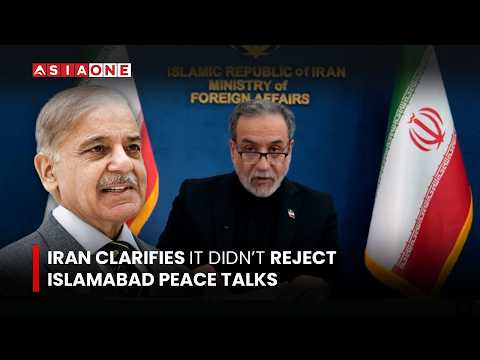
Iran's foreign minister said on social media that Iran 'never refused to go to Islamabad' and that US media was misrepresenting Tehran's position. He called for a 'conclusive and lasting end to the illegal war,' keeping the diplomatic channel nominally open. Pakistan's Ishaq Dar welcomed the clarification.
Trump issues new 48-hour ultimatum on Strait of Hormuz
Political
Trump threatened that 'hell will reign down' on Iran if it does not agree to reopen the Strait of Hormuz within 48 hours, setting up an April 6 escalation trigger.
Wall Street Journal reports ceasefire talks hit 'dead end'
Diplomacy
The Wall Street Journal reported that Iran had told mediators it was unwilling to meet US officials in Islamabad and considered Washington's demands unacceptable. Iran had also reportedly rejected a US proposal for a 48-hour ceasefire. Turkey and Egypt were said to be exploring alternative venues.
Iran strikes Gulf refineries; US loses F-15 over Iran
Military
Iranian drones set fire to Kuwait's largest oil refinery. An American F-15 was downed over Iran and a second US aircraft crashed near the Strait of Hormuz, marking the most intense week of fighting since the war began.
Pakistan vows to continue mediation despite 'obstacles'
Diplomacy
Ishaq Dar reaffirmed Pakistan's commitment to facilitating dialogue, acknowledging difficulties but insisting the diplomatic track remained viable.
March 2026
Four-nation Islamabad initiative launches
Diplomacy
Foreign ministers of Pakistan, Turkey, Egypt, and Saudi Arabia met in Islamabad and produced a five-point peace initiative. Both Washington and Tehran endorsed Pakistan as a legitimate facilitator for potential direct talks.
Trump extends Strait of Hormuz deadline to April 6
Political
Trump delayed his threat to destroy Iran's power grid by 10 days, citing ongoing negotiations, while claiming talks were 'going very well.'
Iran rejects US 15-point ceasefire proposal, issues five counter-demands
Diplomacy
Tehran rejected Washington's framework — which required dismantling nuclear facilities, surrendering enriched uranium, and accepting intrusive inspections — and countered with demands for reparations, a comprehensive regional ceasefire, guarantees against renewed war, and sovereignty recognition over the Strait of Hormuz.
Iran declares total Strait of Hormuz blockade
Military
The IRGC announced 'not a litre of oil' would pass through the strait, removing roughly 20 percent of global oil supply from markets and pushing Brent crude above $100 per barrel.
Mojtaba Khamenei named new Supreme Leader
Political
The Assembly of Experts selected the assassinated leader's 56-year-old son as successor, reportedly under pressure from the Islamic Revolutionary Guard Corps.
February 2026
US and Israel launch Operation Epic Fury
Military
Surprise joint strikes hit sites across Iran, killing Supreme Leader Ali Khamenei, defense minister Aziz Nasirzadeh, and at least 40 other officials. Iran retaliated with missiles and drones against Israel, US bases, and Gulf states, and closed the Strait of Hormuz.
Omani FM announces nuclear 'breakthrough' with Iran
Diplomacy
Oman's foreign minister Badr Al-Busaidi said Iran had agreed to never stockpile enriched uranium and accept full International Atomic Energy Agency verification — one day before the US-Israeli strikes began.
Scenarios
1
Pakistan-brokered framework produces a ceasefire and Hormuz reopening
Possible
Discussed by: Al Jazeera analysts, Christian Science Monitor, Pakistan Today — citing backchannel progress and both sides' endorsement of Pakistan as facilitator
Araghchi's public insistence that Iran never refused Islamabad talks could be a signal that Tehran is keeping the door open for a face-saving climb-down. If Pakistan can bridge the gap between the US 15-point plan and Iran's five conditions — perhaps through a phased approach where a ceasefire and partial Hormuz reopening come first, with nuclear and reparations issues deferred — a framework could emerge before or shortly after the April 6 deadline. The four-nation coalition provides multiple channels and alternative venues if Islamabad proves politically difficult.
2
April 6 deadline passes, US strikes Iranian infrastructure, war intensifies
Possible
Discussed by: NPR, Axios, Washington Times — based on Trump's repeated threats and the pattern of escalation
Trump has already extended the deadline twice. If he follows through on April 6, strikes on Iran's power grid and bridges would represent a major escalation from military targets to civilian infrastructure, likely ending any near-term diplomatic track. Iran would likely intensify its own attacks on Gulf energy infrastructure and US assets. Oil prices could spike well beyond $130 per barrel, and the economic shock could tip major economies into recession.
3
Prolonged war of attrition with intermittent, inconclusive talks
Likely
Discussed by: CSIS, Atlantic Council, The Diplomat — noting the wide gap between US and Iranian demands and the Korean War parallel of fighting-while-talking
The most historically consistent outcome. The US and Iran remain too far apart on core demands — Washington wants Iran's nuclear program dismantled; Tehran wants reparations and Hormuz sovereignty — for a quick resolution. But neither side can deliver a knockout blow. The war settles into a pattern of military pressure punctuated by periodic mediation rounds, with Pakistan, Turkey, and Egypt rotating as intermediaries. The Strait of Hormuz remains partially or fully closed for months, reshaping global energy markets.
4
China or a major external power brokers a deal outside the Pakistan framework
Unlikely
Discussed by: The Diplomat, The National, Al Jazeera — noting Dar's Beijing visit and China-Pakistan joint initiative
Pakistan's Ishaq Dar visited Beijing in late March, and China issued a joint initiative with Pakistan. China's leverage as Iran's largest oil customer and a major US trading partner gives it unique economic tools. If the Islamabad track stalls completely, Beijing could step in with security guarantees or an economic package that neither the US nor regional mediators can offer, potentially reshaping the diplomatic architecture entirely.
5
Gulf allies' 2-3 day window closes with a signed one-page MOU
Possible
Resolves by May 22, 2026
Discussed by: Axios (May 6 MOU framework reporting), Times of Israel — citing direct Trump quotes and Gulf leader appeals
Qatar's emir, Saudi Arabia's crown prince, and the UAE's president told Trump they need two or three days because talks are close to producing a one-page memorandum of understanding. The framework reportedly covers an enrichment moratorium, IAEA snap inspections, shipment of highly enriched uranium out of Iran, simultaneous Hormuz reopening, US naval blockade lifted, and partial sanctions relief. If the moratorium duration gap (five years vs. twenty) can be bridged near twelve to fifteen years, a deal could close before May 22.
6
Trump launches large-scale strike after 2-3 day window expires without deal
Possible
Resolves by May 25, 2026
Discussed by: NPR, Reuters — citing Trump's direct warning that US forces remain on standby for a 'full, large-scale assault'
Trump has set and broken multiple deadlines, but each new ultimatum has come with more military preparation than the last. If the Gulf allies' window closes without a deal, Trump faces domestic pressure to follow through, and the US has two carrier groups in the region. A new strike would likely target civilian infrastructure beyond the military sites hit earlier and would probably collapse the Pakistan mediation track.
7
MOU signed but 60-day nuclear talks collapse before permanent deal
Possible
Resolves by Aug 31, 2026
Discussed by: Al Jazeera analysts, Times of Israel, NPR — citing the gap between Iran's demand for immediate sanctions relief and Washington's insistence on verified implementation first
A signed MOU would give both sides a short-term win: Iran gets a US blockade lift and begins sanctions negotiations; the US gets Hormuz open and Iran's enriched uranium shipped out. But compressing a permanent nuclear framework into 60 days would be historically unprecedented. If talks hit the 30-day mark without progress on sanctions sequencing or enrichment verification, Iran could halt cooperation and the US could reimpose pressure, collapsing the MOU and returning the conflict to its pre-ceasefire posture.
8
Islamabad Declaration signed within days; Strait of Hormuz reopens to commercial shipping
Likely
Resolves by Jun 21, 2026
Discussed by: Pakistan PM Sharif (June 13 announcement), Axios (MOU terms reported June 12), CBS News and NBC News (June 13 live coverage)
Both governments agreed on the text, and Pakistan said signing was expected within 24-48 hours of June 13. Under the framework, the Strait would reopen immediately after signature. The main risks are Trump demanding a last-minute amendment on nuclear timing or Iranian domestic politics blocking ratification — both have delayed previous deadlines.
9
Lebanon front derails MOU implementation before Hormuz fully reopens
Possible
Resolves by Jun 26, 2026
Discussed by: PBS NewsHour, NPR, Al Jazeera — citing Iran's explicit Lebanon condition attached to the deal on June 15
Araghchi said Israeli strikes on Lebanon must stop completely as a condition of implementing the deal. If Israel continues strikes and the US fails to enforce a halt, Iran could pause its Hormuz demining. That gives domestic hardliners in Tehran an argument to reject the MOU after signing.
10
New mediator brokers emergency ceasefire after MOU collapse
Possible
Resolves by Aug 18, 2026
Discussed by: CFR, Al Jazeera, NBC News — citing Qatar's track record as a remaining credible broker
Qatar hosted both delegations as recently as July 2 and remains the most credible broker. A new ceasefire formula would need to address Hormuz fee sovereignty, IAEA access, and sanction sequencing — the issues deferred by the June MOU. Both sides retain economic self-interest in a halt, but Trump's public declaration that the deal is 'over' and domestic hardliner pressure on Iran's negotiating team narrow the opening considerably.
11
US widens strikes to Iranian power plants and desalination infrastructure
Possible
Resolves by Aug 1, 2026
Discussed by: NPR, NBC News — based on Trump's explicit threat at the NATO summit July 8
Trump said at the NATO summit that the US hasn't hit Iran at its 'highest level' and could target power plants and desalination facilities. The US has already struck bridges and transportation nodes; Iran has targeted Kuwaiti water infrastructure. A US strike on Iranian civilian utilities would be a significant escalation and would likely trigger large-scale Iranian retaliation against Gulf energy assets.
12
Iran-Oman technical deal reopens a narrow Hormuz corridor without a US-Iran ceasefire
Likely
Resolves by Q3 2026
Discussed by: CNN analysis (Aug 9), Al Jazeera, Washington Post — citing the Iran-Oman route agreement alongside Iran's separate demands of Washington
Iran and Oman have agreed on coordinates for a shared shipping corridor, but Tehran says full reopening still depends on the US lifting its naval blockade, ending sanctions, and paying war damages. If Muscat and Tehran finalize their bilateral pact first, a narrow, Iran-controlled route could open for some traffic while the broader US-Iran standoff over sanctions and compensation stays unresolved.
13
Houthi-Iraqi militia offensive pulls Saudi Arabia directly into the war
Possible
Resolves by Sep 15, 2026
Discussed by: CNN (Aug 6-7), Al Jazeera, The National — citing Saudi intelligence warnings of coordinated attacks
Saudi officials say Iran-backed Houthi and Iraqi militia forces are preparing coordinated strikes on Saudi ports, airports, and energy infrastructure, after US-Saudi strikes killed at least 20 Popular Mobilization Forces fighters in Iraq on July 29. Iraqi factions delayed retaliation at the request of political leaders, but say the pause is temporary.
14
Bessent's 'economic isolation' campaign forces Iran back to the table
Possible
Resolves by Q3 2026
Discussed by: Treasury Secretary Scott Bessent, Bloomberg, Washington Times
Bessent has promised secondary sanctions and tighter financial isolation on top of the existing naval blockade, aiming to make evasion costly enough that Iran returns to nuclear and sanctions talks. Critics quoted by Bloomberg note Iran is already under thousands of sanctions, so new measures may simply push transactions to new intermediaries rather than force capitulation.
15
Trump follows through on his threat to strike Oman
Unlikely
Resolves by Oct 1, 2026
Discussed by: Trump (Fox News interview, Aug 17), Forbes, Euronews, The Hill
Trump threatened to bomb Oman if it 'gets in the way' of US efforts on Hormuz, even though Oman is a longtime US ally and the main mediator of the Iran-Oman shipping talks. A strike on Omani territory would be a major break with decades of US-Oman relations and could collapse the Hormuz route negotiations entirely.
Historical Context
3 moments from history that rhyme with this story — and how they unfolded.
1 of 3
July 2012 – July 2015
Oman's secret backchannel to the Iran nuclear deal (2012-2015)
Sultan Qaboos of Oman hosted at least five secret meetings between senior US officials — Deputy Secretary of State William Burns and adviser Jake Sullivan — and Iranian counterparts in Muscat. Both sides denied the talks existed for over a year. The backchannel built the framework that became the 2015 Joint Comprehensive Plan of Action, which froze Iran's nuclear program in exchange for sanctions relief.
Then
The secret meetings produced enough trust to move quickly when Iran elected moderate president Hassan Rouhani in June 2013, enabling a public interim agreement by November.
Now
The JCPOA held from 2015 to 2018 before the first Trump administration withdrew. It proved that US-Iran agreements are possible through regional mediators — but also that they can be undone by political change in Washington.
Why this matters now
Pakistan in 2026 occupies the same structural role Oman played in 2012: a neighbor with credibility on both sides facilitating deniable contact. Araghchi's public denial of a breakdown mirrors how backchannel diplomacy typically functions — public denials often signal ongoing private engagement, not its absence.
2 of 3
July 1951 – July 1953
Korean War armistice negotiations (1951-1953)
Armistice talks between UN Command and North Korean-Chinese forces lasted two years and 575 meetings at Panmunjom, while fighting continued throughout. The talks were formally suspended for 199 days at one point. Both sides used military offensives to strengthen their negotiating position. India's diplomat V.K. Krishna Menon ultimately broke the deadlock by proposing a prisoner repatriation formula that neither belligerent could have offered without appearing to concede.
Then
The armistice established a demilitarized zone roughly where the war started. Neither side 'won' in traditional terms.
Now
The armistice was never replaced by a peace treaty and remains in effect 73 years later — a reminder that 'temporary' ceasefire arrangements can become permanent.
Why this matters now
The Korean precedent shows that theatrical breakdowns in negotiations — including long suspensions — are normal when talks run alongside active combat. The Wall Street Journal's 'dead end' report and Araghchi's denial may be part of this same pattern: public posturing that coexists with continued behind-the-scenes contact. It also suggests Pakistan's ultimate contribution may be a specific face-saving formula, not just a venue.
3 of 3
September 1980 – January 1981
Algeria's mediation of the Iran hostage crisis (1980-1981)
With no diplomatic relations between the US and Iran, Algeria served as physical intermediary for four months, shuttling documents and proposals between Washington and Tehran to resolve the 444-day hostage crisis. Algerian Deputy Foreign Minister Redha Malek designed a financial escrow mechanism through the Bank of England and Algeria's central bank to unfreeze approximately $8 billion in Iranian assets, giving both sides a technical structure that obscured what was politically a difficult concession.
Then
The Algiers Accords were signed January 19, 1981, and 52 hostages were released the following day.
Now
The Iran-US Claims Tribunal established by the accords continued operating in The Hague for decades. The model proved that financial architecture designed by a mediator can resolve disputes where direct concession is politically impossible.
Why this matters now
Algeria worked because it was ideologically sympathetic to Iran but pragmatically credible to Washington — precisely the balance Pakistan occupies today. The case suggests that if the current impasse is partly about face-saving, Pakistan's contribution may need to be a specific mechanism (sequencing of sanctions relief, Hormuz reopening protocols, verification arrangements) rather than simply hosting talks.