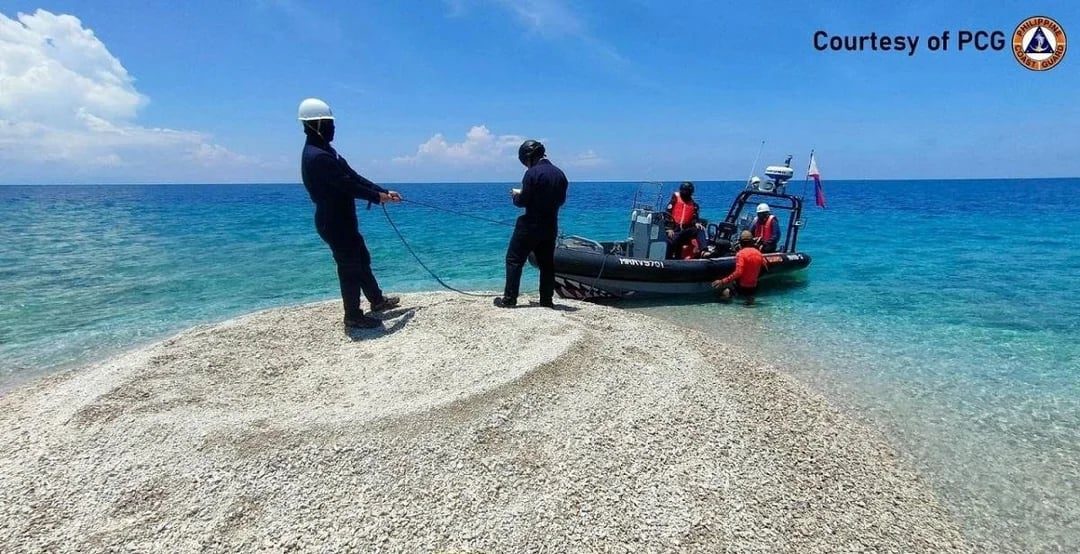
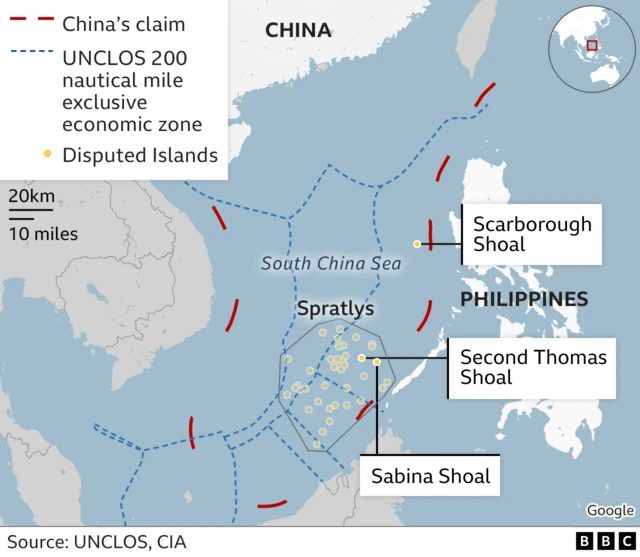
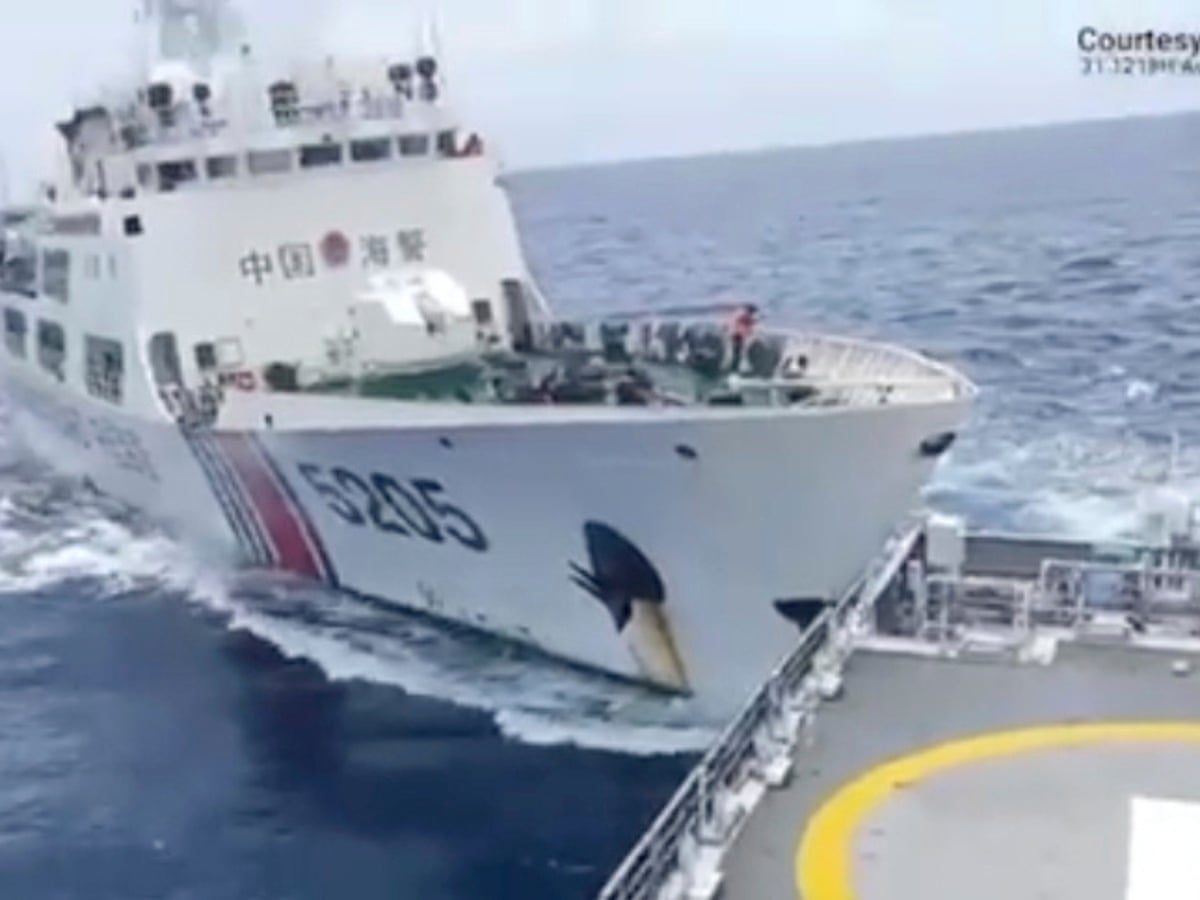
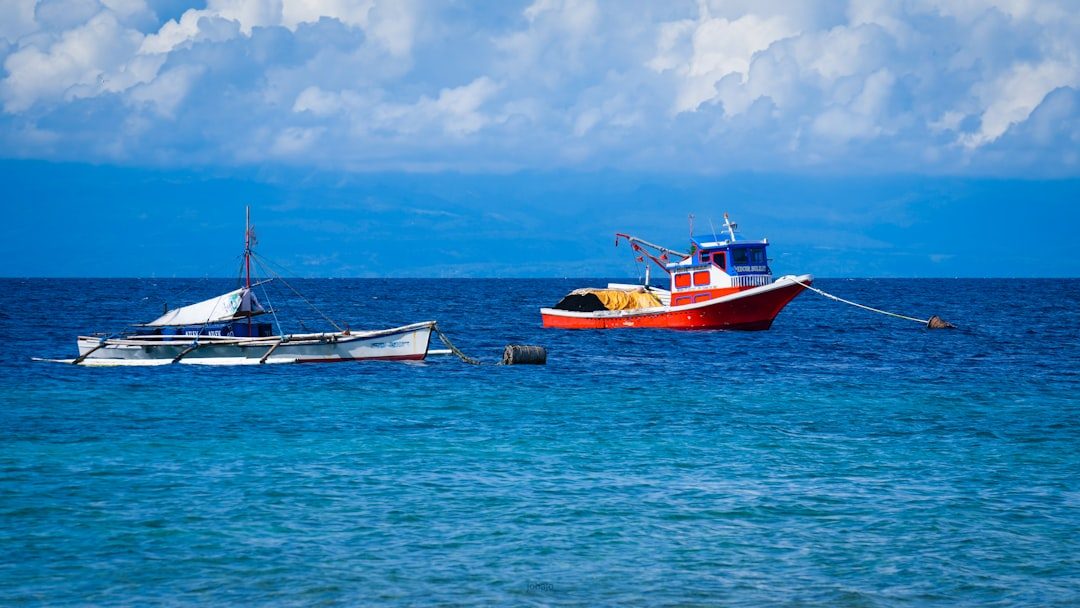
A month ago, China's coast guard escalated beyond shoving resupply convoys. It blasted water cannons at small Philippine fishing boats near Sabina (Escoda) Shoal, damaged two vessels, and left three fishermen injured. Chinese craft allegedly cut anchor lines and boxed out rescuers.
Manila filed a diplomatic protest calling the actions "dangerous" and "inhumane." The pressure hasn't stopped: in early January 2026, Chinese naval and coast guard vessels appeared during a search-and-rescue operation off Zambales, closer to the Philippine mainland than the usual reef flashpoints.
If China can normalize "control measures" at Sabina, it tightens a choke point near other Philippine-held features and pushes Manila toward tougher escorts, louder allies, and a hair-trigger definition of what counts as an attack. Sabina tests who polices Philippine waters. The Philippines chairs ASEAN for 2026 and is pushing to finalize a South China Sea Code of Conduct by July, though analysts doubt Beijing will accept binding constraints while it holds tactical momentum at sea.
Questions about this story
Free account needed to ask — your question is kept and asked for you right after sign-up. Answers are public.
No questions yet — be the first to ask.
Key Indicators
3
Filipino fishermen reported injured
Civilian injuries raise the political cost of backing down.
~20–24
Philippine fishing boats involved
A swarm of small boats makes coercion visible—and volatile.
35 yards
Closest reported approach in blocking incident
Near-collision distance during nighttime maneuvering.
150 km
Approx. distance of Sabina Shoal from Palawan
Close enough to feel like home waters to Filipinos—and a provocation if denied.
5 months
BRP Teresa Magbanua’s 2024 Sabina deployment
Set the template: presence, pressure, and endurance contests.
17 events
Latest: January 9th, 2026 · 9 months ago
Showing 8 of 17
JK to step
Tap a bar to jump to that date
Jump to
January 2026
Chinese naval and coast guard vessels challenged during fisherman search near Zambales
LatestIncident
PCG confronted PLA Navy corvette 627 (42 nm off Capones Island) and CCG cutter 3106 (73 nm out) while searching for missing fisherman—closer to Philippine mainland than typical reef confrontations.
Philippines assumes ASEAN chairmanship, prioritizes South China Sea Code of Conduct
Diplomacy
Manila takes rotating chair with goal of finalizing legally binding code by July 2026 deadline; proposes weekly negotiation meetings to accelerate talks that began in 2018.
December 2025
Philippine Navy releases annual assessment: China increased 'coercive actions' in 2025
Analysis
Report cites 447 Chinese law enforcement and military vessels deployed in South China Sea (up from 278 in 2024); notes PLAN presence became 'more consistent, predictable, and geographically closer' to contested areas.
Philippines files diplomatic protest; international condemnation follows
Diplomacy
DFA issues demarche calling Dec 12 actions 'dangerous' and 'inhumane'; US, Canada, Australia, Germany, and Japan issue statements backing Manila and condemning Chinese aggression.
Manila goes public; diplomatic pressure builds
Statement
Philippines condemns the incident, stressing civilian harm and unsafe interference with rescue efforts.
Fishermen hit at Sabina: water cannons, anchor lines cut, rescues blocked
Incident
PCG says civilians were injured and boats damaged; China calls it “control measures.”
Philippines says Chinese forces fired signal flares toward its patrol plane
Incident
A surveillance flight near Spratlys reports flare targeting and a heavy Chinese ship presence.
September 2024
Teresa Magbanua withdraws; Manila promises an immediate replacement
Deployment
Philippines frames the pullback as repairs and crew health, not surrender of the shoal.
Analysts label Sabina a new flashpoint with a “drawn-out struggle” risk
Analysis
Experts warn normalization of confrontations increases odds of an accidental spiral.
August 2024
China publishes Sabina survey report, denies reef-damage allegations
Information
Beijing rejects Philippine environmental claims and blames PCG anchoring for harm.
Sabina collisions pull in allies’ warnings
Diplomacy
Philippines says Chinese actions undermine confidence-building; partners urge restraint and lawfulness.
July 2024
Manila and Beijing announce a “provisional arrangement” for Second Thomas resupply
Diplomacy
Philippines says there’s an understanding to reduce clashes, but rejects Chinese inspections.
June 2024
Sailor seriously injured in Second Thomas Shoal clash
Incident
Philippines says Chinese ramming caused a serious injury; China blames Philippine maneuvers.
April 2024
Philippines plants a coast guard flag at Sabina Shoal
Deployment
BRP Teresa Magbanua deploys to monitor alleged reclamation signals and hold presence.
December 2023
Water cannons become routine again at Second Thomas Shoal
Incident
Philippines accuses China of ramming and water cannon attacks during contested missions.
July 2016
International tribunal rejects China’s sweeping South China Sea claims
Legal
The ruling says China’s “nine-dash line” has no legal basis; Beijing refuses to accept it.
June 2012
Scarborough standoff ends; China holds the shoal
Turning Point
After a tense face-off, China emerges with de facto control, shaping Manila’s fears of repeats.
Scenarios
1
Manila Starts Escorting Fishermen Like Resupply Convoys
If civilian targeting persists, Manila is likely to treat fishing activity as protected presence—more PCG ships, tighter formations, quicker medical response assets, and nonstop documentation. That reduces China’s freedom to intimidate quietly, but it also increases ship density in tight waters, making collisions and escalation-by-accident more probable.
2
China Builds a Soft Blockade Around Sabina—And Tests How Long the Philippines Can Hold
Possible
Discussed by: Analysts quoted by The Guardian (SeaLight’s Ray Powell; CSIS AMTI’s Harrison Prétat); reporting on 2024 vessel surges
A sustained Chinese cordon—constant rotations of CCG and militia craft, harassment of fuel and provisions, and aggressive maneuvering—would aim to exhaust Philippine ships and crews without firing a shot. The trigger would be Manila increasing presence again at Sabina or linking it operationally to Second Thomas missions. The endgame is simple: make Philippine presence episodic, then call that “proof” of Chinese jurisdiction.
3
A Quiet “Rules of the Road” Deal Emerges for Sabina
Unlikely
Discussed by: Diplomacy parallels drawn from the 2024 Second Thomas ‘provisional arrangement’ coverage (Reuters)
A backchannel understanding—distance buffers, no cutting across bows, limits on water cannon use—could appear if both sides fear a fatal incident and want to stabilize the theater. It would likely be informal, deniable, and narrow, because neither wants to concede sovereignty. It requires Beijing to believe restraint serves its interests more than pressure does, which is a high bar.
4
A Death at Sea Triggers a Treaty Crisis and Emergency Joint Operations
Uncertain
Discussed by: Philippine presidential warnings quoted by The Guardian; repeated U.S. statements tying the treaty to maritime forces in disputed waters
A fatality—especially if Manila frames it as a deliberate act—could force rapid escalation: emergency allied statements, expanded joint patrols, and potentially U.S. operational support around Philippine missions. Beijing would likely respond with more ships, not fewer, betting that fear of war limits U.S. and Philippine moves. This is the nightmare scenario: everyone insists they’re de-escalating while accelerating.
5
The Code of Conduct Becomes a Showdown Over What 'Binding' Actually Means
Likely
Discussed by: Analysts at Chatham House, CSIS, and The Diplomat covering 2026 ASEAN chairmanship; Philippine Foreign Secretary Theresa Lazaro statements
Manila is pushing for a legally binding Code of Conduct by July 2026, proposing weekly negotiation meetings to meet ASEAN-China's self-imposed deadline. But 'binding' is where consensus collapses: the Philippines wants enforceable rules with dispute mechanisms, while China historically resists anything that limits its operational freedom or subjects sovereignty claims to external review. If negotiations stall publicly during the Philippine chairmanship, it would expose ASEAN's limits and potentially push Manila to rely even more heavily on bilateral defense partnerships with the US, Japan, and Australia—making the diplomatic track look like theater while the military track hardens.
Historical Context
3 moments from history that rhyme with this story — and how they unfolded.
1 of 3
2012
Scarborough Shoal Standoff
A confrontation over arrests and access spiraled into a prolonged face-off. After a U.S.-brokered pullback, China effectively held the ground—controlling access and normalizing its presence.
Then
Philippine access became harder and more conditional.
Now
It became Manila’s cautionary tale: a ‘temporary’ standoff can become permanent loss.
Why this matters now
Sabina scares Manila because it looks like the same slow squeeze, just closer to other critical features.
2 of 3
2014-05 to 2014-07
Haiyang Shiyou 981 Oil Rig Crisis (China–Vietnam)
China moved a major oil rig into disputed waters and guarded it with a large flotilla. Vietnam’s ships challenged it; collisions and water cannon use became part of the contest.
Then
China withdrew the rig after months, but tensions and distrust deepened.
Now
It showed how ‘non-war’ tools—ramming, spraying, swarming—can still reshape reality.
Why this matters now
It’s a blueprint for how China can press claims hard without crossing into open combat.
3 of 3
1999 to present
BRP Sierra Madre Grounding at Second Thomas Shoal
The Philippines deliberately grounded an old naval ship to anchor its claim. China couldn’t remove it without escalating, so it tried to strangle it—blockades, water cannons, and interference with resupply.
Then
A rusting ship became a live military outpost and a recurring trigger for crises.
Now
It turned logistics into strategy: whoever controls access controls the outpost.
Why this matters now
Sabina matters partly because it can become a staging ground—or choke point—for Second Thomas.