Anchor

Chinook salmon reclaim most of former Klamath range after largest US dam removal
Built WorldFour dams down, 640 km of habitat reopened; 21,052 salmon returned in two seasons
Today: Human Progress highlights Klamath recoveryNew here? Follow stories to track developments over time. Create a free account to get updates when stories you care about change.
Overview
Updated 1 hour agoFour dams on the Klamath River came down in 2024. Within two salmon runs, more than 21,000 Chinook salmon swam upstream past the former dam sites into 345 km of habitat that had been blocked for over a century.
Peer-reviewed research published August 27 in Scientific Reports confirms the fish reclaimed 88% of their historical range. Two remaining dams upstream, drought, and a fish parasite leave the recovery's long-term trajectory uncertain.
Why it matters
Salmon reclaimed 88% of their historic Klamath range within two years of the largest US dam removal, proving river reconnection works at the scale skeptics doubted.
Questions about this story
Free account needed to ask — your question is kept and asked for you right after sign-up. Answers are public.
No questions yet — be the first to ask.
Key Indicators
21,052
Chinook salmon passing upstream, 2024-2025
7,742 in the first run, 13,310 in the second.
88%
Historic Klamath range recolonized
Salmon reached 345 km of reconnected habitat at up to 1,250 m elevation.
345 km
Reconnected habitat used by salmon
Fish traversed dam removal sites, hydraulic corridors, and engineered fishways.
640 km
Total habitat reconnected by dam removal
The largest dam removal project completed to date.
4
Dams removed
JC Boyle, Copco 1, Copco 2, and Iron Gate, built 1918-1962.
Related Media
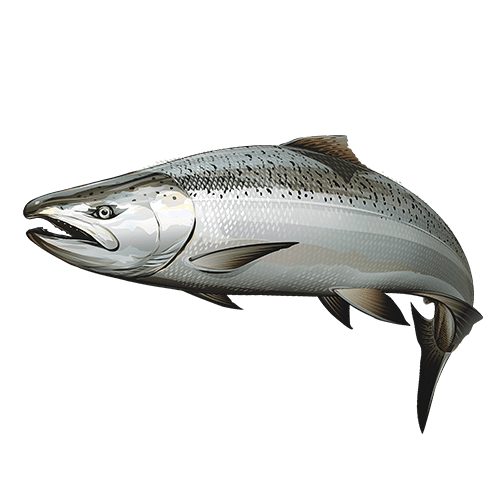
Upper Klamath-Trinity Rivers Spring-Run Chinook Salmon | California Trout
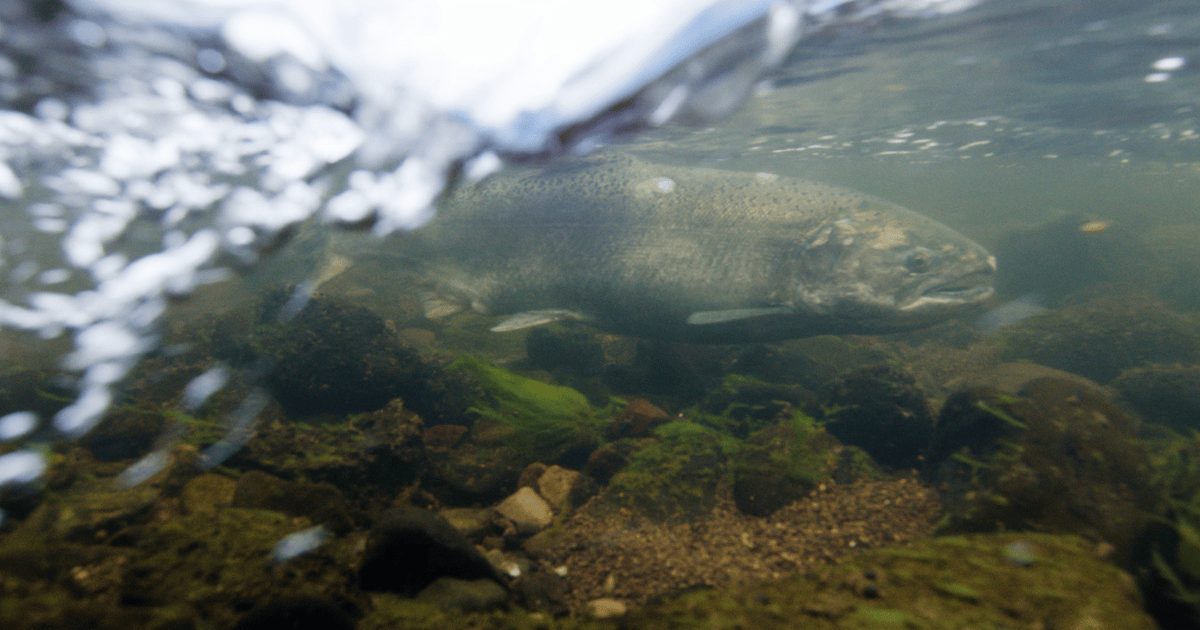
Salmon Migrate Above Former Klamath River Dams | California Trout
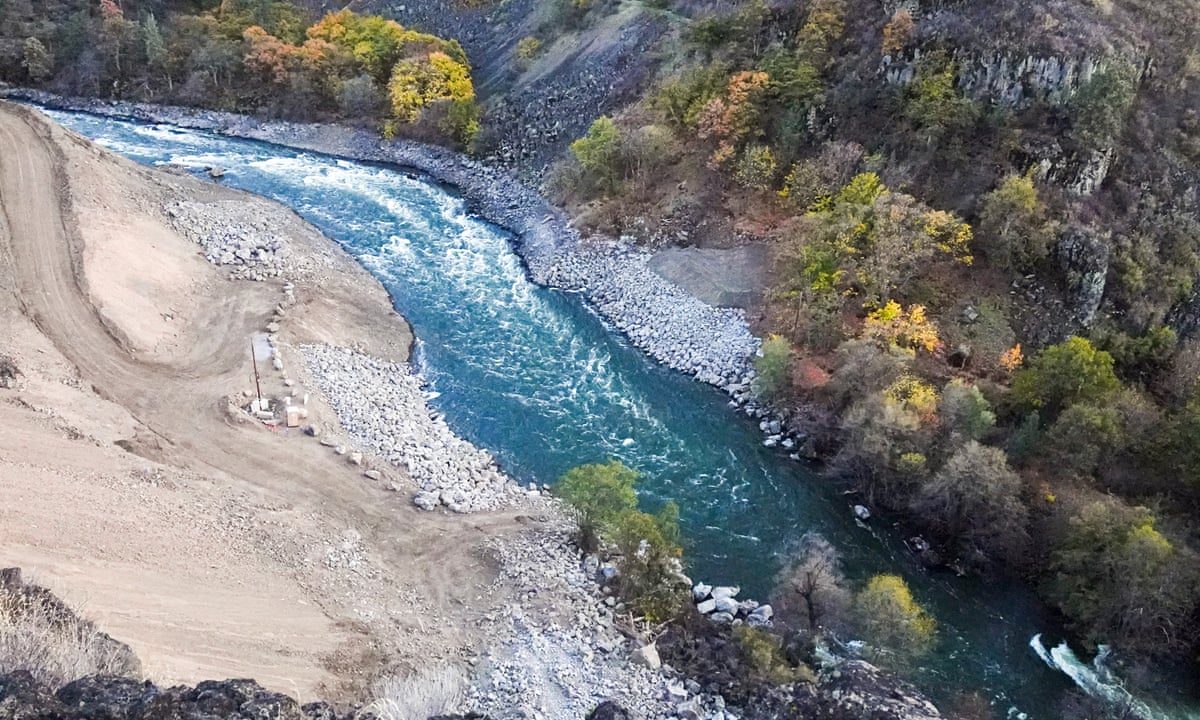
Klamath River dam removal: before and after images show dramatic change | California | The Guardian
55.1K views
8:32
A year after Klamath dam removals, salmon return, but ...
ABC10
19.8K views
3:01
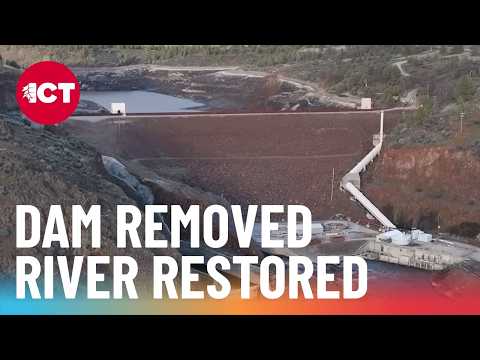
Salmon Return to Klamath River After Historic Dam Removal
Indian Country Today
111.1K views
2:02
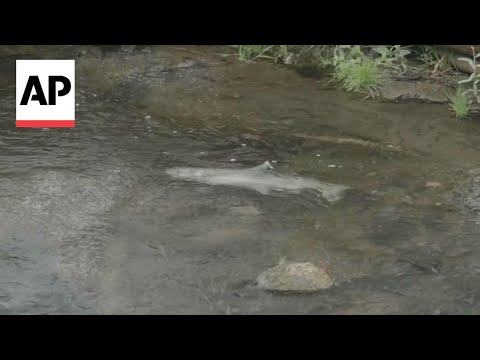
Salmon return to historic habitat after largest dam removal ...
Associated Press
Images from Openverse under Creative Commons licenses. Videos from YouTube.
Voices
Curated perspectives — historical figures and your fellow readers.
Play
Exploring all sides of a story is often best achieved with Play.
Most of these play right now — no account needed. Sign up to save scores, keep a streak, and unlock Debate and Predict.
Log in
Sign Up
Higher or Lower
A number from this story, against one from elsewhere in the news — guess which is bigger, then keep the chain going. 5 rounds, 3 strikes; a miss costs a strike and resets your streak.
Example
Anchor
EU tariff revenue
$52B
Big for this kind of number
Mystery
Pentagon AI contract
?
Round 1
Streak: 0
Mystery
?
Keyboard: ↓/L lower · ↑/H higher
0 pts
Best streak: 0 · Rounds: 0
0 points — sign up to put that on the leaderboard.
Now try on this story
Connections
Sixteen names from the news. Find the four hidden groups of four. Four mistakes max.
Loading today's puzzle…
0/4 groups
Mistakes
Sign up to keep a daily streak — a new puzzle lands every day.
Now try on this story
Exit debate?
Your progress in this debate will be lost.
How it works
- 1 Two AI personas square off on this story.
- 2 You predict who'll win each round — correct picks earn XP.
- 3 One crossfire question is yours to fire. Pick it carefully.
Couldn't generate a topic
Select Your Champions
Choose one persona for each side of the debate
DEBATE TOPIC
Choose personas with different perspectives for a more dynamic debate.
SIDE A (PRO)
Select debater for this side:
No debate personas available right now.
SIDE B (CON)
Select debater for this side:
No debate personas available right now.
VS
Get ready to make your prediction...
Round of
Claim
Evidence
Stakes
Crossfire Answer
Closing Statement
Claim
Evidence
Stakes
Crossfire Answer
Closing Statement
Your Crossfire Question
Generating arguments...
Who's Got This Round?
Make your prediction before the referee scores
The referee scores both sides on
Correct predictions earn +20 XP
· Press 1 or 2 to pick
Evidence
40%
Logic
30%
Detail
20%
Style
10%
Round Results
Your Pick
Not this time
(%)
Overall Score
/10
Your Pick
Not this time
(%)
Overall Score
/10
Set the Crossfire
Pick the question both personas must answer in the final round
Crafting crossfire questions...
Choosing a question earns +10 XP crossfire bonus
🏆
Total XP Earned
Cred Change
Predictions
Debate Oracle! You called every round!
Sharp Instincts! You know your debaters!
The Coin Flip Strategist! Perfectly balanced!
The Contrarian! Bold predictions!
Inverse Genius! Try betting the opposite next time!
XP Breakdown
Base completion
+20 XP
Rounds played ( rounds x 5 XP)
+ XP
Correct predictions ( correct x 20 XP)
+ XP
Crossfire bonus
+10 XP
Accuracy
%
Prediction History
Round
You picked:
✓
✗
Now try on this story
Keep debating to level up your credibility and unlock achievements
People Involved
Damon Goodman
Lead author of the Klamath recolonization study; Mount Shasta-Klamath regional director, Cal Trout
Leading ongoing monitoring of salmon recovery
George Pess
CEO, Conservation Angler; former NOAA Fisheries scientist
Independent analyst of Klamath recovery
MB
Mark Bransom
Chief executive, Klamath River Renewal Corp
Managing post-removal site restoration
AC
Amy Cordalis
Executive director, Ridges to Riffles Indigenous Conservation Group; attorney for the Yurok Tribe
Advocating for minimum flows and tribal water rights
Organizations Involved
PacifiCorp
Utility company
Transferred dams to the Klamath River Renewal Corp for removal
The Oregon-based utility built the four Klamath dams between 1918 and 1962 and agreed in 2016 to surrender them for removal.
Klamath River Renewal Corp
Nonprofit organization
Completed dam removal in 2024; restoring former dam sites
The nonprofit established to plan and execute removal of the PacifiCorp dams and restore the former dam sites.
Yurok Tribe
Tribal government
Leading advocate for dam removal and salmon recovery
The largest federally recognized tribe in California, which led the two-decade campaign to remove the dams.
Bureau of Reclamation
Federal agency
Operates remaining Link River and Keno dams; manages Klamath Project water allocations
Federal agency within the Interior Department that manages the Klamath Project's water infrastructure.
Cal Trout
Conservation nonprofit
Lead author of the recolonization study
California's trout and salmon conservation organization, whose researchers documented the Chinook recolonization.
Timeline
January 1918 September 2026
8 events
Latest: Today
Tap a bar to jump to that date
-
Human Progress highlights Klamath recovery
Today MediaThe study's findings reach a wider audience, framing the return as a rare environmental success story.
-
Salmon recolonization study published
ResearchScientific Reports publishes peer-reviewed research documenting 88% range recolonization.
-
Second Chinook run nearly doubles
Species Recovery13,310 Chinook pass upstream, bringing the two-season total past 21,000.
-
First spring-run salmon detected above former dams
Species RecoveryA tagged spring-run Chinook is detected moving back up the river toward Upper Klamath Lake.
-
First Chinook run passes former dam sites
Species Recovery7,742 Chinook salmon migrate upstream through the removal sites in the first fall season.
-
Last Klamath dam breached
InfrastructureCrews breach the final dam, Iron Gate, freeing the river for the first time since 1918.
-
Klamath dam removal begins
InfrastructureCrews start dismantling the four PacifiCorp dams, beginning with reservoir drawdowns.
-
PacifiCorp builds four Klamath dams
InfrastructureHydroelectric dams block salmon from over 640 km of upstream habitat for more than a century.
Historical Context
3 moments from history that rhyme with this story — and how they unfolded.
July 1999
Edwards Dam removal (1999)
The Federal Energy Regulatory Commission ordered removal of the Edwards Dam on Maine's Kennebec River after determining its power output was worth less than the fish passage costs it imposed. It was the first FERC-ordered removal for environmental reasons.
Then
Striped bass, alewives, and Atlantic salmon returned upstream within months. The river's ecosystem shifted visibly within a year.
Now
The ruling established that FERC can weigh ecological costs against power benefits, creating a legal path used later for the Klamath.
Why this matters now
Edwards set the regulatory precedent that led to the Klamath agreement. The Klamath shows what that precedent can do at industrial scale.
September 2011 - August 2014
Elwha River dam removal (2011-2014)
Two dams on the Elwha River in Olympic National Park, Washington, were dismantled at a cost of $325 million. The Elwha and Glines Canyon dams had blocked salmon from over 112 km of habitat for a century.
Then
Salmon returned within months of the first breach. By 2016, over 4,000 Chinook were counted in the river, far exceeding pre-removal numbers.
Now
The Elwha became the proof point that large dam removal leads to rapid ecological recovery, influencing the Klamath decision.
Why this matters now
The Elwha showed salmon recolonize quickly when dams fall. The Klamath tests whether that holds at four times the scale.
October 2011
Condit Dam removal (2011)
A 38-meter dam on Washington's White Salmon River was breached in a single demolition blast. It was the tallest dam ever removed in the US at the time.
Then
Chinook and steelhead returned within weeks. The river re-established its natural channel within months.
Now
Condit demonstrated that natural recolonization can be immediate when a barrier is fully removed, without fish passage structures.
Why this matters now
Condit showed the speed of natural recovery. The Klamath's 640 km of reconnected habitat is 20 times larger, making the speed of this recovery more striking.
Sources
(8)Related Stories
Oregon farmer converts barley farm into wetland refuge for endangered fish
Built World
Updated Yesterday
Trump administration lifts work stoppage on Great Lakes invasive carp barrier
Built World
Updated 3 days ago
US finalizes Colorado River plan forcing steep water cuts on three states
Rule Changes
Updated Aug 23
Pacific Power moves Oregon transmission line east after public pushback
Built World
Updated 3 days ago
Atmospheric river turns Western Washington’s rivers into record-breaking floods
Built World
Updated May 11
Goldendale energy storage project vs. Yakama sacred site
Built World
Updated May 26