
Pull to refresh
Logo
Daily Brief
Following
Why
Colombia's total peace gambit

Colombia's total peace gambit

Rule Changes
By Newzino Staff |

Petro's Bid to Negotiate with Drug Cartels Collides with U.S. Pressure

February 4th, 2026: Gulf Clan Suspends Peace Talks

Overview

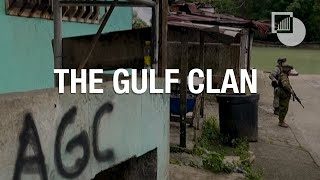
For five months, Colombia's largest drug cartel sat across from government negotiators in Qatar, working toward something unprecedented: a peace deal with an organization the United States had just labeled a terrorist group. On February 4, the Gulf Clan walked away from the table, accusing President Gustavo Petro of betraying the talks by handing their leader's name to the Trump administration as a joint military target.

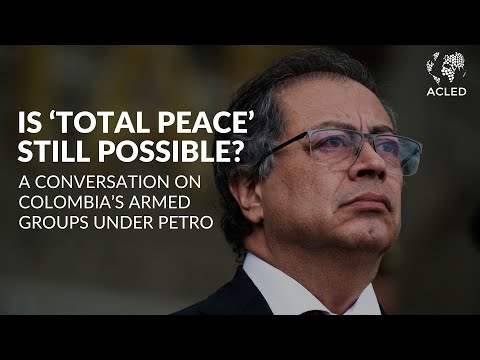
The collapse exposes a fundamental tension at the heart of Petro's 'Total Peace' policy—the most ambitious attempt in Colombian history to negotiate simultaneously with guerrillas, paramilitaries, and criminal organizations. Petro now faces a choice his predecessors avoided: pursue American-backed military operations against the cartels, or preserve the negotiating framework that brought Colombia's most powerful armed groups to the table in the first place.

Key Indicators

9,000
Gulf Clan fighters
Estimated armed members of Colombia's largest criminal organization
$4B+
Annual cartel revenue
Gulf Clan's estimated yearly income from drug trafficking and other illicit activities
70%
Global cocaine share
Colombia's portion of worldwide cocaine production
5 months
Doha talks duration
Length of Qatar-mediated negotiations before suspension

Interactive

Exploring all sides of a story is often best achieved with Play.

James Baldwin

James Baldwin

(1924-1987) · Civil Rights · politics

Fictional AI pastiche — not real quote.

"Peace, it seems, becomes impossible the moment it threatens to disrupt the established business of violence—and one must ask whether Colombia discovered this truth, or whether Washington reminded them of it. How convenient that the path to reconciliation should collapse precisely when it required America to relinquish its favorite role: that of armed instructor to a hemisphere it has never truly wished to understand."

Ever wondered what historical figures would say about today's headlines?

Sign up to generate historical perspectives on this story.

Sign Up

Debate Arena

Two rounds, two personas, one winner. You set the crossfire.

People Involved

Gustavo Petro
Gustavo Petro
President of Colombia (Final year of term, facing collapsed negotiations)
Jobanis de Jesús Ávila Villadiego
Supreme Leader, Gulf Clan (Clan del Golfo) (Named as joint U.S.-Colombia military target)
Donald Trump
Donald Trump
President of the United States (Pursuing aggressive anti-cartel policy)

Organizations Involved

Gulf Clan (Clan del Golfo / AGC)
Criminal Organization / Neo-paramilitary Group
Status: Suspended peace talks, U.S.-designated terrorist organization

Colombia's largest drug trafficking organization, evolved from right-wing paramilitary groups that refused to fully demobilize in the 2000s.

Colombian Government (Total Peace Delegation)
National Government
Status: Negotiating with multiple armed groups under Total Peace framework

The Petro administration authorized by the 2022 Total Peace Law to conduct parallel negotiations with insurgent and criminal groups.

State of Qatar (Mediation Office)
Foreign Government Mediator
Status: Hosting suspended Colombia-Gulf Clan negotiations

Qatar served as neutral host for the Colombia-Gulf Clan peace talks, continuing its role as an international conflict mediator.

Timeline

  1. Gulf Clan Suspends Peace Talks

    Negotiation

    Cartel announces it will 'temporarily' leave negotiating table after learning Petro named its leader as a joint U.S.-Colombia target.

  2. Trump-Petro White House Meeting

    Diplomatic

    After months of hostility, the two presidents meet and agree to jointly target three major drug trafficking figures.

  3. U.S. Designates Gulf Clan as Terrorist Organization

    Regulatory

    Trump administration adds Gulf Clan to foreign terrorist organization list, freezing assets and enabling prosecution of supporters.

  4. Concentration Zones Agreed

    Negotiation

    Second round in Doha produces agreement for Gulf Clan fighters to gather in three designated areas starting March 2026.

  5. U.S. Revokes Petro's Visa

    Diplomatic

    State Department revokes Colombian president's visa after he urged U.S. soldiers to 'disobey Trump' at UN protests.

  6. First Doha Round Concludes

    Negotiation

    Parties sign joint statement committing to pilot projects, child disengagement, and election non-interference.

  7. Gulf Clan Talks Begin in Qatar

    Negotiation

    First round of peace talks opens in Doha with Qatar mediating between Colombian government and Gulf Clan.

  8. Deportation Flight Crisis Erupts

    Diplomatic

    Petro blocks U.S. deportation flights; Trump threatens tariffs; Colombia reverses course within hours.

  9. Petro Suspends ELN Peace Talks

    Negotiation

    Government declares state of emergency and ends negotiations with ELN, calling the violence 'war crimes.'

  10. ELN Launches Catatumbo Offensive

    Violence

    ELN attacks FARC dissidents in northeastern Colombia, killing over 80 people and displacing 30,000 in six days.

  11. Gulf Clan Formal Talks Announced

    Negotiation

    Colombian government announces it will begin formal peace negotiations with the Gulf Clan.

  12. ELN Agrees to Historic Yearlong Ceasefire

    Negotiation

    The National Liberation Army commits to its longest ceasefire since the group's 1964 founding.

  13. Total Peace Law Signed

    Legislative

    Colombia's Congress authorizes simultaneous negotiations with armed and criminal groups under differentiated legal frameworks.

  14. Petro Inaugurated as Colombia's First Leftist President

    Political

    Former M-19 guerrilla Gustavo Petro takes office, making Total Peace his flagship policy.

Scenarios

1

Talks Resume After Internal Gulf Clan Consultations

Discussed by: Colombian government officials; Qatar Foreign Ministry has indicated willingness to continue hosting

The Gulf Clan characterized its withdrawal as 'temporary' and announced internal consultations. If the organization determines it has more to gain from negotiation than confrontation—particularly given looming Colombian elections that could bring a less sympathetic successor to Petro—talks could restart. This would require the Colombian government to clarify that the joint targeting agreement with the U.S. does not preclude continued negotiations, essentially maintaining separate military and diplomatic tracks.

2

Total Peace Collapses; Military Pressure Intensifies

Discussed by: International Crisis Group analyst Elizabeth Dickinson; Washington Office on Latin America's Adam Isacson; Council on Foreign Relations

With the ELN talks already dead and the Gulf Clan now suspended, Petro's signature policy may be beyond rescue. The Trump-Petro agreement creates momentum for joint military operations. The U.S. terrorist designation enables asset freezes and prosecution of Gulf Clan supporters. Colombian security forces, which reduced pressure on armed groups during the Total Peace period, could return to the aggressive posture of the Plan Colombia era. This scenario accelerates as Petro's term ends in August 2026.

3

Chiquito Malo Captured or Killed; Gulf Clan Fragments

Discussed by: Colombian Defense Ministry confirmed two-month timeline for 'neutralization'; U.S. Drug Enforcement Administration tracking

Defense Minister Pedro Sánchez stated Colombia committed to neutralizing the three named targets—including Chiquito Malo—within two months. If successful, the Gulf Clan would face a leadership crisis similar to 2021 when Otoniel's capture destabilized the organization. Historical precedent suggests the group would continue under new leadership rather than collapse, but fragmentation could create competing factions and increased violence in contested territories.

4

Next Colombian President Abandons Total Peace Framework

Discussed by: Oxford Analytica; ACLED conflict data analysts; Council on Foreign Relations

Colombian legislative elections occur in early 2026, with presidential elections following. Petro cannot run for re-election. If voters elect a more conservative successor—reacting to Total Peace's perceived failures and the 85% growth in armed group membership since 2022—the new administration could formally terminate negotiations and return to the military-focused approach of predecessors like Iván Duque. The December 2025 agreement allowing Gulf Clan fighters to gather in concentration zones would become moot.

Historical Context

Pablo Escobar's La Catedral Surrender (1991)

June 1991 - July 1992

What Happened

Medellín Cartel leader Pablo Escobar negotiated his own imprisonment terms with the Colombian government. He surrendered to a custom-built 'prison' called La Catedral—complete with a soccer field, jacuzzi, and casino—on the same day Colombia's new constitution banned extradition to the United States. Escobar continued running his cartel from inside before escaping in July 1992.

Outcome

Short Term

Escobar gained protection from U.S. extradition and rival cartels while maintaining criminal operations. When the government tried to transfer him to a real prison, he walked out through a pre-built escape route.

Long Term

The episode became a symbol of state capture by organized crime. Escobar was killed in December 1993. Colombia subsequently reinstated extradition, which has remained the U.S. government's primary leverage over cartel leaders ever since.

Why It's Relevant Today

The Gulf Clan negotiations faced similar critiques—that legal frameworks could become mechanisms for impunity. The December 2025 agreement suspended extradition of Gulf Clan leaders during talks, echoing the provision Escobar secured 34 years earlier.

2016 FARC Peace Agreement

September 2012 - November 2016

What Happened

After four years of negotiations in Havana, the Colombian government and FARC signed an agreement ending 52 years of armed conflict that had killed over 260,000 people and displaced 6 million. President Juan Manuel Santos won the Nobel Peace Prize. Nearly 6,800 FARC fighters turned in almost 9,000 weapons.

Outcome

Short Term

The FARC transformed into a legal political party with guaranteed congressional seats. A transitional justice system (JEP) began adjudicating war crimes with reduced sentences for those who fully confessed.

Long Term

Implementation faltered under President Iván Duque (2018-2022). Several FARC factions—the EMC and Segunda Marquetalia—rejected the agreement or later abandoned it. Other armed groups, including the Gulf Clan and ELN, expanded into former FARC territory. Eight distinct armed conflicts continued in Colombia as of 2024.

Why It's Relevant Today

The 2016 deal was the template Petro sought to replicate with Total Peace—but it only worked with a group that had clear political motivations. The Gulf Clan, classified as a criminal organization rather than an insurgency, cannot receive the same benefits under Colombian law, creating a structural obstacle the FARC negotiations never faced.

Plan Colombia (2000-2015)

2000 - 2015

What Happened

The United States invested over $10 billion in military aid, aerial herbicide spraying, and counternarcotics operations in Colombia. The program trained and equipped Colombian military units, provided helicopters, and supported interdiction operations targeting FARC and cocaine production.

Outcome

Short Term

Homicides in Colombia fell by half. FARC membership dropped from 18,000 fighters in 2001 to under 7,000 by 2014. Key FARC leaders were killed in military operations.

Long Term

Effects on cocaine production were contested—U.S. reports claimed a 72% reduction while UN sources found no change. The pressure helped push FARC toward the 2016 peace deal. But paramilitary successor groups like the Gulf Clan filled the power vacuum in drug trafficking.

Why It's Relevant Today

The Trump-Petro agreement signals a potential return to Plan Colombia-style joint operations after years of Petro's negotiation-first approach. The Gulf Clan's suspension of talks is partly a reaction to this strategic shift.

20 Sources: