
Pull to refresh
Logo
Colombia president deploys troops to Santa Marta after armed group attacks

Colombia president deploys troops to Santa Marta after armed group attacks

Force in Play

The militarization follows ACSN reprisals for a military operation that killed 13 group members

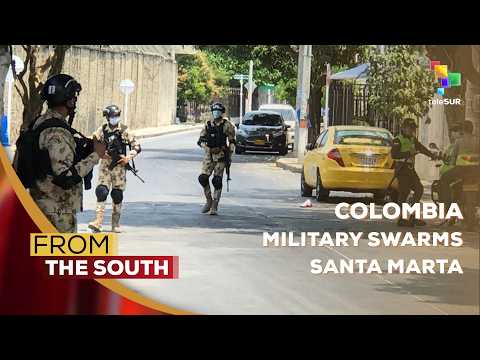
Yesterday: Santa Marta awakes under heavy security presence

Overview

Updated 2 hours ago

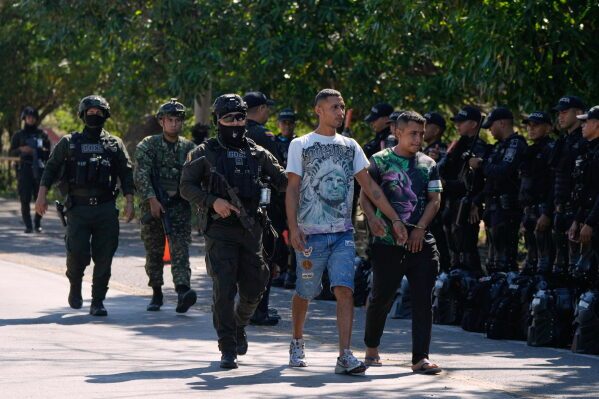
Colombian President Abelardo de la Espriella ordered the militarization of Santa Marta, a Caribbean coastal city, on September 22. The move came after members of the Conquering Self-Defense Forces of the Sierra Nevada (ACSN) shot at shops and burned vehicles, responding to a security operation that had killed 13 of their members, including a senior commander.

The violence turned the city into a lockdown. Businesses shuttered, a truck and a bus burned in the streets, and the ACSN announced a 48-hour curfew. The president said the military deployment is meant to reclaim full territorial control and that "anyone who does not submit will be taken down."

Why it matters

Santa Marta is a gateway to Tayrona National Park, a top tourist destination, and the confrontation tests whether the state can hold territory against a revived paramilitary group.

Questions about this story

Free account needed to ask — your question is kept and asked for you right after sign-up. Answers are public.

No questions yet — be the first to ask.

Key Indicators

13
ACSN members killed in initial operation
Killed in a military operation that triggered the group's reprisal attacks.
1,000+
Reinforced police and military personnel
Governor of Magdalena reported over 500 police and 500 soldiers deployed, with more en route.
48 hours
ACSN-declared curfew period
Group ordered businesses closed and public movement halted during this window.

Voices

Curated perspectives — historical figures and your fellow readers.

Ever wondered what historical figures would say about today's headlines?

Sign up to generate historical perspectives on this story.

People Involved

Organizations Involved

Timeline

6 events Latest: Yesterday
Tap a bar to jump to that date
  1. Security Council meeting scheduled in Santa Marta

    Upcoming Government Meeting

    President de la Espriella is expected to travel to Santa Marta to lead a Security Council meeting on the public order situation.

  2. Santa Marta awakes under heavy security presence

    Latest Deployment

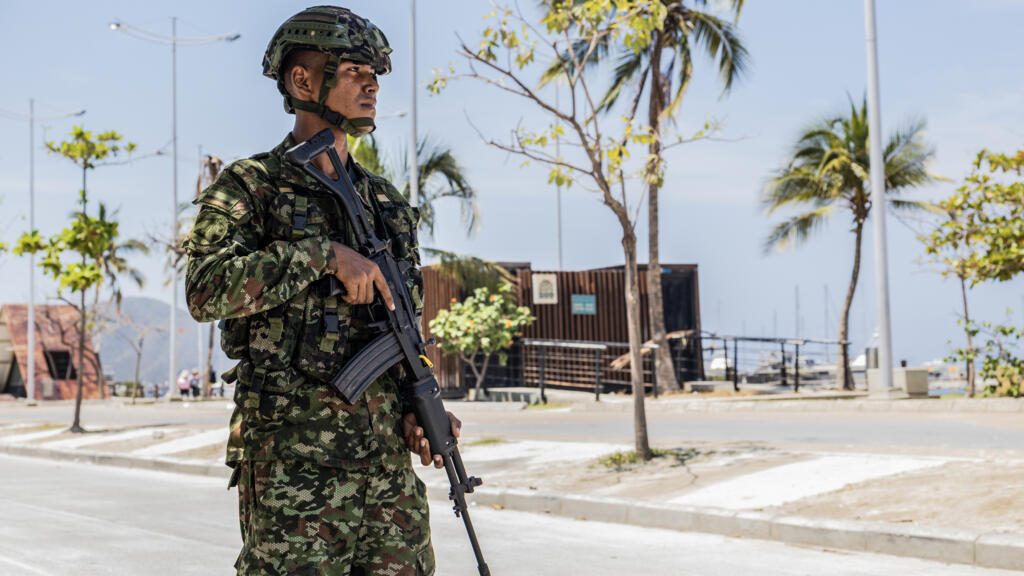
    City streets show strong military and police presence; over 1,000 personnel deployed, with more en route. Many businesses remain closed.

  3. ACSN attacks businesses and vehicles in Santa Marta

    Violence

    Armed group members ride through the city, firing on open businesses; a truck and a bus are set ablaze. The group declares a 48-hour curfew.

  4. President orders militarization of Santa Marta

    Government Action

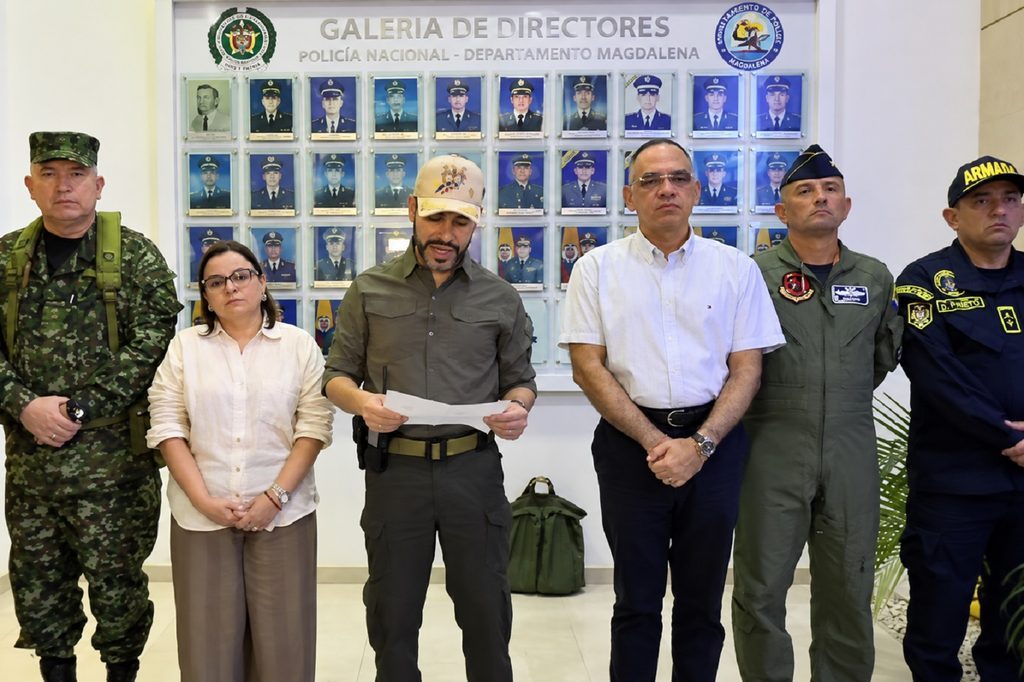
    President Abelardo de la Espriella announces the deployment of military troops to Santa Marta and reinforces security in Magdalena and La Guajira.

  5. President vows to fight ACSN 'narcoterrorists'

    Statement

    De la Espriella announces that two ACSN members (aliases 'Pati Liso' and '200') are now priority targets for the armed forces.

  6. Military operation kills ACSN second-in-command

    Security Operation

    Police and armed forces kill 13 ACSN members, including José Luis Pérez Villanueva, alias 'Cholo', in Quebrada del Sol, Guachaca, rural Santa Marta.

Scenarios

1

State stabilized, ACSN forced into retreat

Possible Resolves by Oct 23, 2026

Discussed by: Presidential statements; AFP reporting

The troop surge, combined with the killing of the group's second-in-command, forces the ACSN to abandon its armed strike and retreat to rural strongholds. The city returns to normal under heavy military presence, and the group shifts to hit-and-run attacks or negotiations.

2

Hit-and-run insurgency persists

Likely Resolves by Dec 22, 2026

Discussed by: Analysts in CNN en Español coverage, citing Norma Vera Salazar

The ACSN avoids direct confrontation with the military but continues extortion, targeted killings, and terror attacks. The group's structure, built on territorial and family networks, allows it to absorb the loss of a commander and adapt, leading to a prolonged low-intensity conflict in the region.

3

ACSN expands into new territories

Possible Resolves by End of 2026

Discussed by: AFP and Noticias RCN reporting on La Guajira operations

Pushed out of Santa Marta, the ACSN relocates its operations toward La Guajira, near the Venezuelan border, where it already has a presence. The group attempts to expand control over smuggling routes and new extortion networks, sparking conflict with rival groups.

Historical Context

2 moments from history that rhyme with this story — and how they unfolded.

2003 to 2006

Demobilization of the AUC paramilitaries (2003–2006)

Under President Álvaro Uribe, the United Self-Defense Forces of Colombia (AUC), a national paramilitary umbrella group, negotiated a demobilization with the government. Over 30,000 fighters turned in weapons, but many mid-level commanders and their networks never fully surrendered, leaving criminal structures in place.

Then

Homicide rates dropped in many urban centers, but the paramilitary structure fractured into successor groups that retained control over drug trafficking routes and extortion rackets.

Now

Groups like the ACSN, which claim paramilitary lineage through the AUC, are direct legacies of this incomplete demobilization. They operate as localized mafias rather than a unified political army.

Why this matters now

The ACSN is one of the groups that inherited the AUC's territory and illicit economies after demobilization. Understanding its structure helps explain why killing its leaders has not dissolved the organization in the past two decades.

July 2008

Operation Jaque (2008)

Colombian military intelligence staged a daring rescue operation, masquerading as an NGO to extract 15 high-value hostages, including former presidential candidate Ingrid Betancourt, from FARC guerrillas. The operation was a major propaganda and tactical victory, showing that the state could reach high-value targets deep in guerrilla territory.

Then

The FARC lost a key bargaining chip and suffered a massive humiliation. The operation boosted international confidence in the state's military capabilities.

Now

It became a symbol of the state's recovery under the security policy of President Álvaro Uribe, undermining the FARC's strategic position in the years leading up to the 2016 peace deal.

Why this matters now

Like Operation Jaque, the killing of 'Cholo' is a precision intelligence-led strike against a high-value target. The current challenge is whether the state can convert this tactical victory into sustained territorial control, as it did in the run-up to the FARC peace process.

Sources

(8)