


Pull to refresh
Logo
Illinois regulators approve ComEd's underground transmission ring near O'Hare

Illinois regulators approve ComEd's underground transmission ring near O'Hare

Built World

Four 138-kV lines and a new substation add rerouting capacity in Cook and DuPage counties, with service due by mid-2029

Today: Illinois Commerce Commission approves the GRIT project

Overview

Updated 2 hours ago

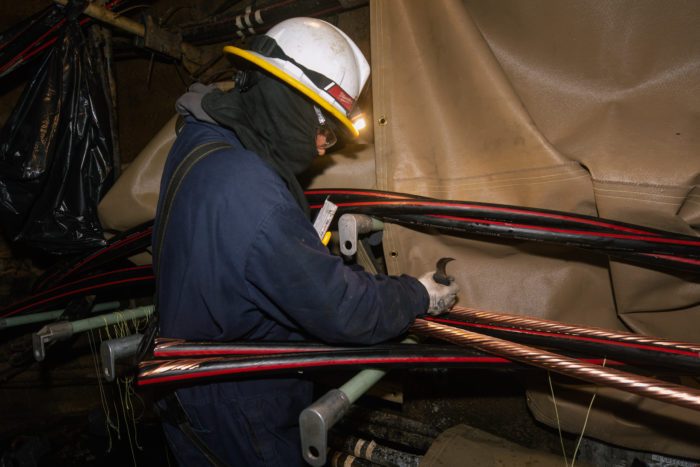
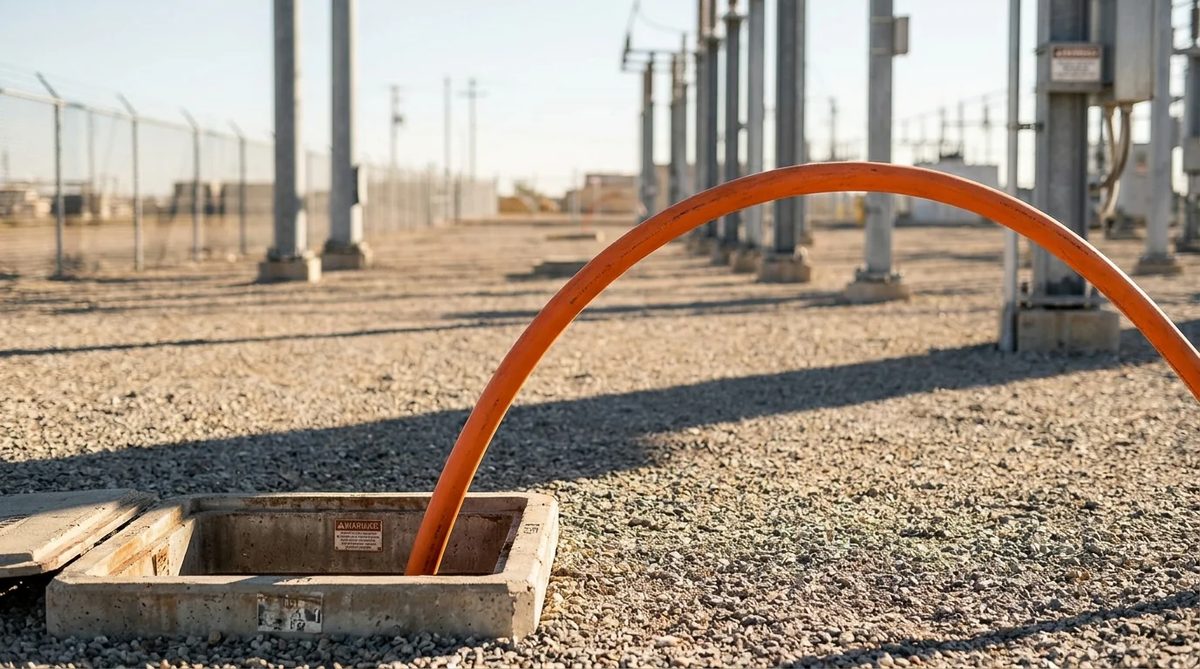
ComEd will bury four high-voltage transmission lines and build a new substation near O'Hare Airport after Illinois regulators approved the $319 million project. The lines form an underground ring that lets operators reroute power around failed segments in Elk Grove Village, Wood Dale, and Bensenville.

The Federal Aviation Administration ruled out overhead lines because 150-foot towers would disrupt instrument approaches at O'Hare. Construction starts this fall with grading at the Dierking substation; underground work begins in January and service is due in the second quarter of 2029.

Why it matters

The buried ring near O'Hare lets ComEd reroute power around failures, cutting outage risk in a corridor adding large industrial and commercial customers.

Questions about this story

Free account needed to ask — your question is kept and asked for you right after sign-up. Answers are public.

No questions yet — be the first to ask.

Key Indicators

$319M
Estimated project cost
Total estimate cited by ComEd witness Andrew Hamari in the ICC docket.
4
Underground transmission lines
Four 138-kV lines forming a ring that connects three substations and allows rerouting.
Q2 2029
Target in-service date
Projected service entry after construction begins in fall 2026.
3.6% (peak)
Share of ComEd annual capital budget
GRIT represents 0.3% to 3.6% of ComEd's annual capital budget during construction years.

Voices

Curated perspectives — historical figures and your fellow readers.

Ever wondered what historical figures would say about today's headlines?

Sign up to generate historical perspectives on this story.

People Involved

Organizations Involved

Timeline

2025 2029

7 events Latest: Today
Tap a bar to jump to that date
  1. GRIT project scheduled for service

    Upcoming Milestone

    The underground ring and Dierking substation are expected to be placed into service in the second quarter of 2029.

  2. Underground transmission work starts

    Upcoming Construction

    Trenching and installation of the four 138-kV lines begins across the Wood Dale and Bensenville areas.

  3. Illinois Commerce Commission approves the GRIT project

    Today Regulatory approval

    The ICC grants ComEd a Certificate of Public Convenience and Necessity, clearing the way for construction to begin this fall.

  4. ICC staff move to extend the review deadline

    Procedural

    Staff request a 75-day extension of the 150-day review deadline. ComEd says it does not oppose the extension.

  5. ComEd files Certificate of Public Convenience and Necessity petition

    Regulatory filing

    ComEd asks the Illinois Commerce Commission to approve four underground 138-kV lines and one new substation in Cook and DuPage counties.

  6. Construction begins with Dierking substation grading

    Construction

    Grading and drainage work starts at the new Dierking substation site near the Elmhurst Road corridor in Elk Grove Village.

  7. ComEd holds public open houses on GRIT routing

    Community engagement

    Two rounds of in-person open houses in the affected counties plus a virtual session gather routing feedback from residents and local governments.

Scenarios

1

GRIT project energizes on schedule in Q2 2029

Likely Resolves by Q2 2029

Discussed by: ComEd's announced construction schedule and the ICC-approved certificate

With the certificate secured, ComEd proceeds on its stated timeline: substation grading this fall, underground work starting January 2027, and the four lines plus the new substation live by the second quarter of 2029. The project then enters ComEd's rate base and its costs flow into transmission rates.

2

Construction delays push GRIT in-service date past Q2 2029

Possible Resolves by Jan 31, 2030

Discussed by: Construction risk in congested suburban corridors near a major airport

Trenching and boring beneath streets, rail crossings, and buried utilities near one of the nation's busiest airports carries schedule risk. Utility strikes, weather, and permitting delays of even a few months would push energization into late 2029 or 2030.

3

GRIT final cost exceeds the $319 million estimate

Possible Resolves by Q2 2029

Discussed by: ICC Docket P2026-0156 testimony on financing

The ICC's approval rests on ComEd's $319 million estimate and its finding that the utility can finance construction without significant adverse consequences. Underground work often meets unexpected conditions, such as rock, buried utilities, or contaminated soil, that raise costs. A material overrun would surface in ComEd's transmission rate filings.

Historical Context

2 moments from history that rhyme with this story — and how they unfolded.

August 2003

Northeast blackout (2003)

A high-voltage line in Ohio sagged into an untrimmed tree on August 14, 2003, tripping a cascade of failures that cut power to 50 million people in eight U.S. states and Ontario. The blackout traced to insufficient monitoring and a lack of rerouting options.

Then

The blackout killed at least 11 people and cost an estimated $6 billion in economic losses. It prompted new federal reliability standards and closer attention to transmission maintenance.

Now

The event remains the reference point for why transmission redundancy matters: grids need alternate paths so one failure does not cascade.

Why this matters now

The GRIT ring's core purpose is to give operators exactly that alternate-path capability, so a fault in one line can be rerouted instead of spreading.

2013–2018

London Power Tunnels (2013–2018)

National Grid built roughly 32 kilometers of deep underground tunnels beneath London to carry high-voltage cables, replacing aging circuits and adding capacity without disrupting a dense city. The first phase came online in 2018.

Then

The tunnels freed surface space and reduced visual impact while strengthening London's transmission network.

Now

They became a model for urban undergrounding of high-voltage lines in constrained environments.

Why this matters now

ComEd faces a similar constraint near O'Hare: FAA height limits rule out overhead lines, and dense development makes undergrounding the only workable option.

Sources

(6)