

Pull to refresh
Logo
Offshore substations installed at Gennaker wind farm in Baltic Sea

Offshore substations installed at Gennaker wind farm in Baltic Sea

Built World

Two transformer platforms will collect power from 63 turbines and step it from 66 kV to 220 kV for Germany's grid

Today: Installation of offshore substations completed

Overview

Updated 1 hour ago

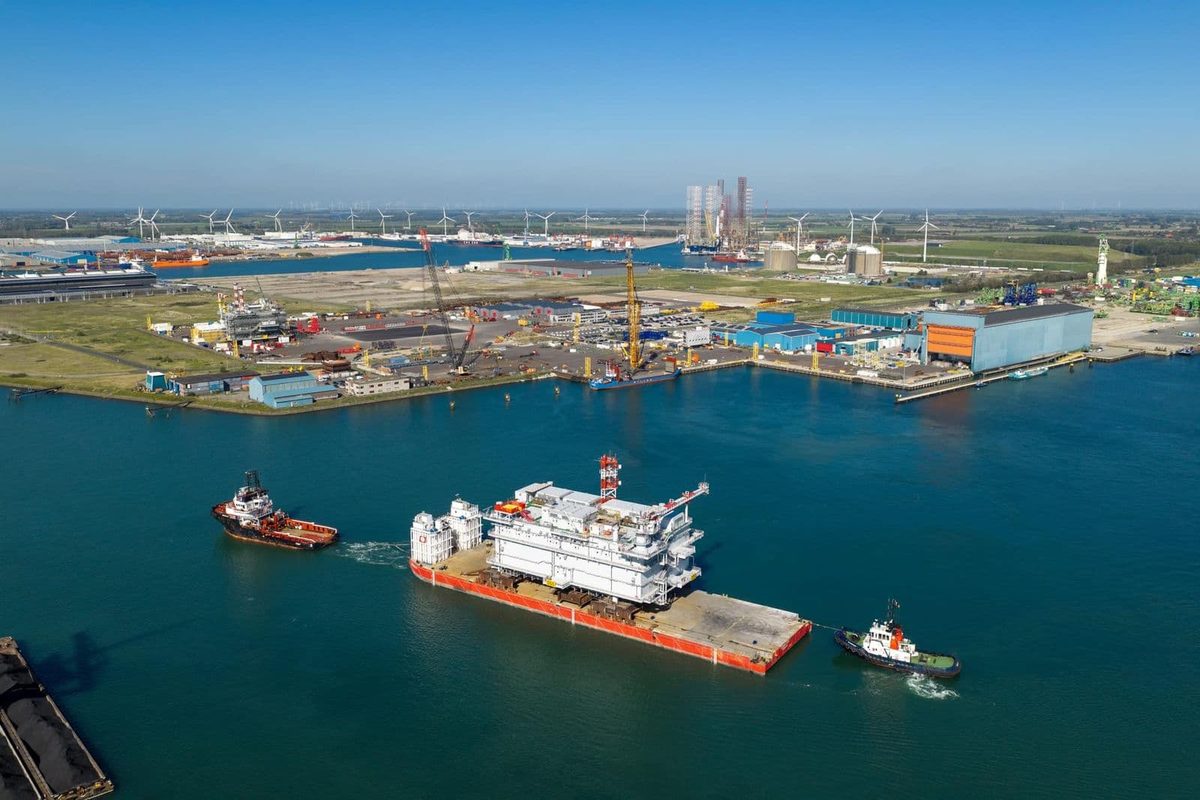
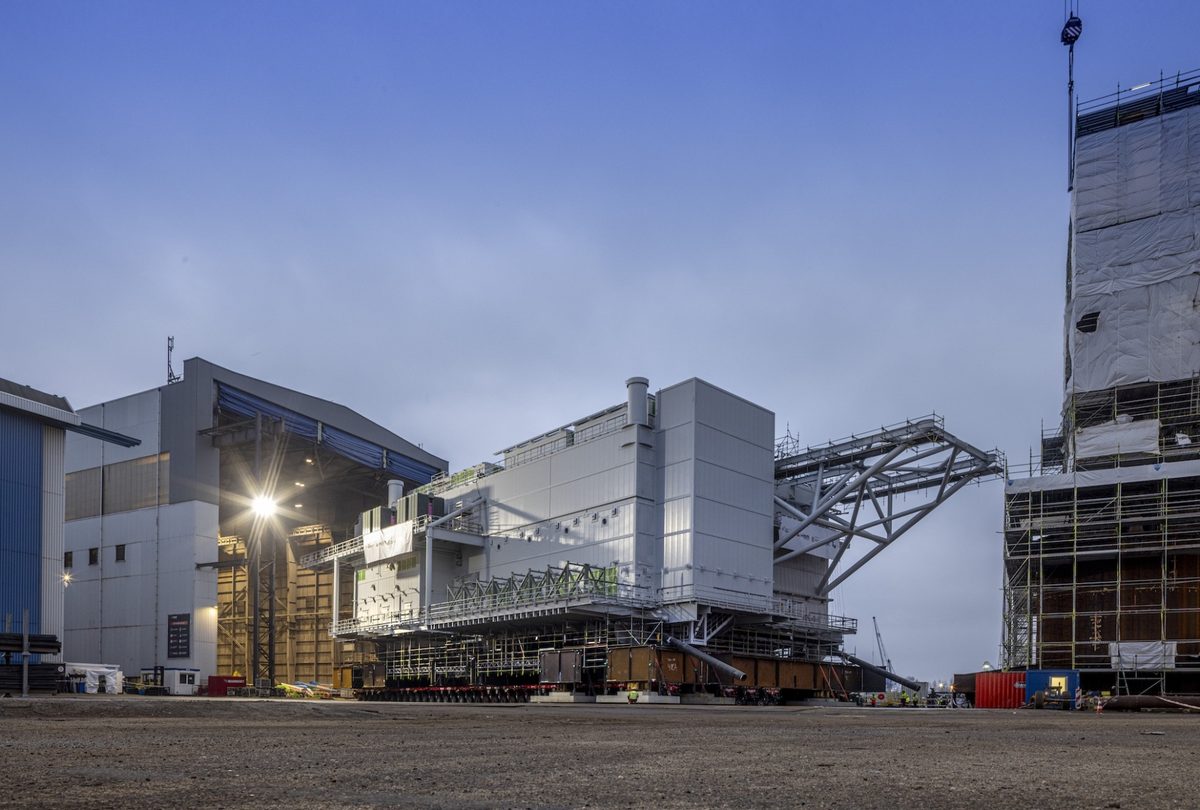
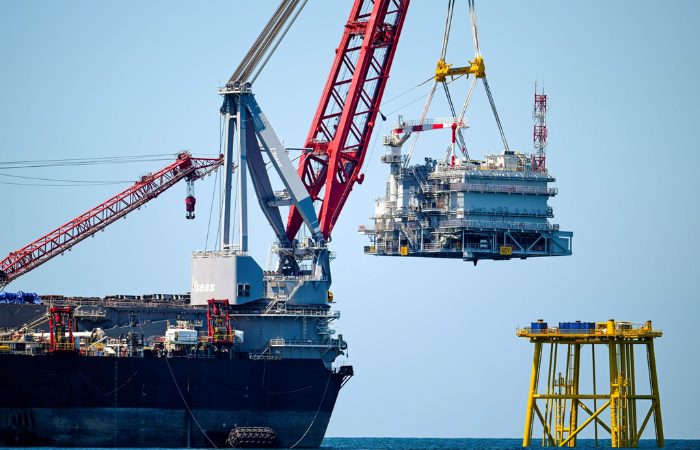
The two offshore substations that will carry power from the Gennaker wind farm to Germany's grid are now standing in the Baltic Sea. 50Hertz confirmed on October 22 that installation of the transformer platforms OSS Darß and OSS Zingst is complete.

The platforms sit about 15 kilometers north of the Fischland-Darß-Zingst peninsula off Mecklenburg-Western Pomerania. They collect electricity from the wind farm's 63 turbines at 66 kV, transform it to 220 kV, and send it through three cable systems to a new onshore substation at Gnewitz.

Why it matters

Gennaker is slated to become the largest offshore wind farm in the German Baltic, supplying roughly one million households, with first power planned for 2028.

Questions about this story

Free account needed to ask — your question is kept and asked for you right after sign-up. Answers are public.

No questions yet — be the first to ask.

Key Indicators

976.5 MW
Planned wind farm capacity
63 turbines of the 15 MW class, set to be the German Baltic's largest offshore wind farm.
63
Wind turbines planned
Siemens Gamesa 15 MW turbines, with installation scheduled to begin in 2027.
3.8 TWh
Expected annual generation
Enough renewable electricity for roughly one million households per year.
927 MW
Grid connection transfer capacity
OST-6-1 connection system capacity across subsea and land cable routes up to 90 km.
60,000 t
Pioneering Spirit lifting capacity
The world's largest offshore construction vessel, used to install both platforms.

Voices

Curated perspectives — historical figures and your fellow readers.

Ever wondered what historical figures would say about today's headlines?

Sign up to generate historical perspectives on this story.

Organizations Involved

Timeline

April 2026 2028

6 events Latest: Today
Tap a bar to jump to that date
  1. Wind farm commissioning planned

    Upcoming Planned

    Gennaker is set to become the largest offshore wind farm in the German Baltic upon full operation.

  2. Turbine installation scheduled to begin

    Upcoming Planned

    Installation of 63 Siemens Gamesa turbines is slated to start, after Seaway7 installs the monopiles.

  3. Installation of offshore substations completed

    Today Construction Milestone

    50Hertz confirms both substations are installed using the Allseas vessel Pioneering Spirit in the Baltic Sea.

  4. Substation topsides depart Netherlands

    Logistics

    Topsides and jackets for OSS Darß and OSS Zingst leave the Netherlands for installation in the Baltic Sea.

  5. Gennaker reaches financial close

    Financial

    Skyborn secures project financing; HSI consortium completes fabrication and load-out of both substations.

  6. Plan approval issued for offshore substations

    Regulatory

    German authorities clear construction of OSS Darß and OSS Zingst as part of the OST-6-1 grid connection.

Scenarios

1

Gennaker commissioned in 2028, largest in German Baltic

Possible Resolves by End of 2028

Discussed by: 50Hertz and Skyborn Renewables project schedules

With the substations in place, the critical path shifts to monopile and cable installation followed by turbine erection. If the 2027 weather window holds and supply contracts deliver on time, the wind farm reaches full commissioning in 2028. The installed platforms remove the need for separate offshore transformer construction later.

2

Turbine or cable delays push commissioning to 2029

Possible Resolves by End of 2028

Discussed by: Offshore wind industry analysts and supply chain observers

The Baltic Sea has narrow weather windows for offshore installation work, especially in winter. A shortage of heavy-lift vessels, cable supply bottlenecks, or a delayed monopile shipment could push turbine installation into 2028, moving full commissioning to 2029 or later.

3

Turbine installation starts on schedule in 2027

Likely Resolves by End of 2027

Discussed by: Skyborn Renewables project plan

The first monopiles and turbines enter the water during the 2027 installation window, confirming the project's stated timeline. This would validate the supply chain commitments from Seaway7, EEW, Dajin Heavy Industry, and Fred. Olsen Windcarrier.

Historical Context

2 moments from history that rhyme with this story — and how they unfolded.

2007 – 2010

Alpha Ventus, Germany's first offshore wind farm (2010)

Germany built its first offshore wind farm, Alpha Ventus, with 12 turbines totaling 60 MW, about 45 km off the island of Borkum in the North Sea. Construction was delayed several times by technical challenges and weather.

Then

Commissioned in April 2010 after repeated setbacks, becoming a test bed for German offshore wind technology.

Now

Its lessons shaped German offshore wind standards and regulatory practice that later projects, including Gennaker, build on.

Why this matters now

German offshore wind has scaled from a 60 MW test farm in 2010 to a single 976.5 MW project. The substations installed this week show how far the supply chain has come in 16 years.

2018 – 2020

Hornsea One, first offshore wind farm over 1 GW (2020)

Orsted built the 1.2 GW Hornsea One off England's Yorkshire coast, the first offshore wind farm to exceed one gigawatt. The project required two offshore substations and an offshore reactive compensation station to transmit power to shore.

Then

Commissioned in 2020 as the world's largest offshore wind farm at the time.

Now

Demonstrated that gigawatt-scale offshore wind with multiple offshore platforms could be delivered on schedule; paved the way for Hornsea Two and Three.

Why this matters now

Gennaker mirrors Hornsea One's structure: two large substations collecting power from many high-capacity turbines. The comparison shows how proven, if logistically demanding, this architecture has become.

Sources

(9)